
This site is supported by our readers. We may earn a commission, at no cost to you, if you purchase through links.

Your new corn snake coils around your finger, barely thicker than a pencil, and you’re wondering when to offer that first meal. Get the timing wrong and you risk stunted growth or a picky eater who refuses food for weeks.
Corn snakes don’t follow the same feeding rules throughout their lives—a hatchling needs meals almost twice as often as an adult, and missing those early windows can set back development. The answer depends entirely on your snake’s age and size.
Hatchlings need food every five to seven days to fuel their rapid growth spurts. Juveniles can wait seven to ten days between meals. Adults settle into a comfortable routine of eating every ten to fourteen days. Understanding these shifts helps you match your feeding schedule to your snake’s changing metabolism and keeps them healthy at every stage.
Table Of Contents
- Key Takeaways
- How Often Do Corn Snakes Eat?
- Feeding Schedule for Hatchling Corn Snakes
- How Often Should Juvenile Corn Snakes Eat?
- Adult Corn Snake Feeding Frequency
- What to Feed Corn Snakes
- Frozen Vs. Live Prey for Corn Snakes
- Recognizing Hunger in Corn Snakes
- Risks of Overfeeding or Underfeeding
- Adjusting Feeding Frequency for Health
- Troubleshooting Feeding Problems
- Frequently Asked Questions (FAQs)
- How to tell when a corn snake is hungry?
- How long can a corn snake go without eating?
- What can I feed my corn snake if I don’t have mice?
- Should I handle my corn snake every day?
- How often should you feed a corn snake?
- How long can corn snakes go without eating?
- How do I know if my corn snake is hungry?
- Are corn snakes high maintenance?
- Can corn snakes eat insects or fish?
- How do seasonal changes affect feeding?
- Conclusion
Key Takeaways
- Feed hatchling corn snakes every 5-7 days with pinky mice to support their rapid growth phase, then shift juveniles (6 months to 1 year) to weekly or 10-day intervals as their metabolism slows.
- Adult corn snakes over one year old need meals only every 10-14 days, and proper feeding means matching prey size to about one to one-and-a-half times your snake’s girth at its widest point.
- Frozen-thawed prey is safer than live feeding because it eliminates bite injuries to your snake, though some stubborn hatchlings may initially need live feeders to trigger their strike reflex.
- Watch for visible ribs or spine as signs of underfeeding and fat deposits near the tail as obesity markers, adjusting your schedule within the recommended ranges based on your snake’s body condition rather than sticking rigidly to a calendar.
How Often Do Corn Snakes Eat?
How often you feed your corn snake depends on its age and size. Hatchlings need food more frequently than adults because they’re growing fast.
A detailed corn snake care guide for beginners breaks down feeding schedules by life stage so you can create the right routine for your pet.
Let’s break down the feeding schedule by life stage and the factors that influence how often your snake should eat.
Feeding Frequency by Age and Size
Your corn snake’s feeding frequency hinges directly on age and size. Baby corn snakes under six months need meals every five to seven days to fuel rapid growth, while juveniles shift to seven-to-ten-day feeding cycles. Adult corn snakes eat every ten to fourteen days, matching their slower metabolism.
These feeding schedules align with natural growth patterns and guarantee proper snake nutrition without overloading their system.
Typical Feeding Intervals for Hatchlings, Juveniles, Adults
Your snake’s life stage determines its feeding schedule. Hatchlings eat every five to seven days, receiving pinky mice to support their rapid growth rates.
Juveniles between six months and one year shift to weekly or ten-day intervals.
Once your corn snake reaches adulthood at one year old, you’ll feed every ten to fourteen days, matching their slower metabolic needs and maintaining proper snake nutrition.
Factors Affecting Feeding Schedule
Once you’ve set a basic feeding schedule, real life steps in. Your snake’s appetite shifts with temperature, body condition, and even daylight hours. For example, a cooler tank slows digestion, while stress or shedding can throw off hunger.
Here are five factors shaping feeding frequency:
- Environmental Impact
- Snake Metabolism
- Feeding Techniques
- Health Considerations
- Nutrition Balance
You can learn more about seasonal snake feeding patterns and how they affect appetite and feeding frequency.
Feeding Schedule for Hatchling Corn Snakes

Hatchling corn snakes are in their most critical growth phase and need consistent nutrition to develop properly. Your feeding approach during these first few months sets the foundation for a healthy adult snake.
Let’s break down exactly what your baby corn snake needs during this early stage.
Age Range and Developmental Stage
Your hatchling’s age defines its eating schedule in those vital first months. Baby corn snakes from birth to six months experience explosive growth patterns, burning energy fast. During this developmental stage, you’ll notice impressive life stage transitions as your snake doubles or triples in length.
| Age Range | Length |
|---|---|
| Birth | 10–15 inches |
| 3 months | 15–20 inches |
| 6 months | 20–30 inches |
These age-related changes signal when feeding frequency adjustments become necessary.
Recommended Prey Size and Type
You’ll want to offer pinkies to your hatchling—tiny, hairless mice about half to two-thirds the width of your snake’s head. Prey Size Guidelines recommend choosing mice roughly the thickness of a pencil. This ensures proper Snake Nutrition without strain.
Frozen mice work best, following safe Feeding Techniques. As your hatchling grows, you’ll gradually shift from pinkies to fuzzies.
Feeding Frequency Guidelines
For the first few months, you’ll feed your hatchling every 5 to 7 days—a rhythm that fosters healthy Snake Growth Rates and Nutrition Needs. This Feeding Frequency matches their fast metabolism and Digestion Times. Stick to this Meal Scheduling pattern to maintain ideal Feeding Cycles.
If your hatchling refuses food, check out these proven strategies to boost snake appetite before adjusting your schedule.
Proper Corn Snake Care means monitoring weight between feedings, adjusting your Feeding Schedule if growth slows or appetite changes. It’s important to remember that helps promote ideal digestive health and overall well-being.
How Often Should Juvenile Corn Snakes Eat?

Once your corn snake reaches six months old, it enters the juvenile stage and things start to shift. Their appetite grows along with their body, so you’ll need to adjust both what you feed and how often.
Let’s look at what changes during this important growth phase.
Defining Juvenile Age (6 Months–1 Year)
You’ll know your corn snake has reached juvenile age when it’s between six months and one year old. During this developmental stage, baby corn snakes show rapid growth patterns and increased nutritional needs.
Most juveniles measure under 18 inches at six months and reach 24 to 36 inches by their first birthday. Their feeding schedules and juvenile care requirements shift as they progress from hatchlings to adults.
Adjusting Prey Size as They Grow
As your juvenile corn snake transitions toward adulthood, you’ll need to gradually increase prey size every 6 to 8 months. Start by offering feeder mice that match about 25 to 40 percent of your snake’s girth at the midbody. This prey size increase promotes digestive health without overwhelming their system.
Always measure the widest part of your corn snake to verify proper feeding techniques and balanced snake nutrition.
Monitoring Growth and Nutrition
Tracking your corn snake’s progress is like keeping a health diary for your pet. Monthly weigh-ins during this growth phase give you the clearest picture of whether your feeding strategies are on point.
Pay attention to three key growth charts indicators:
- Weight gain consistency – Steady increases signal proper nutrient balance and dietary needs are being met
- Body girth proportions – Your snake should maintain smooth body contours without bulges or dips
- Overall activity levels – Healthy juveniles stay alert and responsive between meals
Regular health monitoring helps you spot feeding issues before they affect your corn snake’s long-term wellness.
Adult Corn Snake Feeding Frequency
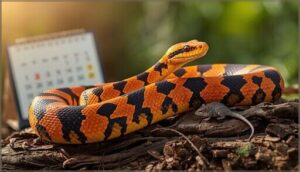
Once your corn snake hits the one-year mark, its growth slows down and its feeding schedule changes to match. Adult snakes need less frequent meals than their younger counterparts, but getting the timing right keeps them healthy without excess weight.
Let’s look at how to identify adulthood, set the right feeding interval, and keep your snake in top condition.
Identifying Adulthood (1 Year+)
Your corn snake becomes an adult around one year of age, though growth rates vary by feeding frequency and metabolism. You’ll notice maturity signs like stable body weight and consistent girth. Adult corn snakes usually measure 3-5 feet long and display reliable feeding patterns that support long-term health monitoring.
| Age Marker | Physical Indicator |
|---|---|
| 12+ months | Stable weight, consistent girth |
| 3-5 feet length | Full body development complete |
| Steady appetite | Predictable feeding response |
Feeding Every 10–14 Days
Once your corn snake reaches adulthood, you’ll settle into a 10 to 14 day feeding schedule that promotes steady health without obesity. Snake metabolism slows after maturity, so digestion rates require longer intervals between meals.
This feeding cycle ensures proper nutrient uptake and stable growth patterns. Your corn snake’s body condition will guide you toward the ideal rhythm within that range.
Managing Weight and Health
Regular health monitoring keeps your adult corn snake thriving through the years. Check for visible ribs or spine (signs of underfeeding) and skin folds near the tail (obesity markers). A well-fed snake shows smooth curves along its body without bulges.
Adjust your feeding schedule within that 10–14 day window based on body condition, ensuring balanced reptile nutrition and proper metabolic care throughout its life.
What to Feed Corn Snakes
Corn snakes are carnivores that thrive on a simple diet of rodents. Getting the right prey type and size matters more than you might think—it directly affects your snake’s health and growth.
Let’s break down what your corn snake should eat at each stage of life.
Appropriate Prey Types (Mice, Rats)

Most corn snakes thrive on mice throughout their lives, making them the go-to choice for reptile nutrition. Rats offer a larger alternative as your snake grows, but mice remain easier to source and handle.
Both prey types provide essential protein and fat when you select healthy, ethically sourced feeders. Snake feeding success depends on prey quality control and feeding variety that matches your pet’s developmental needs.
Matching Prey Size to Snake Girth
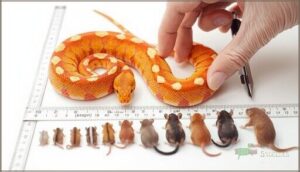
Once you’ve picked mice or rats, you need to match prey size to your corn snake’s girth at its widest point. Measure around your snake’s body, then select prey about one to one-and-a-half times that diameter. Proper girth measurement prevents digestion issues and keeps feeding ratios safe for every growth stage.
- Too small means your snake stays hungry between meals
- Oversized prey triggers stress and can cause dangerous regurgitation
- Regular checks help you adjust as your snake grows
Nutritional Requirements for Each Life Stage

Throughout each life stage, your corn snake’s dietary needs shift with changing growth rates and metabolic health. Hatchlings burn energy fast and need frequent, small meals to fuel rapid development.
Juveniles require a steady nutrient balance as their feeding schedule stretches to weekly intervals.
Adults maintain metabolic health on less frequent feeding strategies, prioritizing weight stability over growth. Matching feeding and nutrition to each stage keeps your reptile healthy and thriving.
Frozen Vs. Live Prey for Corn Snakes

Most corn snake owners feed frozen/thawed prey because it’s safer and more convenient than live feeders. That said, you’ll want to understand the trade-offs between both options before making your choice.
Here’s what you need to know about frozen versus live prey for your corn snake.
Pros and Cons of Frozen/Thawed Prey
Frozen-thawed prey offers your corn snake safer feeding and simpler prey storage, but it’s not without tradeoffs. Let’s break down what you need to know.
| Advantages | Considerations |
|---|---|
| Feeding safety improves—no bite injuries to your snake | Some snakes initially refuse frozen-thawed prey |
| Humane treatment of prey and easier prey storage | Minor nutrient retention loss if stored too long |
| Consistent feeding schedule with year-round availability | Requires proper thawing technique for snake preference |
Safe Handling and Preparation Techniques
Proper thawing protects your corn snake from bacterial contamination and digestive issues. Always thaw frozen prey in the refrigerator or a sealed container in warm water—never at room temperature. Use tongs or feeding tools to offer prey, keeping your hands clean and reducing stress.
| Step | Safe Practice |
|---|---|
| Prey Storage | Keep frozen feeders in sealed containers separate from human food |
| Thawing Method | Use refrigerator overnight or warm water bath in dedicated feeding containers |
| Handling Tools | Offer prey with tongs to maintain hygiene practices and prevent bites |
| Sanitation Methods | Wash hands and disinfect tools after every feeding session |
This reptile care routine promotes your pet snake’s health and wellness while maintaining a clean feeding chart you can trust.
When Live Prey May Be Necessary
Most corn snakes thrive on frozen prey, but live feeders can jumpstart feeding reflexes in stubborn hatchlings or snakes recovering from relocation stress. You’ll want to source healthy prey carefully and monitor closely to prevent injury during captive hunting sessions.
| Situation | When to Consider Live Prey |
|---|---|
| Hatchling Refusal | Strike reflexes need live movement triggers |
| Post-Relocation | Familiar prey sourcing rebuilds appetite |
| Extended Fasting | Live feeders restart normal feeding schedule |
Always shift back to frozen options once your pet snake health stabilizes—it’s safer for everyone and backs better live prey ethics in snake nutrition practices.
Recognizing Hunger in Corn Snakes

Your corn snake won’t ring a dinner bell when it’s hungry, but it will show you clear signs if you know what to watch for. Learning to read these behaviors helps you stick to a healthy feeding schedule and catch potential problems early.
Let’s look at the key signals that tell you when your snake is ready to eat.
Behavioral Signs of Hunger
Your corn snake’s hunger cues are easy to spot once you know what to look for. Watch for increased activity around feeding time, with your pet pacing along the glass or exploring its enclosure more than usual.
You’ll notice frequent tongue flicking as it scans for prey, plus an alert, focused posture. Some corn snakes even track your movements closely when hungry, signaling their snake appetite is active.
Distinguishing Hunger From Stress or Illness
Not every restless snake is simply hungry. Stress indicators like hiding constantly, rapid breathing, or refusing food repeatedly suggest something beyond appetite changes.
Illness detection matters too—watch for lethargy, weight loss, or mouth breathing. Health monitoring helps you separate true hunger signs from warning flags.
If your corn snake shows stress or illness symptoms alongside feeding schedule disruptions, consult your vet before adjusting snake feeding and nutrition routines.
When to Adjust Feeding Frequency
Once you know your corn snake isn’t stressed or sick, you can fine-tune its feeding schedule based on weight monitoring and growth patterns. Snake metabolism shifts with age and season, so your feeding cycles should adapt to maintain nutrition balance.
Adjust your corn snake feeding schedule when you notice:
- Visible ribs or a triangular body outline that signals underfeeding
- Fat deposits near the tail base or skin folds that indicate overfeeding
- Rapid weight gain on your current feeding cycles
- Sluggish digestion with bulges lasting over 24 hours
Check body condition every few weeks to keep your pet snake health and wellness on track.
Risks of Overfeeding or Underfeeding

Getting your corn snake’s feeding schedule right makes all the difference for their health. Feed too much and you risk obesity and shortened lifespan. Feed too little and your snake won’t get the nutrition they need to grow and thrive.
Signs and Consequences of Overfeeding
Unfortunately, overfeeding your corn snake can trigger serious health problems that shorten its lifespan. Weight gain risks include fatty liver disease and joint strain from excess body fat. Metabolic issues like insulin resistance develop when feeding schedules become too frequent. Digestive problems—regurgitation, constipation, or diarrhea—signal that your snake is processing too much prey too often. Obesity effects reduce mobility and alter reproductive health in breeding-age adults.
Overfeeding corn snakes causes obesity, fatty liver disease, digestive problems, and metabolic disorders that significantly shorten their lifespan
| Health Impact | Early Warning Signs | Long-Term Consequences |
|---|---|---|
| Weight Gain Risks | Visible fat rolls, bulge above tail | Fatty liver disease, reduced lifespan |
| Digestive Problems | Regurgitation, irregular bowel movements | Chronic digestive distress, feeding refusals |
| Metabolic Issues | Lethargy, reduced activity during basking | Insulin resistance, hormonal imbalances |
Effects of Underfeeding and Malnutrition
On the flip side, underfeeding your corn snake triggers malnutrition risks that weaken immunity and slow growth. Nutrient deficits from irregular feeding schedules reduce muscle mass and delay healing from injuries or illness.
Health consequences include stunted development in juveniles and poor skin quality during sheds. Dietary imbalances can lead to metabolic disorders that compromise your pet snake’s health and wellness long-term, making consistent feeding essential for overall snake health.
Adjusting Feeding Frequency for Health

Your corn snake’s feeding schedule isn’t set in stone. Sometimes you’ll need to adjust how often you feed based on what you see and what’s happening around you.
Here are the key factors to watch when fine-tuning your snake’s diet.
Monitoring Weight and Body Condition
Your corn snake’s health depends on regular weight tracking and body scoring—not guesswork. Weigh your pet monthly using a precise scale, then check girth measurements at the widest point. Watch for fat deposits around the tail base or wrinkles along the skin.
Growth monitoring reveals if your feeding schedule matches your snake’s needs, helping you catch health correlates like dehydration or illness early.
Seasonal and Environmental Influences
Your snake’s appetite naturally shifts as temperature fluctuations and seasonal changes arrive. When nights cool or daylight shortens, expect reduced feeding frequency—these environmental cues signal slower metabolism.
Humidity levels below 50 percent may also suppress hunger, so monitor your enclosure carefully. Climate adaptation is normal reptile care behavior, not illness.
Adjust your corn snake’s feeding schedule during seasonal transitions to support animal welfare and healthy snake feeding habits.
Consulting a Veterinarian for Concerns
Whenever feeding declines or weight changes occur, schedule a vet consultation for diagnostic tests and medical guidance. A veterinarian can assess your snake’s health through physical exams, determine the right feeding schedule, and distinguish hunger from illness.
Veterinary care ensures pet snake health and wellness through expert animal health monitoring, creating a written plan for proper reptile care and management.
Troubleshooting Feeding Problems
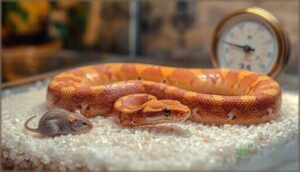
Even healthy corn snakes sometimes refuse food, and it can be worrying when your snake skips a meal. The good news is that most feeding problems have simple solutions once you identify the cause.
Let’s look at common reasons your corn snake mightn’t be eating and what you can do to help.
Reasons a Corn Snake May Refuse Food
Sometimes your pet snake health and wellness depends on spotting the silent signals. Temperature stress and humidity issues rank as top culprits when your corn snake suddenly ignores dinner. Environmental changes like rearranging the tank can trigger snake anxiety, while poor prey quality or improper warming dulls natural feeding habits and behavior.
Shedding, mouth infections, or internal parasites also suppress appetite, affecting reptile nutrition and health. A quick look at your feeding chart helps identify patterns worth investigating.
Changing Prey Type or Feeding Method
If your pet snake keeps ignoring frozen feeder mice, prey switching can break the deadlock. Try shifting from mice to rat pinkies or adjusting your feeding techniques—sometimes a fresh scent triggers corn snake feeding habits.
Warming prey longer boosts acceptance during feeding transitions. Size matters for prey adaptation, so match girth to your snake’s body to respect natural snake nutrition needs without forcing the feeding schedule.
When to Seek Veterinary Advice
If your corn snake stops eating for over three weeks, it’s time for veterinary advice to protect snake health. Watch for these health alerts that demand veterinary care:
- Sudden bleeding or wound drainage lasting over 24 hours
- Difficulty lifting the head or labored breathing
- Chronic vomiting or diarrhea with dehydration signs
- Significant weight loss or failure to grow
Veterinary medicine can diagnose snake emergencies early, and pet insurance may offset veterinary costs while supporting animal welfare and ethics.
Frequently Asked Questions (FAQs)
How to tell when a corn snake is hungry?
You’ll notice increased tongue flicking and active exploration when your snake hunts for food.
A hungry corn snake paces its enclosure with purpose, showing alert posture and rapid strikes at movement near the glass.
How long can a corn snake go without eating?
Healthy adult corn snakes can tolerate food deprivation for two to three months during brumation cycles, when snake metabolism slows naturally.
Hatchlings require feeding more frequently, rarely fasting beyond one week without concern.
What can I feed my corn snake if I don’t have mice?
If mice aren’t available, you can offer appropriately sized rat pups, quail, or frozen chicks to your corn snake.
Reptilinks and minced whole prey also work well as alternative rodents while maintaining balanced nutrition.
Should I handle my corn snake every day?
You don’t need to handle your corn snake every day. A few short sessions per week works better—daily interaction can increase handling stress and disrupt natural behaviors, so gentle techniques and watching for stress signs matter more than frequency.
How often should you feed a corn snake?
Your pet snake’s feeding schedule depends entirely on age: hatchlings need meals every five to seven days, juveniles every seven to ten days, and adults thrive on a ten- to fourteen-day routine.
How long can corn snakes go without eating?
Adult corn snakes can fast for several months during brumation or mating season, but hatchlings and juveniles need food every one to three weeks to avoid stunted growth and health decline.
How do I know if my corn snake is hungry?
Like a cat eyeing a bird, your corn snake will show hunger through intense tongue flicking, active exploration, and purposeful movement near feeding spots—clear appetite indicators aligned with your regular feeding schedule and proper snake nutrition.
Are corn snakes high maintenance?
Corn snakes rank among the easiest reptiles for care requirements and handling tips. Weekly feeding, simple environmental needs, and minimal health monitoring make maintenance costs low compared to most pets requiring daily attention.
Can corn snakes eat insects or fish?
While insects and fish aren’t ideal for snake nutrition, corn snakes can occasionally eat small portions as enrichment.
However, rodents remain essential for proper digestive impact and dietary balance in a carnivorous diet.
How do seasonal changes affect feeding?
Seasonal appetite shifts, temperature fluctuations, and metabolic changes can all slow your corn snake’s feeding schedule. Colder months reduce activity and digestion, while warmer periods boost hunger and prey availability naturally.
Conclusion
A single skipped meal won’t derail your snake’s health, but weeks of guesswork can leave you with a sluggish, underfed reptile or an overweight one struggling to move.
Now you know exactly how often corn snakes eat at every life stage. Match your feeding schedule to your snake’s age, watch for hunger cues, and adjust as they grow.
Your corn snake will thrive when you feed with confidence instead of doubt.