This site is supported by our readers. We may earn a commission, at no cost to you, if you purchase through links.

A ball python can outlive your car, your marriage, maybe even your mortgage. That’s not a scare tactic, it’s biology: these animals routinely reach 20 to 30 years in captivity. Most first-time buyers picture a cool terrarium accessory, not a multi-decade commitment with legal paperwork attached.
This pet snake species overview cuts through the impulse-buy mentality. You’ll see why a corn snake suits a beginner while a reticulated python demands real expertise, and how thermoregulation, diet, and state law shape every decision you make. Choose wrong, and you’re stuck. Choose right, and you’ve got a fascinating companion for the long haul.
Table Of Contents
- Key Takeaways
- Pet Snake Ownership: Key Facts to Know
- Best Snake Species for Beginners
- Advanced Snake Species for Experienced Keepers
- Snake Care Essentials: Enclosure and Feeding
- How to Choose The Right Pet Snake
- Frequently Asked Questions (FAQs)
- What’s the nicest snake to have as a pet?
- What snake is worth $100,000?
- What snakes can I own as a pet?
- What is the most cuddly pet snake?
- How often do pet snakes shed their skin?
- What vaccinations do pet snakes need annually?
- Can snakes recognize their owners or handlers?
- How much does snake veterinary care typically cost?
- What signs indicate a snake is sick?
- How do you handle a snake safely?
- Conclusion
Key Takeaways
- Ball pythons and corn snakes can live 15 to 35 years, so choosing one means committing to decades of consistent care, not a passing hobby.
- Beginners should start with docile, forgiving species like corn snakes, ball pythons, or rosy boas, while reticulated pythons and other large constrictors demand expert-level experience.
- Successful snake keeping depends on replicating precise thermal gradients, humidity levels, and secure enclosures tailored to each species’ natural habitat.
- Before buying any snake, you must verify state and local permits, CITES compliance, and ethical breeding sources to avoid legal and welfare issues.
Pet Snake Ownership: Key Facts to Know

Owning a snake isn’t just about picking a cool-looking pet. You’re signing up for a long-term relationship with specific rules, from diet to legal paperwork. Here’s what you need to know before that snake ever comes home.
If you’re Muslim or buying from a Muslim seller, it’s worth understanding whether keeping pet snakes is considered haram in Islam before making any decisions.
Permits, species bans, and enclosure size requirements vary wildly by state, so it’s worth checking a detailed state-by-state guide to snake ownership laws before you commit.
Before you commit, it’s worth reading up on which snake breeds actually suit first-time owners, since temperament and care needs vary a lot between species.
Carnivorous Diets Explained
Every snake you keep is an obligate carnivore, full stop. Stick to frozen-thawed rodents—they’re safer than live prey and prevent bites.
Match prey size to your snake’s widest point, never larger. Feed juveniles weekly; adults every 10-14 days. Vary protein sources when possible, since nutrient density differs between mice, rats, and other feeder animals suited to predatory feeding habits.
For a deeper breakdown of what works in practice, ball python captive diet options and feeding schedules covers how to rotate prey types without disrupting your snake’s routine.
Cold-Blooded Thermoregulation Needs
Your snake can’t shiver or sweat its way to comfort—it’s an ectothermic animal relying entirely on its surroundings. That’s why a thermal gradient matters so much: a warm basking spot (85-95°F) paired with a cooler retreat lets your snake choose its own microhabitat. Watch it move between zones throughout the day; that’s active thermoregulation, keeping its metabolism running within the narrow window it needs to digest and thrive.
Because they rely on external heat sources, providing consistent warmth is essential for their survival.
15–30 Year Commitment
That warm-cool gradient you’re maintaining today? You’ll be maintaining it for decades.
Ball pythons commonly live 20 to 30 years, corn snakes 15 to 20. This isn’t a hobby you outgrow—it’s lifespan planning. Budget for vet visits, enclosure upgrades, and habitat stability over time.
Ask yourself: where will you be in 2046? Exotic pet care demands that kind of foresight.
Owning a snake means asking where you’ll be decades from now, since exotic pet care demands real foresight
Legal and Ethical Considerations
Twenty-plus years commits you to more than gradients and vet bills. It ties you to a legal landscape.
Over 20 states restrict or ban large constrictors outright, and CITES permit compliance is mandatory for regulated species crossing borders. Check local ordinances before buying anything—apartments and even entire counties can prohibit exotic pet ownership.
Five things to verify before you commit:
- State and local permit requirements
- Species documentation requirements for CITES-listed animals
- Annual permit costs ($20–50 for many species)
- Whether your breeder follows ethical breeding practices
- Local animal welfare standards for housing
Illegal wildlife trade carries real consequences: seizures, fines, lost ownership rights. Buy documented, captive-bred animals only.
Best Snake Species for Beginners
Not every snake makes a good first pet, so your choice matters more than you’d think. Some species handle beginner mistakes better than others, forgiving a missed feeding or a clumsy handling session. Here are five that won’t punish you for still learning the ropes.
Corn Snake
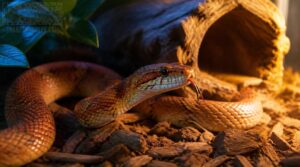
Few reptiles reward a beginner like this nonvenomous colubrid. Wild habitat instincts show through ambush hunting and constant scent tracking, even indoors. Morph coloration ranges from classic amber saddles to snow-white patterns.
If you’re curious how these traits compare across species, explore facts about the world’s largest python to see how size and camouflage shape hunting strategy in the wild.
Handle one weekly and defensiveness fades fast, though don’t be surprised by brief defensive postures early on.
- 40+ gallon enclosure, escape-proof lid
- Thawed mice every 5–7 days young, 10–14 days adult
- Warm side 85–95°F for proper digestion
Their dietary needs stay simple, making everyday snake care genuinely beginner-friendly.
Ball Python

Docile ball pythons live up to their reputation as the calmest pick for new keepers. Named for their signature defensive coiling behavior, they tuck their head safely inside when startled rather than striking.
You’ll notice tactile tongue flicking as they explore, and nocturnal activity patterns mean daytime dozing. Color morph variety here is staggering, from classic browns to bold designer patterns. Watch humidity closely, since low levels cause shedding difficulty. Get husbandry basics right, and these snakes reward you with decades of easygoing companionship.
California Kingsnake
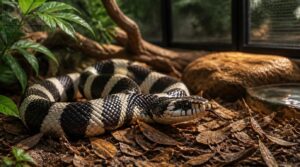
California Kingsnakes bring something corn snakes can’t: a built-in taste for danger. These constrictors show venom resistance, letting them hunt and eat rattlesnakes without flinching.
You’ll spot banding pattern variations ranging from bold black-and-white stripes to regional morphs with browns and grays. They’re diurnal, active by day, using natural hunting behaviors like scent-tracking prey through leaf litter.
Species selection matters here since these snakes are notorious escape artists.
- Secure, lockable enclosure lids
- 20-gallon minimum reptile care setup
- Frozen-thawed rodent diet
- Gentle, consistent handling routine
Rosy Boa

Want a snake that acts more like a shy roommate than a pet? Rosy boas fit the bill.
Their docile temperament and fossorial lifestyle, hiding beneath substrate, make handling low-stress. Adults stay compact at 14 to 24 inches, easing enclosure size demands.
They’re live-bearers, skip egg incubation entirely. With a slow metabolism, feeding stays infrequent. Replicate their natural microhabitats using rocky hides and loose substrate.
Western Hognose Snake

Ever met a snake that fakes its own death to survive? That’s the western hognose, prairie-dwelling and built for drama.
Its upturned snout digs through loose soil, hunting toads and frogs by ambush. Blotchy tan camouflage hides it in leaf litter. Threatened, it hisses, flattens its neck cobra-style, then flops over playing dead.
Despite its dramatic defenses, the eastern hognose is harmless — and learning to spot it by distinctive head shape and scale pattern rather than color helps distinguish it from species that warrant more caution.
Docile otherwise, staying under three feet, feeding every 1–2 weeks—ideal for beginners.
Advanced Snake Species for Experienced Keepers

Once you’ve mastered the basics, you might crave a bigger challenge, and these species deliver. They demand sharper skills, stricter safety protocols, and a serious respect for their power or venom. Here’s what you need to know before leveling up to any of these five.
False Water Cobra
Hydrodynastes gigas puts on a show: threaten it, and that neck flares into a hood cobras would envy.
This rearfanged colubrid hunts fish and frogs by day, ambushing prey along wetland edges. Reaching 7 feet, it needs both aquatic and terrestrial space.
Temperament swings docile-to-defensive, so this one’s for keepers with real handling experience—not a first snake by any stretch.
Amazon Tree Boa
Corn snakes flare no hood, but Corallus hortulanus brings its own drama: a coiled ambush predator draped across a branch, waiting.
These arboreal hunters strike from perches, using prehensile tail usage to anchor themselves while snatching birds, bats, and rodents mid-motion. Color morphs run from gray to fire-orange, shifting as juveniles mature.
Live birth reproduction produces 4–9 neonates yearly. Setup essentials:
- Vertical climbing branches
- 80–90% humidity
- Warm basking zones
- Rainforest habitat mimicry
Their defensive temperament means fewer handling sessions, more observation—a species you respect from arm’s length.
Egg-Eating Snake
Egg-eating snakes skip venom and constriction entirely, relying on specialized jaw anatomy to swallow eggs whole. Vertebral extensions perform vertebral shell crushing inside the esophagus, then shells get regurgitated during unique egg digestion.
- Feed on quail or finch eggs, timed to nesting cycle feeding
- Show skittish animal behavior, flattening necks in defensive neck displays
- Require zero live prey for their dietary requirements
- Demand precise snake care around egg sourcing and rotation
Green Tree Python
Green Tree Pythons live almost entirely in the rainforest canopy of New Guinea, coiled on branches with that prehensile tail anchoring every move.
Juveniles hatch red or yellow, shifting to emerald green camouflage over months. Adults hunt by ambush, striking from stillness rather than chasing prey.
Give them:
- Vertical climbing space with sturdy branches
- 60–80% humidity, misted daily
- Warm basking zones near 90°F
- A calm, low-stress reptile enclosure setup
Their temperament stays defensive if rushed, so patience matters more than confidence here.
Reticulated Python
If Green Tree Pythons test your patience, Reticulated Pythons test everything else. This is the largest snake species on Earth, native to Southeast Asian forests, riverbanks, and farmland edges. Adults regularly exceed 6 meters, with rare specimens pushing toward 10.
That signature net pattern camouflage—gold, black, and brown diamonds—hides serious top predator behavior. These constrictor snakes ambush pigs, deer, and primates, subduing them through sheer coiled strength.
| Requirement | Detail |
|---|---|
| Enclosure size | 8x4x4 feet minimum |
| Feeding | Large prey every few weeks |
| Experience level | Expert only |
| Reproduction | Oviparous, dozens of eggs incubated by the female |
Handling one demands respect, not bravado. This snake doesn’t forgive mistakes.
Snake Care Essentials: Enclosure and Feeding

Owning a snake means thinking like one. Its comfort, safety, and health all come down to the setup you build and the food you provide. Here’s what you need to get right, starting with the basics of enclosure and feeding.
Heating and Temperature Gradients
Snakes can’t shiver or sweat, so you become their thermostat. Set a basking zone at 85–95°F using an under-tank heater or ceramic emitter, with the cool end 10–15°F lower.
Place your thermostat probe near the basking surface, not the air, for accurate readings. Ceramic emitters handle nocturnal heat without disrupting sleep cycles. Check temps twice daily—drift over 2°F means recalibrating. Stable thermal gradients support digestion, shedding, and overall thermoregulation, so consistency matters more than being perfect.
Humidity and Hydration Levels
Humidity is the piece most beginners get wrong. Aim for 40–60% for desert species like ball pythons, 60–90% for tropical species like green tree pythons. Place your hygrometer at head height, not the substrate. Cypress mulch retains moisture better than paper towels but watch for mold.
Add a humid hide during shedding, and check water bowls daily for dehydration signs—sunken eyes, loose skin.
Enclosure Size and Security
Size your enclosure to your snake’s adult length, not its current one. Undersized terrariums cause stress and stunted growth. For most beginner species, budget 50–100 gallons and add 15% extra volume for proper heat and humidity distribution.
Larger constrictors need roughly 2–3 feet wide by 4–6 feet long. Don’t skimp on height either—vertical space matters for arboreal species and general climbing enrichment.
Secure latch systems are non-negotiable. Snakes are escape artists; a loose lid is an invitation. Install tamper resistant hardware and double-check locks after every feeding. Combine sturdy latches with escape prevention tactics like sealed cable grommets, and you’ll rarely lose sleep wondering where your snake went.
Substrate and Habitat Decor
What goes on the enclosure floor matters as much as what’s inside it. Match substrate to species: coconut coir or sphagnum moss for tropical humidity-lovers, aspen bedding for drier terrestrial snakes.
Depth counts too—burrowers want 5+ cm to tunnel properly.
Avoid crushed walnut shell, a known impaction risk. Add secured branches and inert hides for enrichment, keeping decor naturalistic without compromising cleanliness.
Feeding and Nutrition Basics
Feeding day is prey day, and getting it right prevents most beginner mistakes. Stick with frozen rodents, fully thawed and warmed—never microwaved—to trigger natural feeding response. Match prey width to your snake’s thickest point; too large risks regurgitation.
Juveniles eat weekly, adults every 10-14 days, adjusting for weight gain. Keep fresh water available for hydration and metabolism.
If refusals persist, check tank temps before switching diets.
How to Choose The Right Pet Snake

Picking a snake isn’t just about looks, it’s about matching a species to your life. A three-foot corn snake and a twenty-foot python demand completely different commitments. Here’s what to weigh before you bring one home.
Longevity and Adult Size
A snake’s lifespan often runs opposite to its speed of growth. Ball pythons mature slowly and can live 25 to 35 years; corn snakes grow faster, maturing by 18-24 months, and usually live 12-20 years.
Genetics set the ceiling on adult size, but slower growth usually means a longer, healthier life. Choose accordingly.
Temperament and Handling Needs
Longevity tells you how long you’re committed. Temperament tells you what daily life actually looks like.
Corn snakes and ball pythons stay docile, rarely striking when approached calmly. Hognose snakes need patience during taming.
If you’re weighing your options, this guide to popular beginner-friendly snake species breaks down which temperaments suit first-time owners best.
Watch for stress signals: tense coiling, rapid tongue-flicks, hunched posture.
If you’re seeing wobble alongside these signs, it’s worth reading up on ball python head wobble and aggression before assuming your snake is angry.
- Acclimate 5-10 minutes first
- Support the whole body
- Skip handling post-feeding (48 hours)
- Keep early sessions under 7 minutes
- Match technique to species behavior
Space and Enclosure Demands
Your snake’s home shrinks or grows your options fast. A general rule: enclosures need 2.5 times body length in linear space, plus vertical climbing room for arboreal species.
A mature corn snake needs 40-55 gallons. Reticulated pythons? Think custom-built rooms, not tanks.
Secure latching mechanisms aren’t optional. Escape artists like kingsnakes will test every weak point you leave them.
Local Laws and Permits
Here’s the part nobody enjoys but everyone needs: paperwork. Registration rules vary by species risk category, and wildlife protection laws can restrict even private ownership without proof of lawful acquisition.
Consider:
- Losing a beloved snake to seizure
- Facing fines for missing import trade licensing
- Getting stopped without transport documentation
- Discovering your dream species is banned locally
- Owning illegally without realizing it
Check permits before purchase. Compliance isn’t optional.
Matching Species to Experience
Once permits are sorted, the real question is whether the snake fits you. Match experience level to species temperament: docile corn snakes suit beginners, while defensive or fast-growing species demand handling tolerance and confidence.
Weigh activity patterns, growth rate planning, and care level honestly. A trial socialization period reveals true temperament—your snake’s personality, not just its species reputation, should guide long-term handling decisions.
Frequently Asked Questions (FAQs)
What’s the nicest snake to have as a pet?
For calmest snake choices, the ball python takes the crown. Its docile temperament and slow, predictable movements make gentle handling easy, even for nervous first-timers seeking stress-free interaction with a genuinely beginner-friendly species.
What snake is worth $100,000?
Rare green tree python morphs with unicorn genetics and verified female lineage can top six figures.
Pedigree, genetic rarity, and top-tier breeder reputation drive collector demand, turning standout color morphs into true blue-chip reptiles.
What snakes can I own as a pet?
Like a mirror shedding old skin, your choice reflects who you’re becoming as a keeper.
Beginner-friendly snakes include corn snakes, ball pythons, kingsnakes, rosy boas, and hognoses. Experienced keepers can graduate toward reticulated pythons or green tree pythons once handling temperament and size demands are mastered.
For a calm first pet, explore the gentle temperament of rosy boa snakes, including signs of relaxed handling behavior.
What is the most cuddly pet snake?
Ball python temperament takes the crown here: docile, slow-moving, and content to coil in your lap. Corn snakes and rosy boas rank close behind, showing genuine handling tolerance and low flight responses among beginner-friendly, docile reptile species.
How often do pet snakes shed their skin?
Expect a shedding cycle every 4-8 weeks for most adults, with juvenile shedding happening every 2-4 weeks due to rapid growth. Watch for dulled color and cloudy eyes—clear signs of imminent molting driven by growth rate and humidity levels.
What vaccinations do pet snakes need annually?
You won’t find a routine vaccine schedule here. Snakes don’t contract the communicable diseases vaccines target, so annual shots aren’t necessary. Instead, focus on reptile wellness visits, habitat hygiene, and preventive husbandry to keep your snake genuinely healthy year-round.
Can snakes recognize their owners or handlers?
Not by sight, not by sound, but by scent and warmth: your snake reads you through its Jacobson’s organ, tongue-flicks, and body heat. Consistent handling builds recognition—it’s chemical memory, not affection, but it still counts as trust.
How much does snake veterinary care typically cost?
Budget $75–150 for annual wellness exams, plus $30–60 for fecal testing. Bloodwork runs $100–250, X-rays $100–200 per view. Emergencies like egg binding or infections can push costs to $300–2,000, so plan accordingly.
What signs indicate a snake is sick?
Watch for appetite loss, lethargy, open-mouth breathing, wheezing, discolored or crusty scales, incomplete sheds, and diarrhea or regurgitation. These signs of poor reptile health management warrant a prompt veterinary exam before symptoms worsen into systemic illness.
How do you handle a snake safely?
Support its midsection with calm movement, never grab the head or tail. Use a snake hook for lifting. Watch tongue-flicking or coiling as stress signals, stop immediately. Always wash hands afterward for proper hygiene.
Conclusion
Slow and steady wins the race, and that’s exactly how you should approach this pet snake species overview.
Rushing into ownership because a hatchling looks cute leads to overwhelmed owners and neglected animals.
Match the species to your experience, your space, and your schedule before you buy anything.
A corn snake forgives mistakes; a reticulated python doesn’t.
Get the fundamentals right, and you’ll gain a keeper’s most valuable asset: a thriving, decades-long companion.