This site is supported by our readers. We may earn a commission, at no cost to you, if you purchase through links.
Pick up your ball python and catch a whiff of something off, sour, almost rotten, and your stomach drops a little. That smell usually means bacteria have moved into the belly scales, and it rarely shows up without a reason.
Most ball python scale rot causes trace back to something in the tank, not the snake itself. Damp bedding, stagnant air, or a water bowl that tips over during the night all set the stage for infection. Scales that stay wet lose their natural defenses fast.
Catch it early, though, and you’re looking at a simple fix instead of a vet visit.
Table Of Contents
- Key Takeaways
- What is Scale Rot in Ball Pythons?
- What Causes Scale Rot in Ball Pythons?
- How Dirty Habitats Lead to Infection
- How to Prevent Scale Rot at Home
- How to Treat Scale Rot at Home
- When to See a Reptile Veterinarian
- Frequently Asked Questions (FAQs)
- Why does my ball python keep getting scale rot?
- How to heal scale rot on ball in python?
- Can a snake survive scale rot?
- How to fix scale rot at home?
- Can scale rot spread from snake to snake?
- How long does scale rot take to heal?
- What antibiotics treat severe scale rot cases?
- Is scale rot painful for ball pythons?
- Can scale rot cause permanent scarring?
- Can scale rot spread to other snakes?
- Conclusion
Key Takeaways
- Scale rot is a bacterial infection of the belly scales almost always caused by excess enclosure moisture, dirty substrate, poor ventilation, physical wounds, or nutritional deficiencies rather than the snake itself.
- Preventing scale rot comes down to daily spot-cleaning, keeping humidity between 30-50%, using a properly placed hygrometer, and ensuring good airflow so scales stay dry.
- Mild cases can often be treated at home with quarantine, chlorhexidine or diluted Betadine baths, and consistent monitoring, typically healing within 1 to 2 weeks.
- Severe symptoms like spreading lesions, persistent odor, loss of appetite, or open wounds require prompt veterinary care, which may include culture-guided antibiotics or surgical debridement to prevent systemic infection.
What is Scale Rot in Ball Pythons?
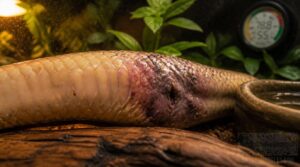
Scale rot is a bacterial skin infection that shows up on your ball python’s belly and lower scales, and it’s more common than most owners realize. Catching it early makes treatment far easier, so you’ll want to know exactly what to look for and why your snake might be at risk. Here’s what you need to understand first.
If you spot discolored, blistered, or mushy belly scales, this guide to treating scale rot in ball pythons walks you through the exact steps to get your snake back on track.
How to Identify Scale Rot
How do you catch scale rot early? Check the belly scales first. Look for brownish or yellow discoloration, raised or blistered patches, and any foul odor. Gently run your hand along the body—swelling or thickened scales signal trouble.
Your snake may flinch or rub against objects if it’s in pain, even before pus-filled blisters appear. Be vigilant for signs of scale rot such as lethargy or food refusal.
Why Ball Pythons Are Susceptible
Ball pythons spend much of their time coiled belly-down, so ventral moisture impact hits them harder than other species. That constant ground contact wears down skin barrier integrity fast.
Improper habitat humidity, unsanitary living conditions, and small scrapes from rough decor all open doors for bacteria. Add husbandry stress, which raises immune system stress, plus nutritional deficiencies, and you’ve got a snake that can’t fight off bacterial colonization pathways effectively.
What Causes Scale Rot in Ball Pythons?
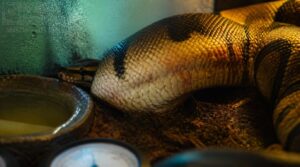
Scale rot rarely comes from just bad luck; it’s almost always tied to something specific in the enclosure. Most cases trace back to a small handful of conditions that quietly stress your snake’s skin over time. Here’s what to check first when something’s off.
Excessive Humidity Levels
When humidity climbs above 60%, water starts condensing right on your snake’s scales, keeping surfaces damp far too long. This surface wetness softens skin defenses, invites microbial growth, and complicates shedding.
Trapped moisture under retained shed pockets creates ideal breeding grounds. Mold can even develop in humid corners.
That’s why consistent moisture control matters more than any single cleaning habit.
Dirty or Damp Substrate
Grab a handful of substrate and squeeze: if water drips out, it’s too wet. That simple substrate moisture testing habit catches problems early.
Damp bedding traps waste, feeding bacterial biofilm risks and anaerobic microbial growth in low-oxygen pockets.
- Squeeze-test substrate daily
- Remove wet spots immediately
- Prevent waste contact friction
- Allow drying cycles between mistings
- Avoid soggy, unsanitary living environments
Good enclosure hygiene starts with real moisture control, not guesswork.
Left unchecked, damp bedding and grime let bacteria thrive, and you might first notice trouble through the subtle lethargic snake warning signs that signal something’s off.
Poor Enclosure Ventilation
Often overlooked, inadequate ventilation lets humid air stagnate near hides, worsening scale issues. Vent placement matters: low-only vents refresh nothing up top.
| Ventilation Problem | Result |
|---|---|
| Blocked vents | Trapped moisture |
| Same-side airflow | Short-circuiting |
| No exhaust path | Rising humidity |
| Weak passive airflow | Uneven drying |
| Pressure differences | Lingering dampness |
Good habitat sanitation depends on real airflow, not luck.
Physical Wounds and Abrasions
Every scrape against rough décor breaks skin integrity, and that small scale friction injury is an open door for bacteria.
- Rubbed scales turn raw or dull
- Embedded bedding debris keeps wounds irritated
- Crust formation traps moisture beneath
- Exposed skin layers dry unevenly
- Wound recontamination from soiled substrate
Left alone, minor abrasions become full skin lesions, and eventually, scale rot sets in where healing should’ve happened.
Nutritional Deficiencies
Rarely does diet get blamed first, but it’s often the root cause.
Vitamin A deficiency weakens skin barrier function, causing abnormal shedding and irritation-prone scales.
Low protein intake slows tissue repair and suppresses antibody production—your snake’s immune system needs fuel.
Calcium and B vitamin shortfalls compound the problem, sapping energy and healing capacity, making even minor wounds far more likely to spiral into scale rot.
How Dirty Habitats Lead to Infection
A messy enclosure isn’t just unsightly, it’s an open invitation for bacteria to move in. Every bit of waste left behind creates a breeding ground your snake has to live in, day after day. Here’s what actually happens when cleaning gets pushed to the back burner.
A dirty enclosure isn’t just messy, it’s a daily invitation for bacteria to move in on your snake
Bacterial Growth in Waste
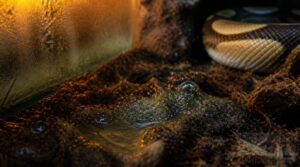
Think of wet waste as a bacterial playground—moisture lets bacteria thrive, speeding up their growth and multiplying risk. Nutrient-rich waste acts as fuel, increasing cell density and shifting which bacteria dominate.
If oxygen drops in compacted or saturated waste, anaerobic bacteria produce strong odors. Biofilms can form on damp surfaces, making cleaning harder and raising infection chances.
Effects of Soiled Substrate
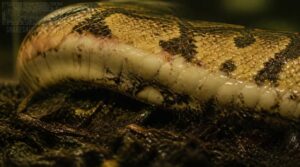
Soiled substrate does more than smell bad, it actively works against your snake’s skin. Waste and debris combine to form crust that traps moisture against the scales, while friction from dirty particles causes abrasions around belly and scale edges. These micro-tears become entry points for microbial contamination. Damp patches also reduce heat transfer, stressing skin and delaying healing before you even notice a problem.
Importance of Regular Cleaning
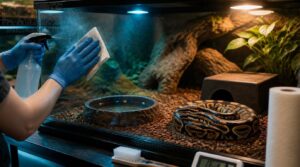
A clean enclosure isn’t just tidy, it’s microbial load control in action. Waste accumulation risks climb fast when feces and shed sit too long, feeding bacteria that spread to healthy scales through repeated contact.
That’s why hygiene routine discipline matters: daily spot cleaning plus weekly disinfecting keeps pathogen spread prevention consistent, cuts odor buildup, and stops small messes from becoming full-blown contamination zones.
How to Prevent Scale Rot at Home
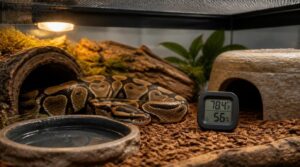
The good news is, scale rot is almost entirely preventable with the right daily habits. It comes down to three things: how you manage the habitat, what equipment you use, and how closely you watch humidity. Let’s break down each one, starting with the basics of keeping the enclosure clean and dry.
Habitat Management Best Practices
Good habitat habits beat treatment every time. Spot-check daily for waste and damp spots, removing them before bacteria settle in. Keep substrate thin and evenly spread so it dries fully between mistings, and give your snake a dry zone away from the humid hide. Position water bowls on stable ground to avoid tips and leaks.
Consistent moisture management keeps scale rot from ever starting.
Equipment Essentials for Prevention
The right tools make cleaning routines actually stick. Pick a disinfectant spray with fine, even misting, keep dedicated scrub brushes for glass versus hardscape, and use gloves religiously between hides.
Run a dedicated bowl system per enclosure, and store quarantine tools separately.
A reliable hygrometer rounds it out, since guessing at moisture levels is how scale rot sneaks in.
Maintaining Ideal Humidity Levels
That hygrometer earns its keep once you use it correctly. Place sensors at mid-enclosure height, away from vents or water bowls, for accurate microclimate sensor placement. Aim for 30-50% humidity, checking calibration monthly.
Watch for daily swings, condensation on walls signals trouble. Improper humidity regulation invites bacteria, so steady, controlled evaporation from water dishes keeps things balanced without overshooting.
How to Treat Scale Rot at Home
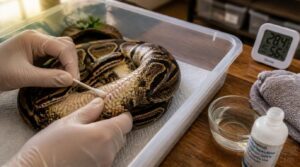
Once you spot the signs of scale rot, quick action at home can stop things from getting worse. Mild cases often respond well to a few simple steps you can do yourself, before it’s time to call the vet. Here’s exactly how to get started.
Quarantine and Isolation Steps
Your first move: isolate the affected snake in a separate enclosure, away from healthy animals’ sight and smell.
Use dedicated water dishes and hides—never shared tools. Wash hands before and after handling.
Keep quarantine going until lesions improve and no new spots appear for several days straight. Check daily for spreading, discoloration, or worsening pain; that’s your cue to escalate care.
Cleaning With Chlorhexidine Solution
Reaching for chlorhexidine? Check the label first — you want a diluted skin wash, not mouthwash strength, since concentration safety matters here.
Wipe away debris before applying; pre-cleaning lets the antimicrobial spray actually reach bacteria instead of sitting on grime.
Apply as a topical disinfectant, allow proper contact time, then rinse. Never use it near the eyes.
Betadine Baths for Mild Cases
Mix 15 mL Betadine with 500 mL clean water, no full-strength soaks.
Steps:
- Rinse and dry the wound
- Soak affected scales 30 minutes
- Water should look medium tea-colored
- Let it air-dry into a protective film
- Wash hands after handling
This topical disinfectant targets scale rot without over-treating healthy tissue.
When to See a Reptile Veterinarian
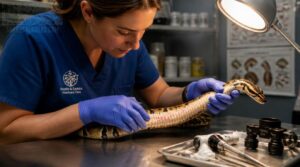
Home care works for mild cases, but some situations call for a vet’s trained eye and steady hands. Waiting too long can let a simple skin problem turn into something far more serious.
Here’s how to know it’s time to make that call, what treatment might look like, and how to keep this from happening again.
Signs You Need Professional Care
Some cases cross the line from home care into veterinary intervention territory. Watch for rapidly enlarging patches, pustules and then abscesses, or open lesions that won’t close, plus persistent foul odors even after cleaning.
Loss of appetite, abnormal posture changes, or an increased pain response when you touch the area all point to a reptile veterinarian visit, not another round of baths.
Antibiotic and Surgical Treatments
Once your vet confirms scale rot, treatment usually combines targeted antibiotics with hands-on wound care:
- Culture-guided antibiotics matched to the actual bacteria, not guesswork
- Surgical debridement to remove dead, infected tissue
- Topical antibiotic ointment applied directly to cleaned wounds
- Follow-up dosing timed precisely, since missed doses fuel antibiotic resistance
Proper dosing timing matters more than people realize; skipping doses lets surviving bacteria adapt and multiply.
Preventing Future Scale Rot
Once your snake heals, the real work begins: keeping scale rot from coming back. Focus on dry hide management, drying the top substrate layer, and steady airflow optimization. Remove waste daily, disinfect weekly, and watch temperature and humidity closely.
Good reptile husbandry isn’t a one-time fix; it’s a habit. Consistent substrate maintenance and cleaning routines keep bacteria from ever getting a foothold again.
Frequently Asked Questions (FAQs)
Why does my ball python keep getting scale rot?
Recurring infections usually trace back to chronic humidity issues and substrate moisture cycles that never fully dry.
Belly contact zones stay damp, letting microbe multiplication outpace your snake’s skin defenses, especially when temperature and humidity aren’t balanced correctly in your enclosure.
How to heal scale rot on ball in python?
Isolate on paper towels, then start iodine antiseptic baths at a diluted, tea-colored ratio. Gently clean lesions, disinfect the enclosure, and monitor healing daily. Persistent ulcerative dermatitis needs a veterinarian for wound management and infection control.
If you’re unsure whether it’s bacterial, fungal, or parasitic, a reptile skin infection treatment guide can help you recognize the signs before starting home care.
Can a snake survive scale rot?
Yes, much like a small kitchen fire, early detection keeps scale rot manageable.
Survival odds stay high with prompt wound management, but delayed care risks bacterial infections spreading into systemic illness, including septicaemia, so see your veterinarian if healing stalls.
How to fix scale rot at home?
For mild cases, switch to paper towel substrate, then give a Betadine bath diluted one-to-ten with water. Blot dry gently, monitor lesion spread daily, and skip household chemicals—stick to reptile-safe antimicrobial application and consistent cleaning and disinfecting until skin heals.
Can scale rot spread from snake to snake?
Think of it less as "catching a cold" and more as sharing contaminated tools.
Scale rot spreads through shared water bowls, tongs, or bedding—bacterial proliferation happens fast when hygiene protocols fail.
Proper quarantine procedures stop cross-contamination before pathogenic bacteria reach your other snakes.
How long does scale rot take to heal?
Mild cases often improve within 1 to 2 weeks of consistent cleaning, while deeper infections with abscesses or exposed tissue may take 4 to 8 weeks, especially without proper humidity control, wound debridement, topical antibiotics, or timely veterinary care.
What antibiotics treat severe scale rot cases?
When infection goes beyond skin deep, it’s time to bring out the big guns: Ceftazidime injections (every 72 hours) or Enrofloxacin, often guided by culture testing, since systemic antibiotics tackle septicaemia better than topical treatments alone.
Is scale rot painful for ball pythons?
Yes, it can be. Early cases cause mild sensitivity when touched, but as tissue inflammation worsens, you’ll see a genuine pain response—guarding the area, reduced movement, even aggression. Pus-filled blisters and nerve exposure signal it’s time for veterinary care.
Can scale rot cause permanent scarring?
Deep ulceration can outpace tissue regeneration limits, damaging the scale bed. Once that happens, healed skin often shows permanent skin texture changes, discoloration, or irregular scale patterning, especially after chronic inflammation or repeated raised, swollen scales during healing.
Can scale rot spread to other snakes?
Absolutely, through shared water, tools, and hands. Bacteria spread even without visible symptoms, so quarantine any affected snake immediately, disinfect shared equipment, and wash hands between handling to prevent cross-contamination and possible septicaemia in your collection.
Conclusion
Most cases catch a break: studies suggest over 80% of scale rot cases resolve without surgery when caught in the first week. That statistic matters, because it means your daily glance at the tank is your best tool.
Most ball python scale rot causes boil down to moisture you can control, not bad luck. Fix the humidity, swap the substrate, and you’ve already won half the battle. A dry, clean enclosure keeps that sour smell gone for good.