This site is supported by our readers. We may earn a commission, at no cost to you, if you purchase through links.

Wrong prey size ranks among the top reasons ball pythons stop eating, and most owners never catch it until weight loss sets in. A snake that’s 600g needs something far different than a 40g hatchling, yet plenty of rats get offered by "eyeballing it." That guesswork causes regurgitation, stress, and vets like me seeing the same preventable case week after week.
Feeding ball pythons rats correctly comes down to matching numbers: prey weight, girth, thaw time, internal temperature. Get the size wrong or skip a safety step, and you’re looking at a python’s worst nightmare — a regurgitated meal that sets growth back months.
Master these details, and feeding stops being guesswork.
Table Of Contents
- Key Takeaways
- Choosing The Right Rat Size for Your Ball Python
- Feeding Schedule by Age and Life Stage
- How to Safely Thaw and Prepare Rats
- Step-by-Step Feeding Techniques for Ball Pythons
- Troubleshooting Feeding Problems and Picky Eaters
- Frequently Asked Questions (FAQs)
- Can I feed my ball python to rats?
- How often should I feed a ball python a rat?
- Should I feed my snake live rats?
- Do ball pythons have to eat rodents?
- Can ball pythons eat live rats safely?
- How long can rats stay in enclosure?
- What temperature should rats be when feeding?
- Do ball pythons need vitamin supplements?
- Can pregnant ball pythons eat larger rats?
- Can I feed live rats instead of frozen-thawed?
- Conclusion
Key Takeaways
- Match rat size to your snake’s girth (roughly 1 to 1.5 times its body thickness) and weight (10-15% of body weight), since prey size mismatch is a leading cause of regurgitation and feeding refusal.
- Follow age-based feeding intervals—every 5-7 days for hatchlings, 7-10 days for juveniles, and every 2-3 weeks for adults—then adjust frequency based on monthly weigh-ins rather than the calendar.
- Thaw rats safely in the fridge, warm them to 90-100°F in a water bath, and dry them thoroughly before feeding to trigger a proper strike response.
- After feeding, maintain enclosure temperatures between 80-88°F and avoid handling for 48-72 hours to protect digestion and prevent regurgitation.
Choosing The Right Rat Size for Your Ball Python
Prey size mistakes rank among the top causes of feeding injuries and refusals in ball pythons. Get the size wrong, and you risk regurgitation, aspiration, or a snake that simply turns its nose up at every meal.
As a rule of thumb, stick to prey no wider than your snake’s midsection, and this ball python feeding guide for frozen prey sizing can help you measure it correctly.
Here’s exactly how to match rat size to your snake’s age, weight, and girth.
Hatchling and Juvenile Prey Sizes
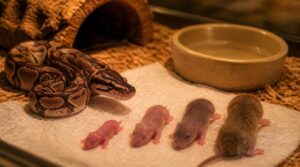
Four size categories, one goal: never let prey outpace your snake’s growth. Hatchlings under 50g take pinky rats (5-12g) or pinky mice. At 50-200g, switch to fuzzy rats. Reaching 200-400g means rat pups (20-30g), your bridge toward Norway rats. Girth, not weight alone, determines what’s safe to offer.
For best health, make sure you follow a proper ball python feeding chart to manage nutritional needs.
Sub-Adult and Adult Rat Sizes

Past 400g, your ball python graduates to weaned rats (30-45g), then small adults (45-85g) as jaw strength develops. Weight-to-prey ratio stays 10-15% of body weight.
| Snake Weight | Rat Size |
|---|---|
| 300-450g | 30-45g |
| 500-800g | 45-85g |
| 1000g+ | 85-175g |
| Mature adult | 175-275g |
ASF rats pack denser calories than Norway rats at equal weight—handy for picky eaters.
Matching Prey Girth to Snake

Weight charts only get you so far—your snake’s actual body girth matters more for prey size selection. Measure the thickest midsection point, then pick rodents matching that width.
- Prey 1 to 1.5 times body thickness prevents swallowing struggles
- Watch for girth mismatch signs: repeated refusals or excessive jaw stretching
- Remember body shape variations—stocky snakes need chunkier prey than slender ones
Tracking Growth With Monthly Weigh-Ins

Girth is only half the picture—get your snake on a scale every month to catch problems early. Grab digital kitchen scales for 1-2 gram accuracy, then log the number.
Hatchlings should gain 20-30 grams monthly. Watch for growth plateaus lasting 2-3 months as adulthood nears—that’s normal. Combine weights with body condition scoring to catch early illness before symptoms show. Numbers don’t lie.
Feeding Schedule by Age and Life Stage

Getting the rat size right is only half the job—timing matters just as much. Your snake’s age tells you almost everything about how often it should eat, and guessing wrong can slow growth or pack on unhealthy weight.
If your snake seems to beg for food constantly, it’s worth learning the warning signs of overfeeding a snake before you adjust its schedule.
Here’s how feeding frequency shifts as your ball python moves through each life stage.
Hatchling Feeding Intervals
A newborn ball python has a metabolism running on overdrive, so timing matters more here than at any other life stage.
Feed every 5-7 days, offering pinky rats sized to their frame.
Weigh weekly: healthy hatchlings gain steadily, while any 10% weight loss signals trouble.
Randomize feeding times, favoring evenings, since these snakes hunt naturally after dark.
Juvenile Feeding Intervals
Once your snake clears three months, growth slows just enough to stretch feeding to every 7-10 days. Watch monthly weight gain: over 10% means add a day or two. Stalled growth for two weeks? Keep the interval, bump prey size 10-15% instead. Males often stay on 7-10 day cycles; females may shift to 10-14 days past six months. Judge body condition, not just the scale.
Adult and Mature Adult Schedules
Once your python passes two years, settle into a feeding frequency of every 2-3 weeks, stretching to monthly for mature adults. Cooler months trigger natural seasonal fasting; don’t panic if she skips a meal.
- The gut-punch of overfeeding: fatty liver disease
- The quiet worry of a shrinking appetite come fall
- The relief of stable, predictable weigh-ins
Offer appropriately sized frozen thawed rats, and adjust for weight-based intervals.
Feeding Gravid Females
Pregnancy in ball pythons is a metabolic sprint, not a marathon. From ovulation until she lays, feed a large rat weekly, matching 10-15% of body weight. Protein demand jumps roughly 20% in the final two weeks.
| Phase | Feeding Frequency |
|---|---|
| Pre-ovulation | Weekly, medium rats |
| Post-ovulation | Weekly, large rats |
| Final 2 weeks | Weekly, protein-focused |
Add calcium supplementation—feeder rats alone won’t cut it.
Adjusting Frequency for Weight Gain
Your scale tells the real story, not the calendar. If your ball python packs on more than 15% body weight between monthly weigh-ins, pump the brakes—stretch that feeding schedule out. Losing weight or looking lean? Tighten the interval.
Trust the scale, not the calendar—let your snake’s weight guide when to feed more or less
Cooler months naturally slow metabolism, so cut frequency by a third. Adjust prey size only after frequency changes fail.
How to Safely Thaw and Prepare Rats
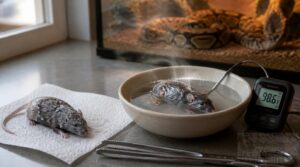
Thawing and prepping a rat isn’t complicated, but skip a step and you’re asking for trouble. Your snake’s safety hinges on getting temperature and timing right, every single time. Here’s exactly how to do it from freezer to feeding tongs.
Once you’ve nailed the thaw, pairing it with a smart boa constrictor feeding schedule for beginners keeps every meal safe and prevents the overfeeding pitfalls that silently shorten your snake’s life.
Refrigerator Thawing Steps
Rushing a thaw is how you end up with a half-frozen rat and a stressed python. Do it right: seal the frozen rat in a ziplock bag, set it on a fridge shelf (never the door), and let cold temps do the work.
- Pinkies: 2-3 hours
- Medium rats: 8-12 hours
- Large adults: up to 24 hours
Sealing prevents cross-contamination and controls bacterial growth.
Warming Prey to Body Temperature
Once thawed, warm the rat in a water bath at 90-100°F for 2-3 minutes, checking internal temperature, not just surface. Ball pythons key in on heat, so this triggers a proper feeding response.
| Tool | Purpose |
|---|---|
| Infrared gun | Surface check |
| Water bath | Even heating |
Stir often, avoid hot spots, and never exceed 105°F to prevent thermal injury.
Drying Prey Before Feeding
Give the rat a quick pat-down before offering it. Wet fur blocks thermal detection, since moisture creates a barrier between heat pits and body temperature.
- Pat dry 2-3 minutes with paper towel
- Aim for damp, not soaked, fur
- Dry at room temperature on a rack
Skip direct sunlight or heat sources. Proper texture mimicry keeps fur lifelike, encouraging strikes instead of refusals.
Disposing of Uneaten Rats Safely
Once your snake passes on a meal, the clock starts ticking. Never re-offer the same rat—bacterial rot sets in fast. Seal it in a bag, fridge it at 4°C if disposal waits, or return it to the pet store. Rehoming to another keeper or feeding a king snake works too. Never release rats outdoors; it’s illegal and risky for local wildlife.
Step-by-Step Feeding Techniques for Ball Pythons

Thawed and warmed rat in hand, you’re not done yet. How you present that meal matters just as much as its size or temperature. Here’s exactly how to get feeding right, step by step.
Feeding Inside The Enclosure
Home turf matters. Feeding inside the main enclosure keeps stress low and minimizes feeding stress tied to unfamiliar surroundings.
On loose substrate, use a feeding container to cut substrate ingestion risks during a strong feeding response.
- Check for decor gaps where your python could get stuck
- Choose a quiet feeding zone, away from foot traffic
- Keep frozen-thawed rats matched to correct prey item selection
This groundwork sets up feeding tongs use next.
Using Feeding Tongs Correctly
Grab stainless steel tongs, never plastic or bamboo — a determined strike deserves durable gear. Hold the rat by its tail, keeping the head angled away from metal to prevent tooth contact.
Present prey 12 inches out, just outside striking range, and add gentle S-curve wiggles to trigger a genuine feeding response. Keep fingers behind the grips; that predatory strike happens fast.
Maintaining Digestion-Friendly Temperatures
Meal isn’t over once the rat’s swallowed — your job shifts to thermal gradient management. Keep the hot side at 88°F and cool side near 78°F; dipping below 75°F slows digestion metabolism and invites regurgitation.
Check both zones daily with reliable temperature monitoring tools, and let thermostat control systems handle consistency. Stable ambient temperatures support real digestive health, not guesswork.
Post-Feeding Handling Rules
Rarely does patience matter more than right after your python eats. Wait a full 48-72 hours before handling—shorter waits spike regurgitation risk.
Watch for stress signs: defensive coiling, rapid tongue flicks.
- Support the body’s middle third
- Skip the head/tail grab
- Wash hands first
- Keep sessions under 10 minutes
- Return snake if stressed
Solid husbandry protects digestion and welfare alike.
Troubleshooting Feeding Problems and Picky Eaters

Even experienced keepers hit a feeding strike sooner or later, and it’s rarely a reason to panic. Your ball python’s refusal usually traces back to a handful of common culprits, from stress to seasonal appetite dips. Here’s what’s likely going on, and how to fix it.
Reasons for Feeding Refusal
A hunger strike rarely comes from nowhere. Thermal stress hits first: a warm side over 90°F or a 2°F dip stops feeding fast. Humidity fluctuations below 40% blind that vomeronasal organ to prey scent. Missing hide security leaves your snake too exposed to eat. Add seasonal breeding instincts or a prey size mismatch, and refusal makes complete sense.
Preventing Regurgitation
Regurgitation is your snake’s worst nightmare, and yours too. Temperature stability matters more than anything: keep the enclosure at 80-88°F for 48-72 hours post-meal. Size matters just as much, so match prey girth to your snake’s thickest point.
If regurgitation happens, wait 14 days, then resume with prey size reduction—two categories smaller—plus probiotic supplementation for digestive enzyme support.
Scenting Rats for Picky Eaters
Some ball pythons refuse rats outright, no matter how perfect the setup. Scenting techniques solve this by tricking the feeding response.
- Mouse shavings rubbed on the rat
- Bedding transfer from live rats
- Chicken broth or fish oil coating
- Warming to 105-110°F for heat signal
Combine scent with proper heat: cold, scented rats still get ignored, since heat-sensing pits matter as much as smell.
Transitioning From Mice to Rats
Weight, not age, tells you when to switch: once your snake hits 150-200 grams, start swapping mice for rat pups (20-30g).
| Signal | Action |
|---|---|
| Under 100g | Stay on mice |
| 150-200g | Begin rat pups |
| Hesitation | Offer both together |
| No refusal in 3 meals | Full switch |
| 2+ weeks refusal | Pause 7 days |
Warm rats to 98-99°F and watch strike time under 30 seconds for true acceptance.
Frequently Asked Questions (FAQs)
Can I feed my ball python to rats?
Yes — as the old saying goes, "you are what you eat," and rats deliver better protein-to-fat ratios than mice. Frozen-thawed rats are safer, more nutritious rodent prey for adult ball pythons than mice-only diets.
How often should I feed a ball python a rat?
Frequency depends on life stage and metabolic rate: hatchlings eat every 5-7 days, juveniles every 7-14 days, adults every 2-3 weeks.
Once you know how often to feed, matching feeder size to your snake’s girth ensures each meal is safe to swallow and easy to digest.
Track weight gain, watch hunger cues, and adjust seasonally—overfeeding risks obesity, so let growth guide your schedule.
Should I feed my snake live rats?
Letting nature "run its course" at feeding time sounds primal, but it’s a gamble. Frozen/thawed is safer: no bites, no parasites, no legal gray zones. Skip live rodent colonies altogether—your snake’s safety and your peace of mind depend on it.
Do ball pythons have to eat rodents?
Rodents dominate wild diet comparison studies, but bird prey alternatives like quail and rabbit nutrition benefits round things out. Commercial prey blocks and organ feeding can supplement dietary requirements, though rodent feeders remain the backbone of healthy ball python diet planning.
Can ball pythons eat live rats safely?
Technically, live rats can be eaten—but it’s a gamble. A hungry rodent will bite, scratch, and defend itself, risking serious injury to your snake. Frozen-thawed prey removes that danger entirely while still delivering full nutrition.
How long can rats stay in enclosure?
A fresh kill left untouched isn’t patience, it’s spoilage in waiting. Remove uneaten rats within 2 hours—room temperature invites bacterial growth fast. Refrigerate leftovers if trying again tomorrow, but always discard rather than refreeze once thawed.
What temperature should rats be when feeding?
Aim for 97-110°F, checked with a digital thermometer, not a guess. Warm frozen-thawed rats in water, dry them fully, and feed fast—rapid cooling triggers rejection, since heat sensing pits are how snakes confirm live prey.
Do ball pythons need vitamin supplements?
Funny thing: whole prey looks complete on paper, yet captive-bred rats often fall short. Without UVB, skip supplements and risk vitamin D deficiency; dust every fourth feeding with calcium and multivitamin for real insurance.
Can pregnant ball pythons eat larger rats?
Yes. Gravid females can handle larger rats matching body girth—medium (85-175g) for average adults—since pregnancy nutrition needs rise. Keep increases under 25%, watch weight monitoring closely, and expect natural gestation fasting weeks before laying.
Can I feed live rats instead of frozen-thawed?
Don’t. Live rats can seriously injure your snake through bites and gnawing, plus they carry parasites frozen prey doesn’t. It’s also illegal in the EU and UK. Stick with frozen-thawed—safer, and over 50% of pythons accept it readily.
Conclusion
Weighing every rat feels tedious, but that discipline is exactly what keeps snakes alive.
Feeding ball pythons rats isn’t about routine, it’s about respecting a predator’s biology. Skip the guesswork, and you skip the emergency vet visits. Your snake won’t thank you, but its steady growth curve will.
Master the numbers once, and feeding stops feeling like anxiety and starts feeling like instinct. That’s the real reward: confidence, not chance.