This site is supported by our readers. We may earn a commission, at no cost to you, if you purchase through links.

Most snake owners obsess over feeding schedules and temperature gradients—then forget the water bowl exists until something smells wrong. That neglect costs snakes their health more often than any other husbandry mistake.
A contaminated water source breeds bacteria fast, and a snake drinking from it won’t show symptoms until things have already gone sideways. Knowing how often to change your snake water bowl isn’t complicated, but it does depend on your species, enclosure setup, and a few signs most keepers learn to recognize too late. Get this right, and everything else gets easier.
Table Of Contents
- Key Takeaways
- How Often Should You Change Snake Water?
- Why Frequent Water Changes Are Essential
- Signs Your Snake’s Water Needs Changing
- Best Practices for Cleaning Snake Water Bowls
- Choosing The Right Water Bowl for Your Snake
- Safe Water Sources and Treatment for Snakes
- Frequently Asked Questions (FAQs)
- Conclusion
Key Takeaways
- Change your snake’s water daily—biofilm formation starts within 24 to 48 hours, and a bowl that looks clean can already be hiding millions of bacteria.
- Dump and refill immediately if you spot cloudiness, odor, fecal matter, or shed skin—don’t wait for your scheduled change.
- Your snake’s species matters: heavy soakers like ball pythons dirty their bowl in hours, while arboreal species barely touch standing water, so tailor your routine accordingly.
- Ceramic or stainless steel bowls beat plastic every time—scratched plastic traps bacteria, and a dedicated scrub brush with a reptile-safe disinfectant like F10SC or chlorhexidine is what actually keeps things sanitary.
How Often Should You Change Snake Water?
The short answer is daily—but it’s not quite that simple. How often you change your snake’s water depends on the species, how they use their bowl, and a few special circumstances worth knowing.
Your snake’s drinking habits actually vary quite a bit by species, so it helps to check out how often snakes drink water and what affects their hydration needs before setting a routine.
Here’s what actually matters.
Daily Vs. Every Other Day Water Changes
Daily water changes are the benchmark for snake water maintenance—biofilm starts forming within 24 to 48 hours in a warm enclosure. Every other day works as a minimum, but it leaves more room for bacteria to build up.
Here’s a quick guide to your cleaning schedules:
- Daily: Dump, rinse, refill—takes 60 seconds
- Every other day: Acceptable only if water stays visibly clean
- Immediately: Any fecal matter, cloudiness, or odor means change it now
- Weekly: Deep clean with reptile-safe disinfectant
Consistent bowl maintenance is non-negotiable for reptile health.
Impact of Species and Enclosure Habits
Your snake’s species shapes your entire water maintenance routine. A ball python that soaks regularly dirties its bowl within hours — demanding daily changes. Meanwhile, an arboreal emerald tree boa rarely touches standing water at all.
Enclosure size, substrate type, and individual snake behavior all factor in. Knowing your species-specific needs isn’t optional — it’s the foundation of smart reptile water maintenance.
Special Cases: Soaking and Semi-aquatic Snakes
Some snakes need more than just a fresh water bowl — they need active soak water management. If you’re soaking your snake for shedding or constipation, never reuse that water. Change it immediately if they defecate mid-session.
For semi-aquatic snakes, reptile hygiene means full water changes every one to three days. Aquatic habitat maintenance isn’t optional — it’s just part of the routine.
Why Frequent Water Changes Are Essential
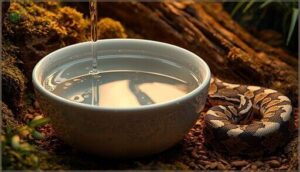
Swapping out your snake’s water isn’t just a chore—it’s one of the simplest things you can do to protect their health. Warm enclosures turn a neglected water bowl into a breeding ground for bacteria and fungi faster than you’d expect.
Here’s why staying on top of water changes actually matters.
Preventing Bacterial and Fungal Growth
Warm enclosures are basically a petri dish waiting to happen. Bacteria can double every 20 minutes in standing water—meaning a bowl left two days can harbor millions of organisms even when it looks clean.
Choosing the right substrate makes a real difference—reptile carpet vs. loose substrate options breaks down which materials trap moisture and which ones actually help keep bacterial buildup in check.
A neglected snake water bowl can harbor millions of bacteria within two days, even when it looks clean
That’s where biofilm removal and consistent water bowl cleaning protocols come in. Scrubbing with a dedicated brush manages microbe control, while weekly bowl sanitizing cuts bacterial blooms before they threaten your snake’s water quality and reptile hygiene.
Supporting Reptile Hydration and Health
Fresh water does more than quench thirst—it’s the backbone of reptile hydration management. Most snakes drink small amounts often, so stale water gets skipped entirely. How often to change snake water directly affects how well your snake absorbs nutrients and sheds cleanly.
- Maintains normal kidney function
- Aids digestion after feeding
- Encourages frequent small drinks
- Promotes clean, complete sheds
- Maintains healthy blood volume
Reducing Risk of Illness and Dehydration
Dirty water is one of the sneakiest threats to reptile health—and it’s completely preventable. Bacteria build fast in warm enclosures, and a snake that avoids its bowl is a snake heading toward dehydration. Watch for these Dehydration Signs as part of your Enclosure Maintenance routine:
| Warning Sign | What It Means | Action Needed |
|---|---|---|
| Wrinkled, saggy skin | Poor Snake Hydration | Water changes + vet check |
| Dry, chalky urates | Dehydration risk rising | Immediate fresh water |
| Stuck shed on eyes/tail | Low humidity + reptile hydration management issues | Humidity adjustment |
Nail Water Quality, and you’re already preventing snake illness before it starts.
Signs Your Snake’s Water Needs Changing
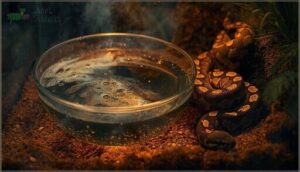
Sometimes the water looks fine—but it’s not. Your snake can’t tell you when something’s off, so you have to learn to spot the warning signs yourself.
Here are the most common red flags to watch for.
Cloudiness, Debris, and Discoloration
Clear water won’t stay that way forever—especially in a warm enclosure above 80°F where bacteria multiply fast. Knowing when water quality has slipped is key to how often to change snake water. Watch for these red flags:
- Cloudy appearance or faint haze developing within 24–48 hours
- Debris removal needed when substrate or shed skin floats in
- Color shifts — green, brown, or blue-green tints signal algae or microbial growth
- Biofilm control becomes urgent when the bowl feels slippery inside
Mineral deposits and dirty water aren’t just eyesores — they’re health risks. Don’t ignore early fecal contamination or even slight discoloration.
Odor and Visible Contamination
Your nose is one of the best contamination signs you’ve got. If the water bowl smells sour, musty, or faintly swampy—that’s bacterial odor detection telling you action is overdue. A cloudy appearance means microbes are already multiplying.
Biofilm formation makes slime control urgent; that slick coating won’t rinse away on its own. Dirty water and poor water clarity aren’t cosmetic issues—they’re health warnings.
Fecal Matter, Shed Skin, and Substrate
Poop in the water bowl isn’t just gross—it’s a genuine health emergency. Fecal contamination releases Salmonella and E. coli instantly, making that water unsafe to drink.
Shed skin floating around speeds up biofilm prevention problems by giving bacteria a surface to grab onto. Substrate control matters too—loose bedding tracked in clouds the water fast.
See any of this? Dump it, wash it, refill it. No debating.
Best Practices for Cleaning Snake Water Bowls
Changing the water is only half the job—how you clean the bowl matters just as much. A quick rinse won’t cut it if biofilm or bacteria have already set up camp.
Here’s what actually works to keep things safe and sanitary.
Daily Rinsing and Weekly Deep Cleaning
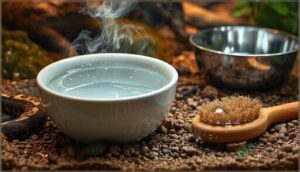
Two routines keep your water bowl truly clean—daily rinsing and a weekly deep clean.
- Dump and scrub the bowl under hot water every day
- Use a dedicated brush for reptile-only cleaning tool safety
- Soak weekly to tackle stubborn biofilm removal and mineral scale
- Scrub edges and corners where bacteria hide
- Rotate a spare bowl during deep cleans for uninterrupted enclosure maintenance
Daily water changes handle the surface mess. Weekly scrubbing manages everything lurking underneath.
Choosing Safe Disinfectants for Reptiles
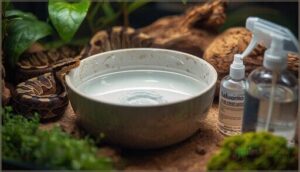
Not all cleaners are safe near snakes. For water hygiene for reptiles, stick to veterinary products like F10SC or chlorhexidine—both handle disinfectant safety without the chemical risks that phenol-based household sprays carry.
F10SC diluted at 1:500 covers routine sanitizing, while chlorhexidine stays low-odor and gentle. Skip anything scented or labeled “all-purpose.” Reptile health depends on that distinction.
Tools and Methods for Effective Sanitization

Once you’ve picked your disinfectant, the right tools make all the difference. Keep a dedicated scrub brush and old toothbrush reserved only for reptile use—those corners and seams collect biofilm fast.
Scrub with hot soapy water first, then apply your sanitizing solution and let it sit 10 to 15 minutes. Rinse thoroughly. That’s the cleaning protocol that actually works.
Choosing The Right Water Bowl for Your Snake
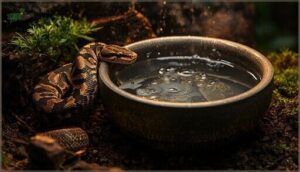
The bowl you pick matters more than most people think. It affects how clean the water stays, how easy it is to maintain, and whether your snake actually uses it.
Here’s what to think about before you buy.
Material Options: Ceramic, Stainless Steel, Plastic
Each material brings real trade-offs to your snake enclosure hygiene game. Ceramic durability wins for stability—glazed surfaces resist biofilm and keep reptile water cleaner longer.
Stainless steel is lightweight, non-reactive, and dead simple to disinfect for clean reptile water dish maintenance.
Plastic safety is shakier—scratches trap bacteria fast. For water quality and bowl hygiene, ceramic or stainless steel beats plastic every time.
Size, Depth, and Placement Considerations
Once you’ve picked your bowl material, size and placement make or break snake accessibility. The bowl diameter should match your snake’s widest body section—hatchlings do fine with 120–250 ml bowls, while adults often need over a liter. Keep water depth around half your snake’s body thickness.
For enclosure layout, centering the water dish in the temperature gradient balances clean reptile water and easy access.
Preventing Spills and Contamination
Even the best water bowl fails if it tips every time your snake explores. Stable Bowl Design starts with heavy, wide-base bowls—low and squat, smooth-bottomed, one-piece.
For extra Bowl Anchoring, tuck one side against a wall or nestle it in a substrate recess. These simple Spill Prevention moves also support Contamination Control, keeping fecal contamination and debris out of your snake’s water quality.
Safe Water Sources and Treatment for Snakes
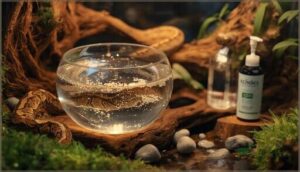
Clean water matters, but where that water comes from matters just as much.
Not all sources are created equal—and some can quietly cause more harm than you’d expect.
Here’s what you need to know before filling that bowl.
Tap Water Vs. Filtered or Bottled Water
For most corn snakes and ball pythons, tap water works fine—if it’s safe for you to drink, it’s generally safe for them.
That said, tap water risks include chlorine and trace metals that can affect water quality over time. Filtered water benefits your snake by cutting those chemicals.
Bottled water costs add up fast with daily water bowl changes, so a simple pitcher filter is the sweet spot.
Dechlorination and Water Additives
Chlorine won’t hurt you, but it can irritate your snake’s eyes and skin over time. That’s where dechlorination comes in.
A reptile conditioner like Zoo Med ReptiSafe takes care of water purification and chemical removal instantly — about 2 drops per cup covers both chlorine and chloramine. For electrolyte balance and reptile hydration support, electrolyte additives work well during soaks, not as daily water additives.
Maintaining Optimal Water Temperature
Temperature matters more than most keepers realize. Aim for 72–82°F — close to your enclosure’s cool side. Too cold, and your snake may skip the bowl entirely. Too warm, and bacteria multiply fast.
Here’s what good microclimate management looks like in practice:
- Thermal Gradients: Place the water bowl on the cool side
- Water Heating: Skip it — room temp is enough for most species
- Temperature Control: Check bowl temp weekly with a probe thermometer
- Reptile Thermoregulation: Stable water promotes healthier drinking and shedding cycles
Frequently Asked Questions (FAQs)
Can snakes drink too much water daily?
Overhydration risk is rare in healthy snakes. Their kidneys regulate excess fluid naturally, making true water intoxication unlikely.
Let your snake drink freely—daily water bowl access promotes reptile hydration without pushing dangerous daily water limits.
Should hatchlings have smaller water bowls?
Yes — hatchlings need smaller, shallower water bowls. Deep dishes risk drowning exhausted neonates. A bowl under 5 inches deep covers hatchling hydration and snake safety without overwhelming their tiny frames.
Do snakes need water during brumation?
Absolutely. Even during brumation, your snake still needs access to fresh water.
Metabolism slows, but dehydration doesn’t stop being a risk.
Leave a small, clean water bowl in the enclosure—they’ll drink when they’re ready.
Can a dirty bowl affect shedding?
A dirty bowl absolutely wrecks the shedding process. Poor bowl sanitation leads to dehydration, skin irritation, and scale quality issues—making clean reptile water non-negotiable for your snake’s health and care.
How does humidity impact snake hydration needs?
Humidity directly shapes your snake’s hydration needs. Low humidity levels accelerate water loss through the skin and lungs, increasing dehydration risk and respiratory issues.
Maintaining proper humidity protects skin health and reduces how hard your snake works to stay hydrated.
Conclusion
How often should you change your snake water bowl? More often than most keepers think—and definitely before it looks or smells wrong.
Clean water isn’t a bonus; it’s the foundation everything else builds on. A snake that’s properly hydrated stays active, sheds cleanly, and fights off illness better.
Check the bowl daily, change it at the first sign of contamination, and deep clean weekly. That one habit protects more than you’d expect.
- https://www.petmd.com/reptile/water-snake-care-sheet
- https://www.merckvetmanual.com/exotic-and-laboratory-animals/reptiles/management-and-husbandry-of-reptiles
- https://www.ajsreptiles.com/ball-python-care-sheet
- https://reptifiles.com/bioactive-vivarium-maintenance/
- https://vbspca.com/lurking-bacteria-water-food-safety/