This site is supported by our readers. We may earn a commission, at no cost to you, if you purchase through links.
Most snake bites happen to people who thought they knew what they were doing. Not beginners fumbling through their first encounter — experienced handlers who missed a subtle warning sign or moved a half-second too fast.
Snakes don’t bite out of malice. They bite because something in their environment signaled danger, and they responded the only way they know how. Understanding that single distinction changes everything about how you approach a snake.
Once you learn to read body language, control your movements, and position your hands correctly, picking up a snake without getting bitten stops being a matter of luck.
Table Of Contents
- Key Takeaways
- Why Snakes Bite and How to Avoid It
- How to Read a Snake’s Body Language First
- Step-by-Step: How to Pick Up a Snake Safely
- How to Hold a Snake So It Can’t Bite
- How to Pick Up a Wild or Garter Snake
- How to Prevent Getting Bitten by a Snake
- Top 3 Tools for Safe Snake Handling
- How to Use Snake Hooks and Tongs Properly
- How to Handle a Scared or Aggressive Snake
- What to Do if You Get Bitten by a Snake
- Frequently Asked Questions (FAQs)
- Conclusion
Key Takeaways
- Snakes bite out of fear, not aggression — once you understand that, every handling decision gets sharper and safer.
- Reading body language before you reach in is non-negotiable: loose coils mean go, tight S-curves mean stop.
- Most bites happen because of bad hand placement, sudden movements, or ignoring hunger and shedding cycles — all fully preventable.
- If you’re ever unsure — wild snake, unknown species, repeated strikes — tools and professionals exist for exactly that reason.
Why Snakes Bite and How to Avoid It
Snakes don’t bite because they’re mean — they bite because they’re scared. Understanding what triggers that fear response is the first step to staying safe.
Once you know the common fear triggers, you can work through them step by step using this guide on what causes ball pythons to bite and how to prevent it.
Here’s what actually puts you at risk.
Survival Instinct Vs. Aggression
Most snake bites aren’t aggression — they’re fear. Snakes don’t hunt you. Their defensive mechanisms kick in when they feel cornered, grabbed, or threatened. That’s pure instinctual behavior, not a bad snake temperament.
Snakes don’t bite out of aggression — they bite because they’re afraid of you
Even venomous snakes follow a defense ladder: freeze, display, then bite. Understanding this fear response transforms snake handling from a gamble into a skill. Snake safety starts with that mindset shift.
Learning about the importance of protective clothing and handling techniques can further minimize the risk of bites.
Common Triggers That Cause Snake Bites
Fear triggers bites — and most triggers are avoidable. Sudden movements near the head, approaching from above, or cornering a snake against a wall all activate defensive mechanisms fast.
Venomous species can strike in under 90 milliseconds. That’s faster than your hand can pull back. Snake safety starts with recognizing these patterns.
Solid handling techniques eliminate most bite risk before you ever reach for the animal. According to researchers analyzing 20 years of snakebite cases, many bites occur because people underestimate the risk and attempt unsafe interactions.
How Hunger and Shedding Affect Bite Risk
Two more bite risk factors catch even experienced keepers off guard: hunger and shedding. A snake in feeding mode holds a tight S-coil and tracks your hand like prey. Wait 24–72 hours after feeding before snake handling.
During shedding, cloudy eyes mean poor vision — and poor vision means stress bites. Respect both states, and you eliminate two major bite risk factors immediately.
How to Read a Snake’s Body Language First

Before you reach for any snake, you need to read what it’s already telling you. Body language is the first conversation — and snakes are remarkably consistent about it.
Here’s what to look for before you make your move.
Signs a Snake is Calm and Ready to Handle
Reading snake body language starts with one thing: looking at the body, not the head. A calm snake shows loose, flowing curves — no stiff coils, no tight bunching. Its neutral head rests low, moving slowly without locking onto your hand.
Relaxed behavior means steady tongue flicks, gentle movement from hand to hand, and no sudden jerks. That’s your green light.
Warning Signs Your Snake May Bite
Tension is your first warning. When snake behavior shifts from loose and calm to stiff and reactive, stop immediately. Defensive postures before a bite are rarely subtle — once you know what to look for, bite prevention becomes instinct.
Watch for these snake stress signals:
- S-shaped neck coil near the head
- Rapid, jerky directional changes
- Body freezing with head locked on your hand
- Repeated mock strikes
- Loud hissing from a tense, coiled position
What Tongue Flicks and Body Posture Mean
Your snake is always talking. Tongue flick patterns and snake posture together form a real-time report on its mood.
| Signal | Meaning |
|---|---|
| Slow, sporadic tongue flicks | Calm, relaxed state |
| Rapid upward flicks | Scent detection, active alertness |
| S-curved neck, frozen head | Defensive signals, possible strike |
| Tight coils, head raised | High stress, don’t handle yet |
Read both signals together for accurate snake behavior assessment.
Step-by-Step: How to Pick Up a Snake Safely
Knowing a snake is calm is only half the job — now you have to actually pick it up. That’s where most people freeze, second-guess themselves, and end up moving too fast.
Here’s exactly what to do, step by step.
Approaching The Snake Slowly and Calmly

Your approach sets the tone before you touch anything. Move like you’re not in a hurry — because you aren’t.
That same calm energy applies to feeding too — always use tongs, never fingers, and how you handle a new snake in those first weeks shapes how relaxed they’ll be for years.
Calm approach and snake awareness work together. Gentle handling starts before contact. That’s snake safety in practice.
- Stay 12–18 inches away initially
- Approach from the side, never above
- Take slow, deliberate steps
- Pause if it stiffens or freezes
Where to Place Your Hands on The Body

Hand placement makes or breaks safe snake handling. Your main hand goes under the mid body — where the snake is thickest and most balanced. Your second hand steadies the front third, just behind the head.
Never grab or pin. Use a gentle grip: fingers curved, not clamped. This two-point body support keeps the snake calm and your hands away from the strike zone.
How to Support a Larger Snake’s Weight

Big snakes demand more than two hands. For any snake over 8 feet, weight distribution becomes critical — distribute its mass across multiple contact points or risk a defensive response.
- Support one-third to one-half of its total length at all times
- Use your arms, torso, and a stable surface together
- Have a second adult present for large constrictors
Staying Seated During Your First Handling Session

Your first session sets the tone — for both of you. Stay in a quiet room, dim the lights, and place a towel across your thighs.
Seated handling keeps the snake close to your lap, limiting fall distance and reducing panic if it shifts suddenly. Use gentle touch, slow hand-over-hand movement, and keep sessions to 10–20 minutes.
Calm environment, consistent handling techniques, safer results.
How to Hold a Snake So It Can’t Bite
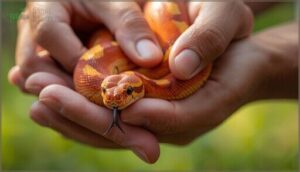
Picking up a snake is only half the challenge — holding it safely is where most bites actually happen. Your hand placement and how you support its body make all the difference.
Here’s what you need to know to stay in control once the snake is in your hands.
Avoiding The Head and Tail at All Times
The head is where bites happen. The tail is where panic starts. Keep your hands in the mid section — always. That’s the foundation of safe handling.
A gentle grip there gives you real snake restraint without triggering defensive strikes. Remember: the distance from your grip to the head is exactly how far it can reach you. Stay out of that zone.
Keeping The Snake’s Body Straight and Supported
Support is everything. A dangling body puts real stress on the spine — and a stressed snake is an unpredictable one.
Follow these safe handling and weight distribution basics:
- Slide one hand under the mid-body first
- Place your second hand under the rear third
- Keep at least half the body length supported
- Let the snake flow — don’t grip rigidly
Gentle lifting, proper snake body alignment, and steady reptile handling keep both of you safe.
What to Do When a Snake Wraps Around You
Even with perfect snake handling, constriction happens. Stay calm — sudden movements make snake constriction worse.
Start safe unwrapping from the tail, peeling one loop at a time toward the head. Use calm deterrents like lukewarm water if it tightens.
If it reaches your neck, that’s emergency protocols territory — call for help immediately. Never handle large constrictors alone.
How to Pick Up a Wild or Garter Snake

Wild snakes are a different story than the one curled up in your living room terrarium. They haven’t been handled, they don’t trust you, and they’ll react fast. Here’s what you need to know before you reach down.
Handling Non-Venomous Wild Snakes Confidently
Wild snakes aren’t pets — and your approach has to reflect that. Non venomous species like garter snakes still bite when startled, so every snake safety precaution starts before you reach down.
- Identify the species from a distance first
- Approach from the side, never head-on
- Slide hands under mid-body for full support
- Keep sessions under five minutes, then release
Confident snake handling is just planned, calm movement.
Why Wild Snakes React Differently Than Pet Snakes
Every wild snake you encounter treats you as a predator — full stop. That’s snake behavior shaped by survival, not attitude.
Pet snakes benefit from captive breeding and snake habituation, which dulls their wild instincts over time. Environmental factors like stable temperatures and routine handling reinforce calm species temperament.
Wild snakes have none of that history, so expect sharper, faster defensive reactions during any snake handling attempt.
When to Leave a Wild Snake Alone
Restraint is your best snake safety tip. If a wild snake coils tight, flattens its body, or drops into an S-curve, those defensive postures mean one thing: back off. You can’t identify venomous species reliably under pressure.
Wild snake encounters near children, pets, or enclosed spaces call for a licensed removal professional — not bare hands. Knowing when not to act is real snake behavior expertise.
How to Prevent Getting Bitten by a Snake

Most snake bites are completely avoidable — and that’s not just reassuring talk, it’s fact. The key is knowing what to do before you ever get close to one.
A few simple habits can make all the difference between a safe encounter and a trip to the ER.
Wear Appropriate Clothing and Protective Gear
Your clothing is your first line of defense before you ever get close. Most bites land on feet, ankles, and hands — all preventable with the right safety apparel.
- Wear Snake Boots or gaiters covering ankle to knee
- Choose thick denim or canvas pants for leg protection
- Use thick gloves extending up the forearm
- Carry snake hooks or tongs to maintain distance
- Layer protective gear — no single item is enough
Keep Calm and Avoid Sudden Movements
Your body language speaks before your hands do. Snakes detect vibrations and air movement — a jerky reach feels like a predator strike. That’s why calm approach and slow movements aren’t just good habits; they’re snake safety fundamentals.
Practice gentle handling by moving at a steady, even pace. Stay aware of defensive postures. Safe interaction starts with you controlling your own energy first.
Give a Warning Before Approaching
Snakes don’t get warnings — until you give them one. Before any snake handling attempt, signal your presence through three channels:
- Audible Warnings: Speak calmly near the enclosure to create air vibrations.
- Ground Vibrations: Tap lightly nearby so the snake senses your approach.
- Tactile Signals: Use a hook tap on the mid-body before lifting.
These Visual Cues and signals reduce defensive postures and snake bites markedly.
Don’t Travel Alone in Snake-Prone Areas
Hiking alone in snake country is one of the easiest risks to eliminate. A buddy system isn’t just comfort — it’s wilderness safety infrastructure.
If a venomous snake bites you, your partner calls 911, keeps you calm, and monitors symptoms while you stay still. Two sets of eyes catch wild snakes before feet do. Emergency protocols work far better with two people executing them.
Top 3 Tools for Safe Snake Handling
The right tools make snake handling safer and less stressful — for you and the snake. Having the proper gear on hand isn’t optional; it’s what separates a confident handler from a nervous one.
Here are three tools worth keeping in your kit.
1. Zoo Med Collapsible Snake Hook

The Zoo Med Collapsible Snake Hook is a smart first tool for any keeper. It extends from 7.25 inches to 26 inches, giving you enough distance to lift a small snake without hovering your hand over its head. That extra reach alone cuts bite risk markedly.
The easy-grip handle keeps your movements steady and controlled — no sudden jerks, no startled snake. It’s not rated for venomous species, but for nonvenomous pet or wild snakes, it’s practical, lightweight, and pocket-ready.
| Best For | New snake keepers who want a safe, simple way to handle small nonvenomous snakes without getting too close. |
|---|---|
| Primary Use | Snake handling |
| Material | Metal and mixed |
| Safety Feature | Keeps hands distant |
| Ease of Use | Easy grip handle |
| Suitable For | Small snakes |
| Key Limitation | Not for venomous snakes |
| Additional Features |
|
- Collapses down small enough to toss in your pocket — easy to carry anywhere
- Adjustable length gives you comfortable reach without hovering over the snake’s head
- Lightweight and easy to grip, so your movements stay calm and controlled
- Not built for venomous snakes, so experienced herpers will need something sturdier
- Can bend or break if you’re not gentle with it — it’s not the most heavy-duty tool
- No clear weight limit, so using it with larger snakes is a gamble
2. Repti Zoo Glass Terrarium

Once your snake is calm and ready, where you keep it matters just as much as how you pick it up. The Repti Zoo Glass Terrarium makes safe handling easier before you even open the doors.
Clear tempered glass lets you read your snake’s body posture without reaching in blind. Dual front-opening doors let you access one side at a time, keeping the snake contained.
At $152.99, it’s a solid, secure setup built for control.
| Best For | Snake and reptile owners who want a secure, easy-access enclosure that makes handling and daily maintenance less stressful for both pet and owner. |
|---|---|
| Primary Use | Snake housing |
| Material | Tempered glass |
| Safety Feature | Secure locking doors |
| Ease of Use | Front-opening doors |
| Suitable For | Multiple reptile types |
| Key Limitation | Assembly issues reported |
| Additional Features |
|
- Dual front-opening doors let you access your reptile without hovering over them, which feels less threatening to the animal
- Clear tempered glass means you can check on your pet’s mood and posture before ever opening the enclosure
- Watertight design gives you flexibility to add a water feature or pool for aquatic species
- Assembly can be frustrating—instructions aren’t always clear, and the screws strip easily
- A few buyers have reported minor chips or scratches on the glass right out of the box
- No feeder door or top-opening option, which might be a dealbreaker for some owners
3. Symton Reptile Food Tongs

Feeding time is actually one of the riskiest moments for a bite. That’s where Symton Reptile Food Tongs earn their place.
At 15 inches long, they keep your fingers well outside a snake’s strike range while you present prey.
The stainless steel build resists rust, doesn’t hold odors, and cleans with soap and hot water in seconds. No rubber tips to degrade.
Just a firm, precise grip that keeps the snake focused on the food — not your hand.
| Best For | Reptile owners who want a safe, hygienic way to feed snakes, lizards, and other pets without risking a bite. |
|---|---|
| Primary Use | Snake feeding |
| Material | Stainless steel |
| Safety Feature | Keeps fingers safe |
| Ease of Use | Easy to wash |
| Suitable For | Reptiles and amphibians |
| Key Limitation | Size inconsistencies reported |
| Additional Features |
|
- Stainless steel is rust-resistant, odor-free, and a breeze to clean
- Long enough to keep your fingers well out of strike range
- Works for a variety of pets beyond reptiles — axolotls, small animals, even household tasks
- May be too bulky for smaller reptiles like bearded dragons
- Picking up tiny feeders like crickets can be tricky
- Some buyers received smaller tongs than expected, so sizing isn’t always consistent
How to Use Snake Hooks and Tongs Properly
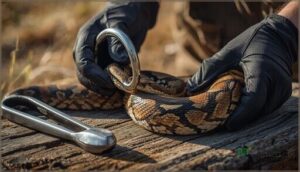
Using the right tool makes a real difference — not just for your safety, but for the snake’s. Snake hooks and tongs each have a specific job, and knowing when and how to use them keeps handling clean and stress-free.
Here’s what you need to know to use both correctly.
Choosing The Right Hook for Your Snake’s Size
The right hook size isn’t a preference — it’s a safety precaution. A hook too small for your snake’s weight creates instability, triggering defensive strikes.
- Small species under 3 feet: 12–16 inch hooks
- Ball pythons and mid-size boas: 16–24 inch hooks
- Large constrictors over 6 feet: 26–40 inch hooks, aluminum or titanium for handling techniques that reduce fatigue
Match the tool to the snake.
How to Use Tongs Without Harming The Snake
Tong safety tips start with one principle: less pressure, not more. Close the jaws only enough so the snake can’t slip free — its body should stay round, never pinched. Place the tongs at midbody, about one-third down from the head.
Wide, rubber-coated jaws distribute force across several ribs, making humane capture and safe release far less stressful for the snake.
When to Use Tools Instead of Bare Hands
Bare hands have limits. Use snake hooks or snake tongs any time you’re dealing with venomous snake handling, unknown wild species, or defensive postures like S-coiling and striking.
Constricted spaces — under furniture, inside brush piles — demand snake hook techniques because you can’t see what’s beside your fingers.
Emergency protocols exist for a reason. When in doubt, tools protect you first.
How to Handle a Scared or Aggressive Snake

A scared or aggressive snake isn’t a lost cause — it just needs the right approach. How you read it, respond to it, and know your limits makes all the difference.
Here’s what actually works when a snake isn’t in the mood to cooperate.
How to Pick Up a Grumpy Snake Safely
A grumpy snake isn’t trying to hurt you — it’s just scared. Start with snake hook usage: tap the mid-body lightly before lifting. This signals handling time, not feeding time.
Then apply safe lifting techniques by placing one hand a third down from the head, the other supporting the rear.
Defensive postures — tight coiling, S-shaped neck — tell you to slow down immediately.
Calming Techniques Before and During Handling
Your environment does half the work. Dim the lights, clear the space, and wash away food smells before you even open the enclosure. Snake Relaxation starts before contact.
- Use Gentle Touch on the mid-body first — never the head
- Watch body language; loose coils signal readiness
- Let the snake move hand to hand for Stress Reduction
Calm Environments make every handling technique work better.
Knowing When to Seek Expert Help
Some situations are simply beyond DIY snake handling. If you can’t confidently distinguish venomous species from nonvenomous ones, stop. Expert Removal services exist for exactly this reason.
Repeated strikes, aggressive coiling, or any snake inside your living space demands Professional Guidance — not bravery. Snake Identification errors cost lives.
For snake bites from unknown species, emergency protocols apply immediately: call 911, don’t wait.
What to Do if You Get Bitten by a Snake
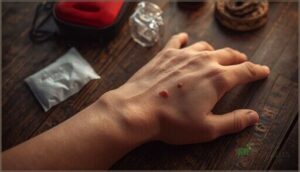
Even careful handlers get bitten sometimes — it happens, and it doesn’t mean you failed. What matters most is what you do in the next few minutes.
Here’s exactly what to do.
Immediate First Aid Steps After a Snake Bite
A snake bite moves fast — so should you. Skip venom removal attempts; they don’t work and waste precious time. Your emergency response needs to be sharp and immediate.
- Move away, call 911, and stay calm — panic speeds venom spread.
- Immobilize the limb below heart level and remove tight clothing.
- Clean the wound gently with soap and water — no ice, no cutting.
Why Accurate Snake Identification Matters for Treatment
Knowing the snake species changes everything about your medical treatment. Antivenom choice isn’t one-size-fits-all — many products only neutralize specific venoms. Misidentifying a cobra as a krait, for instance, means wrong dosing or the wrong product entirely.
If you can safely photograph the snake, do it. That image could directly shape how doctors treat your bite.
When to Go to The Emergency Room
Once you’ve identified the snake, act on that information fast. Any bite from a venomous snake — rattlesnake, copperhead, cottonmouth — means calling 911 immediately. Don’t drive yourself; venom effects like dizziness can make that dangerous.
Urgent care centers rarely stock antivenom. Go straight to a hospital emergency room. Watch for spreading swelling, trouble breathing, or confusion. Those bite symptoms mean minutes matter.
Frequently Asked Questions (FAQs)
Will snakes bite if you pick them up?
Yes, they can — but it’s rarely personal. Bites are pure survival instinct, a defensive mechanism triggered by feeling trapped or threatened.
Smart handling techniques and snake bite prevention habits make all the difference.
How often should you handle your pet snake?
Most pet snakes do well with two to three sessions per week. Gentle handling builds snake habituation over time. Watch for stress signals — they’ll tell you when enough is enough.
Can children safely handle snakes with supervision?
With strict supervision and the right snake, children can handle reptiles safely. Stick to calm, captive-bred species, follow Youth Education Guidelines, enforce Reptile Hygiene, and always keep an adult in control.
How do you sanitize your hands after handling?
Wash your hands with soap and water for at least 20 seconds after snake handling. No soap nearby? Use a 60% alcohol sanitizer. Either way, keep germs like Salmonella off your skin.
What age can snakes start being handled?
Most hatchlings are ready for brief handling after two to three consistent meals. That’s roughly one to two weeks in.
Apply gentle handling techniques from the start, respecting each snake’s maturity and species considerations.
How do temperature and lighting affect snake behavior?
Temperature and lighting cycles directly shape snake behavior. Warm snakes move faster and strike quicker. Poor thermal regulation or mismatched lighting cycles creates environmental stress, making snakes more defensive and unpredictable during handling.
Conclusion
A thousand handlers have learned this the hard way — bites don’t come from dangerous snakes, they come from unreadable moments. Now you can read them.
Knowing how to pick up a snake without getting bitten isn’t just a skill; it’s a shift in how you see every encounter. Slow approach, steady hands, supported body — that’s the whole system.
The snake isn’t your opponent. Treat it like a wild thing deserving respect, and it usually returns the favor.
- https://www.chesapeakebay.net/discover/field-guide/entry/eastern-garter-snake
- https://www.reptiles.swelluk.com/help-guides/aggressive-snake-handling-guide/
- https://reptifiles.com/corn-snake-care-guide/corn-snake-handling-body-language/
- https://newatlas.com/biology/ultra-slo-motion-snake-bites/
- https://pmc.ncbi.nlm.nih.gov/articles/PMC5923336/