This site is supported by our readers. We may earn a commission, at no cost to you, if you purchase through links.

Children’s pythons have a reputation that precedes them—and for good reason. These small Australian constrictors are remarkably calm by nature, with low emotional reactivity and a steady temperament that makes them one of the most forgiving snakes a new keeper can own.
However, calm doesn’t mean carefree. Even the most docile snake can become stressed by rushed handling, wrong timing, or poor technique. Getting children’s python handling techniques right from the start builds trust with your snake and keeps every session safe and predictable.
The steps that follow will walk you through exactly how to do that.
Table Of Contents
- Key Takeaways
- Do Children’s Pythons Like Handling?
- Prepare Before Handling
- Pick Up Safely
- Handle Without Stress
- Prevent Common Handling Mistakes
- Frequently Asked Questions (FAQs)
- Do children’s Pythons like being handled?
- Do children’s pythons like to be held?
- What feeding schedule works best for pythons?
- How do you transport pythons safely?
- When should you avoid handling your python?
- What tools help with python handling?
- How do you introduce children to pythons?
- Can Childrens Pythons recognize their owners scent?
- How do you handle a python during shedding?
- What if my python refuses to be handled?
- Conclusion
Key Takeaways
- Children’s pythons are naturally calm and low-reactive, making them one of the most forgiving snakes for new keepers — but that easygoing nature still depends on you handling them correctly every time.
- Always prep before you pick up your snake: wash your hands, check the feeding schedule, skip sessions during shedding, and choose a quiet room to keep stress levels low for both of you.
- When lifting your python, approach from the side, move slowly, and use two open palms to support its full body — avoiding the head and tail keeps the interaction safe and predictable.
- Watch for stress signals like tight coiling, fast breathing, or a raised defensive posture, and end the session immediately if you spot them — ignoring these cues constantly chips away at your snake’s trust over time.
Do Children’s Pythons Like Handling?
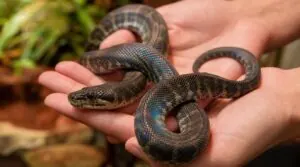
Children’s pythons are generally calm and tolerant of regular handling, especially once they’ve settled into their environment. Like any animal, they respond best when you know how to read their behavior and build trust at a steady pace.
With patience and consistency, most Children’s pythons become remarkably relaxed companions — a full breakdown of what to expect is covered in this Children’s python care and handling guide.
Here’s what you need to know before you pick one up.
Natural Temperament
Children’s Pythons have a calm temperament by nature. Their activity level remains steady and predictable, which simplifies reading their body language.
They exhibit low emotional reactivity and gentle sensory sensitivity to new environments. This inherent adaptability allows them to adjust well over time.
Their social behavior is curious rather than defensive—and they are rarely aggressive, solidifying their reputation as an excellent pet snake choice.
Beginner-Friendly Behavior
That calm temperament makes Children’s Pythons one of the top picks for beginner reptile care. They respond well to Gradual Exposure and Consistent Scheduling — meaning short, predictable sessions go a long way.
Three behaviors signal beginner-friendly readiness:
- Slow, relaxed movement when approached
- No hissing or tight coiling
- Steady body posture without jerky shifts
Calm Vocal Cues and Observation First help reduce stress from day one.
Trust-Building Basics
Trust grows one session at a time. Consistent communication—like using the same calm approach every visit—teaches your python that you are predictable.
Demonstrated competence is built from small wins: steady hands, slow movement, and no surprises.
| Habit | Why It Helps | How Often |
|---|---|---|
| Same approach angle | Reduces body language interpretation errors | Every session |
| Reliability routines | Lowers snake stress signals | Daily |
| Empathetic listening | Improves socialization responses | Each handling |
| Transparent decision-making | Builds calm temperament trust | Consistently |
| Short, calm sessions | Reinforces handling comfort | 2–3x weekly |
Handling Readiness Signs
Once your Python trusts your approach, you’ll start noticing clear readiness cues. Visual readiness cues include steady breathing, relaxed posture, and eyes tracking you with calm curiosity.
Behavioral readiness signals, such as a lifted head or gentle lean toward your hand, mean it’s ready. Behavioral readiness signals like these indicate engagement and comfort.
Check environmental readiness factors too—such as a quiet room and stable temperature—to ensure external conditions support interaction.
Prepare Before Handling
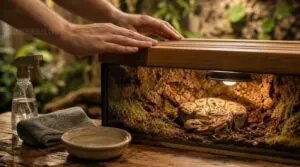
Before you open that enclosure, a little prep goes a long way. There are five simple steps that help keep both you and your snake calm and safe. Run through each one before every handling session.
These ball python handling tips for building trust suggest younger snakes actually thrive on more frequent sessions than most owners expect.
Wash Hands First
Wash your hands with soap and warm water before every handling session — this is one of the most important hygiene practices you can follow. Scrub for at least 20 seconds, covering fingertips, between fingers, and under nails.
Thorough drying matters too, as wet hands make gripping slippery. Avoid scented products, since strong odors can trigger defensive behavior.
Rewash between sessions if you touch anything else.
Check Feeding Schedule
Checking your Feeding Record Review before every session keeps both you and your snake safe. A quick look at your Feeding Calendar confirms the timing of the last meal, ensuring informed handling decisions.
- Wait 24–48 hours after feeding before any handling
- Follow prey size consistency — never offer oversized meals before a session
- Track Post-Meal Rest and Digestion Monitoring to confirm the snake is calm
Adhering strictly to your rodent feeding schedule and feeding frequency guidelines is critical. Adult snakes require one appropriately sized mouse every 10–14 days to maintain health and prevent overfeeding.
Avoid Shedding Periods
When your python enters a shedding period, pause handling completely. Shedding signs include cloudy eyes and dull, gray-tinted skin — this is your signal to step back.
Poor humidity control can cause dysecdysis, meaning stuck shed. Use a moist hide and monitor humidity through pre-shed monitoring.
A handling pause protects sensitive new skin and keeps the shedding process stress-free.
Choose a Quiet Room
Your python’s temperament is calm and curious, but it’s also sensitive to its surroundings. Choose a low-traffic location away from loud TVs, doors, and foot traffic.
Sound-absorbing furnishings like rugs and curtains help with acoustic insulation. Sealed windows block outside noise.
Use adjustable lighting to keep the space dim and steady. A calm room means a calmer snake.
Remove Food Scents
Snakes rely heavily on smell — so your hands carrying food scents can trigger a feeding response. Before handling, wash thoroughly and ventilate the room using open windows or a fan.
Activated charcoal or baking soda placed nearby absorbs lingering cooking odors. Vinegar steam clears the air quickly.
Enzyme detergents remove food proteins from clothing.
Clean hands and a scent-free space make handling much safer.
Pick Up Safely
Picking up your Children’s Python the right way makes all the difference — for both of you. A confident, steady approach tells the snake you’re not a threat, which keeps the whole interaction calm.
Here’s exactly how to do it, step by step.
Approach From The Side

Always reach into the enclosure using a side entry angle — never drop your hand straight down from above. That top-down approach feels like a predator strike to your python. Instead, keep your hands low and present a broad hand surface at the snake’s level.
This low lift posture gives it a clear escape route, which actually makes it less likely to bolt.
Move Slowly and Calmly
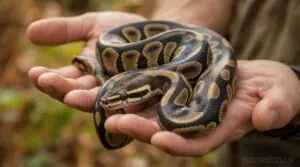
Once your hand is at the snake’s level, keep everything slow. Sudden jerks trigger a defensive response — steady hand motions and controlled lifts tell your python it’s safe.
- Take at least 30 seconds from first contact to full lift
- Use gradual position shifts if it stiffens or pauses
- Smooth shift techniques keep its temperament calm, curious, and rarely aggressive
Support The Full Body
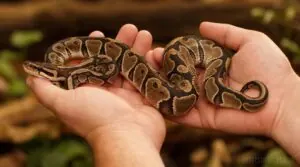
Even weight distribution helps keep your snake calm when lifting it slowly. Place one hand under the midbody and the other beneath the hind section. This stable lift technique provides a continuous body contact platform, avoiding a dangling, unstable feeling.
Proper midbody hand placement also supports heat retention during socialization sessions, significantly reducing reptile stress.
Use Two Open Hands
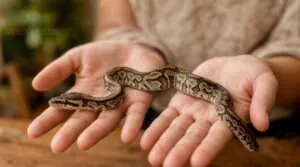
Once your snake feels supported, open both palms flat and let it rest across them evenly. This hand positioning spreads weight naturally—no pinching, no gripping. Good pressure distribution also reduces grip fatigue during longer sessions.
For size adaptability, here’s what works:
- Spread fingers slightly apart
- Keep both palms level
- Let the snake guide its own movement
Avoid Head or Tail
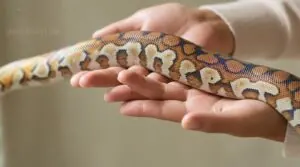
With both palms flat and weight evenly spread, your next focus is End Point Awareness — knowing where the head and tail are at all times.
| Contact Zone | Risk Level | Best Practice |
|---|---|---|
| Head area | High | Use Barrier Placement |
| Tail tip | Medium | Apply Midbody Grip |
| Mid-body | Low | Use Horizontal Transfer |
| Near enclosure edge | Medium | Practice End Avoidance |
| During handling after feeding | High | Postpone session entirely |
Keep contact to the middle third only.
Handle Without Stress
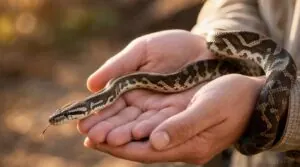
Once you’ve picked up your Children’s Python, the next step is making sure the experience stays calm for both of you.
Handling without stress takes a little practice, but a few simple habits go a long way. Here’s what to keep in mind each time you handle your snake.
Start With Short Sessions
Keep your first handling sessions brief. A short hold of 5–10 minutes is enough to start building trust without overwhelming your python. Think of it like a first introduction — quick, calm, and low-pressure.
- End the session while your python is still calm
- Focus each session on one simple goal: a steady, supported hold
- Gradually increase time only after your python shows consistent, relaxed behavior
Limit Handling Frequency
How often you handle your python matters just as much as how you do it. For juveniles, aim for one session every five to seven days. Adults can go up to two weeks between interactions.
Interval Tracking and Frequency Documentation help you spot Growth Stage Adjustments over time.
Consistent Seasonal Scheduling assists reptiles’ stress reduction and builds lasting socialization through clear owner responsibility.
Watch Stress Signals
Your python’s body language reveals its comfort level during handling. Watch for a raised Defensive Posture, tightened Body Tension, or a braced Tail Position—these signal discomfort. Early recognition of these cues is critical for reptile health monitoring and protecting your pet snake’s temperament.
Faster Breathing Rate and increased Tongue Flicking immediately after being picked up are additional stress indicators. Addressing these signs promptly helps prevent regurgitation linked to handling stress, ensuring safer interactions for both the snake and handler.
Let Them Explore
Once your python seems relaxed, let it move freely across your hands and arms. This kind of Enclosure Expansion time builds real confidence.
Offer Climbing Structures and varied substrate textures as Sensory Enrichment during Progressive Sessions.
Note what your snake prefers — a favorite hiding spot, a preferred temperature gradient zone — and track it in a simple Exploration Logbook to improve future handling.
Return Gently to Enclosure
When it’s time to go home, your snake deserves a calm, smooth return. Move slowly, approach from the side, and lower it gently onto the stable substrate.
- Close the Secure Door quietly after placement
- Let it find its Immediate Hide without interference
- Begin Post-Return Monitoring for 10–15 seconds
A quiet reentry keeps reptile stress reduction on track.
Prevent Common Handling Mistakes
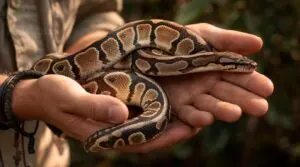
Even experienced keepers make a few of these mistakes at first — and that’s okay. Knowing what to watch out for will make every handling session safer for both you and your snake.
Here are the five most common handling mistakes and how to avoid them.
Handling Too Soon After Feeding
After a meal, your python’s digestive system is working hard — disturbing that process causes regurgitation hazards and serious post-feeding stress. Wait 48 hours after feeding before handling.
Digestive upset risk is real, and regurgitation can even create airway protection concerns.
| Situation | Handling Wait Time | Regurgitation Risk |
|---|---|---|
| Just fed | 48 hours | High |
| Mid-shed | Avoid entirely | Moderate |
| Normal day | Anytime | Low |
Gripping Too Tightly
Tight grip pressure is just as harmful as rushing a feed. When you squeeze too hard, muscle tension travels up your arms — and the snake feels it. A balanced grip means your palms carry the weight while your fingers rest lightly.
- Excess grip raises force by 20–40% above a relaxed hold
- Tight grip slows your release timing, increasing mishandling risk
- Hand fatigue sets in quickly, even during short snake handling sessions
- Calm, even pressure keeps this nonvenomous python species cooperative
Ignoring Defensive Behavior
Ignoring defensive behavior is one of the fastest ways to damage long-term trust. When your Children’s python pulls away, stays rigid, or keeps its head low, those are clear stress signals. Continuing to handle past these warning signs triggers a stress hormone surge and creates escalation risks.
Ignoring your python’s stress signals doesn’t just risk a bite—it quietly destroys trust, one dismissed warning at a time
A nonvenomous snake with a calm, curious, rarely aggressive temperament can become harder to handle over time if early warning signs are repeatedly dismissed.
Allowing Unsupervised Children
Children’s pythons are nonvenomous with a calm, curious, rarely aggressive temperament — but that doesn’t make unsupervised handling safe for young children. Always establish clear Safety Zones and Age Limits before any child interacts with your pet snake.
Teach Emergency Signals so kids know when to stop. Supervision Alternatives like an older sibling can help. Risk Communication before each session keeps everyone confident and safe.
Skipping Post-Handling Hygiene
Supervision sets the stage — but hygiene closes the loop.
After handling, hand washing isn’t optional. Soap and water physically remove germs that reptiles naturally carry, cutting your cross-contamination risk right away.
Change clothing if your snake made contact with your sleeves. Disinfect any tools used.
Surface sanitation and tool disinfection protect everyone in the home and support disease prevention well beyond the enclosure.
Frequently Asked Questions (FAQs)
Do children’s Pythons like being handled?
Children’s pythons generally enjoy handling. Their calm, curious temperament makes them one of the most beginner-friendly nonvenomous snakes available.
Most individuals tolerate gentle, regular contact well and rarely show aggression. Ensuring a proper temperature gradient helps maintain their calm demeanor.
Do children’s pythons like to be held?
Most Children’s pythons tolerate holding well, making them ideal for interaction. They exhibit calm, curious, and rarely aggressive behavior—classic traits of a nonvenomous snake suited for owner engagement.
Watch their body language, and you’ll quickly learn their comfort level.
What feeding schedule works best for pythons?
Feed hatchlings every 5–7 days, juveniles every 7–10 days, and adults an adult mouse every 10–14 days. Follow the prey size rule: match prey width to your snake’s widest point.
How do you transport pythons safely?
Ironically, the hardest part of transport isn’t the distance — it’s staying calm yourself. Use a secure travel container, keep temperatures between 25–30°C, and check on your python after arrival.
When should you avoid handling your python?
Avoid handling during a shed cycle, after transport, or when illness signs appear.
Skip it after feeding, during temperature spikes or post‑cleaning disturbance.
Elevated humidity and respiratory infection are also clear stop signals.
What tools help with python handling?
What’s in your toolkit? Tongs and hooks help during feeding, not handling. A thermometer, digital hygrometer, heat mat, and thermostat keep conditions safe. Use a transport box for vet visits.
How do you introduce children to pythons?
Start with observation sessions before any hands-on handling. Parental guidance is crucial here. Let children watch the snake move calmly in its enclosure first. This builds comfort and establishes a safe, confident foundation.
Can Childrens Pythons recognize their owners scent?
Children’s Pythons detect your scent through olfactory recognition. Their tongue collects human odor cues and builds scent familiarity over time.
Regular handling strengthens this scent conditioning, helping your calm and curious python feel safer around you.
How do you handle a python during shedding?
Skip handling when your python’s eyes cloud over. The scale shedding process needs calm and humidity hide support. A shedding soak bath loosens stuck shed removal safely.
What if my python refuses to be handled?
Sometimes a python just says "not today." Check for refusal triggers like shedding, hunger, or stress. That’s okay.
Try gradual desensitization instead — allow it to explore your hand on its own terms.
Conclusion
Children’s pythons are small, but the trust you build with them isn’t. Every children’s python handling technique you’ve learned here—the slow approach, the full-body support, the careful timing—adds another layer to that bond. Snakes don’t forgive carelessness, but they do reward patience.
Give your python consistent, calm handling, and it will become more relaxed with every session. That’s not luck. That’s the result of doing things right from the start.
- https://dubiaroaches.com/blogs/snake-care/children-s-python-care-sheet?srsltid=AfmBOoq5NrTE55nLfOpj4b0i7-9epPOFJQ6G_3nQxs9jpG-ianWqGo7Q
- https://reptilesupply.com/blogs/snake-care-sheets/how-to-care-for-your-children-s-python
- https://reptifauna.com.au/blogs/news/childrens-python-care-sheet?srsltid=AfmBOorBh-sruDhTwHgPgaqAJHoGaOdHrnzEHmVnJVvf1z5xe4WpPWK1