This site is supported by our readers. We may earn a commission, at no cost to you, if you purchase through links.
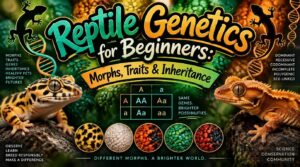
A single gecko can carry a hidden gene for ten generations without ever showing it, until the right pairing finally brings it to light. That’s the quiet power behind reptile genetics for beginners, and it changes how you see every animal in your collection.
Knowing the difference between a genotype and a phenotype isn’t just academic. It shapes which pairings you choose, which offspring you keep, and which animals are actually worth the price tag.
Understanding morphs, inheritance patterns, and genetic probability gives you a real advantage, whether you’re breeding your first corn snake or just choosing a leopard gecko that matches your goals.
Table Of Contents
- Key Takeaways
- What Reptile Genetics Means for Beginners
- Genes, Genotypes, and Phenotypes Explained
- What is a Reptile Morph?
- How Reptile Inheritance Patterns Work
- Predicting Offspring With Genetic Calculators
- Beginner-Friendly Reptiles and Starter Morphs
- Frequently Asked Questions (FAQs)
- What do all females inherit from their father?
- What is the most profitable reptile to breed?
- What are the 7 main characteristics of reptiles?
- What is a shed test for snakes?
- What is reptile breeding?
- How do I get started with reptile breeding?
- What are the different types of reptile genetics and morphs?
- Should you learn reptile breeding & reproduction?
- How long does it take to breed a reptile?
- What equipment is required for reptile breeding?
- Conclusion
Key Takeaways
- A gene can stay hidden for ten generations and only appear when two carriers are paired, so understanding the difference between what an animal carries and what it shows is essential before any breeding decision.
- Dominant traits appear with just one gene copy, recessive traits need two, and co-dominant traits blend both — knowing which pattern you’re working with determines what offspring you can realistically expect.
- Genetic calculators apply Mendelian rules to predict clutch outcomes before a single pairing is made, but they only give accurate results when you input parental genotypes correctly and treat co-dominant traits as their own category.
- Leopard geckos, corn snakes, and bearded dragons are the best starting points because their morphs are well-documented, their traits are easy to observe, and their inheritance patterns are straightforward enough to track across generations.
What Reptile Genetics Means for Beginners

For most beginners, reptile genetics feels intimidating at first. But it’s actually one of the most accessible entry points into applied biology you’ll ever find.
Once you understand a few foundational concepts, ball python morph genetics starts to feel less like science class and more like a rewarding puzzle.
Fundamentally, reptile genetics for beginners is about understanding why animals look the way they do. You’re connecting an animal’s genotype and phenotype to the visible traits we call morphs. Think of it like a recipe: the genetic instructions are hidden inside, but what comes out is the animal you actually see.
You don’t need a lab to get started. Breeders have spent generations documenting dominant and recessive genes, and that knowledge is available to you through simple tools like Punnett squares and genetic calculators. You just need to learn how to read it.
Genes, Genotypes, and Phenotypes Explained
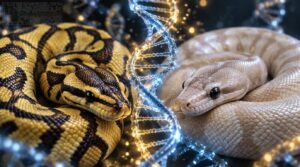
Every animal carries two copies of each gene, one from each parent. Those copies together form the genotype. Think of it as the hidden code running behind the scenes, the instructions you can’t see just by looking.
What you can see is the phenotype, the actual color, pattern, or physical trait the animal shows. In reptile genetics for beginners, the gap between genotype and phenotype is where everything gets interesting.
Here’s where dominant and recessive genes matter. A dominant gene only needs one copy to show up in the phenotype. A recessive gene needs two. That’s why some traits stay hidden for generations before they appear, and understanding trait inheritance and genetic inheritance is what breeding decisions are built on.
Knowing whether offspring are heterozygous carriers is especially useful in practice — resources like this guide to understanding trait inheritance and genetic breeding outcomes can help you apply these principles when making real breeding decisions.
What is a Reptile Morph?
Now that you understand how genotype and phenotype work, morphs start making real sense.
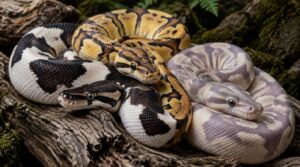
A morph is a distinct, heritable variant in color or pattern. Breeders have stabilized these traits across generations through careful genetic inheritance practices. It’s not chance. It’s a repeatable outcome written into an animal’s DNA at birth.
Here’s what makes morphs so exciting in reptile genetics for beginners:
- They stem from visual mutations that change pigment or pattern.
- Each morph ties directly back to a specific genotype.
- Some are common and affordable; others are rare and expensive.
- You can combine multiple morphs into one animal.
- The phenotype you see reflects the hidden code inside.
That link between inner genotype and outer appearance is the whole game.
A corn snake genetics calculator brings that connection to life, translating hidden allele combinations into predicted morph outcomes before a single pairing is made.
How Reptile Inheritance Patterns Work
Understanding how traits pass from parent to offspring is what separates guesswork from intentional breeding. Reptile inheritance follows a few key patterns, and once you recognize them, predicting outcomes becomes straightforward. Here’s what you need to know about recessive traits and dominant genes before you start planning any pairing.
Recessive Traits and Carriers
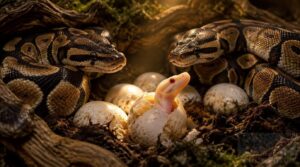
Imagine you pair two normal-looking ball pythons, both carrying the albino gene. Neither looks albino, but roughly 25% of their eggs will hatch into one. That’s recessive inheritance working quietly behind the scenes.
Two ordinary-looking pythons can silently carry a hidden trait, passing albinism to one in four offspring
Recessive traits only appear when an animal inherits recessive genes from both parents. Animals that carry just one copy are called possible hets and look completely normal.
Dominant and Co-Dominant Genes
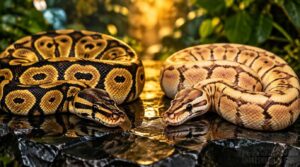
While recessive traits stay hidden until paired, dominant genes show up with just one copy. If your animal carries a single dominant allele, the trait appears clearly in its phenotype.
Codominant genes behave differently. Both alleles express together, creating a blended or split look. That result is a codominant trait, and it’s what makes morph inheritance so exciting to study.
Predicting Offspring With Genetic Calculators

Once you know your animals’ genotypes, a genetics calculator does the math for you. You enter both parents’ alleles, and the tool applies Mendelian inheritance rules to show every possible offspring genotype and its probability.
Think of it like a weather forecast. You won’t get a guaranteed result, but you’ll know the odds.
Most reptile genetics calculators handle morph combinations well for single-gene traits. Enter parental genotypes carefully, since incorrect notation skews your results. If you’re working with co-dominant traits, don’t input them as simple dominant/recessive. The calculator will give you wrong phenotype proportions if you do. A dedicated reptile morph genetics breeding chart can serve as a useful visual companion, helping you cross-check co-dominant combinations before entering them into any calculator.
Track your offspring against the predicted offspring probability. Comparing real results to calculator predictions over time helps you fine-tune your reptile genetics practice.
A reptile breeding pedigree journal makes it easy to log clutch outcomes alongside calculator predictions, so patterns emerge naturally over multiple seasons.
Beginner-Friendly Reptiles and Starter Morphs
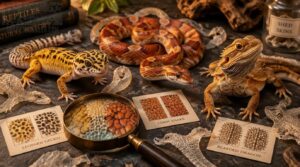
A first-time keeper picks up a high-yellow leopard gecko and wonders why its sibling looks completely different. That single question is your real entry point into reptile genetics for beginners.
Three beginner-friendly species stand out: leopard geckos, corn snakes, and bearded dragons. They tolerate handling well, adapt to stable enclosures, and display clearly observable traits, making them ideal for tracking inheritance across generations. A leopard gecko starter enclosure kit gives beginners a stable, species-appropriate setup right from the first day.
Start with simple, well-documented starter morphs like motley or common stripe patterns across species. These carry stable lineages and fewer health complications than complex designer morphs. Tracking each morph’s parentage from the start becomes much easier with a dedicated reptile breeding logbook, helping you spot inheritance patterns before complications arise.
Choose morphs that don’t interfere with metabolism or growth. Focus on dominant and recessive genes you can verify through pedigree records. Consistent reptile care keeps non-genetic variables out of the picture. A reliable reptile thermostat temperature controller keeps enclosure conditions stable, so temperature swings never muddy your observations of inherited traits.
Frequently Asked Questions (FAQs)
What do all females inherit from their father?
Daughters are supposed to take after mom, yet every female reptile’s sex chromosome comes from dad. In ZW sex determination, all females inherit the paternal Z, so sex-linked traits reveal heredity patterns you can track.
What is the most profitable reptile to breed?
Want real profit from reptile breeding? Ball pythons lead the market right now. Their rare morph compatibility pushes reptile pet cost incredibly high. Build a focused selective breeding program and you’ll see returns grow steadily.
What are the 7 main characteristics of reptiles?
If you’re serious about reptile care and reptile husbandry, these seven traits define every species you’ll study: ectothermic metabolism, waterproof scaly skin, land-laid eggs, a three-chambered heart, self-replacing teeth, behavioral thermoregulation, and temperature-dependent energy use.
What is a shed test for snakes?
Many breeders assume shed tests only reveal color. In reptile genetics, though, carefully analyzing your snake’s molted skin can confirm simple recessive traits, uncover possible hets, and even identify a visual morph without direct handling.
What is reptile breeding?
Think of reptile breeding as sculpting with living DNA. You pair animals intentionally, selecting for specific traits you want in offspring. It’s the foundation of every morph and the gateway into reptile genetics for beginners.
How do I get started with reptile breeding?
Reptile keeping has grown by over 20% in the past decade. Start with one beginner-friendly species, learn essential genetics terms first, and log every pairing you do. Good records turn reptile breeding into a science.
What are the different types of reptile genetics and morphs?
Ironically, the so-called complex world of reptile morph genetics for beginners really just comes down to three types: color, pattern, and structural morphs, each one shaped by dominant and recessive genes affecting your animal’s appearance.
Should you learn reptile breeding & reproduction?
One hobbyist kept 20 geckos for two years before ever pairing them. Breeding isn’t required, but if morphs and trait inheritance genuinely excite you, start with genetics basics and one beginner-friendly species first. Then decide.
How long does it take to breed a reptile?
It’s all about species. Small lizards can give you a first viable clutch in 1-4 months. Snakes often take a full season. Reptile breeding and reproduction needs 2-4 generations before offspring consistently match your goals.
What equipment is required for reptile breeding?
You’ll need a mountain of equipment before breeding even begins. Secure enclosures, thermometers, hygrometers, a UVB lighting setup, and a precise incubator are your essential reptile breeding tools. Add a quarantine container for genetic health.
Conclusion
Genetics can feel overwhelming at first, but you don’t need a biology degree to breed confidently. Start small. Learn one inheritance pattern, run one pairing, and watch what the offspring tell you.
Reptile genetics for beginners is really just careful observation with a framework behind it. Every animal you work with teaches you something the last one couldn’t. That hidden gene waiting ten generations? It’s proof that patience and knowledge, together, always pay off.