This site is supported by our readers. We may earn a commission, at no cost to you, if you purchase through links.

A ball python purchased as a hatchling today could still be alive in 2051. That’s not a typo. Ball pythons routinely live 20 to 30 years, and some have hit 40 in captivity, which makes them one of the longest commitments you’ll make as a pet owner, rivaling a mortgage.
Most people know they’re getting a snake. Fewer stop to think about what that actually means across decades of feeding, enclosure upgrades, vet visits, and the occasional shedding crisis at midnight.
Ball python snake owners who thrive aren’t just reptile enthusiasts; they’re planners. Get the setup, feeding, and health basics right from the start, and you’ll have a genuinely rewarding relationship with one of the most low-maintenance yet endlessly fascinating animals you can keep.
Table Of Contents
- Key Takeaways
- What New Ball Python Owners Should Know Before Choosing a Snake
- Ball Python Enclosure Setup: Size, Equipment, Temperature, and Humidity
- Feeding Ball Pythons: Frozen-Thawed Prey, Schedules, and Fresh Water
- Handling Ball Pythons Safely: Building Trust and Recognizing Stress
- Ball Python Health Care: Shedding, Common Illnesses, and Annual Vet Checks
- Frequently Asked Questions (FAQs)
- Do ball pythons actually like their owners?
- What are the downsides of owning a ball python?
- Do ball pythons get to know their owners?
- Is owning a ball python hard?
- Are ball pythons a good first snake?
- What is a ball python?
- Are ball pythons illegal?
- Can ball pythons live together?
- How much does a ball python snake cost?
- How do ball pythons get their name?
- Conclusion
Key Takeaways
- Ball pythons can live 20–40 years, making ownership a multi-decade commitment that demands stable housing, consistent feeding, and a trusted reptile vet before you ever buy one.
- Getting the enclosure right from day one — proper sizing, a temperature gradient of 78–92°F, and humidity held at 50–60% — prevents the temperature and humidity errors that cause roughly 60% of reptile illness in captivity.
- Feeding frozen-thawed prey matched to 1.0–1.5 times your snake’s widest point, on a consistent schedule, is the single most effective way to avoid feeding refusals and oral injuries.
- Your snake won’t bond with you the way a dog does, but four to eight weeks of slow, calm, consistent handling builds genuine habituation — and recognizing stress signals like tight coiling or a raised head tells you when to stop before trust breaks down.
What New Ball Python Owners Should Know Before Choosing a Snake

Before you bring a ball python home, there are a few key realities worth understanding. These aren’t dealbreakers, but they’ll shape every decision you make as an owner. Here’s what you need to know upfront.
From the initial purchase price to ongoing setup costs, understanding the full cost of owning a ball python will help you plan ahead without surprises.
Long-Term Commitment
Before you bring one home, understand that ball python ownership is a decades-long commitment. The average ball python lifespan runs 15 to 25 years, and many thrive well past that.
As a ball python owner, you’ll need stable housing, a consistent feeding routine, and a reptile vet you trust, regardless of what life throws at you.
Adult Size Differences
That long-term commitment means planning around adult size differences from day one. Most ball pythons reach 3.5 to 5.5 feet, with females usually bulkier than males. Growth rate depends on genetics and care.
- Match enclosure size to your snake’s expected adult length.
- Adjust your feeding schedule as your snake grows.
- Track weight monthly for weight management and early health checks.
Housing And Climate
Once you know your snake’s adult size, enclosure choice follows. Juveniles need at least 18x12x12 inches; adults need 24x18x12 or larger, with escape-proof latches on every lid.
For a detailed breakdown of which enclosures actually hit these size marks, this ball python enclosure buying guide compares six options across every life stage.
Your temperature gradient setup is simple: 88-92°F on the warm side, 78-82°F on the cool end. Two digital thermometers keep you honest. Maintain humidity control at 50-60%, bumping it to 60-70% during shedding.
Rodent Feeding Reality
Once your enclosure’s dialed in, feeding is next.
A frozen rodent diet is the safest, most practical option for most owners. Always use a proper thawing method, like warm water, to bring prey close to body temperature before offering it. Prey size matching matters too: nothing wider than 1.5 times your snake’s girth. A consistent feeding schedule reduces feeding refusal.
Health And Breeder Quality
Since Ball Python health starts before you even buy, choosing a captivebred animal from a reputable breeder matters enormously.
Ask every breeder these questions:
- Has the snake eaten frozen-thawed prey consistently?
- Can they share shedding and feeding history?
- Do they screen for parasites?
- What’s the Ball Python breeding facility’s hygiene like?
Your first Ball Python vet visit sets the baseline.
Ball Python Enclosure Setup: Size, Equipment, Temperature, and Humidity
Getting your ball python’s home right from the start makes everything else easier. There are a few key setup areas you’ll want to nail down before your snake arrives. Here’s what to focus on.
If you’re still deciding on your snake, reviewing what to look for when choosing a boa constrictor can help you think through space and commitment before you invest in any enclosure setup.
Pay special attention to climate control — ideal ball python temperature and humidity levels are among the most common things new owners get wrong.
Enclosure Size and Security
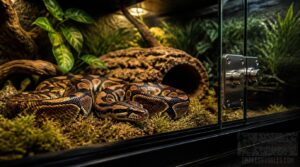
Ball pythons grow surprisingly fast, and buying a too-small cage is the most common mistake new owners make.
Adults need a terrarium at least 4 to 6 feet long, with secure latching doors that can’t be nudged open. Any gap wider than 1 cm becomes an escape route.
Your ball python setup needs to grow with them, not against them.
Heating and Humidity Control

Temperature problems cause roughly 60% of reptile illnesses in captivity.
Set your temperature gradient to 88–92°F warm and 78–82°F cool. Use a reliable thermostat to avoid dangerous spikes, and keep humidity control at 50–60% with steady hygrometer monitoring.
- Feel proud when your snake sheds flawlessly
- Sleep easy knowing your thermostat always has you covered
- Pick substrate with strong moisture retention
Substrate, Hides, and Lighting

Picture your ball python tucked snugly into a warm hide, calm and secure after hours of exploring. That’s the setup you’re aiming for.
Use cypress mulch or coconut coir; both hold humidity far better than newspaper. Keep two correctly sized hides on opposite sides. Skip strong UV lighting; a simple low-level LED photoperiod of 10-12 hours suits their nocturnal lifestyle.
Feeding Ball Pythons: Frozen-Thawed Prey, Schedules, and Fresh Water
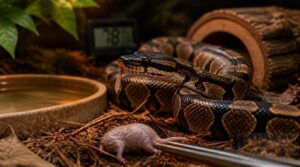
Getting your Ball Python feeding routine right is one of the most satisfying parts of ownership. Always offer frozen-thawed prey fully thawed to room temperature before presenting it. A cold meal risks oral injuries and almost always triggers refusals.
Here’s a practical feeding schedule to follow:
- Match prey size to 1.0–1.5 times the widest part of your snake’s body.
- Feed juveniles every 5–7 days; shift adults to every 7–14 days based on body condition.
- Rotate mice and rats within safe size ranges to keep your frozen rodent diet interesting.
- Change your Ball Python water dish every 24–48 hours to prevent bacterial buildup.
Persistent refusals across two or three feedings usually signal a husbandry problem, not a picky eater. Check your enclosure temps first.
Handling Ball Pythons Safely: Building Trust and Recognizing Stress
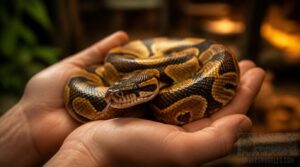
Your snake reads you more than you realize. Slow, low movements signal safety to a ball python; quick grabs trigger the defensive behavior you’re trying to avoid. Start sessions briefly, end before stress escalates, and keep your timing consistent each time.
Slow, low movements signal safety to a ball python — quick grabs trigger exactly the behavior you’re trying to avoid
Watch for ball python stress indicators like rapid tongue flicking, tight body coiling, or an elevated, forward-positioned head. These are real warnings. When you notice them, freeze, don’t force it, and try again another day.
| Signal | Meaning | What To Do |
|---|---|---|
| Rapid tongue flicking | Heightened arousal | Slow your movements |
| Tight coiling, pulling away | Active stress | End the session |
| Elevated head, striking posture | Defensive behavior | Set the snake down calmly |
Ball python safe lifting means supporting the full body from below. Never grab by the tail. Keep handling away from other pets, traffic noise, and loud spaces to prevent startles that can drive sudden, defensive head movement.
Ball Python Health Care: Shedding, Common Illnesses, and Annual Vet Checks
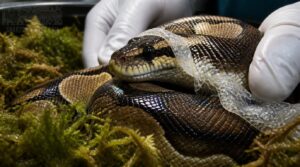
Knowing your snake’s body language helps with handling, and that same attentiveness keeps ball python health on track.
During the shedding process, cloudy blue eyes and a whitish sheen signal a shed in 3-7 days. Boost humidity to 65-70%, offer a moist sphagnum hide, and skip handling. After each shed, check that eye caps and the tail tip came off fully. Retained caps can impair vision. If shedding becomes problematic, you can use a humidity chamber for stuck shed to help loosen retained skin safely within 24 hours.
Annual vet checks catch common illnesses and internal parasites before symptoms escalate. Watch for these four red flags in reptile husbandry:
- Wheezing or open-mouth breathing signals a respiratory infection
- Tiny moving dots on skin or substrate mean mites
- Redness and pus around the mouth indicate mouth rot
- Weight loss and loose stools suggest internal parasites
Frequently Asked Questions (FAQs)
Do ball pythons actually like their owners?
Do ball pythons like you? Honestly, not the way a dog does. What looks like Ball Python bonding is really just habituation to calm, predictable handling. They’re comfort-seekers, not social bonders, and that’s totally okay.
What are the downsides of owning a ball python?
Owning a ball python means 30 years of care. Picture someone moving apartments and suddenly discovering their new lease bans reptiles entirely. Real problem. You’ll also manage precise temperatures, weekly rodent feedings, and vet bills.
Do ball pythons get to know their owners?
Yes, in their own way. Your ball python learns your scent and routine, gradually tolerating and approaching you more calmly after 4–8 weeks of consistent handling.
Is owning a ball python hard?
Picture a calm, coiled snake resting in a warm, quiet enclosure. Ball Python care is straightforward if you stay consistent. Feeding, temperature, and humidity are your main responsibilities, and they’re manageable once you build a routine.
Are ball pythons a good first snake?
For most beginners, they’re honestly one of the best reptile options out there. Ball pythons are naturally docile, they tolerate gentle handling well, and they make Ball Python care genuinely rewarding right from the start.
What is a ball python?
Sleek, compact, and calm, the ball python (Python regius) is a non-venomous constrictor from sub-Saharan Africa. It tops out around four feet, and it’s genuinely one of the most manageable pet snakes you can own.
Are ball pythons illegal?
Are ball pythons illegal? Not federally, but reptile regulations vary widely by state, city, and province.
Your area may require a permit or restrict exotic pet ownership entirely. Always check your local laws before buying.
Before committing to a purchase, reviewing legal guidelines for buying a boa constrictor can help you navigate permit requirements and find reputable, documentation-ready breeders in your area.
Can ball pythons live together?
Like lone wolves, ball pythons are naturally solitary animals. Housing them together triggers stress, competition, and a serious risk of injury. Give each snake its own dedicated enclosure, and you’ll keep them healthier and calmer.
How much does a ball python snake cost?
Prices range from $20 to $1,000+, depending on morph and source. Common morphs usually run $50–$200, while rare designer variants can reach $2,500+. Reputable breeders cost more, but you’re paying for verified genetics and health.
How do ball pythons get their name?
The name comes straight from behavior. When stressed, your ball python curls into a tight sphere, tucking its head safely inside its coils, a self-defense response it uses both in the wild and in captivity.
Conclusion
Imagine your ball python coiled contentedly in its warm hide, decades from now, still thriving because you got the fundamentals right. That’s the reward waiting for ball python snake owners who invest time upfront in proper setup, consistent feeding, and attentive health care.
The learning curve is real but short. Once your snake settles in, you’ll wonder why you hesitated. This isn’t just a pet. It’s a living commitment that pays you back every year.