This site is supported by our readers. We may earn a commission, at no cost to you, if you purchase through links.

A snake pressing its nose against the glass isn’t exploring. It’s telling you something’s wrong, and most keepers don’t catch it until feeding stops or a shed turns into a mess of stuck skin.
Healthy snake habitat conditions come down to a handful of fundamentals: the right temperature gradient, appropriate humidity, a substrate that won’t damage lungs, and a lid your snake can’t force open at 2 a.m. Get those right, and your snake eats consistently, sheds cleanly, and behaves like the animal it’s supposed to be.
A few of those details tend to surprise even experienced keepers.
Table Of Contents
- Key Takeaways
- Choose a Secure, Species-Appropriate Enclosure
- Create a Safe Temperature Gradient
- Monitor and Maintain Healthy Humidity
- Select and Clean Safe Substrate
- Add Hides and Natural Enrichment
- Monitor Habitat Health and Equipment
- Frequently Asked Questions (FAQs)
- How do you keep a snake healthy?
- How do you manage temperature in a snake habitat?
- How do I create an ideal snake habitat?
- How do you protect a snake from heat?
- How to prepare a snake’s home?
- How do you keep snakes healthy?
- What makes a good snake habitat?
- What does a snake need in its cage?
- How do you give a snake a good life?
- Can corn snakes live together in one habitat?
- Conclusion
Key Takeaways
- A proper temperature gradient — warm basking spot at 34–36°C tapering to a cool side at 22–26°C — is the single most critical factor in keeping your snake healthy and self-regulating.
- Matching humidity to your specific species (50–60% for most, up to 90% for tropicals) prevents stuck sheds, respiratory problems, and bacterial growth before they start.
- Substrate choice directly impacts lung health and shedding success, so avoid aromatic wood shavings like cedar or pine and stick to inert options like aspen or paper-based bedding.
- Nose-pressing against the glass, failed sheds, and refusal to leave hides are your snake’s way of signaling that something in its environment is wrong — catching these early prevents serious health decline.
Choose a Secure, Species-Appropriate Enclosure

Choosing the right enclosure is one of the most important decisions you’ll make for your snake’s long-term health. Glass, PVC, and hybrid options each bring distinct advantages depending on your species and setup goals. Here’s what to think about before you buy.
Your species’ natural habitat plays a huge role in this decision, so reviewing snake species habitat requirements can sharpen your thinking before committing to a build.
Plan for Adult Size
Even if your snake is tiny now, adult size accommodation should shape your setup from the start.
- Ground species need floor space 2-3x their adult length
- Choose vertical vs horizontal tanks based on climbing habits
- Modular designs improve space utilization as your snake grows
Planning for growth space needs now means you’ll skip a costly enclosure size upgrade later.
Prevent Escapes and Stress
Once your snake has enough space, escape prevention matters equally. Escapeproof lids with locking latches stop escape attempts on contact.
For added peace of mind, pairing a secure lid with a quiet, low-stress snake species means fewer frantic escape attempts to begin with.
| Stress Signal | Fix |
|---|---|
| Nosing at gaps | Seal openings to 5 mm |
| Repeated shed issues | Stabilize temp and humidity |
| Won’t leave hides | Add enrichment, reduce handling |
Check secure locks weekly. Good enclosure security keeps stress reduction built right into the routine.
Create a Safe Temperature Gradient
Once you’ve sorted your enclosure, getting the temperature gradient right is your next priority. Your snake needs a cool side sitting around 22-26°C, a warm mid-zone, and a basking spot reaching 34-36°C. That layout lets them self-regulate naturally by moving between zones as needed.
For heating methods, ceramic heat emitters and infrared basking lamps work well without disrupting nocturnal patterns. Always pair these with thermostat control to prevent dangerous spikes, and position your probe between the basking site and mid-zone so you’re tracking both ends.
Log temps every four hours if possible, and check twice daily for hot spots. A ±2°C drift during the day is fine; nights allow a little more flex.
Before swapping in fresh material, a full rinse and dry cycle helps prevent mold—see safe snake substrate for humidity control for guidance on choosing options that stay stable between your temperature checks.
Monitor and Maintain Healthy Humidity
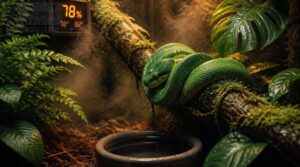
With temperatures dialed in, humidity levels are your next variable. Most species thrive at 50–60% RH, but tropical snakes need 70–90% and desert species as low as 30–50%.
Hygrometer use isn’t optional. Place digital sensors at both enclosure ends to track moisture gradients, and use models with data logging to catch gradual drift early.
Poor moisture control causes real damage:
- Stuck sheds that tear delicate scales
- Respiratory irritation from mold forming in hides
- Bacterial blooms in water bowls that aren’t cleaned daily
- Dehydration stress from persistently dry conditions
A quick mist raises RH by 5–15% in 30 minutes. Misting systems handle this automatically, but watch substrate moisture retention closely, since waterlogged bedding breeds the mold you’re working against.
Select and Clean Safe Substrate
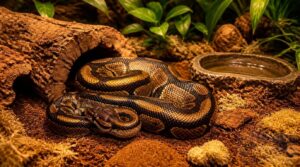
What lines the bottom of your snake’s enclosure matters more than most keepers realize. Substrate choice directly affects your snake’s respiratory health, shedding success, and even its daily behavior. The options below walk you through what’s safe, what’s dangerous, and how to keep things clean.
Avoid Toxic Wood Shavings
Cedar or pine shavings look harmless, but aromatic wood volatiles irritate your snake’s lungs and can trigger chronic respiratory issues. For solid reptile substrate safety, choose nontoxic substrates like aspen shavings or paper-based bedding. They’re low-odor and inert.
One quick rule on substrate safety: if the bag smells strong right out of the package, trust your nose and skip it.
Prevent Mold and Bacteria
A persistently damp substrate is basically a welcome mat for bacterial colonization. Keep it dry between mistings, and spot-clean waste promptly before organic matter builds up.
Mold prevention also depends on ventilation air quality, so don’t let air stagnate in corners or under hides. Rinse water dishes fully, dry all surfaces after your sanitation protocol, and substrate safety stays manageable.
Add Hides and Natural Enrichment

Think of your snake’s enclosure as a small world it needs to actively navigate. Place hiding spots at both warm and cool zones so your snake can thermoregulate on its own terms. Two hides minimum, one at each end, is the baseline. Smooth-walled reptile hide caves work well at both ends, giving your snake snug, darkened retreats that support confident thermoregulation.
Natural enrichment matters more than it looks:
- Rotate cork bark, leaf litter, and branches monthly to keep sensory stimulation fresh and prevent novelty fatigue
- Use safe plant-oil scent trails to encourage foraging opportunities and active exploration
- Anchor climbing structures securely and keep total hide coverage under 25% of floor space
Varying the depth and placement of feeding hides promotes natural hunting behavior. Schedule feeding during early activity periods to support those cycles. Your snake doesn’t need a jungle, but it does need real choices.
Your snake doesn’t need a jungle, but it does need real choices
Monitor Habitat Health and Equipment
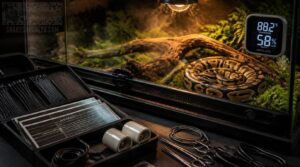
Your enclosure is only as reliable as the equipment running it. Do a daily observation sweep: glance at your thermometer and hygrometer, confirm your basking gradient looks right, and check that ventilation is keeping condensation off the glass. If you’re seeing moisture fog every morning, your humidity and ventilation balance is off.
Log your readings over time. A two-week history at hourly intervals reveals creeping trends that a single daily check never will.
Replace heat mats and ceramic emitters every 12 to 18 months, or after 2,000 hours of use, whichever comes first. Inspect cables for fraying weekly and swap anything damaged within 24 hours. Keep a spare parts kit stocked, because equipment doesn’t pick a convenient moment to fail. A well-stocked reptile heating spare parts kit typically includes backup thermostats, spare bulbs, and extra cable ties — everything you need to get the enclosure back up and running within the hour.
Frequently Asked Questions (FAQs)
How do you keep a snake healthy?
It’s a matter of scale. Nail your temperature gradient, keep humidity levels steady, choose safe substrate choices, add hiding spots, and lock down an escapeproof enclosure. Get those five right, and your snake truly thrives.
How do you manage temperature in a snake habitat?
Managing your snake’s temperature means building a steady thermal gradient. Keep the basking temperature between 32 and 38°C, your cool zone around 24–28°C. Two thermometers, one on each side, let you catch dangerous drift fast.
How do I create an ideal snake habitat?
Size it right, secure the locks, and pick a clean substrate choice. A steady temperature gradient, balanced humidity levels, and well-placed hiding spots give your snake exactly what it needs to stay healthy and thrive.
How do you protect a snake from heat?
Protecting your snake means building a solid temperature gradient. Use a heat lamp or undertank heater on one end for a warm basking spot, and keep the other end cool so your snake self-regulates safely.
How to prepare a snake’s home?
Think of Goldilocks, but for reptiles. Your snake needs temperature gradients from warm to cool, secure locks on the enclosure, proper ventilation, safe substrate options, and at least two snug hiding spots to feel secure.
How do you keep snakes healthy?
Keeping your snake healthy comes down to a few non-negotiables: a secure enclosure with secure locks, a reliable temperature gradient, good humidity management, clean substrate, hiding spots, and regular vet checkups to catch problems early.
What makes a good snake habitat?
A good habitat mirrors nature’s own blueprint: stable temperature gradients, secure locks, safe substrate options, proper humidity levels, and hiding spots your snake actually uses. Get these five elements right, and your snake truly thrives.
What does a snake need in its cage?
Your snake needs secure, escape-proof housing, a thermal gradient, appropriate humidity, clean substrate, and at least two hides so it can thermoregulate and feel genuinely safe.
How do you give a snake a good life?
Most new keepers make it far harder than it needs to be. Nail temperature gradients and humidity levels, offer multiple hiding spots, use bioactive substrates, make sure proper enclosure ventilation, and your reptile will thrive beautifully.
Can corn snakes live together in one habitat?
Yes, corn snakes can cohabitate, but only if they’re similar in size and proven compatible. You’ll need multiple hides and ample space, plus daily behavioral checks to catch aggression before it escalates into real injury.
Conclusion
The irony is that snakes, some of the most self-reliant animals on Earth, depend entirely on the daily choices you make for them.
Snake habitat health tips aren’t complicated. They’re just consistent. Get the temperature gradient right, match humidity to your species, and clean the substrate before problems ever start.
Your snake can’t ask for what it needs. But it will show you when something’s wrong. Pay close attention, and you’ll rarely miss the signs.