This site is supported by our readers. We may earn a commission, at no cost to you, if you purchase through links.
You walk up to the enclosure and spot it: a crinkled, half-hanging shed wrapped around your snake’s tail tip. Or worse, dull eye caps that should’ve come off days ago. Don’t panic. Stuck shed is one of the most common corn snake issues, and it’s almost always fixable at home.
Here’s the thing: a bad shed is rarely the real problem. It’s a symptom. Low humidity, off temperatures, or a missing supplement usually sit at the root, and those you can correct for good.
This guide walks you through corn snake shedding problems solutions that actually work, from humid hides to vet red flags.
Table Of Contents
- Key Takeaways
- Is Your Corn Snake Shedding Normally? Signs and Timeline
- What Causes Corn Snake Shedding Problems?
- How to Help a Corn Snake With Stuck Shed Safely
- Prevent Corn Snake Shedding Problems With Proper Habitat Care
- When Corn Snake Shedding Problems Require a Reptile Vet
- Frequently Asked Questions (FAQs)
- What can I do to help my corn snake shed?
- What should I do if my snake is struggling to shed?
- How long does corn snake shedding last?
- How long can a snake go without shedding?
- How can I help my corn snake shed properly?
- Why do corn snakes shed?
- How often do corn snakes shed?
- How do you know if a corn snake is shedding?
- How to care for a corn snake?
- Do corn snakes eat when shedding?
- Conclusion
Key Takeaways
- Stuck shed is almost always a symptom of fixable husbandry issues—over 90% of cases trace back to enclosure problems like low humidity or poor temperatures, not disease.
- Safe home fixes include a humid hide packed with damp sphagnum moss and a supervised lukewarm soak (around 85°F, under 10 minutes), but never peel stuck shed or retained eye caps yourself.
- Prevent problems by keeping humidity at 50–60% (bumping toward 70% during sheds) with a digital hygrometer, and maintaining a thermal gradient of 88–92°F on the warm side and mid-70s on the cool side.
- Call a reptile vet if eye caps stay retained more than a day or two, shed rings constrict toes or the vent, or you see lethargy, refusal to eat, skin tears, or repeated failed sheds.
Is Your Corn Snake Shedding Normally? Signs and Timeline
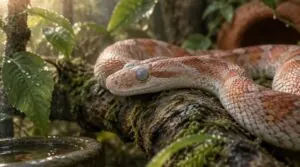
How do you know if your corn snake shedding cycle is going normally? Watch the eyes first. A few days before the shed, they’ll turn a dull, milky blue-gray. Colors across the body look washed out, appetite drops, and your snake slows down noticeably. This pre-shed phase usually lasts 2 to 3 days before the old skin begins lifting off.
For a full walkthrough of each stage from dull eyes to a clean, one-piece shed, this guide to the corn snake shedding process breaks it down step by step. It also explains why humidity spikes during this window and what to tweak if your snake’s shed keeps coming off in pieces.
A healthy shed comes off in one mostly intact piece, revealing bright, evenly colored new scales underneath. No flaking, no dry curls, no torn patches.
Spotting shedding problems early matters. Your two biggest red flags are retained eye caps and stuck shed around the tail tip. If the eyes stay cloudy after shedding finishes, that’s a sign to act fast.
What Causes Corn Snake Shedding Problems?
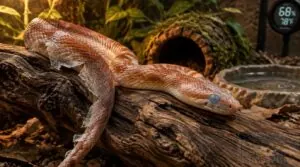
Shedding problems don’t happen randomly—they almost always trace back to something fixable in your setup or care routine. Five main culprits tend to show up again and again when corn snakes struggle to shed cleanly. Let’s walk through each one so you know exactly what to look for.
Poor humidity is often the biggest offender, and this guide to what causes dysecdysis in snakes explains how to spot it early.
If your corn snake keeps losing its skin in pieces, this guide on why snakes shed in patches explains what’s going wrong and how to fix it.
Before blaming your setup entirely, keep in mind that breeding females often shed poorly too—and unlike boa constrictors, which keep their eggs inside and deliver live young, corn snakes lay eggs, so a gravid female’s needs shift fast.
Inadequate Humidity
When humidity drops during an active shed, that old skin dries and grips tighter instead of sliding off.
Inadequate humidity levels are the top trigger for corn snake shedding problems, especially retained eye caps.
Don’t just glance at your hygrometer; sensor placement and calibration drift can fool you into thinking your humidity management is solid when it really isn’t.
Improper Temperatures
Moisture isn’t the only factor. Poor temperature control can wreck shedding just as fast.
If you’re unsure whether your setup is warm enough, this guide on whether corn snakes can live without a heating pad breaks down what’s actually needed.
Your snake needs a proper thermal gradient to push fluid under old skin. Without it, the process stalls.
Watch for these environmental conditions triggering corn snake shedding problems:
- Warm side below 85°F
- No cool side below 75°F
- Unregulated heat sources spiking temperatures
- Nighttime drops below 65°F
Nutritional Deficiencies
Temperature isn’t the only hidden culprit. Nutritional deficiencies quietly wreck shedding over months, and most keepers never see it coming.
| Deficiency | Shedding Impact |
|---|---|
| Low calcium intake | Incomplete, patchy sloughing |
| Missing vitamin D3 | Weak keratin production |
| No vitamin supplementation | Dull, abnormal sheds |
| Imbalanced dietary supplements | Problems worsen with time |
Gut-load your feeders. Rotate prey types. Dust consistently.
When shedding problems keep coming back despite good husbandry, this guide to handling a snake with stuck shed walks you through safe fixes at home. If you spot retained shed around the tail tip, this guide to removing stuck shed from a snake’s tail safely walks you through it step by step.
Underlying Health Problems
Behind repeated failed sheds, a deeper health issue is sometimes quietly hiding. Mites, internal parasites, and skin infections can all trigger skin mottling and paling, stuck patches, or retained eye caps. Metabolic or hormonal disease disrupts your snake’s entire skin cycle too.
Swelling and redness, difficulty breathing, or swallowing issues appearing alongside poor sheds? That combo means vet visit, now.
Poor Enclosure Setup
Although it’s easy to overlook, poor enclosure setup is a major culprit behind stuck sheds. A small water bowl, paper substrate, or an incorrectly placed hide tanks humidity levels and throws off your thermal gradient at key moments. Frequent lid-opening makes things worse fast too.
A few targeted environmental adjustments to your habitat maintenance routine can genuinely turn things around.
How to Help a Corn Snake With Stuck Shed Safely
Good news: stuck shed is fixable, and you don’t need fancy tools to sort it out. You’ve got a few proven methods to help your snake through safely without causing stress or injury. Let’s walk through each one so you can pick the right approach for your situation.
Humid Hide Method
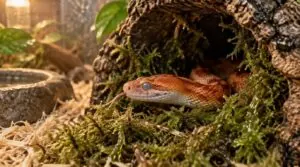
The humid hide method gives stuck shed what it needs: a warm, moist microclimate where shedding happens. Pack it with damp sphagnum moss, not dripping, just moist. Here’s what makes it work:
- Keep humidity levels high inside the hide only
- Warm it to match your snake’s active range
- Re-moisten the moss between shed cycles
Enclosure conditions stay dry overall. Smart!
Supervised Lukewarm Soak
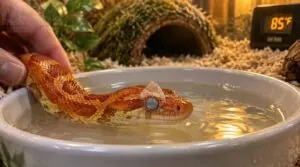
Corn snakes shed roughly every 4 to 6 weeks throughout their lives, making soaking techniques something you’ll actually need.
Lukewarm water near body temperature, around 85°F, is key. Anything hotter stresses sensitive shed skin. Set your snake in a shallow container, stay close, and watch for calm movement. Keep it under 10 minutes, then pat dry right away.
Retained Eye Cap Care
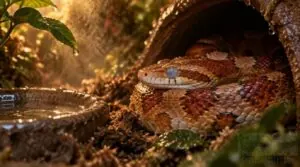
Ever spot a snake with cloudy, "spectacle" eyes? That’s a retained eye cap! Here’s the deal: never peel it. Instead, boost humidity levels in a humid hide so stuck shed softens and lifts naturally. Skip rubbing the eye area entirely.
If the cap stays put past the shedding window, or the eye swells, call your reptile vet. Quick action wins!
While you wait on the vet, this guide to what to do when a snake’s eye caps won’t come off explains why caps get stuck and how to gently improve humidity.
Prevent Corn Snake Shedding Problems With Proper Habitat Care
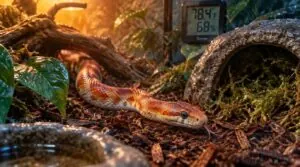
Here’s the good news: shedding problems are almost always preventable. Your job is simple. Build the right setup, then maintain it.
Keep humidity levels steady at 50–60%, bumping toward 70% during shed cycles. Guessing fails. Use a digital hygrometer in the enclosure and check it daily. Misting alone won’t cut it if your temps swing wildly, because heat drives evaporation.
Nail your thermal gradient: 88–92°F on the warm side, mid-70s on the cool side. That range lets your snake pick what its skin needs.
Add a humid hide packed with damp sphagnum moss, and make sure every hide is easy to reach. Choose a substrate that holds moisture, like cypress mulch or coconut fiber.
Feed consistently, with properly balanced prey items, and use proper handling techniques during blue phase. Minimal stress, good care, complete sheds. You’ve got this!
When Corn Snake Shedding Problems Require a Reptile Vet
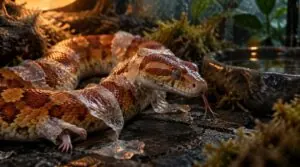
Most sheds you can fix at home. Some you can’t. Knowing the difference protects your snake.
Most shedding issues can be fixed at home, but knowing when to call a vet protects your snake
Call a reptile vet when stuck shed goes beyond simple dryness. Watch for these red flags:
- Retained eye caps lasting more than a day or two, especially with swelling or cloudy corneas
- Shed rings constricting toes or the vent, cutting off circulation
- Lethargy, refusing food, or open-mouth breathing alongside shedding trouble
- Rapid weight loss or repeated failed sheds over multiple cycles
- Skin tears, redness, or signs of infection risk on the shed site
These symptoms point to illness, parasites, or skin disease, not just low humidity. Mechanical removal attempts can worsen damage. Stop tinkering and start consulting a veterinarian experienced with reptiles. Prompt veterinary care prevents lasting injury. You’ve handled the husbandry. Now let a pro handle the rest!
Frequently Asked Questions (FAQs)
What can I do to help my corn snake shed?
What can I do to help my corn snake shed? Boost humidity levels with a damp-moss humid hide, offer a supervised lukewarm soak, and never pull stuck shed. Check your enclosure conditions first!
What should I do if my snake is struggling to shed?
Struggling to shed? Don’t pull! Boost humidity levels with a humid hide, try a supervised lukewarm soak, and make gentle environmental adjustments. Retained eye caps mean call a reptile vet immediately!
How long does corn snake shedding last?
Picture shedding as a countdown, not a marathon. The shedding process runs 1 to 2 weeks total, but actual skin release takes just days. Cloudy eyes signal the preshedding phase; the postshedding phase wraps up quickly. Longer than two weeks? Suspect stuck shed.
How long can a snake go without shedding?
There’s no fixed deadline. Healthy adults shed roughly every 3–6 weeks, so going two or more cycles without shedding signals trouble. If your snake eats well and looks normal, don’t panic yet.
How can I help my corn snake shed properly?
You’ve got this! Keep humidity levels steady, add a damp moss hide, and hold off on handling during the blue phase. Light misting helps prevent stuck shed. Watch for retained eye caps and stress signs.
Why do corn snakes shed?
Your corn snake sheds to replace worn skin and support growth. This molting process removes old scales and occasional parasites, revealing fresh, vibrant skin beneath. Juveniles shed more often than adults, so expect frequent shedding early on.
How often do corn snakes shed?
Here’s a fun stat: a snake’s skin doesn’t grow with it, so shedding is how it upgrades! Adults shed roughly every 8–12 weeks; juveniles, every 4–6 weeks. Growth rate, diet, and temperature all shape your snake’s schedule.
How do you know if a corn snake is shedding?
How do you know if a corn snake is shedding? Watch for cloudy, blueish eyes and dull, faded skin. Expect less appetite, more hiding, and increased defensiveness. This pre-shed phase lasts three to seven days.
Low humidity during this time can cause retained shed and eye caps, so raising humidity to 60–70% with a moist hide helps guarantee a complete, healthy shed.
How to care for a corn snake?
How to care for a corn snake? Master the basics! Keep a thermal gradient of 75-90°F, hold humidity levels at 40-50%, offer fresh water, and feed pre-killed mice every 1-2 weeks. Best care prevents shedding problems!
Do corn snakes eat when shedding?
Do corn snakes eat when shedding? Usually, yes! Many keep eating right through the milky-eye phase. If yours refuses, don’t worry; reduced appetite is normal. Skip feeding, avoid handling during shedding, and offer food once colors brighten.
Conclusion
Here’s a number worth remembering: reptile veterinarians estimate that over 90% of stuck shed cases trace back to enclosure issues, not disease. That’s great news for you! It means your corn snake’s shedding problems solutions live mostly in your hands, not a prescription bottle.
Fix the humidity, nail the temperatures, and offer a proper humid hide. Do that consistently, and most sheds come off in one clean piece. Your snake’s next perfect shed starts today.