This site is supported by our readers. We may earn a commission, at no cost to you, if you purchase through links.

You unscrew the lid, and there it is: your snake, draped in a ragged costume of half-shed skin. Clear patches here, stubborn grey islands there. It looks like a bad wallpaper job.
So why is my snake shedding in patches? Usually, the answer hides in your setup. Dry air, a hide parked in the cold corner, or a water bowl the size of a saucer can all sabotage a clean shed. Stress and nutrition play their parts too.
Most patchy sheds fix easily at home. A few don’t, and spotting the difference protects your snake’s eyes, toes, and tail.
Table Of Contents
- Key Takeaways
- Why is My Snake Shedding in Patches?
- Is It a Patchy Shed or a Normal Pre-Shed Change?
- How Can I Safely Help My Snake With Stuck Shed?
- When Should I Call a Reptile Vet About Patchy Shedding?
- How Can I Prevent Patchy Sheds in The Future?
- Frequently Asked Questions (FAQs)
- What does snake fungal disease look like?
- Is it safe to touch shedded snake skin?
- Does shedding mean a snake is healthy?
- What time of year does a snake shed its skin?
- Why is my snake partially shedding?
- Why is my ball python shedding in patches?
- Is it bad if my snake sheds in pieces?
- How to help a snake with an incomplete shed?
- Can stress cause snakes to shed poorly?
- Do specific substrates improve shedding success?
- Conclusion
Key Takeaways
- Patchy sheds usually trace back to your setup, so check your humidity, hide placement, and water bowl size before anything else.
- A true patchy shed leaves tight, isolated islands of stuck skin for days, which looks different from the dull skin and cloudy eyes of a normal pre-shed.
- Never pull stuck skin off with tweezers or your fingers; soften it with a 20 to 30 minute lukewarm soak, a humid hide, and rough surfaces to rub against, then leave your snake alone.
- Call a reptile vet if you see retained eye caps, hardened skin on the toes or tail tip, repeated patchy sheds, or signs of infection like bleeding, pus, or a foul smell.
Why is My Snake Shedding in Patches?

Patchy sheds can feel like your snake is wearing a bad jumpsuit, but the cause is usually easier to spot than you’d think. Most cases come down to two buckets: enclosure and hydration problems and health and stress factors. Let’s walk through each one so you know exactly where to look first.
If shed problems keep coming back, this guide on what causes dysecdysis in snakes breaks down the common triggers so you can fix them faster.
If your snake keeps coming out of its skin in fragments, this guide on why a snake sheds in pieces helps you match the pattern to its likely cause.
Enclosure and Hydration Problems
Because shed rarely fails without a reason, start with your enclosure. Uneven humidity levels are the usual culprit. Good enclosure design and proper hydration fix most shedding complications. Check these:
- Hide placed away from warmth
- Dry, patchy substrate
- Tiny, shallow water bowl
- Misting spikes instead of steady moisture
Keep your hydration balance steady, and your snake will thank you later.
Health and Stress Factors
Enclosure dialed in, yet patches persist? Now check your snake.
If patches keep showing up, a thorough snake habitat cleaning routine that pairs daily spot-checks with regular deep cleans can stop bacteria before it takes hold.
Stress, nutritional imbalances, and mites all hurt skin health, and dehydration compounds it. Sound familiar?
| Factor | Clue | Fix |
|---|---|---|
| Stress | Hiding and food refusal | Handle less |
| Imbalance | Dull brittle skin | Fix supplements |
| Mites | Rubbing and tiny dots | Call your vet |
Repeated shedding complications signal a deeper problem. Don’t shrug them off.
Is It a Patchy Shed or a Normal Pre-Shed Change?
Before you panic, pause. Not every odd look means trouble, and a pre-shed change can fool even seasoned keepers.
If you’re unsure whether your boa is ready, this guide to handling boa constrictors after shedding explains the timing and the common mistakes worth avoiding.
Here’s the trick: watch the pattern. Normal sheds loosen across the whole body, then the skin slips off in one piece. True patchy shedding looks different. Some areas lift while others stay stuck tight.
Picture it like this:
- Dull, milky skin and cloudy eyes, with your snake acting totally normal. That’s pre-shed.
- Skin peeling evenly from nose to tail. That’s a healthy shed.
- Tight, isolated islands of retained skin sitting there for days. That’s incomplete shedding.
Still unsure? Check the calendar. If patches linger well past the expected window, or your humidity levels have been running low, suspect a real problem.
How Can I Safely Help My Snake With Stuck Shed?

So you’ve spotted real patches. Now what? Stay calm and skip the tweezers. Pulling skin off by force can tear the tender layer underneath, and that’s a fast track to infection.
If you’re unsure whether you’re seeing stuck shed or early infection, this guide to telling mouth rot apart from normal snake shedding walks through the key signs to watch for.
Stay calm and skip the tweezers, because forcing stuck skin off can tear the tender layer beneath and invite infection
Think of it like a stuck sticker. You don’t scrape it, you soften it first. A light mist from a reptile shedding aid spray can help dampen stubborn spots right where the old skin clings.
Try this:
- Offer a short soaking session in clean, room-temperature water, about 20 to 30 minutes, with a secure lid.
- Add a humid hide with damp moss or paper towel so the skin can soften on its own schedule.
- Keep proper hydration in mind by changing the water bowl daily.
- Place rough surfaces like cork bark or textured branches where your snake can rub off loosened, retained skin.
Then leave your snake alone. Less handling, less stress, better results.
When Should I Call a Reptile Vet About Patchy Shedding?
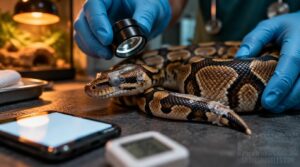
When should you stop playing shed detective and call a pro? Sooner than you’d think. If your snake’s incomplete shedding drags on well past its usual window, don’t wait it out.
Book veterinary care if you see retained eye caps, fragmented shed that keeps coming back, or skin that hardens around the toes or tail tip. Swelling, tight digits, or a snake that struggles to move? That’s urgent.
Open skin, bleeding, pus, or a foul smell points to skin infections, so don’t delay. Has your snake had stuck shed before, or was skin damaged during an earlier fix? Call earlier, because repeat problems rarely fix themselves.
Trust your gut. Take clear photos and note your humidity readings before the visit.
How Can I Prevent Patchy Sheds in The Future?
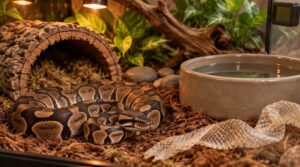
Along with a little planning, prevention beats any shed-day rescue mission. Your snake wants steady comfort, not surprises.
Think of it as a daily routine. Here’s what a winning week looks like:
- Check humidity levels every morning and keep them steady, not just on shed days.
- Offer a snug humidity hide and a bowl big enough for soaking.
- Feed a balanced diet on schedule so skin renews evenly.
Smooth decor matters too. Rough rocks act like sandpaper, and scuffed skin sheds unevenly. Is your enclosure setup hiding a problem?
Hold off on handling once those eyes turn cloudy. Give your snake space, and let the shed run its course. Keep temperatures in range. Small habits, big clean sheds. Sound doable?
Frequently Asked Questions (FAQs)
What does snake fungal disease look like?
Ophidiomyces causes skin lesions you can’t miss: crusty scabs, discolored scales, and thick, clumped shed stuck in sharp-edged patches.
Like most fungal infections, it won’t clear up itself. Skip the guesswork and book veterinary intervention.
Is it safe to touch shedded snake skin?
Yes, clean, dry shed is safe to touch. Skip it if it’s soiled, and wash your hands afterward.
With patchy shedding, leave retained skin alone. Incomplete shedding signals skin health trouble. Tugging adds handling stress.
Does shedding mean a snake is healthy?
Not automatically. Shedding just means your snake is growing. What counts is the quality of the shed. A clean, one-piece slough points to good skin health and steady humidity levels, while stuck patches flag husbandry trouble.
What time of year does a snake shed its skin?
Snakes don’t shed by the calendar. Their shedding cycles follow growth, food, and warmth. Juvenile shedding happens often, adult shedding less. Seasonal shifts slow things down, so offer proper temperature gradients.
Watch your snake instead.
Why is my snake partially shedding?
Ball pythons thrive at 50 to 60 percent humidity levels, yet many homes sit near
When humidity drops too low, watch for subtle changes in behavior first, and this guide to reptile skin infection symptoms shows what to look for before problems get serious.
That gap causes patchy, incomplete shedding, so add a moist hide to gently loosen retained skin and eye caps.
Why is my ball python shedding in patches?
Your python’s skin is playing hard to get. Patchy shedding usually means low humidity, so add a humid hide and offer a lukewarm water soak. Check for retained eye caps, too.
Breathe, you’ve got this.
Is it bad if my snake sheds in pieces?
Picture a sweater peeled in ragged strips, not one smooth pull. That’s patchy shedding, and it’s not ideal. Low humidity often causes it, so add a humidity hide and call a vet if it persists.
How to help a snake with an incomplete shed?
Think of incomplete shedding like a stuck sweater. Don’t yank it! Try warm soaking for 20 minutes, add a humid hide, and boost humidity control.
Still seeing retained skin? Gently wipe with a damp towel.
Can stress cause snakes to shed poorly?
Yes, stress can wreck a shed. Too much handling or a sudden move can trigger incomplete shedding and patchy shedding.
Fix environmental factors, like humidity and temperature, tighten your husbandry techniques, and give them space.
Do specific substrates improve shedding success?
Smart substrate selection helps. Damp sphagnum moss inside a humidity hide is a moisture substrate that keeps skin supple, so patches release cleanly. Bone-dry bedding? Skip it fast. Watch soaking behavior too; it signals thirst.
Conclusion
Picture Mia, a ball python owner, staring at a half-shed snake and muttering, "why is my snake shedding in patches?" Then she moves the hide to the warm side, bumps humidity up, and adds a bigger water bowl. Two weeks later? A perfect, one-piece shed.
That’s how it goes. Fix the setup first, stay patient, and never peel stubborn skin dry. If eyes or toes look wrong, call your vet. Your snake will thank you.