This site is supported by our readers. We may earn a commission, at no cost to you, if you purchase through links.
A dirty enclosure can make a healthy snake sick faster than almost any other husbandry mistake. Bacteria from feces and urates multiply quickly in warm substrate, and by the time you smell something off, the damage is already underway.
The good news? You don’t need to overhaul the entire enclosure every time your snake goes to the bathroom.
Spot cleaning addresses the problem in minutes—if you know exactly where to look and what to remove.
Master this one habit, and your snake’s enclosure stays fresh, safe, and stress-free between full substrate changes.
Table Of Contents
- Key Takeaways
- Signs Your Substrate Needs Cleaning
- How to Spot Clean Snake Substrate
- Tools That Make Cleaning Easier
- Remove Feces, Urates, and Shed
- Replace Soiled Substrate Properly
- Clean Nearby Surfaces Safely
- Adjust for Different Substrates
- Know When Full Changes Matter
- Build a Reliable Cleaning Routine
- Frequently Asked Questions (FAQs)
- How to clean a snake tank?
- How do you clean a snake?
- How to clean a snake’s enclosure?
- Do snakes need to be cleaned?
- How often should I clean my snakes substrate?
- Where do snakes go in October?
- How does feeding frequency affect cleaning schedules?
- Should you clean differently for defensive snake species?
- How long can a snake stay in temporary housing?
- Does substrate type affect how often you clean?
- Conclusion
Key Takeaways
- Spot clean daily by scooping waste plus a 6–10 inch radius of surrounding substrate to eliminate hidden bacteria before it spreads.
- Yellow or orange urates are your snake’s built-in hydration alert — catch them early and add more water access right away.
- Never use bleach or ammonia near your snake; stick to chlorhexidine or F10SC, and always let surfaces dry fully before your snake goes back in.
- When odor lingers after spot cleaning, or when you spot mold and mites, that’s your cue to do a full substrate swap — spot cleaning can’t fix everything.
Signs Your Substrate Needs Cleaning
snake’s substrate doesn’t send a text when it’s time to clean — you have to know what to look for.
Learning to read those cues takes practice, but recognizing when your snake is ready to be handled starts with knowing the difference between normal behavior and stress signals.
A few clear signs will tell you when spot cleaning can’t wait.
Here’s what to watch for.
Fresh Feces on The Surface
Fresh feces are usually dark brown to black, moist, and easy to spot against lighter bedding — color contrast is your first alert. That odor cue hits fast in warm tanks, since temperature influences speeds up bacterial growth.
Check for moisture too; damp substrate around waste is a health sign you shouldn’t ignore. Remove waste immediately and spotclean waste daily for proper snake cage sanitation.
White or Yellow Urates in Bedding
Urates are the other half of snake waste — and just as important to catch.
Fresh ones show up as soft, chalky white clumps sitting beside or near the feces.
Spotting yellow urates is one of the clearest hydration status cues you’ll get; brighter yellow means your snake needs more water access.
Spotclean waste daily, and those urates’ health implications stay easy to manage.
Damp Patches From Spills or Waste
Sometimes, you’ll spot wet patches in the substrate—maybe from spilled water, waste, or a leaking bowl. These dark, glossy spots signal trouble with moisture retention and bedding drainage.
If damp areas linger, bacteria buildup and mold growth become real risks.
Use spot cleaning and good ventilation strategies to manage substrate moisture.
Leak detection helps keep your temperature gradient stable and your snake comfortable.
Shed Pieces Trapped in Substrate
Shed skin doesn’t always land in one tidy pile. Retention patterns vary by substrate — coconut fiber and cypress mulch trap thin flakes deep in the material, while aspen shavings snag larger pieces on wood chip edges.
Detection methods matter here: check under hides and décor during spot cleaning. Leftover shed raises hygiene implications too, since damp fragments encourage mold growth over time.
Sour, Musty, or Rotten Enclosure Odor
Bad smells are your clearest warning sign. Sour odors appear within 24–72 hours when bacteria overwhelm the substrate, while rotten egg smells point to anaerobic bacteria thriving in compacted, oxygen-deprived bedding.
Microbial odor sources multiply fast without proper ventilation strategies and humidity management.
Substrate material impact matters too — coconut fiber and aspen hold moisture longer.
Clean substrate helps control odor better than any odor neutralization product.
How to Spot Clean Snake Substrate
Spot cleaning doesn’t need to be complicated — just consistent. Once you know what to look for, the whole process takes a few minutes.
Here’s how to get it done right, step by step.
Check The Enclosure for Visible Waste
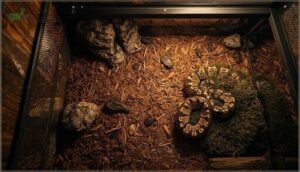
Start your daily spot clean with a quick scan of the whole enclosure — not just the center.
Check these five spots every time:
- Corners — Corner waste accumulation is common; inspect corners first, since snakes often defecate along walls.
- Edges — Look for edge urate rings, the chalky white residue that hugs the enclosure border.
- Glass panels — Surface smear marks reveal waste contact even when bedding looks clean.
- Vents — Ventilation moisture spots indicate humidity buildup that masks odor and waste.
- Substrate color patches — Dark or mottled areas signal contamination beneath the surface.
A weekly inspection catches what daily checks miss.
Move Clean Bedding Aside if Needed
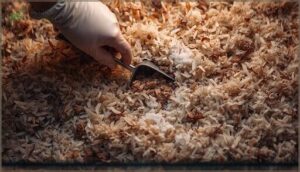
Once you spot the waste, gently push clean substrate away using a small scoop or gloved hand — this is the Bedding Displacement Technique in practice. The goal is Minimal Substrate Disturbance: a Controlled Bedding Shift that exposes only the soiled area.
This keeps clean substrate dry, helps preserve Scent Cues your snake relies on, and aids your daily spot cleaning routine without disrupting Humidity Balance.
Scoop Out The Waste Immediately
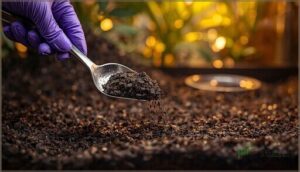
Once the waste is exposed, act fast — waiting even an hour lets bacteria multiply and odor sets in.
Position your scoop at a 45-degree angle using the Scoop Angle Method, then lift cleanly.
Nitrile gloves keep your Glove Hygiene Practices solid and block Salmonella transfer.
This Immediate Bacterial Prevention step is the heart of any daily spot cleaning routine and solid waste removal and odor management.
Remove a Margin of Surrounding Substrate
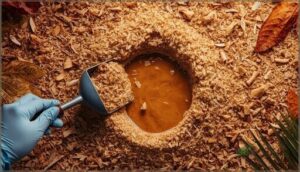
Don’t just grab the visible mess — urine soaks outward 6–10 inches into surrounding bedding. That’s your Urine Absorption Zone, and skipping it leaves a Bacteria Hotspot behind.
Follow simple Margin Depth Guidelines: scoop 1–2 inches deep around the waste. Use Radius Measurement Tips to remove roughly a handful. Practice Burrow Preservation by staying targeted — this keeps spot cleaning effective without triggering unnecessary partial substrate changes.
Spot cleaning reduces bacterial load and helps maintain healthy skin.
Wipe Nearby Hard Surfaces if Soiled
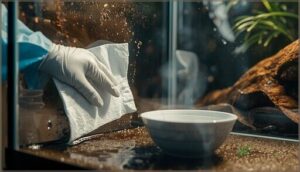
substrate is clear, check hides, glass walls, and the water bowl for splatter.
Spot Cleaning Sequence for hard surfaces:
- Fresh Towel Rotation — one paper towel per dirty zone for cross‑contamination prevention
- bleach‑free wipes or a damp cloth with chlorhexidine on soiled clean accessories
- Rinse clean water bowls with plain water after wiping
- Surface Drying Methods like airflow before your snake returns
Add Fresh Substrate to Restore Depth
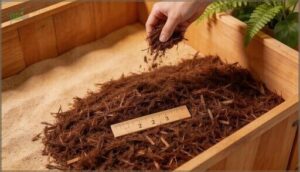
Once the area is clean, fill it back in. Sprinkle fresh bedding loosely — no packing. Use even distribution across the cleaned spot, matching your original depth measurement of 2 to 3 inches for most snakes.
| Step | What to Do |
|---|---|
| Measure first | Check depth with a ruler before adding |
| Estimate volume | One handful for small spots, two for large |
| Add loosely | Sprinkle, don’t press down |
| Account for compression | Add a little extra for settling |
| Monitor humidity | Watch for 24 hours as substrate stabilizes |
Humidity stabilization takes about a day, so keep an eye on your gauge. Consider using coconut fiber for humidity when keeping tropical species.
Dispose of Waste in a Sealed Bag
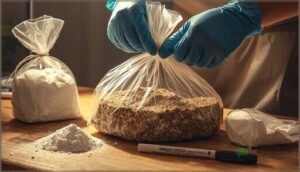
Now that the spot is clean, seal that waste before odors escape.
- Choose a thick 4-mil plastic bag for reliable Bag Material Selection
- Squeeze out air and seal completely — your Double Bagging Technique stops cold leaks
- Label with today’s date for easy Labeling and Dating tracking
- Add baking soda inside for Odor Control Measures
- Use a carry bag for Safe Transport Practices through shared spaces
Tools That Make Cleaning Easier
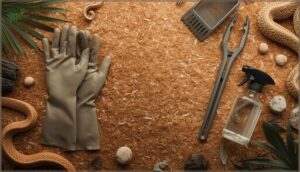
You don’t need a big toolkit to keep a snake enclosure clean. A few simple items make the whole process faster and less messy. Here’s what’s worth keeping on hand.
Small Scoop or Spoon
A good scoop is honestly the unsung hero of spot cleaning. Material choice matters — stainless steel sterilizes easily, while bamboo reduces static in loose aspen. Size selection affects precision; a 2–4 cm curved bowl lifts waste cleanly without pulling clean bedding. Handle ergonomics keep fatigue low during partial replacement sessions.
| Feature | Why It Matters |
|---|---|
| Stainless steel | Easy sterilization methods |
| Curved bowl | Lifts waste without spreading |
| Angled handle | Reaches behind hides easily |
| Dedicated scoop | Prevents cross-contamination |
| Storage solutions | Hung near tank for quick access |
Long Tongs or Feeding Forceps
While a scoop manages loose bedding perfectly, reptile tongs take over where fingers shouldn’t go. Long feeding forceps with Rubber Tip Grip and Stainless Steel Construction keep waste removal clean and safe.
- Extended Reach Design accesses deep corners without disturbing hides
- Curved Jaw Precision grabs hidden urates near glass walls
- Adjustable Length Models suit both small juvenile setups and tall vivariums
- Blunt rubber tips prevent injury during quick-lunge feeding moments
Substrate hygiene best practices and smart handling techniques, to prevent injury, both point to the same tool.
Paper Towels for Hard Surfaces
Wiping down glass panels and hides doesn’t need fancy gear. Paper towels handle hard surfaces surprisingly well during spot cleaning. Look for options with strong Absorbency Capacity, Low‑Lint Performance, and Quick‑Drying Feature — Bounty or Viva both work.
Their Non‑Scratch Surface and Reptile‑Safe Materials won’t harm your enclosure. For textured décor, a hard‑bristled toothbrush paired with paper towels facilitates solid substrate sanitation best practices.
Spray Bottle With Plain Water
A spray bottle with plain water earns its place in any spot cleaning routine. Warm water around 25–30°C loosens dried waste without soaking surrounding bedding — solid substrate moisture management right there.
Choose a clear polyethylene bottle for easy level checks, adjust your nozzle to a fine mist, and label it "plain water only." Clean substrate helps control odor, and this simple tool aids every session.
Reptile-safe Disinfectant for Décor
Décor picks up bacteria fast — that’s where reptile-safe disinfectants earn their keep. Keep one ready for spot cleaning hides, and hard surfaces during your regular snake substrate checks.
- Chlorhexidine (1:30 dilution) counteracts broad-spectrum bacteria safely
- 3% hydrogen peroxide offers hydrogen peroxide benefits with zero residue
- F10SC works even in high humidity — great for tropical setups
- Diluted vinegar removes vinegar scale on mineral deposits
Always follow safe rinsing practices and let surfaces fully dry first.
Gloves for Safer Waste Handling
Gloves are your first line of defense during spot cleaning.
Nitrile gloves offer real nitrile glove benefits — puncture resistant gloves with a chemical resistant coating that holds up against disinfectants and waste.
Their glove fit ergonomics keep your hands comfortable without sacrificing grip.
For solid hygiene control gloves and personal protection, snap a pair on before every session, then wash hands thoroughly after.
Trash Bag Kept Beside The Enclosure
Keep a trash bag right beside the enclosure — it’s one of the simplest bag placement benefits you’ll actually use. Choose a heavy-duty bag for reliable bag material selection, since thin bags tear under damp substrate.
Seal it with a firm knot for solid odor containment strategies after each waste removal. Timely disposal timing keeps enclosure hygiene tight and your cleaning schedule running smoothly.
Remove Feces, Urates, and Shed
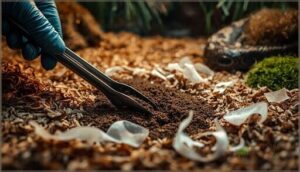
Knowing what you’re looking at makes cleanup faster and less guesswork. Snake waste comes in a few different forms, and each one needs a slightly different approach.
Here’s what to watch for and how to handle each type.
How Snake Feces Usually Looks
Snake feces is usually cigar-shaped — one solid, tubular piece that mirrors your snake’s body thickness. Fresh waste has a tacky texture and a dark brown hue, sometimes nearly black depending on what your snake ate.
Once it dries, you’ll notice a crusty dried surface. In loose bedding, fragmented waste pieces can scatter, so check carefully.
How Urates Differ From Feces
Urates are your snake’s version of urine crystallization — solid white or off-white chunks that sit cleanly on top of the substrate.
Here’s how they differ from feces:
- Color: urates are white or pale yellow; feces are dark brown
- Texture: urates crumble easily; feces stick and smear
- Odor: feces carry a heavier fecal bacterial load and stronger smell
- Cleanup: urates lift out cleanly during spot clean; feces need more surrounding waste removal
- Health clues: yellow or orange urates are dehydration indicators and kidney health signals
Both need prompt removal — clean substrate helps control odor and ammonia smell buildup.
Lifting Sticky Waste Without Spreading It
Feces stick — that’s the tricky part. A gentle upward lift beats dragging every time, because dragging smears waste deeper into loose substrate and turns a small mess into a bigger one.
Try the tool moistening technique: a little plain water on your scoop helps loosen dried residue cleanly. Drop it straight into a containment bag for minimal substrate disturbance and solid odor management.
Removing Substrate Stuck Under Hides
messiest blind spots are in any enclosure. Move your first first, then try hide base lifting before you touch anything else.
Use targeted substrate scooping to pull only the soiled clump — not the whole floor. The edge preservation technique keeps clean bedding undisturbed.
Check for moisture spot detection before replacing, since damp patches hide deeper contamination than they let on.
Clearing Leftover Shed From Damp Spots
Damp spots are where shed likes to cling and cause trouble. The key is moisture management — catch the wet patch early before the skin gets pressed deeper.
Lift the surrounding bedding in small portions for easier shed detachment, rather than yanking the skin directly. Remove the damp clump, replace it with fresh substrate, then allow spot drying to restore proper enclosure airflow and substrate aeration.
Handling Uneaten Prey or Food Residue
Leftover prey is a bigger problem than it looks.
Check the feeding zone, corners, and under hides for any fragments — this is your Prey Fragment Inspection step.
Lift the contaminated top layer immediately; that’s your Substrate Spot Isolation move.
Seal everything in a bag for Waste Bag Sealing and Odor Containment Strategy.
Repeated leftovers? Consider a Feeding Schedule Adjustment.
Replace Soiled Substrate Properly
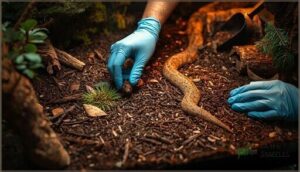
Spot cleaning isn’t about gutting the whole enclosure every time you find a mess. You only need to pull what’s actually dirty, then fill it back in so your snake barely notices.
Here’s what that looks like in practice.
How Much Bedding to Remove
You don’t need to gut the whole enclosure every time.
Follow depth percentage guidelines: remove 25 to 50 percent of depth in the soiled zone, leaving a clean 1 to 2‑inch layer underneath. Maintain radius buffer zones of 4 to 6 inches around waste.
For humid setups, humidity adjusted depth removal may reach 40 percent.
Substrate specific removal varies — aspen provides wider clearance than coconut fiber.
Why Only Contaminated Areas Matter
Spot cleaning only the contaminated areas isn’t laziness — it’s smart substrate hygiene. Clean zones hold your snake’s scent markers, support microfauna balance in bioactive setups, and keep familiar thermal spots intact.
Targeted cleaning removes the bacteria-heavy waste without wiping out your snake’s whole territory. That’s hygiene efficiency working for you, reducing stress while keeping pathogen prevention and odor management on track.
Targeted cleaning removes harmful bacteria while preserving your snake’s territory, balancing hygiene and comfort in one step
Matching The Original Substrate Depth
After scooping out waste, match what you removed with fresh substrate to the same depth — usually 2 to 4 inches for most small to medium snakes.
Here’s why depth consistency checks matter:
- Burrow depth preservation keeps retreat zones intact
- Hide burial uniformity prevents exposed, stressful gaps
- Moisture gradient replication promotes healthy shedding cycles
- Substrate compaction management maintains stable footing over time
Keeping Clean Areas Undisturbed
Think of clean substrate as your snake’s comfort zone — don’t touch what isn’t broken.
When spot cleaning, work only around the waste. Leaving undisturbed bedding protects scent trail preservation, dust cloud reduction, and thermal zone consistency all at once.
| What to Leave Alone | Why It Matters | Benefit |
|---|---|---|
| Clean bedding near hides | Maintains familiar scent trails | Low stress habitat |
| Established warm zones | Keeps heat distribution even | Thermal zone consistency |
| Untouched cool-side substrate | Promotes microbial ecosystem stability | Healthier substrate hygiene |
Partial vs full substrate replacement strategies differ here — spot cleaning vs full substrate change isn’t just a preference; it’s about minimizing stress during snake enclosure cleaning.
Preserving Burrows and Hide Placement
Your snake’s burrow is its home within a home — disturb it carelessly and you’ll undo weeks of comfort-building.
When cleaning near hiding places, protecting burrow structural integrity means everything for burrowing species:
- Leave 2 inches of undisturbed substrate around every tunnel entrance
- Match fresh bedding texture for proper substrate layer matching
- Mark hides before cleaning for hide position consistency
- Preserve scent trail maintenance by avoiding scented cleaners near burrows
- Work from burrow sides for tunnel entrance protection
Avoiding Over-cleaning That Stresses Snakes
Cleaning too much can backfire. Your snake relies on scent cues to feel at home, so avoid excessive disinfection or full resets unless necessary.
Preserve scent cues, leave natural burrows untouched, and limit handling frequency during routine upkeep. Partial vs full substrate replacement strategies make all the difference for stress reduction in captive snakes.
| Approach | When to Use | Benefit |
|---|---|---|
| Partial removal | Visible waste only | Maintains habitat stability |
| Scent preservation | After spot cleaning | Reduces snake anxiety |
| Full replacement | Mold or persistent odor | Resets substrate hygiene |
Clean Nearby Surfaces Safely
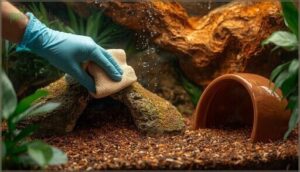
Spot cleaning the substrate is only half the job. Waste can splash or smear onto glass, hides, and décor, and those surfaces need attention too.
Here’s what you need to know about cleaning each one safely.
When to Wipe Glass, Hides, and Décor
Not every mess stays in the substrate.
Wipe the glass after a post-feeding wipe session or when handling oil cleanup is needed — skin oils and saliva smear fast.
Spot stain detection matters too: if your snake dripped waste near the front panel, wipe it before it stains.
Clear condensation stain removal whenever water droplets linger, and always do a pre-heat lamp wipe before turning heat back on.
Using Chlorhexidine or F10 Correctly
Both chlorhexidine and F10SC are solid reptile-safe disinfectants — you just need the right dilution ratios. Dilute chlorhexidine to about 0.05%, which is roughly 1 oz per 32 oz water.
F10SC works at 1:50 for most pathogens. Application method matters: spray, wait for contact time (5 minutes for chlorhexidine), then follow your rinsing procedure carefully before your snake returns.
Why Waste Should Be Removed First
Once you’ve applied your disinfectant, the order of operations matters more than most keepers realize. Waste left on surfaces actively blocks Chemical Efficacy — feces absorb the active ingredients before they reach the glass or plastic beneath.
That means your disinfectant isn’t sanitizing; it’s just getting neutralized. Always prioritize waste removal and odor management first. Clear the mess, then clean.
Your Bacterial Growth Prevention and Respiratory Health outcomes both depend on it.
Rinsing Treated Items Thoroughly
Once disinfectant has done its job, rinsing treated items thoroughly is non‑negotiable.
Run a warm water rinse — around 35–40°C works best — and turn items slowly so water reaches every crevice. Use soft brush rinsing on textured décor. If your snake is sensitive, a filtered water rinse is safer.
Two to three minutes removes most residue.
Hot water and mild dish soap manage routine cleaning accessories and décor during substrate changes easily.
Avoiding Bleach, Ammonia, and Strong Scents
Bleach and ammonia might seem like powerful fixes, but they’re the wrong tools here. Snakes detect chemical residue through their Jacobson’s organ — even trace amounts trigger stress responses.
Stick to these safer options instead:
- Reptile-safe disinfectants like F10SC or chlorhexidine
- Fragrance-free cleaners labeled non-toxic to reptiles
- Bleach-free wipes for quick surface cleanup
- Non-toxic disinfectants with no sodium hypochlorite
- Alternative odor control through proper ventilation and airflow
Drying Surfaces Before The Snake Returns
Before your snake goes back in, make sure everything is actually dry — not just looks dry. Run a paper towel across hard surfaces; it shouldn’t pick up moisture.
Open the mesh top for airflow optimization and ventilation management. A small fan helps with heat assisted drying too.
Even humidity control matters here — high ambient humidity slows air drying noticeably. Give it 15–30 minutes.
Adjust for Different Substrates
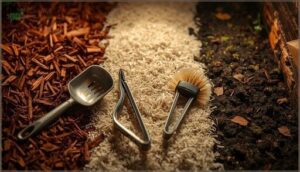
Not every substrate cleans the same way, and that’s worth knowing before you start.
type of bedding your snake lives on changes how you spot clean, how often you do it, and what tools work best.
Here’s how to handle the most common options.
Aspen Spot Cleaning Tips
Aspen’s pale color is your best friend for waste localization strategies — dark feces and chalky urates stand out immediately. That’s why aspen absorption capacity works in your favor; the bedding draws moisture in, keeping waste contained.
spot clean effectively:
- Scan daily for visible waste
- Replace soiled substrate immediately using partial substrate changes
- Fluff remaining aspen for substrate aeration techniques
Dispose of soiled material promptly with proper substrate disposal.
Coconut Fiber and Coco Husk Care
Coconut fiber and coco husk are workhorses for humidity control — but that moisture‑holding power means waste detection takes more attention.
Dark feces show up well against light fiber, but urates can hide in damp clumps.
| What You’re Checking | What to Do |
|---|---|
| Soiled coco husk chunks | Scoop waste plus surrounding substrate |
| Odor without visible waste | Check under hides for buried buildup |
Prompt partial substrate changes support substrate hygiene, bacterial growth prevention, and moisture balance without disrupting your snake’s environment.
Cypress Mulch Cleaning Approach
Cypress mulch is one of the most forgiving substrates for Moisture Management — but it hides waste better than you’d think. Consistent Hygiene Monitoring keeps your cleaning routine tight and maintains Temperature Stability throughout the enclosure.
- Scoop feces and urates together, plus a small ring of nearby mulch
- Leave dry surrounding areas alone — Burrow Preservation matters
- Apply reptile disinfectants to glass and hides only after waste is cleared
- Follow a Waste Disposal Protocol: seal soiled mulch in a bag immediately
Balancing partial vs full substrate replacement strategies here is straightforward — spot cleaning addresses most issues, and substrate hygiene stays solid as long as damp patches get attention before mold sets in.
Topsoil Blend Waste Removal
Topsoil blends are trickier than cypress mulch — the soil absorption capacity means urates soak in quickly. Scoop size matters here: use a 2–3 inch scoop and pull an 8–10 inch radius around waste.
| Task | Detail |
|---|---|
| Urates Loosening | Mist lightly before scooping |
| Compaction Indicators | Check monthly; replace if dense |
| Isopod Population | 20 per 10 gallons aids waste removal |
Humidity Adjustment keeps bioactive substrate healthy between changes.
Paper Towel and Newspaper Replacement
Unlike soil-based setups, paper towels and newspaper are the easiest substrates to maintain. Replacement frequency stays low when you check daily.
- Paper Integrity Check — swap soiled layers only, not the whole sheet
- Fragment Size Control — tear pieces small to prevent hide entanglement
- Ink Transfer Prevention — keep printed newspaper edges away from glass
- Moisture Monitoring — let cleaned areas dry fully before your snake returns
Bioactive Setup Spot Cleaning Basics
Bioactive setups work differently. Your cleanup crew — isopods, springtails — manages a lot of the waste for you, so full substrate changes aren’t needed often.
Focus on Microfauna Management: remove large feces quickly, but leave the surrounding substrate alone. These Beneficial Bacteria and Substrate Layering need to stay intact.
Keep Moisture Balance steady, and your bioactive vivarium maintenance stays minimal.
Know When Full Changes Matter
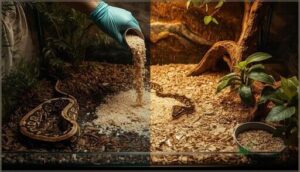
Spot cleaning deals with most messes, but sometimes the whole substrate needs to go. A few clear signs tell you when a full change is overdue.
Watch for any of these in your enclosure.
Persistent Odor After Spot Cleaning
If you’re still smelling something after spot cleaning, that’s your enclosure telling you spot cleaning isn’t enough anymore.
Here’s what’s likely happening beneath the surface:
- Urine absorption drives liquid 1–2 inches deep into aspen, leaving odor-causing crystals behind
- Hidden waste pockets under hides breed anaerobic bacteria within 48 hours
- Porous surface retention keeps smells locked into wood décor and hides
- Ventilation deficiency traps ammonia vapors, amplifying bacterial buildup fast
- Persistent odor signals it’s time to reset your substrate replacement schedule with a full deep clean
Mold, Discoloration, or Clumping
Fuzzy patches, color staining patterns, and substrate clump formation are your clearest mold growth indicators. Mold shows up as fuzzy discoloration — sometimes dark, sometimes bluish-black — especially where moisture pools.
Poor airflow management makes it worse fast.
Once you spot fungal growth or clumping from dampness, spot cleaning won’t fix it. Your substrate replacement schedule needs a full reset now.
Repeated Wet Patches That Stay Damp
If wet patches keep showing up and never dry, your substrate replacement schedule needs a full reset.
Moisture often pools in low spots—Enclosure Leveling fixes that.
Poor Ventilation Optimization and frequent misting also trap dampness.
Adjust Bowl Placement and Misting Frequency. Stir substrate for better aeration.
Persistent wetness means mold control and fungal growth risks rise, so full substrate change is essential.
Hidden Waste Under Corners and Hides
Corner waste accumulation is sneaky — feces and urates pile up in the creases where hides meet the enclosure floor, well below eye level. Even a solid weekly cleaning schedule misses hide pocket odor traps.
Microclimate moisture and substrate depth variation keep that waste warm and buried.
detection probing techniques — a scoop or tongs — to check those pockets.
That’s your full-change signal.
Mites or Pest Activity in Bedding
Tiny moving specks in your bedding aren’t just unsettling — they’re a hard signal to do a full substrate change right away.
- Mites spread fast and hide deep in loose bedding
- Carpet beetle signs include shed larval skins near fabric décor
- Dust mite allergens build up in humid, warm enclosures
- Mold prevention requires strict humidity control between 40–60%
- Spot cleaning won’t solve an active infestation — full replacement does
Spot Cleaning Versus Full Substrate Changes
Spot cleaning is your daily defense — a full change is the reset button. Knowing which one to use saves time, money, and stress for both you and your snake.
| Factor | Spot Cleaning | Full Substrate Change |
|---|---|---|
| Time Management | 5–10 minutes | 30–60 minutes |
| Stress Impact | Minimal disturbance | Temporary appetite loss possible |
| Odor Threshold | Manages fresh waste | Required for persistent odor |
| Humidity Influence | Minimal disruption | Full reset opportunity |
| Cost Efficiency | Low material use | Higher substrate cost |
Build a Reliable Cleaning Routine
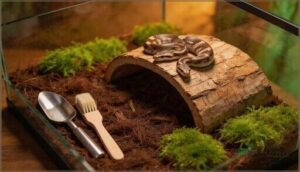
Spot cleaning alone won’t cut it long-term — your snake needs a full routine to stay healthy. A consistent schedule takes the guesswork out of knowing when to clean, stir, or swap out bedding entirely.
Here’s what a solid weekly, monthly, and ongoing routine actually looks like.
Daily Enclosure Waste Checks
A daily cleaning routine is your first defense against odor buildup.
Focus your Edge Zone Inspection along the front edge and hot-spot side — that’s where waste collects first.
Color Cue Detection makes this easier: dark, twisted feces and chalky urates stand out clearly against dry bedding.
Start each check with three high-priority spots:
- Water Bowl Monitoring for spills and damp zones
- Hide Corner Checks beneath and behind all hides
- Waste Frequency Log entry after every removal
This daily snake tank cleaning habit keeps waste removal and odor management simple and consistent.
Weekly Substrate Inspection and Stirring
Once daily checks become second nature, bump your routine up a level with a weekly substrate inspection.
Work through known Waste Hotspots — corners, under hides — and stir just a few centimeters deep. This Stirring Depth keeps Burrow Integrity intact.
Check Moisture Zones for damp patches, and trust your nose for Odor Detection.
Weekly inspections for ideal hygiene really do make a difference.
Monthly Full Substrate Replacement Timing
Even with great weekly habits, a monthly full substrate replacement is your enclosure’s reset button. Pick a consistent Scheduled Inspection Day each month — ideally timed around your snake’s Feeding Cycle Alignment and outside a Humidity Fluctuation Period.
Your Stress Minimization Window matters too. Clean during calm, low-traffic hours. Here’s a simple monthly approach:
- Remove the snake first, always
- Pull all bedding and wipe surfaces dry
- Restore the original substrate depth before returning décor
Adjusting Frequency for Humidity and Snake Size
Your monthly reset works best when you fine-tune it around two real variables: humidity and snake size.
| Factor | Clean More Often |
|---|---|
| High humidity enclosure | Every 3–4 weeks |
| Large or thick-bodied snake | Every 2–3 weeks |
Moisture-Holding Substrate like coconut fiber traps waste faster under humid conditions. Bigger snakes create a heavier Snake Size Load, spreading waste wider. Multiple Snakes? Double your frequency.
Logging Cleanings to Track Enclosure Hygiene
You’ll notice patterns and stay ahead of problems when you log each cleaning. Date Time Stamps and Zone Mapping make it easy to spot waste hotspots.
A Substrate Type Log paired with Waste Category Tags keeps your hygiene schedule for reptiles tight. Tool Usage Notes help improve your maintenance routine.
- See waste trends
- Catch missed spots
- Simplify substrate replacement schedule
Watching for Health Issues After Cleaning
After cleaning, watch your snake closely for the first 24 hours — that’s when most health issues show up.
| Sign | What to Watch | When It Appears |
|---|---|---|
| Respiratory Signs | Wheezing, open-mouth breathing | First 12–24 hours |
| Skin Irritation | Redness, rubbing on glass | Same day |
| Feeding Changes | Skipped meals, regurgitation | 24–72 hours |
| Temperature Fluctuations | Cool damp spots, slow digestion | Within 1 hour |
| Stress Behaviors | Glass surfing, hiding too long | First 6–12 hours |
Catching these early prevents respiratory infections, scale rot, and pathogen prevention failures before they escalate.
Frequently Asked Questions (FAQs)
How to clean a snake tank?
A clean snake tank starts with removing waste fast, wiping surfaces with reptile-safe disinfectants, and renewing substrate regularly. Stay consistent, and your snake stays healthy.
How do you clean a snake?
Spot cleaning focuses on the enclosure, not the snake itself. Most healthy snakes don’t need baths.
Only clean your snake if it has stuck shed, mites, or visible soiling — and always use lukewarm water.
How to clean a snake’s enclosure?
Keeping your snake’s enclosure fresh comes down to consistent waste disposal, smart disinfection protocols, and regular ventilation checks.
Remove feces fast, maintain your temperature gradient, and stay ahead of humidity management.
Do snakes need to be cleaned?
Snakes don’t need baths, but their enclosure does. Waste builds up fast, raising Salmonella Risk and hurting Air Quality. Good reptile hygiene keeps your snake healthy and stress-free.
How often should I clean my snakes substrate?
Most setups need daily waste checks and a deeper spot clean each week.
Your snake’s size, enclosure volume, and seasonal humidity shifts all affect how often that schedule needs to adjust.
Where do snakes go in October?
In October, wild snakes follow Habitat Migration Patterns toward Denning Site Selection areas like rocky crevices, rodent burrows, and root systems.
Seasonal Temperature Triggers and shorter days push them to seek warmth before winter sets in.
How does feeding frequency affect cleaning schedules?
Feed more often, clean more often — it’s that simple.
Bigger meals and tighter feeding intervals spike urate production and waste accumulation rates quickly, so your cleaning workload scales directly with how frequently your snake eats.
Should you clean differently for defensive snake species?
Yes — defensive snakes need a calmer, quicker approach.
Use slow movements, long tongs, and protective barriers to limit handling stress. Adjusted frequency and temporary holding help reduce defensive posturing without disrupting scent markers.
How long can a snake stay in temporary housing?
A snake can stay in a temporary holding habitat as long as the escape-proof temporary enclosure stays climate-stable. Match temperature and humidity requirements closely.
Watch stress indicators daily and return your snake home promptly.
Does substrate type affect how often you clean?
Absolutely — substrate type directly shapes your cleaning schedule.
Aspen’s absorbency impact keeps waste contained, while coco fiber’s moisture retention demands faster action.
Cypress mulch’s clumping tendency hides waste, and bioactive crew efficiency reduces removal frequency.
Conclusion
Think of your snake’s enclosure like a garden—neglect the soil, and weeds choke the roots.
Spot cleaning is your daily pruning: swift, targeted, life‑saving. By mastering how to spot clean snake substrate, you’re not just tidying—you’re guarding against hidden bacteria and stress.
This simple habit keeps odors at bay, humidity balanced, and your reptile thriving. No overhaul needed, just minutes of care.
Your snake? They’ll slither through a fresh, safe world, thanks to you. Keep their sanctuary clean—one scoop at a time.
- https://www.furrycritter.com/pages/articles/reptiles/spot_cleaning.htm
- https://enviroliteracy.org/animals/how-often-should-you-change-snake-bedding/
- https://www.animalsathome.ca/how-to-clean-a-snake-tank/
- https://www.beginnersnakes.com/best-substrate-for-snakes/
- https://charterhouse-aquatics.com/blogs/help-guides/feeding-accessories-every-reptile-owner-should-have