This site is supported by our readers. We may earn a commission, at no cost to you, if you purchase through links.
You know that feeling when your snake’s skin starts to cloud over and you brace yourself for the shed—hoping it’ll come off in one smooth piece, not patchy strips? The difference between a perfect shed and stubborn, stuck skin boils down to moisture.
Ideal humidity isn’t just a comfort issue; it’s the secret ingredient that helps your snake slip free of its old layer without drama.
Miss the mark, and you’re looking at retained eye caps, split tails, or worse.
Whether you keep a ball python or a corn snake, dialing in the ideal moisture for snake shedding means fewer headaches and healthier reptiles.
Table Of Contents
- Key Takeaways
- Importance of Moisture in Snake Shedding
- Setting Up The Ideal Shedding Environment
- Monitoring and Managing Humidity Levels
- Step-by-Step Shedding Support
- Troubleshooting Shedding Problems
- Frequently Asked Questions (FAQs)
- What should my snakes’ humidity be when shedding?
- Is 40 humidity too low for ball python?
- Can snakes hear humans talk?
- Is 75 too cold for corn snakes?
- Can plants help regulate humidity in snake enclosures?
- How does moisture affect snake enclosure odor control?
- Are there moisture-related risks for snake eggs?
- What are signs of over-moisturizing a snake habitat?
- Can moisture levels impact snake feeding behavior?
- Conclusion
Key Takeaways
- Keeping humidity between 50–70% is crucial for most snakes to shed cleanly, with tropical species needing even higher levels and arid species thriving with targeted moisture.
- Reliable humidity control—using digital hygrometers, proper substrates like coconut coir or cypress mulch, and a well-placed humid hide—prevents stuck skin, infections, and shedding failures.
- Spotting early signs like faded colors, cloudy eyes, and increased hiding lets you boost moisture before shedding problems start.
- Too much or too little humidity can cause serious issues, from retained eye caps and tail necrosis to mold and respiratory distress, so regular monitoring and quick adjustments are essential.
Importance of Moisture in Snake Shedding
Moisture is the single biggest factor that determines whether your snake sheds clean in one piece or ends up with stuck skin and a stressed-out owner.
When your snake’s belly starts showing that telltale pinkish hue, it’s a heads-up to start dialing in conditions—reading the early signs of shedding through belly color changes gives you the lead time to get humidity right before it matters.
Getting it right comes down to understanding a few key things — how humidity actually drives the shedding process, what goes wrong when levels are off, and why your ball python’s needs might look nothing like your corn snake’s.
Here’s what you need to know before we get into the specifics.
Role of Humidity in Ecdysis
When your snake is ready to shed, humidity isn’t just helpful — it’s biological. Hormonal triggers kick off ecdysis, and moisture helps skin barrier formation by lubricating the space between old and new layers. Humidity seeking behavior is your snake’s way of telling you what it needs.
When snakes seek humidity before shedding, they are not being picky — they are following biology
- Maintain 50–70% baseline humidity
- Boost levels before shedding cycles
- Provide a dedicated humid hide
You may also notice that snakes become reclusive as they prepare to shed.
Effects of Improper Moisture Levels
Too much or too little moisture throws off the whole shedding process. Low humidity leads to dysecdysis—retained skin, tail necrosis, and even immune suppression. Over misting can trigger skin infection risk and respiratory stress. You’ll notice behavioral changes, too. Reliable humidity measurement tools are your best defense against these issues.
Watch for cloudy eyes indicator as a sign of impending shedding.
| Problem | Cause | Result |
|---|---|---|
| Dysecdysis | Low humidity | Retained skin |
| Skin infection | Over misting | Blister disease |
| Tail necrosis | Chronic dryness | Tail tip loss |
Species-Specific Humidity Needs
Not every snake plays by the same moisture rules. Here’s a quick breakdown:
Desert species like ball pythons thrive in drier setups, while tropical snakes need far more humidity—check out this guide on optimal snake room conditions to dial in the right environment for your specific species.
- Tropical species like ball pythons need 60–70% humidity, while Brazilian rainbow boas push close to 100% at night.
- Temperate colubrids like corn snakes do fine at 40–60%, relying more on a damp hide than a wet enclosure.
- Arid‑adapted snakes shed cleanly under 60% with targeted moisture—not a soggy tank.
Humidity gradients matter more than one fixed number.
Setting Up The Ideal Shedding Environment
Getting the environment right is half the battle for shedding success.
A few smart setup choices can make the whole process easier for your snake — and less stressful for you.
Here’s what to focus on first.
Choosing The Right Substrate for Moisture
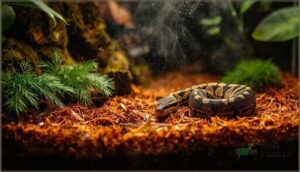
Your substrate is the foundation of humidity control. Coconut coir benefits include holding moisture steadily without turning soggy — ideal for ball pythons needing around 60% humidity.
Cypress mulch retention naturally keeps levels between 60–80%. For desert species, paper towel alternatives keep things dry where needed.
Follow substrate depth guidelines of 2–3 inches, and always match species-specific bedding choices to your snake’s natural environment.
Creating and Maintaining a Humid Hide
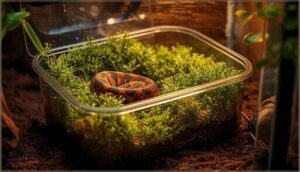
Building a humid hide is simpler than it sounds. Choose a snug container — around 20 by 15 centimeters for corn snakes — and place it partially on the warm side, near 28–30 °C. Fill it with damp moss, using the squeeze test for moisture testing.
Follow a weekly maintenance routine: wash, disinfect, refill. Encouraging use is easy when placement strategy matches your snake’s travel path.
Enclosure Ventilation and Mold Prevention
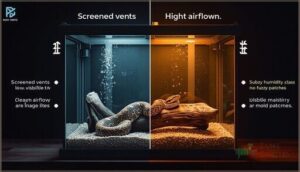
Good ventilation and humidity control go hand in hand. Place screened vents low on the cool end for fresh air intake and high on the warm end for exhaust — that’s your airflow balance working naturally. This vent placement keeps a steady humidity gradient without trapping stagnant moisture.
For mold detection, check weekly for condensation and odors. Combine drainage layers with substrate hygiene to prevent fuzzy mold mats from forming.
Monitoring and Managing Humidity Levels
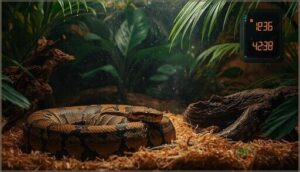
Once your enclosure is set up, the real work begins — keeping humidity in the right range, day after day.
That means knowing what’s actually happening inside the tank, not just guessing.
Here are the three key areas to stay on top of.
Using Hygrometers for Accurate Readings
You can’t manage what you don’t measure — and that’s where a good hygrometer earns its place. Digital hygrometers beat analog hygrometers hands down, hitting ±2-3% accuracy versus analog’s shaky ±5-10%.
For placement strategies, mount yours mid-tank, away from heat sources. Use alarm settings to flag drops below 50%.
Calibration techniques like the salt test keep readings honest, and don’t skip battery maintenance — dead batteries lie.
Misting and Humidifiers: How and When
Misting systems and humidifiers work best when you know exactly how to use them. For misting, lukewarm dechlorinated water and light, fine sprays keep things balanced — morning sessions build steady humidity throughout the day. Watch your digital hygrometer and bump frequency when cloudy eyes appear.
Fogger placement, position nozzles six inches above substrate on the warm side. Nozzle maintenance weekly and distilled water prevent clogs and bacterial buildup.
Adjusting Moisture by Season and Shedding Cycle
Your snake’s shedding cycle doesn’t care what month it is — but your humidity strategy should. Winter heating drops indoor air below 30%, so
Step-by-Step Shedding Support

When your snake hits the pre-shed phase, a few small moves on your end can make a big difference.
Think of it as a short checklist — nothing complicated, just the right steps at the right time.
Here’s what to watch for and do throughout the process.
Recognizing Pre-Shed Signs
Ever notice your snake’s colors fading or its eyes turning cloudy? These are classic signs of shedding—think Dull Skin and Cloudy Eyes.
Increased Hiding and Reduced Appetite often kick in, too. Some snakes ramp up Soaking Behavior, hunting for moisture.
Spotting these signals early helps you prevent dysecdysis, retained skin, and incomplete shedding before they become real headaches.
Adjusting Moisture During Shedding
Once you spot pre-shed signs, it’s time to act on humidity control before the process stalls.
- Boost enclosure moisture 10–20% above baseline using Water Bowl Placement on the warm side or Automated Misting Timers for consistent Seasonal Humidity Spikes.
- Check your Moss Squeeze Test—damp, not dripping—before renewing the humid hide.
- Compare Fogger vs Humidifier options; your hygrometer confirms which keeps your snake shedding environment optimization on track.
Ensuring Cleanliness and Hydration
Once moisture levels are dialed in, cleanliness becomes your next job.
Spot-clean the enclosure daily — shed pieces, waste, and damp substrate can harbor bacteria that irritate fresh skin.
Practice good water bowl hygiene by rinsing with hot water regularly, and use dechlorinated water for both bowls and humid hides.
Watch hydration monitoring cues like bowl visits and body contours — wrinkling means your snake needs more water, fast.
Troubleshooting Shedding Problems

Even with careful moisture control, snakes can run into shedding trouble. Knowing what causes these hiccups lets you act fast and keep your snake comfortable.
Here’s what to watch for and how to fix common shedding issues.
Identifying Incomplete or Problematic Sheds
Incomplete shedding — or dysecdysis — shows up in ways you can’t miss once you know what to look for.
Retained skin often clings in rings around the tail, causing Tail Band Swelling that can cut off circulation fast.
Watch for Retained Eye Caps, dull after shedding ends, plus Behavioral Red Flags like soaking or striking.
Skin Infection Signs and persistent patches are your Vet Intervention Triggers.
Correcting Low or High Humidity Issues
Once you’ve spotted a bad shed, fixing the humidity is usually straightforward. For low humidity, try lid cover modification — tape foil over part of your screen top to slow moisture loss. Move your water bowl placement to the warm side so it evaporates more. Add damp sphagnum moss to your humid hide.
For high humidity, switch to drier substrate options, improve ventilation, or consider dehumidifier implementation in the room.
When to Seek Veterinary Help
Sometimes home care just isn’t enough. If your snake has retained eye caps after a shed, don’t try to remove them yourself — that can cause permanent vision loss.
tight rings of stuck shed alerts around the tail signal tail circulation issues that cut off blood flow fast.
systemic infection signs like oozing skin, foul odor, or lethargy need immediate veterinary care.
emergency respiratory distress — wheezing, open-mouth breathing — means same-day vet attention, no exceptions.
Frequently Asked Questions (FAQs)
What should my snakes’ humidity be when shedding?
Think of it like Goldilocks — not too dry, not too swampy. Most snakes shed cleanly at 50–70% humidity, but species-specific humidity requirements vary. Tropical snakes need more; desert species, less.
Is 40 humidity too low for ball python?
Yes, 40% humidity is dangerously low for a Ball Python. It triggers shedding failure risks, dehydration signs, and respiratory infections. Their natural habitat needs sit firmly between 60–80%.
Can snakes hear humans talk?
Snakes can’t hear you the way a dog might, but they do detect low-frequency vibrations through bone conduction. Your voice creates subtle vocal vibration responses they sense, not understand.
Is 75 too cold for corn snakes?
At 75°F, your corn snake is perfectly fine. That’s actually the recommended cool-side nighttime temperature — well above the danger zone.
Just make sure your warm side stays around 85°F for proper thermoregulation.
Can plants help regulate humidity in snake enclosures?
Absolutely. Live plants pull double duty in any terrarium setup and maintenance routine — their transpiration mechanism quietly releases moisture into the air, raising humidity 5–10% without extra effort from you.
How does moisture affect snake enclosure odor control?
Ironically, the moisture that keeps your snake healthy is the same thing that makes enclosures smell.
Balanced humidity, good airflow, and spot-cleaning strategy together control ammonia volatilization, bacterial growth, and mold odor prevention effectively.
Are there moisture-related risks for snake eggs?
Moisture risks are real for snake eggs.
Excessive humidity above 95% can drown embryos, while insufficient humidity causes desiccation.
Substrate saturation, condensation risks, and pathogen growth all threaten developing eggs without proper humidity management.
What are signs of over-moisturizing a snake habitat?
Too much humidity shows up fast: mold growth on substrate, glass condensation dripping down walls, musty odors rising from soggy bedding.
Scale rot blisters on belly scales, and respiratory distress — wheezing, open‑mouth breathing.
Can moisture levels impact snake feeding behavior?
Humidity levels directly affect snake hydration needs, appetite correlation, and feeding frequency.
Poor humidity management in snake enclosures leads to hydration stress, mood changes, and unreliable prey strike—throwing off snake diet and digestion, and increasing snake behavior and stress.
Conclusion
Like a key cut to exactly the right size, the ideal moisture for snake shedding makes everything else fall into place. When humidity is dialed in, your snake slips free cleanly, every time.
Keep a humid hide stocked, track readings with a reliable hygrometer, and adjust with the seasons. Your snake can’t ask for what it needs—but now you know how to read the signs and respond before a bad shed ever starts.
- https://enviroliteracy.org/animals/what-happens-if-a-snake-enclosure-is-too-humid/
- https://www.reptilecentre.com/blogs/reptile-blog/5-ways-to-increase-humidity-for-reptiles
- https://pmc.ncbi.nlm.nih.gov/articles/PMC10396665/
- https://scholar.lib.ntnu.edu.tw/zh/publications/postnatal-ecdysis-establishes-the-permeability-barrier-in-snake-s-2/
- https://freescience.info/understanding-snake-molting-and-skin-shedding/