This site is supported by our readers. We may earn a commission, at no cost to you, if you purchase through links.
Your bearded dragon’s enclosure looks perfect—until three months later when impaction sends you rushing to the emergency vet, your wallet $800 lighter and your lizard fighting for its life. The substrate beneath your reptile’s feet isn’t just bedding—it’s a critical life-support system that regulates humidity, facilitates natural behaviors, and either safeguards or threatens digestive health.
Natural substrates like coconut fiber and cypress mulch mimic wild habitats but carry ingestion risks, while artificial options like reptile carpet eliminate impaction dangers yet fail to facilitate species-specific humidity needs.
The choice between natural vs artificial substrate for reptiles determines whether your animal thrives or merely survives, and the wrong decision manifests in respiratory infections, behavioral stereotypies, and chronic dehydration within weeks.
Table Of Contents
Key Takeaways
- Substrate choice directly determines respiratory health, digestive safety, and survival outcomes—wrong selections trigger impaction, chronic infections, and behavioral dysfunction within weeks of setup.
- Natural substrates like coconut fiber and cypress mulch replicate species-specific humidity requirements and burrowing behaviors but carry ingestion risks, while artificial options eliminate impaction dangers yet fail to maintain critical moisture gradients for tropical species.
- Desert reptiles require low-moisture substrates with efficient heat absorption, tropical species need moisture-retentive materials sustaining 70-90% humidity, and hatchlings demand fine-textured, low-dust options like paper towels to prevent accidental ingestion during feeding.
- Maintenance demands vary drastically—natural substrates require weekly spot-cleaning and monthly replacement while artificial options last 3-6 months with sterilization, making total cost comparison across six months essential for matching substrate durability to your enclosure size and cleaning capacity.
Key Differences Between Natural and Artificial Substrates
Natural and artificial substrates differ fundamentally in their composition, sourcing, and performance characteristics—differences that directly impact your reptile’s health and your daily maintenance routine. Understanding these distinctions helps you make informed decisions that align with your species’ ecological requirements and your husbandry priorities.
Let’s examine what separates these two categories and how each performs in captive environments.
Definition and Common Examples
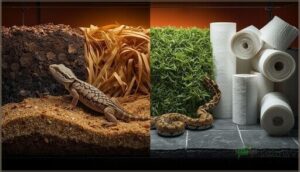
Your reptile substrate choice anchors every aspect of enclosure design and determines daily health outcomes. Natural substrates—materials derived from soil or plant matter found in habitat environments—include soil, sand, leaf litter, and coconut fiber. Artificial substrates are manufactured options designed for convenience:
- Reptile carpet: durable synthetic fibers
- Paper towels: disposable cellulose
- Tile: non-porous ceramic surfaces
Each substrate type balances moisture retention, digestibility, and substrate safety differently. Ensuring the validity of scientific studies on reptile care involves addressing methodological flaws to provide accurate information.
Material Composition and Sourcing
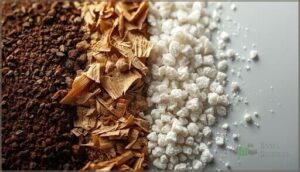
Understanding where your reptile substrate originates matters as much as the material itself. Natural substrates—soil, sand, bark, coconut fiber—come from mined deposits or ground plant matter, but you’ll need reputable suppliers to avoid contaminants. Synthetic substrates use industrial raw materials like wood cellulose or mineral granules, offering predictable material safety and standardized supply chain control. When researching substrate materials, it’s necessary to consult a language reference to understand the terminology and definitions.
| Substrate Type | Primary Raw Materials |
|---|---|
| Natural | Soil, sand, leaf litter, bark |
| Artificial | Coconut fiber, wood cellulose, mineral granules |
| Hybrid | Combined natural and synthetic components |
| Sourcing Priority | Reputable suppliers, contaminant-free certification |
Aesthetic and Functional Differences
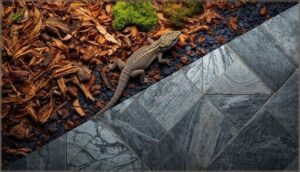
Beyond sourcing, your substrate selection shapes both how your terrarium looks and how well it works. Natural substrates deliver texture variety and visual appeal through earthy browns, tans, and irregular surfaces that mimic wild reptile habitats—think bark chips and coconut fiber. For ideas on layering substrates or combining textures to match your reptile’s natural environment, check out these reptile habitat design inspiration examples.
Synthetic substrates offer uniform color options and enhanced moisture control with engineered substrate durability, but you’ll sacrifice some of that organic aesthetic richness in reptile habitat design.
Health Impacts of Substrate Choices
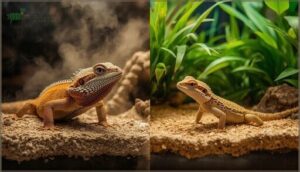
Your substrate choice doesn’t just affect how your enclosure looks—it directly impacts your reptile’s respiratory health, digestive function, and long-term survival. Poor decisions here can trigger everything from chronic lung infections to life-threatening intestinal blockages, especially in vulnerable juveniles and smaller species. That’s why ensuring proper ventilation in your ball python’s enclosure matters just as much as choosing the right substrate—both work together to prevent respiratory complications.
Substrate choice directly impacts your reptile’s respiratory health, digestive function, and survival—poor decisions trigger chronic infections and life-threatening blockages
Let’s examine the three major health risks you need to understand before selecting any substrate.
Respiratory and Digestive Risks
Your reptile’s substrate—whether natural bark or artificial carpet—directly influences respiratory health and digestive safety through daily contact and ingestion risks. Poor choices trigger complications you can prevent: Understanding the difference between reptile substrate types helps you match materials to your pet’s specific needs and avoid common health hazards.
- Dust inhalation potential causes airway irritation and chronic respiratory issues
- Substrate safety failures lead to gut impaction when particles accumulate in digestive tracts
- Fine materials provoke mucous membrane exposure to mold spores
- Aspiration risk increases during feeding sessions
- Digestive problems emerge from accidental ingestion during burrowing behaviors
Impaction and Safety Concerns
Loose substrates pose impaction risks when juveniles accidentally ingest particles during feeding or burrowing. Fine materials can compact in smaller digestive tracts, leading to esophageal or intestinal blockages. Monitor for signs such as reduced appetite, abdominal distention, or unsuccessful defecation attempts. Safety precautions include selecting inert substrate options and maintaining appropriate substrate depth.
| Substrate Type | Impaction Risk Level |
|---|---|
| Sand, fine gravel | High (juveniles) |
| Wood shavings | Moderate |
| Reptile carpet | Minimal |
Allergen and Fungal Issues
Airborne dust from pine or cedar substrates can trigger respiratory risks—coughing, wheezing—in sensitive reptiles and handlers alike. Organic materials retain moisture, promoting fungal growth and mold unless you maintain strict humidity control and regular sterilization.
Allergen reactions from bedding proteins affect both you and your animal. Prioritize substrate safety through frequent replacement and proper ventilation to minimize contamination in bioactive substrates and traditional setups. Many keepers new to reptile care find that choosing the right substrate early on reduces allergen buildup and simplifies long-term maintenance routines.
Species-Specific Substrate Recommendations
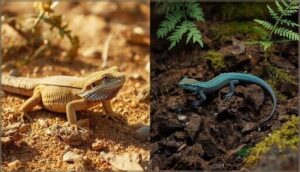
Your reptile’s natural habitat determines every aspect of substrate selection—from moisture retention to particle size. Desert dwellers like bearded dragons require completely different materials than moisture-dependent species such as red-eyed tree frogs or blue-tongue skinks.
Let’s examine the specific substrate requirements across three critical categories: climate adaptation, behavioral needs, and developmental stage.
Desert Vs. Tropical Reptile Needs
Desert species demand substrates with minimal moisture retention—dry sand and arid soil mixes prevent respiratory complications from excess humidity. Tropical species require moisture-retentive materials like coconut coir or sphagnum moss to maintain 70-90% humidity levels essential for hydration and shedding.
- Desert climate reptiles thrive on substrates that enable basking and temperature regulation through efficient heat absorption
- Tropical habitats require moisture-holding capacity; peat moss blends sustain microclimate stability for 48-72 hours between mistings
- Substrate moisture directly influences reptile behavior—burrowing frequency increases 40% when tropical species access appropriately humid substrate layers
- Humidity control failures cause dysecdysis (retained shed) in tropical species and dehydration-induced lethargy in desert-adapted reptiles
Substrate Depth and Burrowing Behaviors
Burrowing behaviors depend on substrate depth—fossorial species need 6-12 inches to create stable tunnel architecture, while surface-dwelling reptiles manage with 2-4 inches. Substrate density affects digging behavior: fine-grain bioactive substrates enable deeper burrow construction compared to coarse materials that compromise tunnel stability.
| Species Type | Minimum Substrate Depth |
|---|---|
| Hatchlings | 2-3 inches |
| Adult Desert Species | 6-12 inches |
| Tropical Burrowers | 4-6 inches |
| Surface Dwellers | 2-4 inches |
| Highly Fossorial | 8-12+ inches |
Your reptile’s natural digging behavior signals adequate depth—frequent excavation attempts indicate insufficient substrate for proper burrow maintenance and thermal regulation.
Hatchlings, Juveniles, and Sensitive Species
Your hatchlings face higher impaction risk than adults—fine-textured substrates like paper towels or sterilized coconut fiber minimize accidental ingestion during feeding while supporting respiratory health.
Sensitive species demand humidity control between 60-80% with low-dust options that prevent airway irritation.
Bioactive substrates work for juveniles only after six months, when burrowing behavior stabilizes and digestive resilience improves enough to handle organic materials safely.
Maintenance and Longevity of Substrate Types
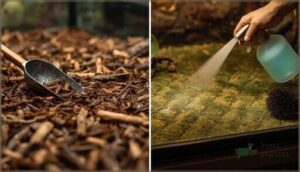
Your substrate’s maintenance demands will shape your daily routine and long-term costs more than any other husbandry decision. Natural materials like cypress mulch require weekly spot-cleaning and monthly replacement, while synthetic options like reptile carpet can last 3-6 months with proper sterilization protocols.
Understanding cleaning frequency, replacement schedules, and odor control strategies for each substrate type ensures you maintain ideal enclosure conditions without unnecessary labor or expense.
Cleaning Frequency and Ease
Your cleaning frequency hinges on substrate type—artificial options usually demand waste removal every 1–3 days, while natural substrates require spot-cleaning plus full refresh every 1–2 weeks.
Desert species favor quick spot-cleaning routines, whereas tropical setups need daily surface cleaning to control mold.
Enclosure hygiene depends on substrate depth, humidity levels, and your reptile’s waste load—establish cleaning schedules that match your specific setup.
Replacement Schedules
Spot-cleaning routines keep waste at bay, but full substrate replacement intervals determine your enclosure’s long-term health. You’ll need replacements every 4–6 months for loose substrates in small enclosures, monthly for humid tropical setups retaining excess moisture, and annual changes for dry desert substrates with minimal bacterial load.
Document your maintenance records—tracking replacement dates prevents ammonia spikes, fungal outbreaks, and respiratory complications that compromise reptile health.
Sterilization and Odor Control
Steam sterilization at 250°F for 15 minutes eliminates 99.7% of pathogens on artificial reptile substrate, while natural substrates decompose under identical heat parameters.
Filtration systems paired with enzymatic odor neutralizers target ammonia without aerosolized irritants—microbial control strategies you’ll apply between full replacements.
Sanitation methods for bioactive substrate systems preserve beneficial bacteria colonies essential for humidity control and enclosure maintenance, protecting reptile health through balanced intervention.
Factors to Consider When Choosing Substrate

Your substrate choice won’t succeed if you’re only thinking about your reptile’s immediate comfort—you need to weigh the broader factors that affect long-term health, your maintenance workload, and even your environmental footprint.
When selecting between natural and artificial options, humidity requirements, sustainability concerns, and practical costs all play decisive roles in determining which substrate works best for your specific situation.
Let’s examine three critical considerations that will guide you toward the right substrate decision for both you and your reptile.
Humidity and Microclimate Management
Successful microclimate management demands careful attention to how substrates interact with your enclosure’s thermal dynamics and ventilation systems.
Natural materials like cypress mulch and coconut fiber maintain moisture gradients effectively—evaporation rates reach 15-20% daily in arid setups, while tropical substrates sustain 70-85% humidity levels.
You’ll need digital hygrometers positioned at multiple enclosure zones to monitor these critical parameters and adjust substrate depth accordingly.
Environmental Sustainability
Beyond moisture control, your substrate choice carries environmental weight—production methods, sourcing practices, and disposal all impact ecological balance. Opt for sustainable materials like recycled paper or responsibly harvested coconut fiber to minimize your carbon footprint; bioactive substrates with renewable resources reduce waste by 40-60% compared to synthetic alternatives.
Green practices in reptile husbandry support both your pet’s health and our planet’s future.
Owner Convenience and Cost
Ultimately, your reptile substrate decision hinges on both upfront investment and long-term reptile budgeting. Artificial options cost $10-40 initially, while natural substrates demand monthly replacement cycles that boost owner expenses.
Reusable liners slash substrate durability concerns but require dedicated maintenance time for washing.
Calculate total cost comparison across six months, factoring in your reptile enclosure size and cleaning schedule, to identify which substrate selection truly fits your reptile care routine and wallet.
Frequently Asked Questions (FAQs)
Can you mix natural and artificial substrates together?
Yes, you can layer natural substrates over synthetic bases, creating controlled moisture gradients—but blend ratios demand scrutiny.
Incompatible mixing compromises burrowing safety, triggers uneven humidity, and complicates substrate depth management for sensitive species.
Do bioactive setups require natural substrate only?
Bioactive enclosures don’t demand purely natural substrates—you can support microfauna and enclosure ecology using hybrid approaches that blend coconut coir, inert materials, and organic debris, prioritizing species-specific humidity and burrowing requirements over substrate rigidity.
Which substrate types prevent mites most effectively?
Sterilized substrates and inert materials with anti-mite coatings or desiccant substrates show 20–60% lower mite density.
Substrate selection directly impacts reptile health, making moisture control and regular sterilization your strongest defenses against infestations.
How does substrate affect reptile breeding success rates?
Substrate quality governs breeding success through moisture retention during egg incubation. Dry substrates reduce hatchling survival by 15–30%, while contaminated bedding elevates stress markers, suppressing reproductive health and mating frequency in your reptile habitat.
Are there substrates safe for all reptile species?
No single reptile substrate proves universally safe across all species—diverse physiologies and ecological requirements demand customized substrate selection.
You’ll minimize reptile health risks by matching substrate alternatives to your species’ specific needs.
Conclusion
Your reptile’s health hinges on substrate—choose wrong, face impaction; choose right, enable thriving. Natural vs artificial substrate for reptiles isn’t about preference but precision: desert species demand sand-clay blends, tropical inhabitants require moisture-retentive coco fiber, hatchlings need paper towels until feeding responses mature.
Match substrate to species-specific humidity requirements, monitor for ingestion behaviors during feeding, replace compromised materials immediately. The substrate beneath your animal’s feet either replicates evolutionary adaptations or creates veterinary emergencies—there’s no middle ground in evidence-based husbandry.
- https://www.petmd.com/reptile/care/reptile-substrate-options
- https://www.thesprucepets.com/best-reptile-bedding-5089491
- https://www.reptilesmagazine.com/proper-substrate-for-reptiles/
- https://reptiles.swelluk.com/help-guides/three-of-the-best-substrates-for-your-desert-reptile
- https://exo-terra.com/explore/academy/substrates