This site is supported by our readers. We may earn a commission, at no cost to you, if you purchase through links.
A ball python will ignore a $200 designer hide and spend three weeks wedged behind the water bowl. Why? The hide was too roomy, too exposed, and too cold.
That’s the quiet truth behind reptile habitat design inspiration: the best enclosures look good because they work. Cork bark releases humidity slowly. A snug hide on each side of the thermal gradient lowers stress. A slate slab holds heat long after the lamp cycles off.
You can build a rainforest floor, a sun-baked canyon, or a clean minimalist setup. Here’s how to match style to species, and how to make every piece earn its place.
Table Of Contents
- Key Takeaways
- Creative Reptile Habitat Themes: Forest, Desert, and Minimalist
- Functional Reptile Habitat Backgrounds With Safe, Natural Materials
- Naturalistic Substrate Ideas for Bioactive Reptile Habitats
- Reptile Enclosure Features for Climbing, Hiding, and Basking
- Species-Specific Snake Habitat Design Inspiration
- Frequently Asked Questions (FAQs)
- What is a DIY reptile enclosure?
- What happened to custom reptile habitats?
- How do you create a natural habitat for arboreal reptiles?
- How do you customize a reptile shelf?
- How often should habitat themes be rotated?
- Can reptiles recognize their owners visually?
- What colors calm stressed reptiles most?
- Do reptiles prefer live or artificial plants?
- How to photograph reptile habitats effectively?
- How often should reptile habitats be cleaned?
- Conclusion
Key Takeaways
- Build your enclosure around your species’ real needs, since a ball python wants snug hides and steady humidity, a crested gecko wants height, and a bearded dragon wants open floor, no matter how good the setup looks.
- Give your animal a thermal gradient with a secure hide on both the warm and cool sides, plus a broad, anchored basking spot, so it can choose its own comfort and feel safe.
- Choose safe, functional materials like cork bark, boiled hardwoods, and scrubbed slate, and avoid pine and cedar because their oils irritate reptile lungs.
- Match your substrate and humidity to your theme, using a drainage layer and cleanup crew for bioactive tropical setups and a fast-draining sandy mix for arid ones, and check moisture weekly.
Creative Reptile Habitat Themes: Forest, Desert, and Minimalist
Themes give your enclosure a purpose beyond looks. Naturalistic forest and jungle designs suit humidity-loving species, so build them with coconut coir, sphagnum moss, and leaf litter, then add bromeliads for climbing and cover. Keep humidity between 70 and 90 percent in these setups, and a hygrometer inside the enclosure makes it easy to monitor.
Desert and arid landscape inspirations flip the script: use sandy, fast-draining substrate, slate basking slabs, and spineless succulents.
Pairing that sandy base with warm-toned rock and a few hardy plants works especially well in a python terrarium design guide, where layout and hiding spots matter as much as looks.
Modern and minimalist habitat styles work differently. You’ll keep one basking platform, one secure hide, and a water dish, which makes cleaning easy and your animal easy to see.
Whatever you choose, let species-specific design lead. A crested gecko needs height, while a bearded dragon needs open floor. Bioactive and self-sustaining terrariums fit any theme, so plan your clean-up crew early. Isopods and springtails keep waste in check.
Functional Reptile Habitat Backgrounds With Safe, Natural Materials
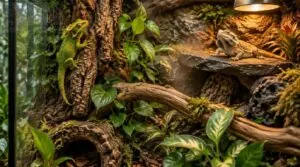
Once your theme is set, the background makes it real. Functional backgrounds do more than look good, they give your animal grip, cover, and climbing routes.
Start with natural cork bark. It’s non-toxic, rot-resistant, and lightweight, and it releases humidity slowly, which suits tropical species. Expect three to five years of use. Untreated oak, maple, or birch works too, once you sand it smooth and bake or boil it. Skip pine and cedar, because their phenols irritate reptile lungs.
Slate, quartz, and lava rock add heat-retentive, textured backgrounds for basking zones. Scrub and boil every stone, and anchor it securely. Sandstone and limestone can shift pH, so test them first in humid setups.
Mount pieces with aquarium-safe silicone or screws.
Naturalistic Substrate Ideas for Bioactive Reptile Habitats
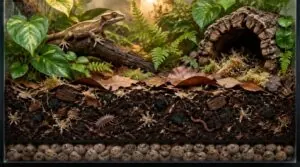
Your backdrop is built, so now build what’s underneath. Bioactive substrates turn a basic enclosure into one of the best bioactive and selfsustaining terrariums you can run, because your bioactive cleanup crew breaks down waste for you.
Once the substrate is settled, add a snug spot for your animal to retreat to, and these hide boxes designed for bioactive habitats hold up well in damp, humid conditions.
Start at the bottom with a bioactive drainage layer of 5-10 cm LECA or gravel, capped by mesh so soil can’t sink into it. Then pick your mix by species:
- Tropical: tree fern fiber, orchid bark, coco coir, sphagnum, and charcoal
- Arid: 40% topsoil, 40% play sand, 20% clay
- Charcoal: about ¼ part keeps the mix fresh
- Leaf litter: Live Oak or Magnolia tops the mix
- Hide damp sphagnum under cork for arid cleanup crews
Check substrate moisture weekly, adjusting before problems start.
Reptile Enclosure Features for Climbing, Hiding, and Basking
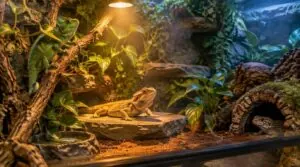
Your reptile doesn’t just live in its enclosure; it climbs, hides, and warms up there every single day.
The four features below cover climbing structures, secure hides, basking platforms, and the warm and cool zones that tie them together.
Use them to build a layout that helps natural behavior, not just a nice-looking tank.
Climbing Structures And Routes
Picture a snake pouring itself up a gnarled manzanita limb, pausing on a cork ledge, then slipping along a bark-covered wall. That’s your goal.
Picture a snake flowing up a gnarled manzanita limb, resting on a cork ledge, then gliding along a bark-covered wall
Build continuous routes, not isolated perches. Link vertical climbing structures with branches at varied angles, each as wide as your animal’s body. Textured backgrounds add grip, and smart hardscape placement turns climbing structures into habitat enrichment.
Secure Hiding Spots
Cork bark flats make secure and stylish shelters, and your snake will use them daily. Place reptile hiding spots at both the warm and cool ends, each with two entrances so nothing gets trapped. Size each hide snugly to your enclosure dimensions.
Wedge hardscape firmly into bioactive substrates, and let textured backgrounds hide the bracing. A stable hide never shifts.
Safe Basking Platforms
Platforms work best when they’re broad, level, and anchored. Safe Basking Platforms should hold your reptile’s full body without tipping, so wedge or secure every shelf before you add the lamp.
Mount the heat source above, out of reach, then measure surface temperature at the contact point. Choose sealed, non-toxic stone or wood, and check UVB intensity at that spot.
Warm And Cool Microhabitats
A hot tank isn’t a good tank; a balanced tank is. Thermal gradients let your reptile choose its own comfort. For a temperature gradient setup, build a warm to cool gradient:
- Anchor basking zones at one end.
- Verify basking temperature with probes.
- Keep the far end cooler.
- Add shade near both ends.
Then watch your animal move between them daily.
Species-Specific Snake Habitat Design Inspiration
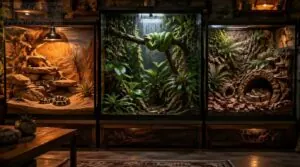
Every snake species you keep needs its own habitat blueprint, not a generic tank with a heat lamp. The three setups below show how species-specific design shapes humidity, climbing space, and structure. Use them as your starting point, then adjust each one to fit your animal.
Ball Python Hides and Humidity
A nervous ball python is a hungry, stressed one, and the fix starts with snug ball python hides. Put one on the warm side and one on the cool side of your temperature gradient, so your snake never trades security for comfort.
Add a humid hide with moist sphagnum moss near the cool end. Keep humidity control steady at 55-70%, rising to 70-80% during shed.
Corn Snake Climbing and Burrowing
isn’t an either-or choice here.
Start with enclosure dimensions that give you height as well as floor space. Add vertical climbing structures like secured grapevine and cork flats. Then fill the base with deep, bioactive substrates or aspen so it can tunnel. Keep thermal gradients running across both levels, and your snake will explore confidently.
Boa Constrictor Space and Structure
starts with generous enclosure dimensions, not cramped compromises. Your boa needs room to stretch, climb, and retreat.
- Add vertical climbing structures with sturdy branches.
- Anchor every perch securely.
- Provide a warm hide and a cool hide.
- Use deep bioactive substrates for humidity.
Species specific design keeps your boa confident, active, and secure every single day.
Frequently Asked Questions (FAQs)
What is a DIY reptile enclosure?
Think building your own is too hard? It’s not. A DIY reptile enclosure is a custom habitat you make from PVC, acrylic, or glass, sized and vented for your animal.
Good enclosure planning saves money, too.
What happened to custom reptile habitats?
Custom Reptile Habitats closed in 2024 amid unfulfilled prepaid orders. You’ve got options now: browse Reptile Habitat Design Ideas, pick species specific design, build bioactive ecosystems, add automated climate controls, or consider custom enclosure import.
How do you create a natural habitat for arboreal reptiles?
Why do arboreal species ignore the floor you spent hours designing? Because they live overhead. Build a vertical enclosure with sturdy branches at varied angles, live plants, and moisture-retentive bioactive substrates, and they’ll climb.
How do you customize a reptile shelf?
Why settle for a stock shelf? Choose PVC or replica rock, drill precise mounting holes, and add adhesive support.
Then tune thermal gradients with adjustable basking zones, smart thermometers, and easy-clean substrates for species-specific design.
How often should habitat themes be rotated?
Think of your terrarium as a stage, not a museum. Refresh reptile habitat themes every three to four months, using an enclosure visualization tool to plan each change. Move one element at a time, and honor species care requirements.
Can reptiles recognize their owners visually?
Ever notice your bearded dragon tracking you across the room? That’s visual recognition at work. Dragons and iguanas learn your face and movement, while snakes lean on scent. Tortoises combine sight and sound.
What colors calm stressed reptiles most?
Soft blues, muted sage greens, and warm grays calm stressed reptiles best. They lower visual arousal and mimic foliage cues that signal safety. Skip bright yellows, oranges, and reds. Your reptile’s behavior will show the difference.
Do reptiles prefer live or artificial plants?
Reptiles don’t care whether a plant is real or fake. They care what it does. Live plants raise humidity and support bioactive ecosystems, while artificial ones keep your reptile enclosure easy to maintain.
How to photograph reptile habitats effectively?
Shoot your naturalistic enclosure with sidelight to reveal texture, and respect reptile lighting needs by skipping flash. Use a polarizing filter to cut glare, then shoot at eye level, and let reptile behavior unfold naturally.
How often should reptile habitats be cleaned?
Most enclosures need a deep clean every 30 days. Spot-clean daily, wipe surfaces weekly, and use reptile safe materials. Enclosure maintenance also means checking substrate depth, your bioactive drainage layer, and reptile enclosure ventilation design.
Conclusion
Picture your ball python curled into a snug cork hide, flank warm against slate, the air faintly damp with rainforest breath.
Let reptile habitat design inspiration start the build, then let your animal finish it. Watch where it basks, hides, and climbs, and move every branch, hide, and bowl until the routine looks easy. Function first is the whole craft. When your snake stops hunting for cover and simply rests, you’ve built the enclosure right.