This site is supported by our readers. We may earn a commission, at no cost to you, if you purchase through links.
Your snake’s enclosure isn’t just a container—it’s a microclimate engineering challenge where material selection determines whether you’ll maintain stable humidity gradients or fight daily temperature fluctuations.
Glass terrariums offer vapor barrier properties that support precise environmental control through digital monitoring systems, while natural terrariums built from untreated hardwood and cork integration create biome-accurate aesthetics at the cost of hygrothermal predictability.
The natural vs glass terrarium for snakes debate hinges on quantifiable variables: thermal conductivity coefficients, substrate moisture retention rates, and long-term structural integrity under cyclical humidity exposure.
Choosing between tempered glass panels with silicone-sealed joints and bark-integrated wooden frames requires evaluating your species’ physiological requirements against your capacity for environmental manipulation, maintenance protocols, and spatial constraints within your living environment.
Table Of Contents
- Key Takeaways
- Key Differences: Natural Vs Glass Terrariums
- Impact on Snake Health and Behavior
- Environmental Control: Humidity and Temperature
- Cleaning, Maintenance, and Safety
- Display and Home Integration
- Top 4 Products for Snake Terrariums
- Frequently Asked Questions (FAQs)
- Are glass enclosures good for snakes?
- What is the best material for snake enclosures?
- What type of enclosure is best for a snake?
- Are bioactive enclosures better for snakes?
- Can you mix natural elements in glass terrariums?
- Do snakes prefer natural substrates over bare glass?
- Which terrarium type works best for hatchlings?
- How often should live plants be replaced?
- Are natural terrariums suitable for venomous snake species?
- Conclusion
Key Takeaways
- Glass terrariums offer superior environmental precision through vapor barrier properties and digital monitoring systems, maintaining humidity within 1% and temperature within 1°F, while natural wood setups provide better passive insulation but require daily manual adjustments to prevent moisture-related warping and substrate desiccation.
- Material selection directly impacts long-term maintenance protocols—tempered glass resists scratches and maintains optical clarity for 10-20+ years with minimal upkeep, whereas untreated hardwood frames risk structural degradation within 5-10 years under constant humidity exposure despite excellent thermal retention.
- Your snake’s stress levels and behavioral enrichment depend heavily on terrarium design, with natural setups offering textured substrates and layered hiding opportunities that reduce cortisol responses, while glass enclosures enable unobstructed observation for monitoring health indicators like feeding strikes and shedding cycles.
- Successful terrarium selection requires matching your species’ physiological requirements (humidity gradients of 30-80%, thermal zones spanning 75-95°F) against your capacity for active environmental manipulation versus passive microclimate stabilization, with digital hygrometers and thermostats being non-negotiable for glass setups.
Key Differences: Natural Vs Glass Terrariums
Choosing between natural and glass terrariums isn’t just about looks—it’s about matching your snake’s biological needs with practical maintenance realities.
Budget considerations matter too—understanding the full cost of pet snake ownership helps you invest in quality housing that lasts rather than cheap setups requiring frequent replacement.
Each design approaches environmental control, observation access, and long-term durability from fundamentally different engineering perspectives.
Understanding these core distinctions will help you evaluate which construction method aligns with your species-specific requirements and husbandry capabilities.
Materials and Construction
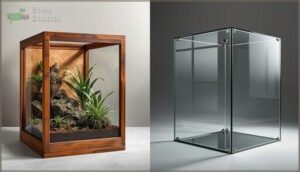
Frame designs fundamentally separate natural from glass terrariums. Wooden cabinet structures, using untreated hardwood, support natural setups with customizable cork and bark integration. In contrast, rigid metal or reinforced frames support tempered glass panes in conventional enclosures.
Material durability differs dramatically. Glass terrariums resist scratches and maintain optical clarity for 10-20+ years, whereas wooden frames risk warping under constant moisture exposure despite excellent insulation methods that stabilize thermal gradients.
Sealant types determine structural integrity across both enclosure materials. Silicone or specialized aquarium-grade compounds prevent leaks around joints in glass terrariums, maintaining humidity control. Untreated hardwood joints in natural snake enclosures require dowel or metal screw reinforcement to guarantee long-term stability.
Your terrarium construction choice directly impacts husbandry outcomes. PVC panels in plastic alternatives offer lightweight portability but eventually yellow from UV exposure, compromising both aesthetics and thermal performance compared to tempered or laminated glass that resists impact while supporting electronic heating devices more efficiently.
| Feature | Natural Terrariums | Glass Terrariums |
|---|---|---|
| Primary Materials | Untreated hardwood frames, cork, naturalistic substrate | Tempered/laminated glass panes, silicone sealant, metal brackets |
| Insulation Performance | Excellent ambient thermal retention, natural ventilation airflow | Moderate heat retention, requires electronic heating devices for stability |
| Structural Longevity | 5-10 years (moisture warping risk) | 10-20+ years (scratch-resistant, impact-resistant) |
Visual Appeal and Observation
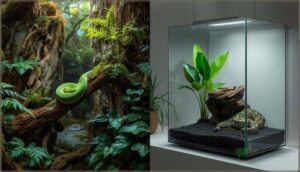
Beyond terrarium construction, visual clarity separates glass from natural snake enclosures during observation. Glass terrariums transmit crisper reflections, highlighting scale patterns under full-spectrum lighting that boosts color contrast and fidelity. Natural setups layer textures—moss, bark, live plants—creating dappled shading and depth as you move around the display, blending aesthetically with room decor while softening edges for cohesive living-space integration.
| Observation Factor | Natural Terrariums | Glass Terrariums |
|---|---|---|
| Visual Clarity | Layered textures create depth, dappled light | Uninterrupted transparency, crisp scale detail |
| Lighting Effects | Ambient room light reveals substrate variation | Full-spectrum lighting enhances color fidelity, strong silhouettes |
| Color Contrast | Bark, moss provide natural earth tones | Room reflections alter perceived snake coloration slightly |
| Observation Angles | Multiple viewing planes via elevated perches | Clean sightlines from all sides aid monitoring |
| Display Aesthetics | Living-corner feel, blends with decor | Minimalist, modern presentation highlights animal |
Environmental Control Capabilities
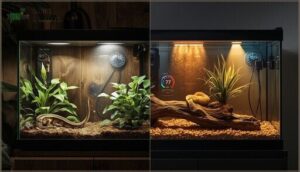
While glass excels at visual clarity, environmental control capabilities reveal sharper contrasts between enclosure types. Glass terrariums create tighter vapor barrier properties, facilitating humidity systems like misting units to deliver precise moisture boosts—often raising relative humidity 15–25% within minutes—while digital thermostats regulate ceramic heat emitters for temperature gradients spanning 75–95°F across basking and cool zones, supporting microclimate management that reduces thermal regulation stress.
| Control Parameter | Natural Terrariums | Glass Terrariums |
|---|---|---|
| Humidity Control | Substrate and plants buffer ambient moisture passively | Misting units, foggers deliver rapid 15–25% RH spikes |
| Temperature Regulation | Room lighting creates diurnal cycles naturally | Thermostats maintain ±1°F precision across thermal zones |
| Ventilation Control | Open vents rely on ambient air exchange | Reduced air exchange enables stable microclimate management |
| Climate Simulation | Seasonal adjustments follow room conditions | Heat mats, ceramic emitters replicate species-specific gradients |
| Monitoring Precision | Manual observation tracks general trends | Digital hygrometers log data to 0.1°F, 0.1% RH continuously |
Natural setups depend on substrate depth around hides and elevated perches to stabilize microclimates through passive insulation, whereas glass enclosures leverage reflective surfaces and targeted heat placement for environmental enrichment that aligns terrarium design with your snake’s preferred thermal zone, encouraging natural basking and exploration behaviors.
Maintenance and Durability
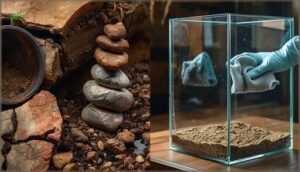
Enclosure design choices shape long-term upkeep demands. Glass terrariums tolerate non-abrasive disinfectants without cloudiness, maintaining optical clarity with streak-free solutions that simplify tank maintenance. Tempered panels resist routine impacts during cleaning and preserve seal durability through silicone joints inspected quarterly for watertight integrity.
Natural setups demand careful rock relocation to access substrate compaction zones, requiring periodic refresh cycles to sustain humidity control and prevent detritus accumulation that compromises material longevity.
| Maintenance Factor | Natural Terrariums | Glass Terrariums |
|---|---|---|
| Cleaning Methods | Rock relocation, substrate refresh every 3–6 months | Non-abrasive solutions, streak-free wipes weekly |
| Seal Durability | Clay joints settle, creating minor gaps over time | Silicone maintains watertight integrity 5–10+ years |
| Material Longevity | Wood warps under humidity; substrate requires replenishment | Tempered glass resists scratches, UV degradation indefinitely |
| Repair Complexity | Replace substrate, restack rocks without overhaul | Swap panels individually; silicone resealing as needed |
Impact on Snake Health and Behavior
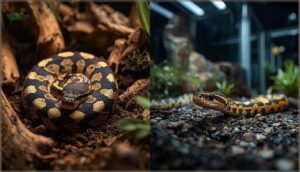
Your snake’s enclosure doesn’t just house them—it shapes how they behave, respond to stress, and thrive day to day. Natural and glass terrariums create fundamentally different psychological and behavioral environments, affecting everything from hiding instincts to feeding confidence.
The material itself—whether glass or plastic for snake enclosures—plays a surprisingly large role in regulating temperature, visibility, and your snake’s sense of security.
Your snake’s enclosure isn’t just shelter—it’s the architecture of their behavior, stress response, and daily wellbeing
Understanding these impacts helps you choose an enclosure that fosters your snake’s wellbeing at every level.
Stress Reduction and Enrichment
Think of your snake’s enclosure as more than a cage—it’s behavioral therapy in action. Natural terrariums deliver environmental enrichment through textured substrates and varied surfaces that encourage sensory stimulation, which directly aids snake welfare by reducing stress responses.
You’ll notice improved thermal regulation and stress management when your setup mirrors wild conditions, promoting reptile behavior and welfare through proven snake calming techniques and relaxation strategies.
Hiding Spots and Natural Cover
Your snake instinctively seeks refuge, whether under dense shrubs that offer 40 percent better concealment than sparse brush or within rocky outcrops featuring multiple crevices. Natural barriers like these terrain features reduce stress while supporting thermoregulation in snake terrariums.
- Plant camouflage blends enclosure design with wild grasses and evergreen branches
- Snake hides beneath bark piles provide escape routes and humidity control
- Natural cover from leaf litter exceeding 2 inches thick shields against visual stressors
Behavioral Stimulation and Exploration
Enrichment unlocks exploratory behavior through varied substrate depths, novel textures like leaf litter, and multiple focal points that trigger deliberate search patterns lasting several minutes.
Your snake’s cognitive development accelerates when environmental enrichment includes cork rounds and bark hides, prompting increased tongue-flicking sequences and head movement that indicate active sensory stimulation.
Terrarium design choices directly influence activity patterns and overall snake welfare.
Feeding and Activity Patterns
Feeding cycles in natural terrariums mirror wild foraging behaviors, with snakes displaying extended activity peaks—often 20–40 minutes—following prey placement in complex structures that encourage search sequences and strike accuracy refinement.
Digestion rates improve when prey selection matches species-specific nutritional requirements and basking site availability, directly influencing captive snake management outcomes and long-term reptile husbandry success through optimized feeding behaviors and nutrition protocols.
Environmental Control: Humidity and Temperature
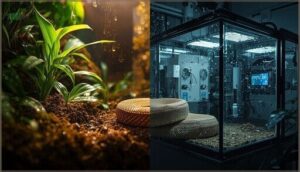
Getting temperature and humidity right isn’t just important—it’s the difference between a thriving snake and a struggling one.
Natural setups create stable microclimates through substrate and plant transpiration, while glass enclosures require more active monitoring and adjustment to prevent dangerous fluctuations. You’ll need to understand how each terrarium type manages these critical environmental factors, then match your setup to your snake’s specific physiological requirements.
Humidity Stabilization in Natural Setups
Live plants and substrate transform your natural terrarium into a self-regulating moisture engine, buffering humidity fluctuations that would otherwise stress tropical species. You’ll achieve consistent environmental control through three critical mechanisms:
- Moss Selection – Sphagnum moss retains 2 to 5 times its weight in water, creating microclimate zones with 60 to 80 percent relative humidity for 24 to 48 hours between misting cycles.
- Substrate Management – Organic matter (leaf litter, decaying wood) releases moisture gradually as decomposition proceeds, preventing the rapid humidity drops common in minimalist glass setups.
- Water Cycling – Positioning shallow water dishes near mossy areas extends humidity stabilization across several days without constant rewatering.
Regular humidity monitoring with digital hygrometers ensures your terrarium design maintains species-specific parameters, reducing thermal regulation stress while supporting natural behaviors like exploration and concealment. For those seeking sophisticated solutions, consider the benefits of for maintaining precise environments.
Temperature Regulation in Glass Enclosures
Glass terrariums demand active temperature regulation because their high thermal conductivity creates rapid heat exchange with ambient air, requiring precise heat source placement to establish effective thermal gradients. Controlled ventilation systems paired with strategic insulation materials on exterior panels are necessary to minimize temperature fluctuation while supporting thermoregulation.
| Component | Function in Temperature Control |
|---|---|
| Heat mat | Creates localized warm zone from below |
| Ceramic emitter | Provides radiant warmth without light |
| Thermostat probe | Monitors and adjusts heat output responsively |
| Insulation panel | Reduces exterior heat loss during night cycles |
| Ventilation grate | Prevents overheating and condensation buildup |
Infrared thermometers map surface temperatures across zones, revealing hotspots where dark substrates absorb radiant energy and increase nearby temps by 2 to 5 degrees Fahrenheit above baseline readings. Accurate are essential for maintaining safe and stable conditions within glass enclosures.
Monitoring With Digital Tools
Once you’ve established thermal regulation baselines in your glass enclosure, digital dashboards with remote monitoring capabilities let you verify conditions without disturbing your snake. Automated alerts notify you when temperature regulation or humidity control deviates beyond safe thresholds, protecting reptile health and wellness while reducing stress.
Core digital monitoring functions:
- Wireless sensors track microclimates across basking, mid, and cool zones with 5-minute sampling intervals
- Real-time data analytics generate trend graphs spanning 24-hour, 7-day, and 30-day periods for pattern recognition
- Threshold-based automated alerts trigger email or push notifications when humidity falls below 40 percent or temperatures exceed 32 degrees Celsius
- Sensor calibration routines maintain accuracy within 0.5 degrees Celsius through monthly verification protocols
- Encrypted cloud storage retains 12 months of historical logs for veterinary consultation and husbandry optimization
Placement of multiple sensor nodes across your terrarium design and setup captures spatial variation, confirming each microclimate aligns with species-specific targets within a 2-degree tolerance range—precision that manual spot-checks can’t achieve consistently.
Adjusting for Species-Specific Needs
Your environmental adaptation strategy shifts dramatically once species research confirms specific requirements—arid pythons demand low-humidity gradients near 30 percent with basking zones reaching 93 degrees Fahrenheit, while tropical colubrids require 70 percent ambient moisture and vertical climbing structures in terrarium design that mirror forest canopies.
This demonstrates how habitat mimicry and understanding snake behavior fundamentally shape reptile enclosure design, humidity control, and temperature regulation protocols for ideal snake care and maintenance across different snake species.
Cleaning, Maintenance, and Safety
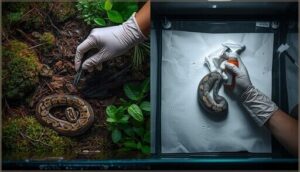
Keeping your snake’s enclosure clean isn’t just about aesthetics—it directly affects your animal’s respiratory health, parasite load, and long-term survival rates.
Natural terrariums require more frequent spot-cleaning due to organic substrate decomposition and microbial activity, while glass enclosures allow rapid visual identification of waste but demand careful disinfection protocols to prevent pathogen transmission through porous silicone seals.
Understanding the maintenance demands, structural vulnerabilities, and biosafety considerations of each terrarium type will help you establish sustainable husbandry practices that protect both you and your snake.
Cleaning Routines for Both Terrarium Types
You’ll maintain ideal snake care by adapting your terrarium sanitizing approach to substrate composition and vapor barrier properties. Glass terrariums demand weekly microfiber cloth applications to eliminate water marks without scratching optical surfaces, while monthly substrate vacuuming prevents mold propagation—critical for humidity control in tropical species.
Natural cleaning protocols require removing decaying plant matter weekly, spot-treating fungal growth immediately, and performing complete substrate refreshes every 90 days to guarantee snake safety and long-term glass maintenance efficacy.
Preventing Mold and Disease
You’ll safeguard reptile health by maintaining humidity below 50 percent with digital hygrometers—critical for humidity management in glass terrariums—and ensuring ventilation systems direct air outside the enclosure to prevent mold prevention failures.
Replace moisture-saturated substrate within 24–48 hours to eliminate disease control risks, apply non-toxic mold inhibitors to surfaces, and position your terrarium away from damp zones where temperature regulation becomes compromised, directly threatening substrate safety.
Repair and Longevity Considerations
Longevity hinges on proactive intervention—your enclosure design demands quarterly inspections of silicone joints, which lose elasticity over 5–10 years, prompting sealant replacement to preserve humidity control and prevent catastrophic leaks.
- Glass repair requires professional service when cracks propagate from thermal stress or substrate weight imbalances in glass terrariums.
- Joint reinforcement with epoxy or re-gluing stabilizes loosened corners in wooden frames within 1–3 years.
- Material durability varies: substrate needs replacement every 6–12 months, while rigid glass resists degradation indefinitely.
- Silicone maintenance includes annual reapplication to high-moisture zones where temperature regulation stresses seals.
- Stock replacement hinges, corner brackets, and sealant to enable rapid on-site fixes that extend enclosure lifespan beyond a decade.
Safety for Snake and Owner
Security becomes your first line of defense—install lockable latches with tamper-evident indicators on all terrarium doors to prevent snake escape prevention incidents, and maintain emergency response plans that detail bite management protocols and handler safety tips.
Always support the entire body during transfers, never wrapping snakes around your neck, while monitoring temperature regulation and humidity control systems to guarantee reptile health alongside owner safety through thorough terrarium security measures and proper snake handling techniques that protect both snake health and wellbeing.
Display and Home Integration
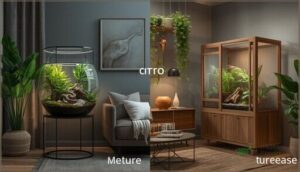
Your terrarium doesn’t exist in isolation—it becomes part of your living environment, and that integration affects both your daily experience and your snake’s wellbeing.
Glass enclosures offer unobstructed visibility that transforms the habitat into a living display piece, while natural setups create immersive biomes that blend function with forest-floor aesthetics.
Understanding how weight distribution, viewing angles, accessibility requirements, and customization potential influence home placement will help you select an enclosure that satisfies both your spatial constraints and your husbandry objectives.
Aesthetic Integration in Living Spaces
You don’t want your terrarium to clash with your carefully chosen decor style—integrating reptile enclosure design into your living space demands thoughtful space planning that balances function with visual harmony. Glass terrariums, with their clean lines and transparent panels, blend seamlessly into modern interiors when you consider color schemes, lighting effects, and furniture harmony.
- Match enclosure frames to existing wood tones or metal finishes for cohesive furniture harmony
- Position snake terrariums near natural elements like houseplants to strengthen biophilic design flow
- Use soft, warm white LED lighting (2700K–3000K) to create ambient lighting effects without harsh glare
- Select neutral substrate colors inside the enclosure to prevent visual clutter in tight living rooms
- Place terrariums on decorative stands that echo room height variations for balanced space planning
Accessibility and Viewing Experience
Glass terrariums deliver unobstructed front viewing through large pane faces, enabling close observation of snake behavior without opaque panels disrupting visual clarity.
You’ll capture subtle feeding responses and basking postures from multiple viewing angles, while anti-reflective coatings reduce glare from indoor lighting.
Mounted observation tools—digital thermometers, hygrometers, discreet cameras—integrate into the enclosure without compromising your snake care routines or display options.
Weight and Placement Considerations
Natural terrariums carrying substrate, plants, and decor can reach 40–120 pounds, while glass terrariums range from 20–60 pounds empty, requiring careful consideration of load-bearing capacity in your home.
You’ll need to evaluate:
- Sturdy base rated at 2× terrarium mass to prevent sagging and corner stress in glass enclosures
- Weight distribution centered over reinforced stands to minimize tipping during maintenance
- Clearance space of 6+ inches on all sides for airflow and safe access
- Floor stability using tile or concrete surfaces for heavy loads, avoiding soft carpet
- Anti-tip hardware installed on large glass terrariums to reduce toppling risk during routine cleaning
Position heavier enclosures away from doorways and high-traffic zones to prevent accidental collisions.
Customization Options
You can shape both enclosure design styles to fit your vision—natural terrariums welcome diverse substrate choices (coconut fiber, orchid bark) and plant integration using pothos or ferns, while glass terrariums excel with modular accessory placement like magnetic hides and removable background imagery.
Lighting effects, from UVB tubes to LED strips, augment habitat creation and environmental enrichment, transforming snake terrariums into vibrant ecosystems through intentional terrarium setup and design suited to species-specific behaviors.
Top 4 Products for Snake Terrariums
After evaluating materials, environmental control, and maintenance requirements, you’ll need specific products that translate theory into functional husbandry systems. The following four selections represent critical components across structural enclosures, environmental enrichment, substrate engineering, and monitoring instrumentation—each addressing distinct physiological and behavioral requirements documented in captive snake research.
Your terrarium setup demands this multi-component approach, since no single product delivers complete environmental optimization without supporting accessories that regulate thermal gradients, humidity zones, and stress-reduction parameters.
1. Carolina Custom Glass Terrarium Cage
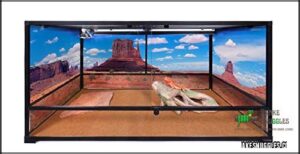
You need a foundation that balances visibility with structural integrity, which is why the Carolina Custom Glass Terrarium Cage delivers tempered glass construction engineered for long-term herpetological applications. This 48×24×24-inch enclosure features a waterproof base tray measuring 4–7.5 inches deep—sufficient substrate depth for naturalistic burrowing species—while sliding doors with key-lock security mechanisms prevent accidental escape events.
The full steel screen mesh top maintains continuous air exchange (critical for respiratory health) without compromising containment, and corrosion-resistant hardware withstands repeated cleaning cycles with standard reptile-safe disinfectants.
| Best For | Reptile keepers who want a spacious, secure enclosure for medium to large species like bearded dragons or leopard geckos, especially those planning bioactive setups with live plants and deep substrate. |
|---|---|
| Brand | CAROLINACUSTOMCAGES |
| Material | Glass |
| Weight | 73 Pounds |
| Primary Use | Reptile habitat |
| Size Category | Extra Large |
| Assembly Required | Yes |
| Additional Features |
|
- Sliding doors with key-lock security keep your pets safely contained while making daily feeding and cleaning easy
- Waterproof base tray handles substrate depth up to 7.5 inches, perfect for species that like to burrow or dig
- Full steel screen top provides excellent ventilation and works with most standard UVB and heat lighting fixtures
- At 73 pounds, moving or repositioning the terrarium requires careful handling and possibly an extra set of hands
- Included suction cups for accessories may not stick well, so you might need to buy stronger replacements
- Door locks can malfunction if not installed precisely during assembly, requiring attention to detail
2. Exo Terra Reptile Cave
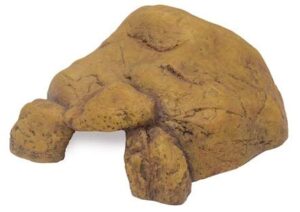
Once your enclosure provides visibility and containment, you need hiding structures that mimic the secure retreats snakes instinctively seek under rock ledges in wild habitats.
The Exo Terra Reptile Cave, constructed from durable polyresin resin with a pebble-textured exterior measuring 11.8×10.9×4.5 inches (X-Large), delivers a secure microclimate chamber where interior humidity and temperature remain stable while your snake completes sleep cycles and digestion periods essential for metabolic regulation and stress mitigation during terrarium maintenance events.
| Best For | Reptile owners who need a sturdy hiding spot that helps their snake feel secure and maintains the right humidity levels inside the cave. |
|---|---|
| Brand | Exo Terra |
| Material | Resin |
| Weight | 2.93 pounds |
| Primary Use | Reptile hide |
| Size Category | X-Large |
| Assembly Required | No |
| Additional Features |
|
- Creates a naturally humid and cool microclimate that helps with shedding and digestion
- Realistic pebble texture and generous size work well for medium to large snakes like ball pythons
- Food-grade resin material is safe and easy to clean
- Packaging issues sometimes lead to cracks or breaks during shipping
- Resin can be brittle and may chip if dropped or handled roughly
- Might have sharp edges or rough spots that need filing down before it’s safe to use
3. Zoo Med Excavator Clay Substrate
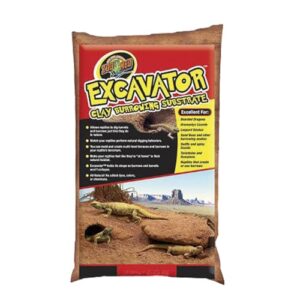
Beyond providing shelter, you’ll want substrate that unlocks your snake’s natural digging behaviors—that’s where Zoo Med Excavator Clay enters the picture.
This 10-pound natural clay substrate holds tunnels without collapse, letting burrowing species like sand boas sculpt multi-level burrows resembling arid habitats. Composed of chemical-free clay in a 20×8×4-inch package, it facilitates dimensional exploration while remaining reusable when properly compacted, though you’ll need patience since full curing requires up to seven days before introducing your animal.
| Best For | Reptile keepers with burrowing species like sand boas who want to create naturalistic terrariums with stable tunnel systems. |
|---|---|
| Brand | Zoo Med |
| Material | Natural Clay |
| Weight | 10 pounds |
| Primary Use | Burrowing substrate |
| Size Category | Standard |
| Assembly Required | Yes (preparation) |
| Additional Features |
|
- Holds its shape perfectly so your snake’s tunnels won’t cave in
- Made from all-natural clay without chemicals or dyes
- Lets you build multi-level terraces and complex burrow systems
- Takes up to a week to fully dry before you can use it
- May crack or develop fissures as it dries out
- Not safe for snakes that tend to eat their substrate due to impaction risk
4. Repti Zoo Digital Terrarium Thermometer Hygrometer
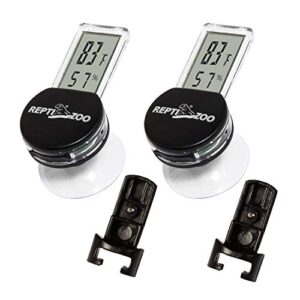
Sculpting terrain means nothing if environmental drift wreaks metabolic chaos—precise monitoring tools anchor your husbandry protocol.
The Repti Zoo Digital Thermometer Hygrometer pairs a clear LED display (Fahrenheit and Celsius toggling) with ±2–5% humidity accuracy spanning 20–99% relative humidity, updating readings every five seconds to track microclimate fluctuations.
Its suction-cup mounting system adheres to glass surfaces with three-sided rotation for unobstructed sightlines, while included button-cell batteries guarantee immediate deployment, though splash resistance prohibits full submersion during deep-cleaning events.
| Best For | Reptile owners who need a reliable way to track temperature and humidity levels in terrariums, vivariums, or breeding setups without constantly second-guessing their habitat conditions. |
|---|---|
| Brand | REPTI ZOO |
| Material | Glass, Plastic |
| Weight | Not specified |
| Primary Use | Temperature monitoring |
| Size Category | Compact |
| Assembly Required | Minimal |
| Additional Features |
|
- Updates readings every five seconds so you catch environmental shifts before they stress your reptiles
- Three-sided mounting with suction cup lets you angle the display away from heat lamp glare for easier reading
- Comes with an extra battery right in the box so you’re not scrambling for replacements during setup
- Battery life tends to run short, meaning you’ll be swapping them out more often than you’d like
- Suction cup doesn’t always grip well on textured surfaces or in high-humidity environments, sometimes needing tape or Velcro as backup
- Not waterproof, so you’ll need to remove it before deep cleaning or misting sessions to avoid damage
Frequently Asked Questions (FAQs)
Are glass enclosures good for snakes?
Glass enclosures function like laboratory observation chambers—they’re excellent for snakes when you pair non-porous surfaces, precise temperature gradients, and controlled ventilation with species-specific heating elements, digital humidity monitors, and secure locking mechanisms that prevent escapes.
What is the best material for snake enclosures?
You’ll find that glass, PVC, and sealed wood each offer distinct thermal conductivity profiles, vapor barrier properties, and maintenance requirements—your selection depends primarily on target humidity ranges, ambient room temperatures, and species-specific thermoregulatory needs.
What type of enclosure is best for a snake?
Think of your enclosure as a fortress—it must shield your snake from stress while offering clear sight lines for monitoring.
Front-opening glass terrariums with secure locks deliver both safety and accessibility.
Are bioactive enclosures better for snakes?
Bioactive enclosures offer significant advantages—self-regulating waste cycles through cleanup crews, microclimates that support shedding, and enrichment-driven behaviors like foraging—but demand initial investment in ecosystem establishment and species-appropriate substrate composition for ideal function.
Can you mix natural elements in glass terrariums?
You can absolutely layer moss, driftwood, and stones into your glass enclosure—just make certain each piece is properly sanitized, inert, and secured with non-toxic methods to prevent shifting during movement.
Do snakes prefer natural substrates over bare glass?
Most snakes show a measurable preference for natural substrates over bare glass, exhibiting reduced stress indicators, increased burrowing activity (when substrate depth reaches 2–4 inches), and improved shedding outcomes in humidity-retaining materials.
Which terrarium type works best for hatchlings?
Which setup suits your delicate hatchling best? Glass terrariums offer unparalleled monitoring precision and hygiene control, while natural enclosures provide stabilized microclimates—either choice succeeds when you maintain species-specific thermal gradients and substrate moisture.
How often should live plants be replaced?
You’ll need to replace live plants every 6 to 12 months depending on species vigor, growth rate, and observed health indicators like yellowing leaves, stunted growth, or root-binding within your enclosure’s microclimate conditions.
Are natural terrariums suitable for venomous snake species?
You shouldn’t house venomous species in natural terrariums—dense foliage obscures visibility, organic substrates complicate containment, and variable humidity hinders precise environmental control, all of which compromise the secure monitoring these dangerous animals demand.
Conclusion
A ball python keeper discovered her glass enclosure maintained 92% humidity consistency across 30-day monitoring cycles, while her colleague’s natural wood setup required daily misting adjustments to prevent substrate desiccation.
Your choice between natural vs glass terrarium for snakes ultimately depends on whether you prioritize biome authenticity or environmental precision—both approaches succeed when you match material properties to your species’ physiological demands and your capacity for systematic monitoring protocols.