This site is supported by our readers. We may earn a commission, at no cost to you, if you purchase through links.
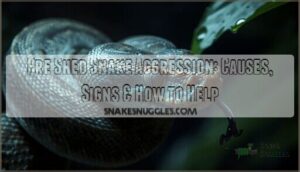
Your normally calm ball python lunges at the feeding tongs—except you’re not holding tongs. Pre shed snake aggression catches even experienced keepers off guard, and for good reason: a snake that tolerated daily handling last week can become a strike risk within 48 hours of entering the shedding cycle.
The skin loosens, vision drops to near-zero, and every vibration reads as a potential threat. Understanding what’s happening beneath that dull, milky exterior changes how you respond—and keeps both of you safer through one of the most physiologically demanding events in a snake’s life.
Table Of Contents
- Key Takeaways
- What Causes Pre Shed Snake Aggression?
- Recognizing Aggressive Behavior in Pre Shed Snakes
- How Shedding Affects Snake Behavior
- Environmental Factors Worsening Pre Shed Aggression
- Health Issues That Mimic Pre Shed Aggression
- Safe Handling During Pre Shed Periods
- Reducing Stress for Pre Shed Snakes
- Species Differences in Pre Shed Aggression
- Preventing Future Aggression Around Shedding
- When Pre Shed Aggression Signals a Bigger Problem
- Frequently Asked Questions (FAQs)
- Where do snakes go in October?
- Do snakes get less active before they shed?
- Can diet affect aggression during shedding cycles?
- Do supplements help snakes shed more comfortably?
- How long does a typical shedding cycle last?
- Should tank mates be separated during pre-shed?
- Does humidity affect how often snakes shed?
- Conclusion
Key Takeaways
- Pre‑shed aggression isn’t attitude—it’s your snake reacting to real physical discomfort, near-zero vision, and heightened vibration sensitivity that peaks 3–7 days before the shed completes.
- Enclosure setup either cushions or amplifies that stress: humidity below 60%, cramped space, missing hides, and inconsistent lighting all push a pre-shed snake closer to the strike threshold.
- Most aggression clears within 7–15 days post-shed; if yours doesn’t, you’re likely looking at a health issue—retained eye caps, incomplete shed, or something deeper—not just a bad mood.
- The safest rule during the blue phase is minimal contact: skip non-essential handling, use hooks and protective gloves when you must go in, and let your snake’s body language—S-curve, tail flicking, sustained hissing—make the call for you.
What Causes Pre Shed Snake Aggression?
Pre‑shed aggression doesn’t come out of nowhere — there are real, identifiable reasons your snake’s behavior shifts during this time. Physical discomfort, compromised senses, and environmental pressure all hitting at once.
These changes are easy to spot once you know what to look for — snake shedding signs beyond cloudy eyes explains how the whole body signals that a shed is coming.
Here’s what’s actually driving it.
Shedding Discomfort and Stress
Shedding puts your snake through real physical stress. Skin tightness pressure builds as fluid accumulates between old and new layers — tension peaks 3 to 7 days before the shed. That discomfort triggers itchy rubbing behavior, restless pacing patterns, and muscle tension indicators like rigid, jumpy movements.
Appetite decline timing usually begins before visible dulling appears. These are classic stress‑induced aggression signals, not random hostility.
During pre‑shed, the snake’s eyes may cloud, reducing vision and increasing defensiveness. pre‑shed vision clouding
Reduced Vision and Vulnerability
The Blue Phase Vision period clouds your snake’s eyes with fluid, turning familiar surroundings into a blur. That visual loss triggers Chemosensory Compensation — tongue‑flick rates increase and jaw‑vibration sensitivity spikes, making Floor Vibration Sensitivity your snake’s primary threat‑detection tool.
- Eyes appear dull, bluish, 3–7 days pre‑shed
- Distance judgment fails, causing misidentified threats
- Hide Preference Shift increases — tight, dark spaces feel safer
- Open Space Avoidance intensifies; walls become navigation guides
- Body Language turns defensive: rigid posture, rapid tongue‑flicking
Aggressive Snakes during this window aren’t acting out — they’re compensating. Snake Health depends on recognizing this phase as vulnerability, not hostility. Shedding Discomfort compounds Environmental Stressors, keeping their threat response dialed up until vision clears. During this period snakes shed their skin in one complete piece, a normal part of the ecdysis cycle.
Environmental Triggers
Vision loss doesn’t help, but the environment can make things far worse.
Vibrational Disturbances from bass speakers or slamming doors register as predator movement.
Lighting Inconsistency disrupts hormone rhythms.
Airflow Drafts drop temperatures 3–5 degrees fast.
Poor Substrate Moisture worsens shedding.
High Ambient Noise Levels keep threat responses elevated.
These Enclosure Conditions stack — and Stress-induced Aggression follows.
Recognizing Aggressive Behavior in Pre Shed Snakes
Your snake’s body language tells a story before it ever strikes.
During the pre-shed period, certain behaviors signal that your snake is stressed, uncomfortable, and asking to be left alone. Knowing what to look for — starting with these key warning signs — can keep both of you safe.
S-Curved Neck and Tense Posture
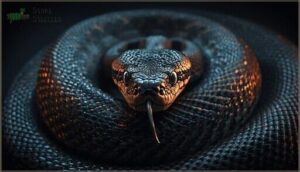
The S-curved neck is your clearest early warning.
That tight coil isn’t random — it’s energy storage, muscles preloading for a strike reaching half the snake’s body length at 10–15 feet per second.
That tense coil is pure physics: muscles preloaded, ready to launch half the snake’s body length in an instant
Shedding discomfort intensifies this stress-induced aggression substantially.
Watch for these body language signals:
- Head retracted within the S curve, eyes locked forward
- Visible muscle tension along the neck and torso
- Rigid posture held 2–5 minutes as a visual threat display
Tail Flicking and Rattling
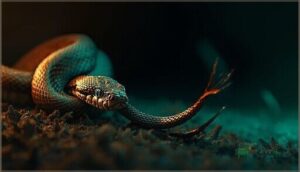
Tail rattling is your second clear signal — and it’s easy to miss if you don’t know what to watch for.
Pre‑shed warning through tail flicking is defensive behavior driven by shedding discomfort and reduced vision. Aggressive snakes modulate frequency based on threat proximity, shifting from slow substrate vibration to rapid high‑frequency bursts as you move closer.
| Signal | What It Means |
|---|---|
| Slow tail flick | Early alert; snake is uneasy |
| Rapid tail rattling | Threat perceived as close and immediate |
| Tail lifted slightly | Reducing friction for faster defensive burst |
| Rattling plus coiling | Combined display — handling response needed |
| Species rattle types vary | Colubrids tap décor; rattlesnakes use keratin rattle |
Even without hissing, that vibration is your cue to stop.
Hissing and Defensive Strikes
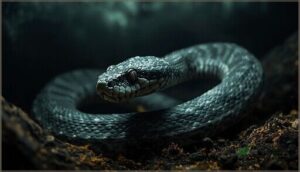
Hissing is acoustics with intent. Snakes force air through a constricted glottis — glottal mechanics, not vocal cords — producing that sharp, sibilant warning.
During pre-shed, shedding discomfort amplifies both frequency and intensity.
Watch for posture-hiss correlation: an S-coil plus sustained hiss means a defensive strike is seconds away.
Reaching into the enclosure from above is the fastest way to trigger one. Back off instead.
How Shedding Affects Snake Behavior
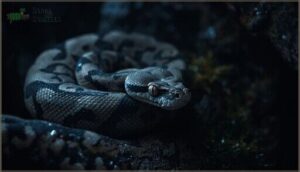
Shedding reshapes how your snake moves, eats, and tolerates contact — sometimes dramatically. The changes aren’t random; they follow a predictable pattern tied directly to the shedding cycle.
Here’s what you’ll notice across three key areas of behavior.
Changes in Activity Levels
Pre‑shed snakes don’t follow their usual schedule. You’ll notice three clear behavioral shifts:
- Hide preference increases — your snake retreats and barely moves for days.
- Increased Pacing and Restless Soaking replace calm exploration.
- Nocturnal Shift and Timing Alterations disrupt normal activity windows.
These environmental stressors drive aggression in snakes. Watch their body language closely — post‑shed, snake health and normal rhythms usually return within 48 hours.
Feeding Response During Shedding
Most snakes stop eating 1–2 weeks before shedding begins. Appetite suppression isn’t stubbornness — it’s biology. Corticosterone rises, metabolism shifts toward skin regeneration, and vision-limited feeding becomes nearly impossible with 90% reduced strike accuracy.
Forcing snake feeding during this phase doubles regurgitation risk, damaging the esophagus. Skip meals, watch for post-shed hunger cues, then resume normal feeding frequency within 24–48 hours.
Increased Sensitivity to Handling
Your hands become a threat during the pre‑shed window. Fluid skin irritation turns every touch into pressure pain — loose old skin amplifies friction, and skin oil transfer disrupts the separation layer underneath.
Pre‑shed stress hormones are already elevated. Add handling frequency to that, and you’re compounding stress‑induced aggression fast.
Keep sessions under 10 minutes, or skip them entirely.
Environmental Factors Worsening Pre Shed Aggression
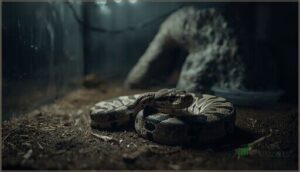
Shedding already puts your snake on edge — but a poorly set up enclosure can make things considerably worse. Several common husbandry mistakes intensify pre-shed stress in ways that are easy to overlook.
Here’s what to check in your setup.
Improper Temperature and Humidity
Temperature and humidity aren’t just comfort factors — they directly control whether your snake sheds cleanly or gets stuck. Thermal gradient gaps are a major culprit: without a warm zone hitting 85–92°F, ecdysis (skin separation) stalls.
Low humidity stress compounds this fast. Below 60%, dry air locks old skin in place.
Keep humidity at 70% during pre-shed to prevent moisture imbalance risks and reduce environmental stressors driving defensive behavior.
Inadequate Enclosure Size
Even after fixing humidity, a cramped enclosure keeps your snake on edge. The body length ratio matters: enclosure length must meet or exceed your snake’s full size. Coil restriction limits movement freedom and intensifies pre‑shed stress fast.
- Undersized enclosures worsen environmental stressors during every shed cycle
- Poor space utilization prevents natural snake behavior and exploration
- Cramped reptile enclosure and environment design drives cage‑defensive strikes
- Snake enclosure design and management directly shapes aggression levels
Lack of Hides and Barriers
Space isn’t enough on its own.
Without secure retreat design and concealed enclosure zones, a pre-shed snake has nowhere to disappear — and that’s where snake aggression spikes.
Exposed snakes show 30% more strike attempts during the blue phase.
Barrier placement strategies, vertical hide integration, and acoustic buffering all reduce environmental stressors, giving your snake the safety signal it needs to stay calm.
Health Issues That Mimic Pre Shed Aggression

Not every aggressive snake is just having a rough shed — sometimes something more serious is going on underneath.
Pain, infection, and neurological issues can all produce behavior that looks identical to pre-shed defensiveness.
Here’s what to watch for when the problem might run deeper than a tight skin.
Signs of Pain or Illness
Pain and illness can look a lot like pre‑shed irritability — but the stakes are higher. Watch for mouth rot (swollen, pus‑filled gums), a respiratory wheeze or clicking breath, abnormal posture like limp hanging or uncoordinated movement, and visible weight loss.
Dehydration signs — sunken eyes, tacky mouth lining — compound stress‑induced aggression quickly. These aren’t shed quirks. They’re urgent snake health warnings.
Differentiating Between Shedding and Health Problems
Spotting the difference comes down to timing and pattern. Pre-shed snake aggression follows a predictable cycle — cloudy eyes, behavioral shift, shed, resolution. Health problems don’t follow that script.
Watch for these red flags signaling reptile health and disease rather than normal snake behavior:
- Behavioral persistence lasting beyond two weeks post-shed
- Respiratory sounds — wheezing, clicking, or open-mouth breathing
- Mouth discharge or gaping between meals
- Weight loss indicators like visible spine or hip bones
- Eye caps retention across multiple consecutive cycles
Environmental stressors can overlap with illness signs, which makes pattern-tracking your sharpest diagnostic tool.
When to Seek Veterinary Care
Don’t wait on a gut feeling — act on hard thresholds.
Persistent post-shed aggression beyond 7–10 days, respiratory distress signs like open-mouth breathing or wheezing, unusual appetite loss exceeding two weeks, weight loss thresholds above 10%, or neurological symptom alerts like stargazing all demand veterinary care for reptiles immediately.
These aren’t stress-induced aggression quirks. They’re reptile health and disease red flags requiring a specialist’s hands.
Safe Handling During Pre Shed Periods

Handling a pre-shed snake is one of those situations where less is genuinely more.
Your snake’s senses are dulled, its skin is sensitive, and its stress threshold is lower than usual.
Here’s what you need to know to keep both of you safe during this window.
Minimizing Handling and Disturbance
The less you disturb a pre-shed snake, the safer you both are. Limit interaction frequency to essential tasks only — scheduled spot cleaning and water changes — and keep quiet enclosure access slow and deliberate.
Low-traffic placement reduces stress-induced aggression considerably.
Visual barriers further settle snake behavior.
Even acclimated snakes shouldn’t be handled longer than 10 minutes during shed.
Using Hooks and Protective Gear
Reaching into a pre‑shed enclosure without protection is a fast way to regret it. Proper snake handling starts with hook selection and protective gloves matched to your animal’s size and temperament.
- Use offset or multi‑prong hooks for thick‑bodied species
- Size hooks to 1.5–2× the snake’s body length
- Wear forearm‑length leather or Kevlar gloves
- Make sure gear fit allows full finger mobility
Handling shields add a final layer of control for highly defensive individuals.
Recognizing When to Avoid Interaction
Even the calmest snake sends clear "stay away" signals before a shed. Learning to read snake body language protects you both.
| Signal | Action |
|---|---|
| Clouded eyes | Stop all snake handling |
| Pre‑shed hiding | Delay interaction 7–10 days |
| Tail flick warning | Back off immediately |
| Reduced feeding | Skip feeding session |
| Stress posture | Observe only, no contact |
Reducing Stress for Pre Shed Snakes

A pre-shed snake isn’t being difficult — it’s genuinely uncomfortable, and your enclosure setup either helps or makes that worse.
A targeted adjustments can considerably lower its stress levels during this vulnerable window.
Here’s what to focus on.
Optimizing Enclosure Conditions
Your enclosure conditions are the first line of defense against stress‑induced aggression. Keep substrate moisture stable using cypress mulch or coconut husk — target 60–80% humidity during pre‑shed.
A proper temperature gradient (85–90°F warm side, 75–80°F cool) helps self‑regulation. Strategic barrier placement and enrichment variety give your snake security and predictable anchors when its vision is compromised.
Controlling Noise and Light Exposure
Quiet room placement quickly cuts defensive reactions fast. Pre‑shed snakes already have compromised vision — sudden vibrations and glare compound that vulnerability.
Mount your enclosure on a vibration‑absorbing stand, away from speakers and washing machines. Use dimmed overhead lighting and scheduled light timers to maintain a consistent 10–12 hour cycle.
A consistent background hum, like a quiet fan, smooths out unpredictable sound spikes that spike reptile behavior.
Providing Enrichment and Security
Sound and light control help, but enrichment seals the deal.
Set up at least two hides plus a humid hide on the warm side — damp sphagnum moss inside maintains 80–90% humidity, cutting stuck‑shed risk.
Texture variety enrichment like cork bark and branches facilitates natural rubbing behavior.
Rotate climbing branches weekly.
Secure barrier placement and escape‑proof door design prevent restless pre‑shed snakes from slipping out.
Species Differences in Pre Shed Aggression
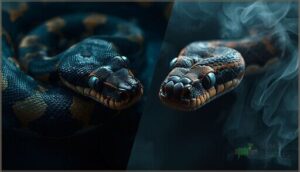
Not every snake deals with the pre-shed period the same way. Species, origin, and individual history all shape how defensive a snake gets when its eyes go blue. Here’s what you need to know about the key differences.
Commonly Defensive Species
Some species run hotter than others during pre‑shed. Ball pythons curl tight and strike when vision blurs. Kingsnakes vibrate tails and bite repeatedly if you open the enclosure mid‑blue phase. Corn snakes stay jumpy even after eyes clear. Milk snakes hiss and flee first, then bite. Boa constrictors flatten into S‑curves and musk heavily.
- Ball python: tight ball, refusal to uncoil for up to 10 days
- Kingsnake: rapid tail vibration, mimicking a rattlesnake, open‑mouth strikes
- Boa constrictor: neck flattening, heavy musking, increased body lifting
Wild-Caught Vs. Captive-Bred Behavior
Origin shapes everything. Captive-bred snakes grow up around routine handling and predictable conditions, so their stress hormone levels stay lower going into shed — they hide rather than strike.
Wild-caught snakes default to threat mode the moment vision clouds.
| Factor | Captive-Bred | Wild-Caught |
|---|---|---|
| Handling Tolerance | Generally tolerates brief contact | Strikes rapidly; cage-defensive |
| Feeding Preferences | Accepts frozen-thawed reliably | Often refuses; misdirected aggression |
| Acclimation Period | Minimal | Months to years |
Species-Specific Care Adjustments
Not every snake follows the same playbook. Ball Python humidity needs a pre‑shed spike to 70–80%, while Sand Boa burrow setups stay drier at 50–60%. Here’s how to adjust by species:
- Ball Pythons – Raise humidity, add tight hides, suspend handling completely.
- Corn Snakes – Use damp Corn Snake hides; brief checks are tolerated.
- Green Tree Pythons – Daily Green Tree misting at 70–85%; zero handling until shed completes.
Preventing Future Aggression Around Shedding
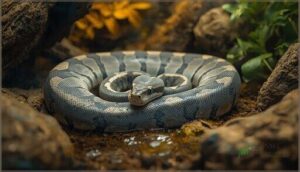
Preventing aggression around shedding isn’t complicated, but it does require consistency.
A few targeted adjustments to your routine and environment can make a real difference in how your snake manages each shed cycle.
Here’s what to focus on.
Establishing Predictable Routines
Snakes thrive on predictability.
Consistent Feeding Times — weekly for juveniles, every 20–30 days for adults — build reliable appetite patterns and reduce pre-shed defensiveness. Pair that with a Fixed Handling Schedule of 5–10 minutes daily, a Stable Light Cycle using 12-hour timers, Unchanging Enclosure Layout, and Regular Spot Cleaning. These aren’t extras. They’re the foundation of calm Snake Care and Management.
Regular Health and Behavior Monitoring
Tracking your snake’s health doesn’t have to be complicated. Weekly Eye Clarity Checks catch the 5–7 day cloudy phase early, reducing surprise defensive strikes. Pair that with Weight Trend Analysis every 2–3 weeks, and routine Fecal Parasite Screening, to catch hidden Health Problems driving Aggression in Snakes.
Skin Shedding Indicators and Behavior Log Frequency consistently — that data becomes your best Snake Care and Management tool.
Adjusting Handling Protocols
Refining your handling protocols is the most direct way to cut stress-induced aggression long‑term. Schedule handling windows when eyes are clear and skin is bright — never during the blue phase. Gradual desensitization, built across multiple shed cycles, rewires defensive defaults.
- Use tool familiarization sessions outside shed periods
- Apply low-light handling to reduce visual threat triggers
- Match temperature-based timing to the snake’s active evening window
When Pre Shed Aggression Signals a Bigger Problem
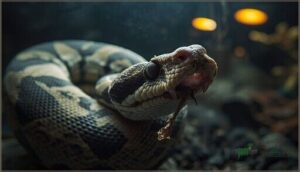
Most snakes calm down noticeably within a day or two after a successful shed.
But if yours is still striking, hissing, or refusing food a week later, that’s worth paying attention to. A few specific patterns can tell you whether something deeper is going on.
Persistent Aggression After Shedding
Most aggression clears within 7–15 days post-shed. If it doesn’t, something deeper is driving it. Eye cap retention, incomplete shed, and post-shed hunger can extend defensive behavior well past that window. A hormonal spike from repeated handling sensitivity compounds the problem.
Persistent aggression in snakes often signals unresolved reptile health issues — check your snake enclosure conditions first before assuming it’s purely stress‑induced aggression.
Signs of Chronic Stress or Disease
Chronic stress looks different from a pre-shed mood swing. Watch for weight loss patterns, abnormal tongue flicking, and open-mouth breathing — classic respiratory distress signs.
Mouth rot indicators include drooling, redness, and pus discharge.
Neurological decline signs like star-gazing or corkscrew posturing signal something serious.
Environmental stressors compound these health problems fast.
Persistent aggression in snakes paired with any of these symptoms demands immediate reptile health attention.
Consulting a Reptile Veterinarian
When behavior doesn’t normalize after shedding, a reptile veterinarian is your clearest next step. Confirm their vet credentials and clinic experience with exotic species before booking.
Come prepared — appointment preparation matters:
- Document shed timing, behavior changes, and husbandry details
- Bring retained shed or photos of incomplete shedding
- Note feeding responses and handling tolerance shifts
Diagnostic tests and custom treatment plans protect long-term snake health and wellness.
Frequently Asked Questions (FAQs)
Where do snakes go in October?
In October, snakes follow burrow migration routes toward hibernacula — deep rock crevice shelters below the frost line. Many retreat under leaf litter, human structure shelters, or dense root systems as temperatures drop.
Do snakes get less active before they shed?
Yes. Most snakes slow down, hide more, and show reduced Pre‑Shed Mobility as Blue Phase Behavior sets in.
Hide Preference Increase is common, and some display Water Soaking Trends or Restlessness Indicators before shedding completes.
Can diet affect aggression during shedding cycles?
Absolutely. Diet shapes snake behavior more than most keepers realize.
Poor protein levels, vitamin deficiencies, or inconsistent feeding frequency all raise baseline stress — and a stressed snake is a defensive one.
Do supplements help snakes shed more comfortably?
adding oil to a squeaky hinge, supplements can ease shedding — but only when husbandry is already solid.
Electrolyte hydration and Vitamin A balance matter most.
Avoid D3 toxicity risks by never doubling doses.
How long does a typical shedding cycle last?
A typical shedding cycle runs 7 to 14 days from first skin dulling to finished shed. Juveniles move faster. Adults shed just 3 to 6 times yearly.
Should tank mates be separated during pre-shed?
Separate them.
Cohabitation spikes stress for any snake, but during pre‑shed poor vision and irritability make conflict almost guaranteed.
Individual enclosures support proper humidity management, hide allocation, and health monitoring for every animal.
Does humidity affect how often snakes shed?
Humidity affects shed quality more than frequency. Proper enclosure humidity management keeps skin flexible, reducing stuck sheds and humidity stress.
Moisture impact frequency is minimal — your snake’s age, diet, and health drive the actual shedding schedule.
Conclusion
snake in shed can feel like sharing a home with a completely different animal—one that treats your hand like a threat and the tongs like an enemy. Pre shed snake aggression isn’t defiance; it’s biology running exactly as designed.
Blurry vision, tight skin, and raw nerves turn even the calmest species into a defensive machine.
Respect that window, adjust your approach, and you won’t just avoid strikes—you’ll build trust that outlasts every shed cycle.
- https://www.pbspettravel.co.uk/blog/what-should-i-do-when-my-snake-is-shedding/
- https://pmc.ncbi.nlm.nih.gov/articles/PMC3899215/
- https://regardingreptiles.com/how-to-calm-down-an-aggressive-snake/
- https://journals.ku.edu/reptilesandamphibians/article/view/16079/14405
- https://www.ncbi.nlm.nih.gov/pmc/articles/PMC5865084/