This site is supported by our readers. We may earn a commission, at no cost to you, if you purchase through links.

You reach into the enclosure, and your ball python is gone. In its place sits a tight, motionless coil the size of a softball, head buried at the center.
That’s your ball python stress ball posture, and it’s not aggression. It’s a snake saying, "I feel unsafe, so I’m hiding in the only way I can." Vets see this every week, and owners often mistake it for a bad temperament or a harmless quirk.
It’s neither. Balling is information, and you can learn to read it, reduce what triggers it, and respond in ways that build trust.
Table Of Contents
- Key Takeaways
- What a Ball Python’s Stress Ball Posture Means
- How to Recognize Stress Signals Beyond Defensive Balling
- How to Reduce Enclosure Stress That Triggers Balling
- How to Handle a Ball Python That Balls Up
- When Balling and Other Symptoms Need Veterinary Attention
- Frequently Asked Questions (FAQs)
- What are the signs that a ball python is stressed?
- What is wobble syndrome in ball pythons?
- What are the signs of a ball python dying?
- What are the signs that a ball python is happy?
- How to tell if your ball python is stressed out?
- What are signs of overfeeding a ball python?
- Can balling behavior affect long-term growth?
- Do juvenile ball pythons ball more often?
- Is stress ball posture linked to breeding season?
- Can enrichment items reduce defensive balling frequency?
- Conclusion
Key Takeaways
- When your ball python curls into a tight coil with its head tucked in, it’s not being aggressive; it’s telling you it feels unsafe.
- You can cut down on balling by keeping the enclosure steady, with two snug hides, a warm side of 88-92°F and a cool side of 78-80°F, and humidity at 50-60%.
- If your snake balls up during handling, stop, give it a few minutes to settle, and rebuild trust with short, predictable sessions that you lengthen gradually.
- Call an exotics vet if balling persists after you’ve fixed the setup, or if you notice wheezing, open-mouth breathing, long-term food refusal, or weight loss of more than 10%.
What a Ball Python’s Stress Ball Posture Means
A ball python that curls into a tight motionless coil isn’t being aggressive. It’s protecting itself. Defensive balling is an instinct, not a decision, and it tells you your snake feels threatened.
If your snake keeps balling up, it helps to learn the common signs of ball python defensive behavior so you can spot stress early and back off.
This gentle, defensive temperament is a big reason beginners love them, and you can see more in this guide to the peaceful nature of ball pythons.
A ball python curled into a tight coil isn’t being aggressive; it’s instinctively protecting itself because it feels threatened
Watch the head. Through head tucking mechanics, your python slides its head into the center of the coil and lets its body act as a shield. That’s avoidance, not confrontation. You’ll often see tongue flicks, too. Those are just your snake gathering information.
Don’t mistake this for feeding posture. A hunting snake holds an S-curve neck and stares at prey. A balled snake does neither.
Frequent balling during handling means your snake needs time to settle. Over two to four weeks, consistent gentle handling usually reduces balling by building positive associations, though timelines vary by individual snake. Check environmental factors too, like inconsistent routines or a poor setup. If the behavior continues undisturbed, treat it as one of several persistent stress signals.
How to Recognize Stress Signals Beyond Defensive Balling

Balling is only one piece of ball python body language stress. If your snake keeps balling, look for the other persistent stress signals, because most stressed snakes show several at once.
- Hissing with a puffed-up body means your snake feels cornered and is ready to defend.
- Glass surfing or tub surfing, meaning constant restless pacing, points to too few hides or an oversized space.
- Deep, labored breathing means stop handling right away.
- Abnormal shedding, like stuck skin, often reflects chronic stress and poor hydration.
Constant hiding with no exploration, refusing meals, or restless searching after a few days in a new setup usually means environmental factors need fixing. A proper enclosure setup gives your snake the security it’s hunting for.
How to Reduce Enclosure Stress That Triggers Balling

You can fix most balling at the source. Your snake’s world is the enclosure, so start there.
Getting humidity, temperature, and hiding spots right goes a long way, and this guide to ball python skin problems and how to fix them shows how small enclosure tweaks can prevent stuck shed.
A proper enclosure setup makes your ball python feel hidden and safe. Get the basics right and the balling often fades on its own.
- Offer two snug, opaque hides, one warm and one cool, in consistent hide locations.
- Keep the warm side at 88-92°F and the cool side at 78-80°F.
- Hold humidity at 50-60%, rising to 70-80% during shed.
- Cover glass sides and back, and keep the tank away from foot traffic.
- Add cork bark and plants, and use a thermostat for steady heat.
That’s the ideal temperature and humidity. Environmental stability beats constant tinkering. You’re in control here, so keep it steady.
How to Handle a Ball Python That Balls Up
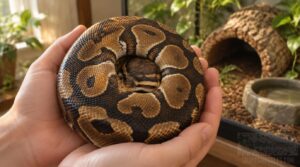
A balled-up python isn’t being stubborn, so your job is to stay calm and take charge of the situation. Below, you’ll find two points that cover what to do while your snake is coiled and how to build trust through gentle, steady handling. Work through them in order, and you’ll gain real control over every session.
What to Do During Balling
You reach in and your python snaps into a tight coil. Don’t panic. That’s ball python body language stress, a defensive posture, not aggression.
Once your snake settles, give it space and time to relax, and our guide to ball python behavior and what each posture means can help you read its signals next time.
Stop, dim the lights, and wait. Most snakes unball within two minutes. Past five, return her to the enclosure. Skip handling for a few days; handling frequency optimization starts with patience, and gentle handling techniques come later.
While she recovers, make sure her enclosure has a snug ball python hide box where she can feel secure and decompress on her own terms.
Building Confidence With Gentle Handling
You build trust by keeping sessions short and predictable. Start with five minutes, tap the enclosure first, and approach from the side. Support your ball python’s midsection with both hands and let the head and tail move freely.
Gentle handling is confidence building. Watch for relaxed, exploring body language, then add a few minutes each week. If stress shows, stop.
When Balling and Other Symptoms Need Veterinary Attention

Some stress is normal, but you need to know when your snake has crossed the line. You’re the one who spots the change first, so you’re also the one who decides when it’s time to call a vet. Here are the five warning signs that mean professional help can’t wait.
Persistent Defensive Balling
Is your snake balled up again, even when nobody’s near? That’s persistent defensive balling, and it’s not a quirk. A ball python stress ball posture that lingers means something’s wrong. Check these first:
- Hiding spots: too few or too snug
- Temperature humidity issues
- Bright, exposed enclosure
- Recent handling or shedding
Still balling after fixes? Call your vet.
Breathing Difficulties
Balling up is normal, so why worry about breathing?" Because stress doesn’t cause wheezing. If you hear wheezing audible signs, or see OpenMouth Breathing, rapid breathing, or bubbly saliva at the nostrils, suspect respiratory infection. Check your cool side temperature and humidity, then call your vet.
Body condition scoring helps you spot weight loss early. Don’t wait.
Persistent Feeding Refusal
Your 18-month-old ball python, Ziggy, ignores every rat for ten weeks. Sound familiar? Persistent food refusal like this needs a methodical check, not panic.
Rule out these first:
- Temperature and humidity issues
- Improper feeding schedule
- Enclosure stress factors and handling stress effects
Refusing after you’ve corrected all three? Book a vet visit once refusal stretches past two or three months.
Unexplained Weight Loss
Can you feel your python’s spine getting sharper? That’s a red flag. Unexplained weight loss is among the most telling reptile stress indicators, especially when balling comes with it.
Check temperature and humidity issues first. Keep consistent routines, slow your handling pace, and track weight every week. If your snake drops over 10%, book an exotics vet visit right away.
Shedding And Skin Problems
Is your python hiding because it can’t see properly? Watch for abnormal shedding.
Four things should worry you:
- Patchy shed patterns on the body.
- Retained eye caps that leave a cloudy stare.
- Skin clinging to the tail tip.
- Weak thermal gradient influence on every shed.
Fix humidity, keep consistent routines, then call your exotic vet if it repeats again soon.
Frequently Asked Questions (FAQs)
What are the signs that a ball python is stressed?
A stressed snake shows it through defensive balling, tight head tucking mechanics, constant hiding, and refusing food. Ball python body language stress also includes rapid tongue flicking and abnormal shedding. Watch your snake’s signs early.
What is wobble syndrome in ball pythons?
Wobble syndrome is an inner ear malformation in spider morph ball pythons. You’ll see head tremors, corkscrewing, and poor coordination, especially during feeding, handling, or stress. It’s genetic, present from hatching, and never bred out.
What are the signs of a ball python dying?
Your snake isn’t just off, it’s fading fast. Watch for open mouth breathing, visible spine from weight loss, retained skin, excessive hiding, and poor hide placement leaving it cold.
Don’t wait. Call your vet today.
What are the signs that a ball python is happy?
Picture your python gliding out at dusk, tongue flicking slowly, body loose. That’s a happy snake. Look for relaxed movement, steady feeding, clean sheds, and calm handling. Predictable routines and consistent hide locations build trust.
How to tell if your ball python is stressed out?
Four to six weeks without eating signals serious stress in a ball python. Watch for tight coiling, constant hiding, tail twitching, and hissing. Check your temperature, then limit handling.
You’re in control, so act early.
What are signs of overfeeding a ball python?
Your python regurgitates a rat, then lies limp for days. That’s overfeeding. Look for scale folds, squishy fat rolls, sluggish behavioral changes, and persistent food refusal. Offer smaller prey weekly, and verify your enclosure microclimate.
Can balling behavior affect long-term growth?
A single balling episode won’t stunt your snake. Cumulative stress buildup will, because growth inhibition follows.
Juveniles feel it most; adults show a milder stress response. Prioritize proper husbandry, then use weight tracking methods weekly.
Do juvenile ball pythons ball more often?
A clenched fist guards what’s fragile, and juveniles clench often. Their juvenile vs adult stress response favors defensive balling, so balling frequency runs high. Slow your handling pace, and the stress escalation ladder shortens gradually.
Is stress ball posture linked to breeding season?
Think of balling as a smoke alarm, not a calendar.
Stress ball posture isn’t clearly proven to track breeding season stress. Corticosterone levels might rise anyway, so use trust building and smart handling interval timing.
Can enrichment items reduce defensive balling frequency?
Picture a nervous juvenile balling every handling session. Add enrichment items like hides and branches, and defensive balling drops. Pair them with handling interval timing and a predictable feeding schedule for trust and confidence building.
Conclusion
Your snake is a locked door, and balling is the knock you’ve finally learned to hear. Every ball python stress ball posture tells you something about the enclosure, the handling, or the animal’s health. Fix the hides, temps, and routines first. Then go slow, keep your hands calm, and let trust build on the snake’s schedule.
If balling comes with wheezing, refused meals, or weight loss, call your vet. Catch trouble early, stay in control.