
This site is supported by our readers. We may earn a commission, at no cost to you, if you purchase through links.
Your ball python slides its nose along the enclosure rim for the third time this week, testing every millimeter for weakness. Snakes don’t need much—a gap the width of a pencil, a slightly loose lid corner, or a weakened seal—and they’re gone.
These escape artists can flatten their bodies, push with surprising strength, and wait hours for the perfect moment when you’re not watching. The instinct to explore never stops, which means your setup needs to be tighter than you think.
Securing a snake isn’t about one big lock, it’s about eliminating dozens of small vulnerabilities they’ll exploit the second they find them. From choosing materials that won’t crack under pressure to sealing openings you didn’t know existed, preventing escapes takes deliberate planning and routine checks that catch problems before your snake does.
Table Of Contents
- Key Takeaways
- Choosing a Secure Snake Enclosure
- Regular Enclosure Maintenance Tips
- Preventing Escape Through Environmental Design
- Reducing Stress to Minimize Escape Attempts
- Emergency Actions if a Snake Escapes
- Frequently Asked Questions (FAQs)
- How to prevent a snake from escaping?
- What is the best thing to do to keep snakes away?
- What plants naturally repel snakes from yards?
- How do temperature changes affect escape behavior?
- Can multiple snakes share one enclosure safely?
- What sounds or vibrations deter snakes effectively?
- How long can escaped snakes survive indoors?
- Conclusion
Key Takeaways
- Snakes escape through surprisingly small gaps—anything the width of a pencil lead—so you’ll need to inspect every seam, seal, and corner of your enclosure monthly for cracks, warped plastic, or compressed gaskets that create weak points.
- A secure setup combines the right materials (glass, PVC, or sealed wood), a tight-fitting lid with mechanical locks like cam twist systems, and reinforcements like marine-grade silicone sealant and metal brackets at vulnerable joints.
- Preventing escapes extends beyond the tank itself—seal room-level gaps with weatherstripping and mesh, eliminate hiding spots, and create a snake-proofed space where even the most determined explorer can’t slip through vents or door cracks.
- Reducing your snake’s stress through consistent handling routines, proper feeding schedules, and environmental enrichment makes escape attempts far less likely, since a calm, content snake won’t spend hours testing every millimeter of its enclosure for weaknesses.
Choosing a Secure Snake Enclosure
Your snake’s enclosure is the first line of defense against escape, and choosing the right one matters more than you might think. The materials, size, lid security, and locking mechanisms all play vital roles in keeping your pet safely contained.
A well-designed escape-proof snake enclosure combines these elements to prevent even the most determined escape artists from breaking free.
Let’s walk through the key features you’ll want to prioritize when selecting or upgrading your snake’s home.
Best Materials for Snake Tanks

Your snake enclosure starts with the right foundation. Glass tanks offer clear visibility and resist staining, while acrylic options stay lighter for easy moves.
If you prefer warmth retention, sealed wood enclosures provide solid insulation, and PVC materials simplify cleaning with their non-porous surfaces.
Metal frames add durability for larger snakes, ensuring your secure tank stands up to years of reptile care.
For a healthy setup, consider important tank size recommendations based on your snake’s species and age.
Selecting The Right Enclosure Size
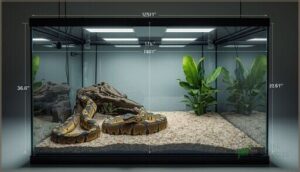
Once you’ve picked your materials, enclosure dimensions depend directly on your snake species and adult size.
Most small snakes thrive in a minimum floor area of 12 by 18 inches, while larger adults need 2 to 3 times their body length in total interior space. Ball pythons do well in 36 by 18 by 12 inch setups, and corn snakes typically require 40 to 70 gallon tanks with proper ventilation needs and humidity control built in.
When choosing your setup, it’s important to think about enclosure size considerations to guarantee your snake’s health and reduce stress.
Importance of Tight-Fitting Lids
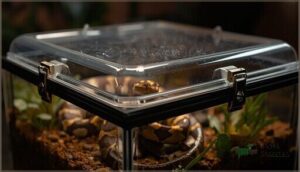
Your enclosure won’t work without a good seal that fits snugly around the rim, blocking every gap. A tight lid minimizes air exchange, keeps humidity stable, and stops your snake from nudging it open during late-night explorations.
Check the fit monthly, since plastic warps and gaskets compress, creating weak points that turn into escape routes before you notice.
Recommended Locking Mechanisms
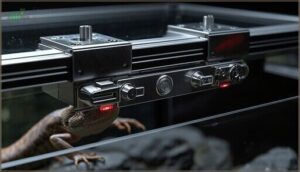
Once the lid sits flush, you’ll need a locking mechanism that won’t budge under pressure. Mechanical locks like cam twist systems and pin tumbler designs resist tampering, while secure latches with double bolt construction keep the tank lid from lifting when your snake pushes upward.
For a complete breakdown of materials, ventilation specs, and locking systems, check out this guide to building a secure snake tank lid.
For sophisticated cage security and escape prevention, consider electro mechanical options with fail-secure modes that maintain enclosure safety even during power loss.
Regular Enclosure Maintenance Tips
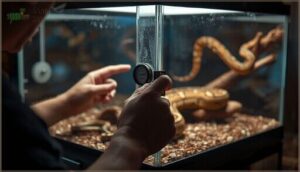
Even the most secure enclosure won’t stay that way without regular checkups. Your snake’s home faces daily wear from humidity, temperature changes, and the snake’s own movements, so small problems can turn into escape routes fast.
Let’s walk through the key maintenance tasks that’ll keep your enclosure locked down tight.
Inspecting for Cracks and Gaps
Think of your secure tank as a puzzle—one tiny piece out of place, and your snake finds a way out.
Treat your snake’s enclosure like a puzzle—one misaligned piece becomes an escape route
You’ll want to grab a bright flashlight and magnifying glass for crack detection methods, then check every seam for hairline cracks up to 2 mm wide. Look closely at silicone seals for gaps wider than 0.5 mm, because thorough enclosure maintenance stops escape attempts before they start.
Reinforcing Weak Points
After you’ve spotted those tiny vulnerabilities, it’s time to fortify them before escape attempts begin. Apply marine-grade silicone sealant along every seam intersection to create a continuous barrier, then secure corners with metal brackets for lid reinforcement and joint sealing.
You can upgrade weak panels to impact-resistant polycarbonate, add latch guards over locks for hardware security, and coat surfaces with non-skid epoxy for complete surface protection.
Replacing Worn or Damaged Parts
When cracked hinges or bent frames appear, don’t patch them—replace them entirely. Swap out corroded hardware for stainless steel screws and upgrade to high-duty latches that won’t fail under pressure.
Fresh weatherstripping and door gaskets maintain your seal integrity, while reinforced access ports prevent future cracking. These cage maintenance and repair steps transform worn components into reliable escape prevention strategies that keep your snake safely contained.
Preventing Escape Through Environmental Design

Even the most secure tank won’t keep your snake inside if the room around it isn’t properly prepared. Small gaps, unsealed openings, and overlooked entry points can turn a temporary escape into a full-blown search mission.
Let’s walk through the environmental tweaks that’ll help you create a truly escape-proof setup.
Sealing Tiny Openings and Gaps
You’d be surprised how a gap the width of a dime can turn into an escape route. Silicone sealant works wonders for openings up to 1/4 inch, creating a flexible barrier that moves with your tank. For deeper channels, try a foam backer rod first—it gives the silicone something to grip.
When sealing isn’t enough, metal mesh covers vent-like openings and adds another layer of snake proofing to your reptile enclosure design.
- Inspect corners and seams for hairline cracks after every cleaning session
- Apply sealant in a continuous bead to avoid irregular gaps that compromise durability
- Recheck all seals within 24 hours to confirm they’ve cured properly
Using Tank Clips and Sealants
Stainless steel tank clips paired with neutral-cure silicone sealant form your pet snake’s first line of defense. Space clips evenly across your reptile enclosure lid to distribute tension, and you’ll avoid the weak spots snakes exploit. Clean seams with isopropyl alcohol before applying a continuous bead of silicone, then let it cure fully—usually 24 to 48 hours—before introducing your snake.
| Securing Cage Component | Primary Function | Maintenance Frequency |
|---|---|---|
| Stainless steel clips | Prevent lid movement and secure lid closure | Monthly inspection |
| Silicone sealant | Fill gaps and create flexible barriers | Quarterly recheck |
| Quick-release clips | Enable rapid feeding access | Check before each use |
| Color-coded clip sets | Identify correct lid placements | Replace when faded |
Quarterly inspections catch cracking sealant before it becomes an escape route, and documenting each application date keeps your snake proofing schedule on track.
Room Preparation and Snake-Proofing
Think of your snake room as a fortress where every crack is an invitation. Start with solid doors fitted with weather stripping, then add metal mesh over vents—choose 1/4-inch openings or smaller. Seal pipe entries with silicone caulk, and install door sweeps to close bottom gaps. These snake barriers transform ordinary rooms into secure reptile enclosure design zones.
- Smooth epoxy or sealed concrete floors deny grip points for escape artists
- Hardware cloth around wall penetrations blocks even the slimmest serpent
- Backdraft dampers in ventilation systems stop airflow-assisted intrusions
Your securing cage strategy extends beyond the tank itself. Snake proof fencing principles apply indoors too: seal concrete gaps with polyurethane, reinforce window frames with steel flashing, and fit fine mesh vent guards with edges flush to walls. Monthly checks of door seals and floor surfaces keep your snake proof room ready, while clear wall barriers and elevated storage eliminate hiding spots that complicate searches.
Reducing Stress to Minimize Escape Attempts

A stressed snake is far more likely to look for a way out, so keeping your pet calm and content plays a major role in preventing escapes.
When snakes feel secure in their environment and daily routine, they’re less inclined to test the boundaries of their enclosure.
Let’s look at three key strategies that help reduce stress and keep your snake settled.
Proper Handling and Routine
Regularly handling your pet snake builds trust and calm and cuts down on escape attempts driven by fear or frustration. Start with brief sessions, just five to ten minutes, and always support the body gently with both hands.
Wash up before and after to keep things clean. A consistent daily routine calms your snake, reduces stress, and makes handling safer for both of you.
Enrichment and Safe Free Roaming
Beyond handling, your snake needs mental stimulation to stay content and less likely to attempt an escape. Enrichment toys like safe foraging puzzles and varied hides engage natural hunting instincts without adding stress.
Free roam sessions in a clearly bounded, snake-proofed area satisfy curiosity, but always supervise closely and stick to short, predictable intervals to keep things secure and calm.
Managing Feeding and Environmental Cues
Your snake’s feeding patterns and cue recognition directly influence stress levels. Schedule meals at consistent times when your snake is alert, and maintain stable temperature control and humidity levels to support natural hunger signals.
Environmental triggers like lighting that mimics day-night cycles and predictable scent cues signal mealtime, reducing anxiety and those restless escape attempts tied to poor snake nutrition and habitat design.
Emergency Actions if a Snake Escapes

Even with the best precautions, snakes can sometimes slip out of their enclosures, and knowing what to do next can make all the difference. Acting quickly and calmly is your best bet for a safe recovery.
Whether your snake is hiding somewhere in your home or has ventured further, here’s how to handle an escape situation, from the initial search to knowing when it’s time to call in backup.
Safe Search and Recovery Steps
When your snake escapes, map the room and sketch potential escape routes to create a search grid for systematic coverage.
Start near the enclosure, checking warm spots like heater vents and electronics where reptile behavior drives them to seek heat.
Use a flashlight to light up dark corners, maintain a calm approach to avoid startling the animal, and document each area you’ve searched—this prevents redundant effort and sharpens your containment strategies.
Securing The Home to Prevent Further Escape
Once you’ve begun your search, lock down the rest of your home to prevent further snake escapes and reinforce household safety.
Block all potential escape routes immediately:
- Install door sweeps or weather stripping to close gaps under doors and improve home barrier systems.
- Seal vents and openings larger than 1/16 inch with mesh or caulk for escape prevention.
- Close off rooms methodically to contain the search zone and strengthen cage security.
When to Seek Professional Help
Sometimes you’ll need professional guidance, especially when your snake’s escape creates a crisis intervention moment. Contact a reptile specialist if your pet remains missing beyond 72 hours, if venomous species are involved, or if you’re experiencing mental health distress from the situation. Emergency response teams and support services can assist with both pet safety and security concerns.
| When to Call | Who to Contact |
|---|---|
| Venomous snake loose | Wildlife control or herpetologist |
| Missing 3+ days | Reptile rescue or experienced breeder |
| Emotional distress | Mental health professional or crisis hotline |
Frequently Asked Questions (FAQs)
How to prevent a snake from escaping?
To prevent escape attempts, you’ll need a glass enclosure with a secure lid that locks from the outside, plus regular inspections for cracks and gaps that even determined snakes can exploit.
What is the best thing to do to keep snakes away?
Like a fortress needs strong walls, your yard needs regular maintenance to stay snake-free.
Keep grass trimmed, remove debris piles, seal foundation gaps, and eliminate food sources—these outdoor safety precautions form effective snake deterrents.
What plants naturally repel snakes from yards?
Marigolds, lavender, lemongrass, and garlic create natural deterrents when you plant them along garden borders.
These snake repellent plants form outdoor plant barriers through strong scents, boosting yard safety measures while enhancing your outdoor safety with reptile deterrents.
How do temperature changes affect escape behavior?
When your snake’s enclosure gets too hot or cold, thermal stress kicks in, slowing neural adaptation and reducing escape velocity.
Temperature thresholds directly shape behavioral responses, triggering more escape attempts if humidity levels fluctuate dramatically.
Can multiple snakes share one enclosure safely?
Most species are solitary animals and shouldn’t cohabit, but garter snakes can share space with careful species compatibility checks, enclosure zoning for separate hides, multi-snake feeding protocols, and constant stress monitoring to prevent aggression.
What sounds or vibrations deter snakes effectively?
While ultrasonic repellents show mixed results across species, ground vibrations from stomping or vibrational mats work better—snakes sense substrate disturbance more than airborne sounds, prompting retreat and supporting overall snake safety strategies.
How long can escaped snakes survive indoors?
Most indoor escapes last two to six weeks for small species with adequate warmth and water, though larger snakes may endure one to three months depending on food availability, temperature effects, and humidity levels.
Conclusion
Your snake won’t announce its departure—it’ll quietly vanish through the smallest oversight you didn’t notice. Preventing snake escape tips aren’t about locking down a prison; they’re about respecting your animal’s resourcefulness and staying one step ahead.
Check seals, reinforce weak spots, and never assume your setup is foolproof. The difference between a secure keeper and a frantic search party often comes down to one loose corner you meant to fix tomorrow.