This site is supported by our readers. We may earn a commission, at no cost to you, if you purchase through links.

Most people assume snakes are unpredictable—and honestly, some are. But certain python species have earned a reputation for tolerating human contact so reliably that even first-time keepers handle them with confidence after just a few weeks.
Ball pythons, for instance, curl into a defensive ball rather than bite when stressed. That single trait changes everything for a nervous beginner.
The python species easiest to handle share a handful of measurable qualities: manageable size, low aggression thresholds, and predictable reactions. Knowing which species fit that profile—and why—takes most of the guesswork out of choosing your first snake.
Table Of Contents
- Key Takeaways
- What Makes a Python Easy to Handle?
- Key Traits of Beginner-Friendly Pythons
- Ball Python: The Classic Easy-Handler
- Children’s Python: Small and Manageable
- Royal Python Morphs: Handling Differences
- Carpet Python: for Confident Beginners
- Factors That Affect Python Handleability
- Safe Handling Practices for Pythons
- Choosing The Right Python for You
- Frequently Asked Questions (FAQs)
- What is the easiest pet snake to handle?
- What is the calmest python species?
- Can pythons recognize their owners over time?
- Do pythons require vaccinations or routine vet visits?
- How do pythons interact with other household pets?
- What legal restrictions exist for owning pythons?
- How does a pythons shedding cycle affect handling?
- Conclusion
Key Takeaways
- Ball pythons are the top pick for beginners because they curl up defensively instead of striking, stay compact at under 5 feet, and grow calmer with every consistent handling session.
- The traits that make a python easy to handle—predictable behavior, low stress response, and manageable size—are more important than any individual species’ looks or morph color.
- Handling success depends as much on your routine as the snake’s temperament: always wait 48–72 hours after feeding, skip sessions during shedding, and keep early sessions under 15 minutes.
- Owning a python is a decades-long commitment—ball pythons can live 20–30 years—so matching the species to your lifestyle, housing situation, and budget matters just as much as picking a docile snake.
What Makes a Python Easy to Handle?
Not every python is created equal regarding handling. Some species stay calm, stay manageable, and give you clear signals — making the whole experience feel less like a gamble and more like a skill you can actually learn.
Species that thrive with consistent handling often do even better when their python snake habitat design reinforces that sense of security from day one.
Here’s what to look for before you pick your first snake.
Calm Temperament
A calm temperament is the single biggest factor that makes a python easy to handle. Genetic disposition plays a huge role here — ball pythons are selectively bred for docility, making them one of the most beginner-friendly handling experiences you’ll find.
Three things that signal a naturally calm snake:
- Slow, deliberate movement when held
- Relaxed coils without constant escape attempts
- Steady tongue-flicking instead of repeated striking
Other gentle reptiles such as gentle corn snakes are also popular beginner pets.
Manageable Size
Size matters more than most beginners expect. A ball python tops out around 1.5 meters and 2,500 grams — compact body size that one person can comfortably support.
Children’s pythons stay even smaller at 3 to 4 feet. These small or medium-sized, docile snake species grow at a steady, predictable pace, making snake size considerations for handling straightforward from day one.
Their calm demeanor for beginners makes them a popular choice for novice reptile owners.
Predictable Behavior
Beyond size, predictable behavior is what makes beginner-friendly handling genuinely manageable. Ball pythons follow a consistent routine — nighttime activity, hide rotation between warm and cool zones, and a reliable feeding schedule when you maintain the right temperature gradient.
That rhythm means fewer surprises. Once you learn your snake’s patterns, you’ll know exactly when it’s ready to explore and when it wants to be left alone.
Low Stress Response
A snake’s stress response runs deeper than mood — it’s hormonal. When a ball python feels threatened repeatedly, elevated stress hormones suppress immune function and disrupt feeding regularity. That’s bad news for long-term health.
Signs of a genuinely low stress response include:
- slow, relaxed movement during handling
- steady tongue flicking
- loose coiling around your hand
- consistent appetite week to week
Docile snake species for beginners, like ball pythons, naturally maintain better hormonal balance when their enclosure enrichment, temperature gradient, and handling routine stay consistent — making beginner-friendly handling far less stressful for both of you.
Key Traits of Beginner-Friendly Pythons
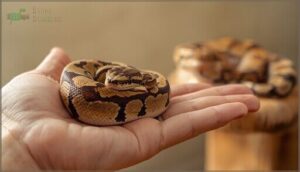
Not every python is the same regarding handling, and a few key traits separate the easy ones from the frustrating ones.
Knowing what to look for upfront saves you a lot of stress down the road.
Here’s what actually matters when picking a beginner-friendly python.
Docility and Tolerance
Docility is your best friend as a beginner. Ball pythons are the model here — they curl up defensively rather than striking, and with gradual exposure, they become remarkably tolerant of regular handling.
Quiet environment conditions and stable temperature influence how relaxed your snake stays. A docile snake species for beginners doesn’t just tolerate you — it trusts you.
Activity Level
Activity level matters more than most beginners realize. Ball pythons lean heavily into Sedentary Tendencies — staying coiled and calm most of the day.
Their Nocturnal Peaks and Crepuscular Activity windows mean you’ll catch them most alert at dusk.
Post-Feeding Slowdown lasts 5–7 days, so timing handling is easy.
Morph Activity Variations exist, but most calm species, including the Children’s Python, stay predictably low-energy — perfect for beginner-friendly handling.
Handling Frequency Needs
Handling frequency shapes trust more than anything else. Follow these Handling Interval Guidelines to stay consistent:
- Post-Feeding Rest — Wait 24–48 hours after meals to avoid regurgitation.
- Weekly Session Count — Adult ball pythons handle 1–3 times weekly, 10–30 minutes each.
- Acclimation Period — New pythons need 7–14 days before first contact.
Age-Based Frequency matters too — short frequent sessions build confidence in juveniles without stress.
Ball Python: The Classic Easy-Handler
If there’s one snake that’s earned its reputation as the perfect beginner pick, it’s the ball python. They’re calm, slow-moving, and remarkably forgiving — exactly what you want when you’re still learning the ropes.
Here’s what makes them so easy to work with.
Temperament and Demeanor
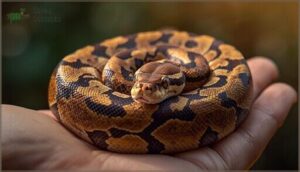
Ball pythons sit at the shy end of the Boldness Spectrum — and that’s exactly what makes them so beginner-friendly. Their go-to Defensive Posture is curling into a tight ball, not striking. You’ll rarely see aggression. Instead, expect quiet curiosity and slow, deliberate movement — classic Shyness Indicators of a genuinely docile snake species.
| Behavior | What It Means |
|---|---|
| Curls into a ball | Feels threatened but non-aggressive |
| Slow tongue flicks | Calm, secure Confidence Levels |
| Loose body posture | Comfortable with you |
With age and consistency, Temperament Shifts toward even greater calm — making this gentle temperament breed a reliable choice for anyone new to snake ownership.
Handling Tips
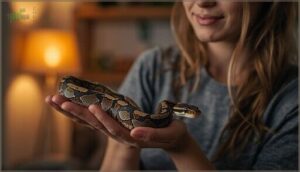
Think of your first session as an introduction, not a test. Approach from the side, touch the mid-body first — Mid-Body Contact signals no threat.
Keep sessions to 10–20 minutes, one to three times weekly.
Nighttime Handling often works better since ball pythons are naturally more active then.
Always wash hands first, and watch for Stress Signal Recognition cues like tight coiling or jerky movement.
Common Care Considerations

Beyond their docile temperament, ball pythons have specific care needs that directly affect how well they handle. Getting these right makes all the difference.
- Maintain a temperature gradient: 88–92°F warm side, 75–80°F cool side
- Keep humidity levels between 50–60%, with 70% in the humid hide
- Prioritize enclosure ventilation to prevent respiratory issues
- Practice water quality management — change the bowl daily
- Monitor seasonal shedding care — boost humidity when skin looks dull
Children’s Python: Small and Manageable

The Children’s Python is one of the most underrated beginner snakes out there — small, steady, and surprisingly easy to work with. At just 3 to 4 feet long, it’s manageable without being fragile, and most individuals settle into a calm routine once they’re used to you.
Getting the enclosure right is the first step, so here’s what you’ll want to think about.
Size and Strength
What makes the Children’s Python such a standout for beginners is its size. Adults max out at 3 to 4 feet and weigh considerably less than ball pythons, which can reach 5 pounds or more.
That smaller adult weight range means less muscle power and grip strength to manage. For beginner-friendly handling, that’s a real advantage — a docile temperament paired with a naturally compact, small to medium-sized build.
Interaction Preferences
Children’s pythons actively explore during handling — curious movements across your hands and arms are normal. Their docile temperament makes trust building straightforward with consistent sessions.
Keep these interaction preferences in mind:
- Preferred Handling Time: Early evening works best given their nocturnal nature
- Touch Sensitivity: Gentle, confident grip reduces stress
- Human Presence: Short, regular contact builds comfort
- Lighting Preference: Dim light encourages calmer behavior
- Environmental Enrichment: Varied handling locations stimulate curiosity
Enclosure Requirements
Your enclosure setup shapes how settled — and handleable — a Children’s python becomes. Adults thrive in a minimum 30 x 12 x 12-inch space, following standard Size Guidelines for the species.
Maintain a Temperature Gradient of 80–85°F at the basking spot, dropping to 75°F on the cool end. For Humidity Management, target 50–70% using moist hides.
Substrate Selection of 3–6 inches of shredded aspen facilitates natural burrowing, while smart Hide Arrangement — one warm, one cool — keeps stress low.
Royal Python Morphs: Handling Differences
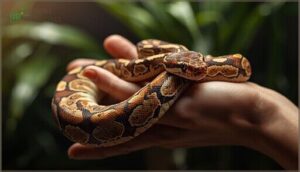
Royal pythons come in hundreds of morphs, and while they’re all the same species, their behavior isn’t always identical. Some morphs tend to be noticeably calmer than others, which can make a real difference when you’re just starting out.
Here’s what you need to know about handling differences across the most common morphs.
Morphs With Calmer Dispositions
Not all morphs are created equal regarding temperament. Genetic line selection matters more than color alone.
Breeders focused on lineage temperament consistently produce banana, mojave, and pastel ball pythons that score eight or higher in temperament scoring systems. Health-linked calmness plays a role too — morphs free of neurological issues stay steadier during handling.
Breeder reputation is your best guide here.
Behavioral Variations Among Morphs
Beyond color, snake morphs carry real behavioral differences worth knowing.
Spider morphs show head wobble and stress displays under bright light, making them trickier to handle confidently.
Piebald morphs tend toward tighter defensive coiling when startled.
Pastel and Banana morphs generally offer calmer activity shifts and steadier feeding responses — solid choices if you’re prioritizing docile snake breeds and beginner-friendly snake handling.
Selecting The Right Morph
When choosing a morph, prioritize health over looks. Health-friendly morphs like Pastel, Banana, and Leopard offer genetic stability, calm snake temperament, and color contrast visibility that makes health checks easier.
Budget-friendly options usually start around $75. Always ask breeders about lineage — breeder transparency matters.
For beginner-friendly snake handling and solid docile snake breeds, simple single-gene morphs win every time during snake species selection.
Carpet Python: for Confident Beginners
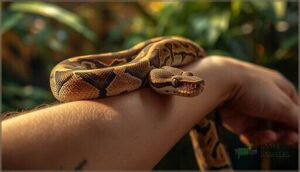
Carpet pythons aren’t quite the laid-back beginners’ snake that ball pythons are, but they’re a great next step once you’ve built some confidence. They’re active, alert, and responsive — which makes handling genuinely interesting, but also means you need to know what you’re doing.
Here’s what to expect across the three key areas that matter most.
Temperament by Subspecies
Not all carpet pythons are built the same. Coastal Carpet Confidence comes with a catch — juveniles can be feisty before settling down.
Jungle Carpet Defensiveness is real and well-documented, making them better for experienced keepers.
If you want Darwin Carpet Relaxation or Inland Carpet Steadiness, those subspecies handle more like beginner-friendly snake handling favorites — calm, predictable, and closer in temperament to ball pythons or a Children’s Python.
Size and Handling Techniques
carpet pythons are longer than most beginner picks — so your technique matters more here. Use a length-based grip, supporting three points along the body so nothing hangs loose.
weight-class handling is straightforward since they’re still light enough for one person.
Keep sessions to 10–15 minutes, use smooth hand-arm coordination, and always practice a gentle release back into the enclosure.
Environmental Needs
Carpet pythons need a properly set-up home — and they’re less forgiving than ball pythons if something’s off.
Here’s what they need:
- Temperature Gradient of 78–92°F with a clear thermal gradient management plan
- Humidity Levels kept at 50–60%, with good ventilation flow to prevent mold
- Substrate Choice like cypress mulch, plus a solid lighting cycle for rhythm
Get temperature and humidity control for snakes right, and your carpet python will thrive.
Factors That Affect Python Handleability
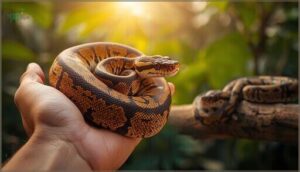
A python’s handleability isn’t fixed — it shifts based on a few key factors that are worth understanding before you pick up your snake. Some of these come down to the snake itself, others depend on you and your routine.
Here’s what actually shapes how a python behaves in your hands.
Age and Socialization
Age shapes how a python reacts to you more than almost anything else. Hatchling needs patience — give it two weeks to settle before that first pick-up, then tap gently on the head to signal you’re not food.
| Age Stage | Handling Guideline |
|---|---|
| Hatchling (0–6 months) | 5 min sessions every few days |
| Juvenile (6–24 months) | 10–20 min, two to three times weekly |
| Adult (2+ years) | 30–45 min after full habituation |
| New rescue adult | Restart with short 5 min sessions |
Consistent early handling builds Hatchling Trust Building from day one, locking in calmer adult behavior later.
Feeding and Health Status
How your python eats tells you a lot about how it’ll handle. A snake on a steady feeding schedule — juveniles every 5 to 10 days, adults every 14 to 21 — usually stays calm and predictable.
Always wait 48 to 72 hours after meals before picking it up.
Feeding Frequency, Body Condition, Hydration Levels, and Shedding Health all signal whether your snake is ready for interaction.
Stress Signs to Watch For
Beyond feeding cues, stress signs in snakes are just as telling. Watch for coiling tension around your hand, rapid breathing along the sides, or mouth gaping that lingers.
Escape attempts — frantic, floor-directed movement — signal the session needs to end.
rising tongue flicking rate combined with an S-curve posture means your python’s done.
These stress indicators don’t lie.
Safe Handling Practices for Pythons
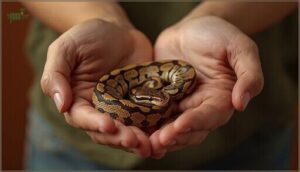
Knowing how to handle your python the right way makes a real difference — for both of you. A few simple habits can keep your snake calm, healthy, and comfortable during every session.
Here’s what you need to know before you pick your python up.
Supporting The Body
Think of it like carrying a long, fragile object — even weight distribution is everything.
Use a mid-body lift technique by sliding one hand under the midsection, then adding a second farther back for tail support.
Keep at least a third of the body supported at all times.
Watch for comfort cues like loose, flowing coils — that’s your docile snake telling you your beginner-friendly handling techniques are working.
Handling Session Length
Once your grip feels steady, the next question is: how long is too long?
Start with 5–10 minutes for new or young snakes, then build from there using incremental increases based on how your snake responds — not the calendar.
Keep these session timing rules in mind:
- Skip handling for 48 hours after feeding to respect the feeding interval.
- Pause during any shedding cycle — snakes feel vulnerable then.
- Watch temperature impact; cool rooms mean shorter sessions.
- Most adults do well with 15–30 minutes, 2–3 times weekly.
Hygiene and Safety Tips
Hand washing is your first line of defense — always wash with soap and warm water for at least 20 seconds before and after every session. This covers snake handling safety from both ends: food smells won’t confuse your snake, and Salmonella won’t hitch a ride to your face.
Keep feeder rodent hygiene separate from your kitchen.
For first bite response, rinse the wound, wash with soap, and monitor for swelling.
Choosing The Right Python for You
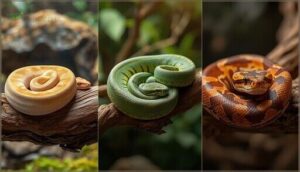
Picking the right python comes down to more than just personality — your lifestyle matters just as much as the snake’s temperament.
Before you commit, there are a few practical things worth thinking through carefully.
Here’s what to think about as you make your decision.
Space and Enclosure Considerations
Space matters more than most beginners expect. A 4×2-foot enclosure covers the minimum Floor Space Ratio for adult ball pythons — enough room for a solid Heating Zone Layout with warm and cool ends.
Add a Vertical Climbing Area with low branches, plan your Hide Placement Strategy across both sides, and keep Humidity Management Zones in mind when placing your water bowl and substrate.
Long-Term Commitment
A ball python can live 20 to 30 years — longer than most dogs. That’s the reality of multi-decade care that beginners often overlook.
A ball python can outlive your dog — and most beginners never see that 30-year commitment coming
Before you commit, consider:
- Ongoing costs of $30–$60 monthly add up to thousands over time
- Future housing must allow reptiles across every move
- Vet preparedness means finding a reptile vet before emergencies hit
- Life event planning keeps your snake cared for through every change
Sourcing From Reputable Breeders
Where you buy your python matters as much as which species you choose.
Prioritize captive bred specimens from breeders who offer Genetic Transparency, clear Health Guarantees, and solid Aftercare Support.
Good Buyer Reputation is easy to verify — check reviews on reptile-specific marketplaces.
Ethical sourcing and responsible pet trade practices protect both you and your snake, making Captive Bred Assurance a non-negotiable when choosing beginner-friendly pet snakes.
Frequently Asked Questions (FAQs)
What is the easiest pet snake to handle?
The ball python earns top marks for beginner-friendly snake handling. Its docile nature, calm pet snake temperament, and easy-to-handle size — usually 3 to 5 feet — make it a reliable first choice.
What is the calmest python species?
Regarding sheer calmness, ball pythons take the top spot. Their shy temperament and balling defense make them a standout among docile snake species for beginners seeking gentle, stress-free handling.
Can pythons recognize their owners over time?
Pythons perceive patterns, not personalities. Through scent memory and thermal cue association, they recognize your routine — not your face.
That habituation rate builds calm over time, making beginner-friendly handling smoother with every session.
Do pythons require vaccinations or routine vet visits?
No, pythons don’t need vaccinations.
Veterinary care for snakes focuses on routine health exams, annual parasite screening, and health monitoring indicators like weight, appetite, and behavior to keep your python thriving.
How do pythons interact with other household pets?
Keep them separate. Ball pythons have a gentle temperament, but predator-prey dynamics and cross-species stress are real. Enclosure separation, pet behavior monitoring, and awareness of Salmonella risk keep everyone safe.
What legal restrictions exist for owning pythons?
Laws vary by location. Federal import bans, CITES compliance, and state licensing all shape what’s legal.
Always check local zoning rules before buying — some areas require permit insurance or ban certain species outright.
How does a pythons shedding cycle affect handling?
Like a snake shedding its old self, timing matters. During the shedding cycle, skip handling entirely — blue phase stress peaks when pre-shed vision clouds.
Post-shed trust rebuilds fast once that fresh skin appears.
Conclusion
The right snake doesn’t just sit in an enclosure—it opens a door. Once you understand what makes the python species easiest to handle, the guesswork disappears and confidence takes its place.
Ball pythons, children’s pythons, and their calm-natured relatives reward patience with predictability.
Start with the right species, respect their signals, and handle them consistently. What begins as cautious curiosity often grows into one of the most rewarding keeper relationships you’ll ever build.
- https://www.allanglescreatures.com/blogs/news/ball-python-behavior-what-every-owner-needs-to-know
- https://www.geniusvets.com/pet-care/learn/reptiles/snakes/blog/top-5-beginner-friendly-pet-snakes-according-vets
- https://www.thebiodude.com/blogs/snake-caresheets/bioactive-childrens-python-care-sheet
- https://reptifauna.com.au/blogs/news/childrens-python-care-sheet
- https://www.exotic-pets.co.uk/spotted-python.html