This site is supported by our readers. We may earn a commission, at no cost to you, if you purchase through links.

Most first-time snake owners pick their pet the same way they pick a puppy: by looks alone. That’s how a nervous ball python ends up with someone who wanted a cuddly corn snake, or a garter snake ends up terrified in a tank built for a python. In my clinic, I see the fallout of these mismatches often, stressed snakes, frustrated owners, and animals that never quite settle in.
Choosing right for your first pet reptile means looking past color and pattern to temperament, size, and daily care. A corn snake might live 20 years and stay calm through clumsy handling. A ball python needs a gentler touch and a quieter setup. Get the match right from day one, and you’ll set yourself up for a smooth, rewarding partnership instead of years of guesswork.
Table Of Contents
- Key Takeaways
- How to Choose Your First Pet Snake
- Best Beginner Snake Species Compared
- Match Your Snake to Your Lifestyle
- Budget for Housing and Ongoing Care
- Buy a Healthy, Ethical Pet Snake
- Frequently Asked Questions (FAQs)
- What should my first pet snake be?
- What’s the friendliest snake to have as a pet?
- Which snake is the best for beginners?
- What are the top 10 best snakes for beginners?
- What is the best first snake to have as a pet?
- What is the best reptile pet for a beginner?
- What snakes are not good for beginners?
- What is the best snake enclosure for beginners?
- How often do pet snakes need veterinary checkups?
- Can snakes recognize and bond with their owners?
- Conclusion
Key Takeaways
- Pick your first snake based on temperament and care needs, not looks, since docile species like corn snakes, ball pythons, kingsnakes, and garter snakes forgive beginner mistakes far better than flashy but unpredictable ones.
- Size and lifespan vary a lot by species, so plan for a 20-30 year commitment with corn snakes or ball pythons versus a shorter 4-8 year one with garter snakes before you buy.
- Budget for more than the snake itself, since enclosures, heating, feeding, and annual vet visits ($100-150) add up to real ongoing costs over the years.
- Always buy from reputable breeders offering documented health and feeding records instead of impulse pet store purchases or wild-caught snakes, and check your state’s exotic pet laws first.
How to Choose Your First Pet Snake

Picking your first snake isn’t just about looks, it’s about setting yourself up for success from day one. A few key factors will steer you toward a pet that fits your experience, your schedule, and your comfort level. Let’s walk through what actually matters before you bring one home.
If you’re weighing your options, browsing this guide to popular pet snake breeds for beginners can help you narrow things down before making a decision.
Match Species to Experience
Before you fall for a snake because it looked cool online, think about your own experience level first. Beginner temperament matters most: corn snakes, ball pythons, kingsnakes, and milk snakes all stay calm and tolerate handling mistakes new owners inevitably make. Garter snakes work too, once they’ve gotten used to gentle handling. Match the species to your comfort level, not the other way around.
A data-centered approach to reading can also help you compare species traits more clearly before you buy.
Compare Adult Size and Lifespan
Size and lifespan considerations matter as much as temperament. Adult length varies by species, and so does snake lifespan, sometimes dramatically.
- Corn snakes: 4–6 feet, 15–20 years
- Ball pythons: 3–6 feet, up to 30 years
- Kingsnakes/milk snakes: 3–5 feet, 12–20 years
- Garter snakes: 2–4 feet, 4–8 years
That’s a wide size range to plan around before buying.
Consider Temperament and Handling
Numbers only tell half the story. Temperament shapes your daily experience, so pick calm species selection over flashy looks.
| Species | Handling Ease |
|---|---|
| Corn snake | Very docile |
| Ball python | Calm, shy |
| Kingsnake | Confident |
| Garter snake | Needs patience |
Support the full body, keep sessions short, and stress-free interaction becomes second nature within weeks.
Check Feeding Requirements
Handling calm snakes is one thing, feeding them is another skill entirely. Check that frozen mice fit your comfort level before buying.
Prey size should match 60-80% of your snake’s girth, roughly one to two head widths. Feeding frequency runs every 5-7 days for juveniles, 1-2 weeks for adults. Frozen-thawed methods beat live vs frozen prey debates on safety every time.
Review Local Ownership Laws
A cute corn snake could still land you in legal trouble, depending on your zip code. State permit requirements and species-specific bans vary wildly.
Before bringing one home, check this state-by-state guide to pet snake regulations to see whether your area requires a permit or restricts certain species outright.
Before buying, check:
- Legal ownership status in your state
- Local exotic pet legislation
- Quantity limits per household
- Grandfathering rules for existing pets
- City-level ordinances
Some states ban species you’d never expect. Do your homework first.
Best Beginner Snake Species Compared
Once you know what to look for, it helps to see how the top beginner species actually stack up. Each one has its own quirks in size, temperament, and daily care that make it a better or worse fit for your life. Here’s how the most common first-snake options compare.
Corn Snakes

Ask ten keepers which snake to start with, and most will say corn snake first. They’re calm, easy to hold, and grow to a manageable 3-5 feet.
You’ll feed them frozen-thawed mice every 7-14 days and house them in a 40-gallon enclosure with a warm side near 85-90°F.
Proper handling keeps them relaxed for 15-20 years.
Ball Pythons

If corn snakes are the friendly face of beginner reptiles, ball pythons are the calm, low-key roommate. They stay 3-5 feet, live 20-30 years, and rarely strike.
Feed juveniles weekly, adults every 1-2 weeks. Keep humidity at 50-60% for clean sheds.
Use proper handling techniques, avoid touching for 48 hours post-feeding, and buy from reputable breeders.
Kingsnakes and Milk Snakes
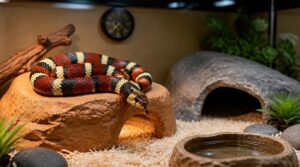
Ever seen a snake that looks like it’s wearing candy stripes? That’s your kingsnake or milk snake. Both stay under 4 feet with calm, predictable temperaments, perfect for new owners.
They eat frozen-thawed rodents readily and need a 20-30 gallon enclosure with warm and cool hides. Just remember, kingsnakes can be cannibalistic, so always house them alone.
Garter Snakes

Small, slim, and often underrated, garter snakes make a solid pick if you want a beginner-friendly species that stays easy to manage. They top out around 20-30 inches, so a smaller enclosure works fine.
You’ll feed them thawed prey or earthworms every 5-7 days, and their calm temperament means they settle into handling quickly with regular, gentle practice.
Species Beginners Should Avoid

Not every snake belongs in a beginner’s home, and some deserve a hard pass. Skip venomous species entirely, and steer clear of large constrictors like Burmese pythons, they outgrow tanks fast.
Watch for aggressive temperaments in reticulated pythons, plus specialized diets in hognose snakes.
Avoid wild-caught snakes too, they carry parasites and unpredictable behavior.
Match Your Snake to Your Lifestyle

Picking a species is only half the job, since the right snake for you also depends on how you live day to day. You’ll want to think honestly about your space, your schedule, and who else is in your home. Here’s what to weigh before you bring one home.
Available Enclosure Space
Before buying, measure the room you’ve got. A 20 gallon terrarium fits a young snake, but adults need 40 gallon minimum enclosures with real floor space and climbing room.
- Cramped tanks breed stress and stunted growth
- Escapeproof latches bring peace of mind
- Vertical climbing area invites natural behavior
- Front access design eases daily care
- Room to stretch means a calmer, happier snake
Feeding and Cleaning Time
Once your enclosure fits, think about the time it takes to run it. Feeding happens every 7 to 14 days, and cleanup after each meal takes 15 to 30 minutes.
Weekly spot cleaning plus a monthly substrate swap keeps odor down. If your schedule’s tight, remember, consistent care beats occasional deep cleans for a healthy, low-stress snake.
Comfort With Frozen-Thawed Prey
Cleanup routines matter, but so does what’s going into the enclosure. Feeding snakes frozen-thawed prey takes practice.
Prey needs full thawing, about 1 to 4 hours, sized to 1.5 times your snake’s width. Skip live rodents. Watch your feeding schedule (every 7 to 21 days) and don’t panic over occasional feeding refusal, it’s often just shedding stress talking.
Children and Supervised Handling
Kids and snakes can mix well, but only with rules. Keep sessions short, 5 to 10 minutes, adults within arm’s reach always.
Three things matter most:
- Support the body evenly, no tail grips
- Freeze if it hisses or wriggles
- Return it calmly if stressed
Choose docile, beginner-friendly species like corn snakes for young handlers, temperament makes all the difference.
Long-Term Care Commitment
Think of your snake as a long-term roommate, not a weekend project. Corn snakes live 15-20 years, ball pythons 20-30+. Budget $100-150 yearly for vet visits, $15-30 monthly for heating, plus substrate swaps every 2-3 months and UVB bulbs yearly. Build a small emergency fund too. You’re planning decades, not months.
A pet snake is a long-term roommate for decades, not a weekend project, so budget and commitment accordingly
Budget for Housing and Ongoing Care

A pet snake costs more than just the price tag at pickup, and you’ll want to plan for that upfront. Your ongoing expenses cover everything from the enclosure itself to the small stuff that keeps your snake healthy and comfortable. Let’s break down where your money actually goes.
Secure Adult-Sized Enclosure
Your snake will outgrow that starter tank fast, so budget for its adult size now. Corn snakes need 40gallon minimum enclosures, while larger species do best in a 4x2x1.5 foot setup.
Choose glass or wood with secure latches for real escapeproofing, since curious snakes test every seam. Smooth interiors and tight lids keep both stress and vet bills low.
Heating, Humidity, and Hides
Get your temperature setup right, and everything else gets easier. You’ll want a thermal gradient, warm end near 90°F, cool end around 75°F, checked with digital probes. A thermostat prevents dangerous swings.
Keep humidity between 40 and 60 percent using a hygrometer.
Remember, two hides matter most, one warm, one cool, so your snake always feels secure.
Substrate and Enrichment Costs
Bedding isn’t just décor, it affects humidity, odor, and your snake’s health. Wood fiber runs $5-10 a bag, paper bedding $4-8, and you’ll replace it every 2-3 months. Hypoallergenic substrate options cost a bit more but cut down on dust.
Enrichment adds up too, hides and branches run $8-25 each, with rotation costs of $5-15 monthly.
Food and Electricity Expenses
Your snake’s monthly bill splits two ways: food and power. Feeding frozen prey runs $10-40 monthly depending on species and size. Heating pads or ceramic emitters add $5-25 in energy costs.
Track usage, compare regional rates, and budget both together, since monthly expense planning keeps annual costs predictable instead of surprising you each January.
Reptile Veterinary Care
Even healthy snakes need a reptile veterinarian, not a general vet. Budget $100-150 for annual wellness exams, which include parasite screening through fecal testing and a full body check. Some owners schedule visits twice yearly for extra peace of mind.
Vets also handle shedding support, skin wound care, and safe restraint if issues pop up. Keep an emergency fund ready, since specialized treatments cost more than routine visits.
Buy a Healthy, Ethical Pet Snake

Once your budget’s sorted, the next step is finding the right snake to bring home. Where you buy matters just as much as what you buy, since it affects your snake’s health for years to come. Here’s what to look for before you hand over any cash.
Knowing exactly where to buy common snake species safely can save you from costly mistakes and help you start your ownership journey on the right foot.
Whether you’re browsing online or checking out a reptile expo nearby, searching for reputable corn snake breeders near me is a smart way to start your search on solid ground.
Choose Captive-Bred Snakes
Where your snake comes from matters as much as which species you pick. Captive-bred snakes carry lower parasite risk, documented health records, and calmer temperaments than wild-caught animals.
Reputable breeders maintain transparency standards, tracking lineage and health history for every animal. This ethical sourcing also protects wild populations, giving beginner-friendly species like corn snakes or ball pythons a healthier, more predictable start toward responsible ownership.
Evaluate Breeders and Reptile Shows
Knowing a snake is captive-bred is step one. Next, you’ll want to judge the source itself.
Reputable breeders answer questions openly about humidity, feeding, and lineage. Local reptile shows list vendors publicly, so check for breeder reputation and health guarantees before you buy. Good customer interactions and clear documentation separate ethical sellers from casual traders.
Check Health and Feeding History
Before you hand over cash, ask to see the snake’s records. Health and feeding history tell you more than looks ever will.
A trustworthy seller shares:
- Recent health checks and vet checkups
- Feeding records showing frozen rodents accepted on schedule
- Shedding checks with no retained skin
- Growth monitoring and behavior observation notes
No paperwork? Walk away.
Compare Morphs and Pricing
Records checked, now let’s talk color and cost. Common corn snake patterns run $60-150, while rare morphs like albino or piebald start at $500 and climb past $1500.
Hatchlings cost less than proven adults. Breeder shows often knock 10-25% off bundled prices.
Remember, rarity drives price, not health, so pick temperament first.
Avoid Impulse Pet Store Purchases
That cute snake in the store window? Walk away.
Pet store snakes often arrive stressed, underfed, with no health history or breeder records.
Avoid impulse decisions:
- Research before buying
- Check legal requirements
- Verify health history
Reputable breeders beat pet shops every time, better temperament, honest records, no regrets.
Frequently Asked Questions (FAQs)
What should my first pet snake be?
Corn snakes and ball pythons top the list of beginner-friendly species, thanks to calm temperament and easy handling. Both accept frozen prey readily, need modest enclosure space, and reward the long-term care commitment with decades of steady companionship.
Before bringing one home, it’s worth knowing how to properly educate yourself about pet snake care, since finding a qualified exotic vet ahead of time is just as important as choosing the right species.
Kids often take to these snakes more naturally than parents expect, especially with guidance from a resource like safe reptile handling techniques for children.
What’s the friendliest snake to have as a pet?
Think of friendliness like a calm handshake. Corn snakes top the list for docile temperament and easy handling, with ball pythons close behind. Both tolerate gentle socialization well, making them ideal, low-stress, beginner-friendly companions for families.
Which snake is the best for beginners?
You’ll do best with corn snakes or ball pythons. Both offer calm temperament, manageable size, easy handling, and simple feeding on frozen-thawed prey, making enclosure setup and long-term care straightforward for someone learning the ropes.
What are the top 10 best snakes for beginners?
Picking a starter snake is like dating, you want easy chemistry, not drama. Your shortlist: corn snake, ball python, kingsnake, milk snake, and garter snake, all beginnerfriendly species that settle into a 20gallon terrarium as steady, low-stress roommates.
What is the best first snake to have as a pet?
For most new owners, a calm corn snake is the answer. They stay 4 to 6 feet, tolerate handling well, and thrive on frozen-thawed mice every 5 to 7 days as hatchlings.
What is the best reptile pet for a beginner?
Like a trusty flip phone in a smartphone world, you want reliable, not flashy. The ball python fits that bill: docile temperament, easy feeding methods, manageable size, and a starter enclosure setup that won’t overwhelm you.
What snakes are not good for beginners?
Skip large constrictors like Burmese pythons, reticulated pythons, and anacondas, plus venomous species and defensive, picky-eating snakes like African Egg-eating snakes.
These demand experienced handling, complex habitats, and pose real safety risks beginners aren’t ready for.
What is the best snake enclosure for beginners?
Think of it as a tiny apartment, not a shoebox. Go with a 36x18x12 inch tank, secure locking lid, warm and cool zones, two hides, and safe substrate like aspen or paper towel.
How often do pet snakes need veterinary checkups?
Plan on a baseline vet visit soon after bringing your snake home, then yearly wellness exams after that. Watch for appetite loss, weight changes, or breathing issues, and call your vet right away if any symptoms appear.
Can snakes recognize and bond with their owners?
Don’t expect cuddles like a puppy, snakes stay solitary by nature. But yours will use scent-based recognition and routine to know you. Consistent handling frequency builds trust, calmer temperament, and fewer defensive reactions over months.
Conclusion
A snake tank is like a tiny kingdom, and you’re the one who sets its rules. Choosing right snake first pet reptile starts with honesty about your patience, space, and budget, not just what looks cool in a glass box. Corn snakes forgive mistakes, ball pythons demand quiet hands, and garter snakes want their own pace. Remember, calm owners raise calm snakes. Pick well, and you’ll gain a companion built to last.