This site is supported by our readers. We may earn a commission, at no cost to you, if you purchase through links.
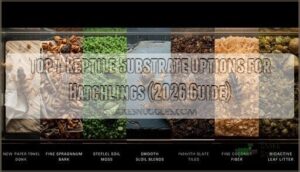
A hatchling reptile’s skin is thinner than you’d expect—sometimes just a few cell layers deep—making it far more vulnerable to abrasion, bacteria, and moisture imbalance than adult skin. That fragility means the ground beneath them isn’t a decorative choice; it’s a biological necessity.
The wrong substrate can trigger respiratory infections, impaction, or shedding complications before a young animal ever reaches its first month. Choosing among reptile substrate options for hatchlings requires matching material properties to species-specific needs, from humidity tolerance to burrowing instincts.
The seven options ahead cover that range precisely.
Table Of Contents
- Key Takeaways
- Key Features of Hatchling Reptile Substrates
- Species-Specific Substrate Considerations
- Humidity and Moisture Management for Hatchlings
- Top 7 Substrate Products for Hatchlings
- Safe Maintenance and Hygiene Practices
- Frequently Asked Questions (FAQs)
- What substrate is safe for baby bearded dragons?
- What substrate is best for baby leopard geckos?
- What substrate is best for bearded dragon eggs?
- What substrate should I use for a baby bearded dragon?
- What is the best substrate for incubating reptile eggs?
- What bedding should I use for my baby bearded dragon?
- What is the best substrate for reptiles?
- How deep should substrate be for hatchlings?
- Are there substrate alternatives for hatchlings with allergies?
- When should hatchlings transition to adult substrate types?
- Conclusion
Key Takeaways
- Hatchling skin is far thinner and more fragile than adult reptile skin, so your substrate choice directly affects their risk of infection, shedding problems, and physical injury.
- Match your substrate to your species’ native habitat — tropical hatchlings need moisture-retaining materials like coconut coir, while desert species do best on dry, fine-grained mixes with minimal impaction risk.
- Dust-free, hypoallergenic substrates aren’t optional for young reptiles — their airways are tiny and react quickly to airborne particles, making respiratory safety a top priority from day one.
- Even the best substrate fails without consistent maintenance — spot-clean daily, do a full replacement every four to six weeks, and replace immediately if you spot mold, foul odor, or signs of bacterial buildup.
Key Features of Hatchling Reptile Substrates
Choosing the right substrate for a hatchling isn’t the same as picking one for an adult reptile — young animals have specific needs that can make or break their early development.
Getting this right early on matters more than most people realize, so it’s worth browsing reptile tank substrate options for every life stage before your hatchling even arrives home.
The substrate you use affects everything from their skin health to their stress levels.
Here are the key features to look for before making your choice.
Soft Texture for Delicate Skin
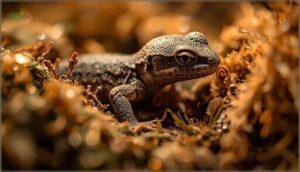
Pressure distribution is critical when you’re caring for hatchlings. Their skin is thinner and more vulnerable than you might expect—think of it as the difference between walking barefoot on soft grass versus gravel.
Hatchling skin is as vulnerable as bare feet on gravel—pressure distribution isn’t optional, it’s essential
Soft substrates like coconut fiber or sphagnum moss spread your hatchling’s weight, cushioning movement and lowering the risk of friction injuries. Abrasion prevention matters, especially for sensitive bellies and tiny toes. If you’ve ever seen a hatchling struggle with stuck shed, you know how much gentle contact counts. Fine particle comfort, such as that found in coconut husk or paper bedding, ensures there are no sharp edges pressing into fragile scales. Shedding support is another benefit—soft materials let old skin slide free without tearing new tissue. Even a few centimeters of soft bedding can absorb impact, making every lunge or crawl safer.
Choose wisely; your substrate shapes every step your hatchling takes.
- Cushions delicate bellies from pressure
- Prevents micro-abrasions and scuffs
- Eases movement for fragile toes
- Facilitates healthy, complete shedding
- Absorbs impact from active exploration
For hatchlings, excellent humidity retention(https://reptichip.com/blogs/reptitips/a-guide-to-choosing-your-substrate) is essential, as detailed in the ReptiChip guide.
Dust-Free and Hypoallergenic Qualities
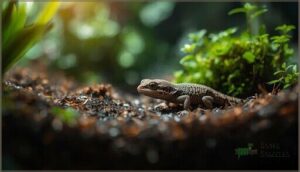
Soft texture protects hatchling skin—but what about air they breathe?
Hatchlings have tiny, delicate airways that react quickly to airborne particles. Dust-free substrates with careful particle size control keep those particles from becoming a respiratory hazard. Coconut coir and sphagnum moss are natural fits here; both offer low dust emission and allergen-free materials without chemical-free processing shortcuts.
Consider using sustainable coconut husk bedding for ideal humidity control.
| Feature | Benefit |
|---|---|
| Particle Size Control | Reduces inhalable airborne dust |
| Low Dust Emission | Protects delicate hatchling airways |
| Allergen-Free Materials | Minimizes respiratory irritation |
| Chemical-Free Processing | Prevents toxic exposure |
| Bioactive Substrates | Promotes long-term respiratory safety |
Reptile substrate selection matters more than keepers often realize. Substrate safety starts before your hatchling takes its first breath.
High Absorbency and Odor Control
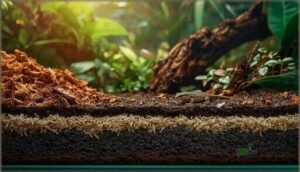
Once your hatchling’s airways are protected, waste management becomes your next concern.
Absorbent materials like coconut coir hold several times their weight in liquid, pulling urine and watery droppings away from the surface fast.
That is your first line of defense against ammonia suppression failures and bacterial spread.
Bioactive substrates take this further with natural mold inhibition, keeping enclosures fresher longer.
Sphagnum moss works well in humid hides for moisture control without pooling.
Better absorption means better spot-clean efficiency—and real substrate longevity between full changes.
Support for Natural Digging Behaviors
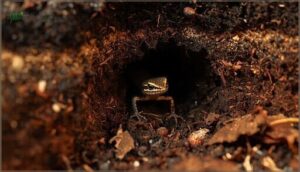
If waste is managed well, your next focus should be supporting natural digging.
Loose, fine-grained reptile substrate lets your hatchling sculpt safe tunnels, boosting environmental enrichment for reptiles and reducing stress.
Follow Burrow Depth Guidelines and Particle Size Selection for stable microhabitats.
Try these:
- Substrate Moisture Balance
- Dig Box Design
- Impaction Prevention
- Natural Substrates for Hatchling Development
Eco-Friendly and Biodegradable Materials
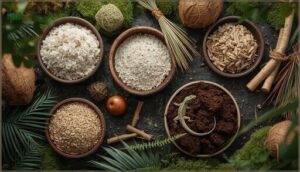
When you weave eco-friendly choices into your reptile care routine, you’re not just helping your hatchling—you’re protecting the planet. Coconut Fiber Composting, Hemp Waste Absorbency, and Miscanthus Grass Sustainability offer practical, safe options. Paper‑Based Packaging and Low‑Impact Shipping round out sustainable practices. Natural Substrates like Eco Earth or Cypress Mulch break down easily, supporting responsible disposal.
| Substrate Type | Eco Benefit | Practical Feature |
|---|---|---|
| Coconut Coir | Compostable | Moisture retention |
| Hemp Fiber | Fully biodegradable | High absorbency |
| Miscanthus Grass | Renewable resource | Gentle, low-dust texture |
Species-Specific Substrate Considerations
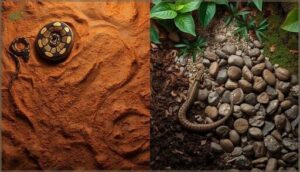
Not every reptile hatchling thrives on the same substrate — what works for a baby ball python can stress out a young day gecko.
The right choice really comes down to where your reptile’s ancestors evolved and what conditions their body is built for.
Here’s a closer look at how substrate needs shift across four key habitat types.
Matching Substrate to Native Habitat
Think of substrate as your hatchling’s first impression of home.
Microclimate replication starts with matching particle size and native texture emulation — sandy loam for desert species, chunky bark for forest floor dwellers.
Species-specific substrates that reflect environmental conditions support natural behaviors and reduce stress.
Getting habitat-specific humidity and species-adaptive digging opportunities right from day one makes a measurable difference in long-term health.
Substrate Needs for Tropical Hatchlings
Tropical species need substrates that hold humidity between 60–80% — and coconut coir manages that job reliably without turning soggy. Its natural mold resistance and eco‑friendly materials make it a practical, cost‑efficient choice.
Aim for about 2–3 inches of depth; this provides thermal buffering and lets your hatchling burrow naturally. Bioactive options with springtails handle waste breakdown passively, lowering impaction prevention concerns.
Cypress mulch works well too, though it needs partial drying cycles to stay clean.
Substrate Choices for Desert Species
Desert species flip the humidity script entirely. Unlike tropical setups, your goal here is dry, breathable reptile substrates that still support natural burrowing depth optimization.
A reliable mix combines 70% organic topsoil with 30% fine, dust-free sand — washed sand works well. Avoid gravel, perlite, and vermiculite, as these raise impaction risk management concerns for hatchlings. For younger animals, start with paper towels or smooth tile, then shift once they’ve grown.
Keep one corner lightly misted for humidity pockets. Material sterilization methods matter too — always use clean, pesticide-free components. Cost-effectiveness analysis favors DIY mixes over commercial "desert blends.
Forest Floor and Arboreal Species Needs
Ever notice how a forest floor isn’t just dirt? Microhabitat complexity is key for arboreal hatchlings.
Layer coconut fiber, leaf litter, and cypress mulch for moisture gradient layers and vertical climbing integration. Sphagnum moss patches add humidity, while bark fragments create shelter.
Avoid reptile carpet and ReptileSafe Sand—these don’t support naturalistic aesthetics or impaction prevention strategies. Instead, focus on:
- Moisture retention
- Drier canopy zones
- Climbing surfaces
- Shelter pockets
- Waste breakdown
Humidity and Moisture Management for Hatchlings
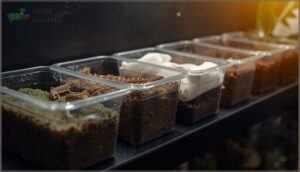
Humidity can make or break a hatchling’s health — get it wrong, and you’re looking at stuck sheds, respiratory issues, or worse. The right substrate does most of the heavy lifting for you.
Here’s what to think about when choosing one that keeps moisture levels where they need to be.
Moisture Retention and Humidity Control
Humidity management starts with choosing the right substrate.
Coconut coir capacity is impressive — it holds up to 10 times its weight in water, keeping moisture stable for days without sogginess.
Cypress mulch evaporation works more slowly, sustaining ambient humidity through gradual release.
ReptiChip’s pore structure locks in moisture without compaction.
Aim for 4–6 inch substrate depth impact, and use mist integration techniques — light daily misting paired with a hygrometer — to keep levels steady.
Preventing Mold and Bacterial Growth
Getting moisture right is only half the battle — what you do to prevent mold and bacteria is just as important for reptile health.
Keep ambient humidity below 60 percent, since mold thrives in wetter conditions. Your substrate selection matters here too. Coconut fiber antimicrobial properties naturally resist bacterial buildup, making it a smart pick for hatchling setups. Before adding any new bedding, follow a simple heat sterilization protocol: bake cypress mulch at 280–300°F for one hour to eliminate hidden spores.
For ongoing care, springtail introduction into bioactive enclosures works well — they consume decaying matter before mold can establish. Pair that with smart ventilation design to keep air moving.
Here’s your mold-prevention checklist:
- Spot-clean daily and remove wet patches immediately
- Apply disinfectant sprays like F10SC at recommended dilutions
- Fix leaks within 24 hours
- Rinse new substrates and sun-dry them before use
- Monitor substrate safety with a reliable hygrometer
Creating Humidity Gradients
Think of your enclosure as a tiny climate map.
Layer Depth Variation does the heavy lifting here — shallow, coarse substrate on the warm side drains fast, while deeper coconut coir or incubation substrate on the cool end holds moisture.
That contrast creates natural humidity zones ranging from 40–50% to 65–75%.
Smart Ventilation Placement and Moisture Source Positioning keep those zones stable.
Add Wet Hide Construction with damp sphagnum moss, and use Gradient Monitoring Tools like calibrated hygrometers to track each zone accurately.
Monitoring and Adjusting Substrate Moisture
Once your gradients are mapped, keeping them stable comes down to consistent observation and small, timely corrections.
Start with Visual Texture Checks — squeeze a small handful of substrate. A few drops of water means it’s too wet. Properly moist substrate feels cool and slightly damp, never slimy.
For Daily Mist Scheduling, Light misting once or twice daily works for most hatchlings. Spray in thin, even layers — never pour.
Follow these four steps for reliable Humidity control:
- Use Moisture Probe Usage at 1–3 inch depths to detect vertical wet zones.
- Apply Hygrometer Placement Tips — position sensors mid-level, not directly on substrate.
- Apply Over‑Wet Adjustments by fluffing or blending in dry substrate when clumping occurs.
- Document weekly moisture checks to improve your Substrate selection and Incubation Techniques over time.
Top 7 Substrate Products for Hatchlings
Choosing the right substrate for your hatchling doesn’t have to feel overwhelming. Each product below was selected with safety, species needs, and ease of care in mind.
Here are seven solid options worth considering.
1. Zilla Reptile Terrarium Bedding
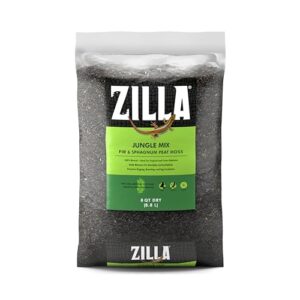
Ever wondered how a substrate can be both gentle and effective for hatchlings? Zilla Reptile Terrarium Bedding stands out for tropical species, blending aged Douglas fir bark with sphagnum peat moss into a soft, earthy layer. You get a plush cushion that protects delicate skin, while the highly absorbent material keeps humidity steady—a must for rainforest geckos, frogs, and young snakes. This bedding isn’t just comfortable; it encourages natural digging, so your hatchlings can behave as they would in the wild.
The organic blend controls odor with its earthy scent, making your enclosure feel more natural and less clinical. Maintenance is straightforward: spot-clean daily, then replace the bedding each month to keep things fresh and safe. If you’re seeking an eco‑friendly substrate that promotes health and natural behaviors, Zilla’s mix delivers. For tropical and forest‑dwelling hatchlings, it’s a reliable choice that balances comfort, moisture control, and easy upkeep.
| Best For | Tropical and forest reptile owners looking for a natural, eco-friendly substrate that keeps humidity steady and encourages wild-like behaviors in frogs, geckos, toads, and snakes. |
|---|---|
| Material Type | Douglas fir bark & peat moss |
| Odor Control | Earthy scent masks odors |
| Humidity Support | High — maintains tropical humidity |
| Eco Friendly | Yes — biodegradable organic blend |
| Maintenance | Daily spot-clean, monthly replace |
| Reusability | No — monthly full replacement |
| Additional Features |
|
- Made from 100% organic aged Douglas fir bark and sphagnum peat moss, so it’s biodegradable and safe for sensitive species
- Highly absorbent material helps maintain healthy humidity levels without much extra effort
- Encourages natural behaviors like digging and nesting, which keeps reptiles active and less stressed
- Can cause splinters if you’re not careful when handling it
- Not a one-size-fits-all solution—some reptile species and drier habitats just aren’t a good match
- Needs daily spot-cleaning and monthly full replacements, which adds up in time and cost
2. Pangea Reptile Egg Incubation Substrate
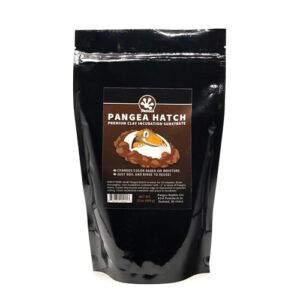
Precision matters when you’re incubating reptile eggs, and Pangea Hatch delivers exactly that. This premium clay-based substrate is built from 100 percent natural minerals that won’t chemically react with developing eggs — a detail that serious breeders genuinely appreciate.
What makes it stand out is the visual moisture indicator. As the substrate dries, it shifts from dark to noticeably lighter in color. You don’t need to guess or constantly handle eggs to check conditions — the substrate tells you when it’s time to add water.
Its porous granules hold many times their weight in water without compacting, so gas exchange around eggs stays healthy. That’s critical for gecko, bearded dragon, and crested dragon clutches. When the breeding season ends, simply boil or bake the substrate to sterilize it. It holds its shape and porosity across multiple cycles, making it a cost-effective, reusable tool for any reptile keeper.
| Best For | Breeders needing reliable moisture control for gecko and bearded dragon eggs |
| Material Type | Natural clay minerals |
| Primary Use | Egg incubation |
| Moisture Control | Highly porous, high water retention |
| Volume/Weight | 16 oz |
| Color | Brown |
| Reusability | Yes — sterilize between clutches |
| Additional Features | Color-shift moisture indicator; can double as terrarium substrate |
Best For: Reptile breeders who need dependable moisture control when hatching gecko, bearded dragon, and crested gecko eggs.
| Material Type | Natural clay minerals |
|---|---|
| Odor Control | Minimal odor noted |
| Humidity Support | High — retains water for incubation |
| Eco Friendly | Yes — natural clay minerals |
| Maintenance | Occasional water top-off required |
| Reusability | Yes — sterilize between clutches |
| Additional Features |
|
- Highly porous clay holds a ton of water without compacting, keeping moisture levels steady around your eggs
- The color-shift indicator takes the guesswork out — you can literally see when it’s time to add water
- Reusable across multiple breeding seasons, so it’s a solid long-term investment
- You’ll need to check in occasionally and top off the water to keep moisture where it needs to be
- No clear mixing or measuring instructions included, so first-timers might need to figure out the right consistency on their own
- Limited info on potential allergens or sensitivities, which could matter if you’re handling it frequently
3. Riare Coconut Fiber Reptile Substrate
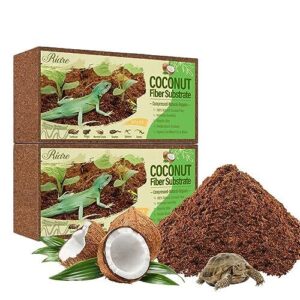
Riare’s coconut fiber bricks are a smart starting point for any hatchling setup that needs reliable humidity support. Each compressed brick soaks up water and expands to about 10 liters of soft, airy bedding — enough to fill a modest hatchling terrarium without breaking your budget.
The texture is gentle on delicate skin, and the fibers allow natural digging and burrowing behaviors that hatchling leopard geckos, ball pythons, and small frogs instinctively seek. It holds humidity in the mid-60s to 70s percent range, which is exactly where many tropical hatchlings thrive.
Odor control is another practical strength. The coconut fiber absorbs ammonia and waste smells between cleanings, keeping the enclosure fresher for longer. Spot-clean soiled clumps regularly to prevent mold buildup. When you’re done, used substrate can go straight into a compost bin — a clean, eco-conscious disposal option.
| Best For | Tropical hatchlings needing gentle, humidity-retaining bedding |
| Material Type | Natural coconut husk fiber |
| Primary Use | Hatchling terrarium substrate |
| Moisture Control | High retention; maintains 60–70% relative humidity |
| Volume/Weight | Expands to ~10L per brick; 2-pack |
| Odor Control | Absorbs ammonia and waste odors |
| Additional Features | Biodegradable, compostable, soft texture for burrowing |
Best For: Reptile, amphibian, and invertebrate owners who need a natural, humidity-retaining substrate that supports burrowing behavior in tropical setups.
| Material Type | Coconut husk fiber |
|---|---|
| Odor Control | Absorbs ammonia and waste odors |
| Humidity Support | High — maintains 60–70% RH |
| Eco Friendly | Yes — compostable coconut fiber |
| Maintenance | Spot-clean soiled clumps regularly |
| Reusability | No — compost when done |
| Additional Features |
|
- Holds moisture well, keeping humidity in the 60–70% range that tropical hatchlings need
- Absorbs odors and ammonia, so the tank stays fresher between cleanings
- Natural, biodegradable material you can compost when you’re done with it
- Can dry out within a day or two, so you may need to mist or refresh it often
- Tends to stick to hands and glass, which makes cleaning a bit messier
- Can attract fungus gnats or small flies, especially in humid setups
4. Coconut Fiber Reptile Substrate
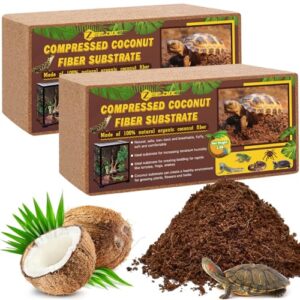
A compressed coconut fiber brick, like ZeeDix’s, offers you a clean, breathable bedding that’s gentle on hatchling scales and encourages digging. You’ll appreciate its ability to absorb waste and control odors, which keeps your terrarium environment healthier between cleanings.
This substrate expands quickly when soaked, forming a soft, natural layer that holds humidity well.
Because it’s biodegradable and low in contaminants, you’re supporting both your animal’s safety and eco‑friendly practices.
Wash before use to minimize irritation, and spot‑clean daily for best results.
| Best For | Reptile and amphibian owners who want a natural, humidity-friendly substrate that keeps odors down and gives their pets a comfortable place to dig and settle in. |
|---|---|
| Material Type | Coconut husk fiber |
| Odor Control | Absorbs waste and odors |
| Humidity Support | High — holds moisture well |
| Eco Friendly | Yes — biodegradable, low contaminants |
| Maintenance | Spot-clean daily |
| Reusability | No — replace when spent |
| Additional Features |
|
- Absorbs waste and controls odors well, so your terrarium stays fresher between deep cleans
- Expands from a compact brick into a soft, natural bedding — easy to store and simple to prep
- Biodegradable and low in contaminants, making it a safer choice for sensitive animals
- Needs soaking before use, which takes a little extra time and some trial and error to get the moisture level right
- Can hold onto moisture, so it’s not a good fit for pets that need a dry environment
- A few users have run into bugs or mold, especially if the substrate stays too wet for too long
5. Zilla Reptile Bark Blend Substrate
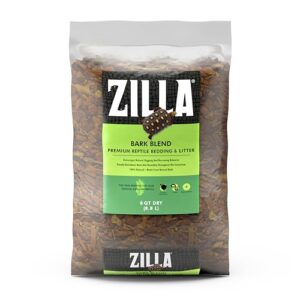
Fir bark might not be the first substrate you reach for, but Zilla’s Bark Blend earns its place in a serious hatchling setup. Made from 100% organic Douglas fir bark — no dyes, no artificial fragrances — it’s a cleaner starting point than many alternatives.
The oven-drying process kills off bark-dwelling pests like mites before the bag even reaches you. That matters when you’re housing young, sensitive animals. The bark absorbs moisture readily and releases it slowly, helping you maintain steady humidity in tropical and forest enclosures without creating soggy, compacted bedding.
It works well for chameleons, rainforest geckos, skinks, frogs, and snakes. Aim for a one to two inch layer, spot-clean daily, and replace as needed rather than washing and reusing.
One thing to watch: some bags contain longer, narrow pieces that you’ll want to pick out before setting up.
| Best For | Reptile owners who want a natural, pest-free substrate that helps maintain humidity in tropical and forest setups. |
|---|---|
| Material Type | Douglas fir bark |
| Odor Control | Natural bark scent |
| Humidity Support | Moderate-High — steady tropical humidity |
| Eco Friendly | Yes — 100% organic, no dyes |
| Maintenance | Spot-clean daily, replace as needed |
| Reusability | No — replace as needed |
| Additional Features |
|
- Oven-dried and organic, so it’s clean and safe for sensitive hatchlings.
- Promotes steady moisture and heat transfer, keeping enclosures healthy.
- Versatile for many reptile species and can boost drainage in plant mixes.
- Some bags have large bark chips or long sticks that need picking out.
- May not suit all plants or reptiles, especially those needing finer substrate.
- Occasional fungus growth reported when used as a soil additive.
6. Natural Cork Bark Reptile Bedding
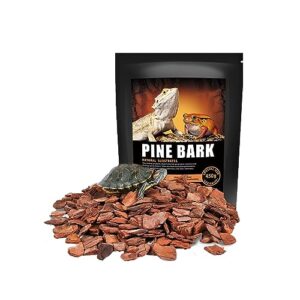
Ever wonder how a single substrate can create both shelter and safety for hatchlings? Natural cork bark bedding does just that.
Lightweight and springy, it cushions delicate skin and won’t injure small reptiles if pieces shift. The porous structure absorbs surface moisture, controls odors, and resists mold—ideal for daily spot-cleaning.
It’s harvested sustainably, heat-treated for pest control, and reusable.
You’ll find cork bark especially suited for woodland and arboreal species needing secure hides and humidity pockets in their enclosure.
| Best For | Reptile and amphibian owners looking for a natural, reusable bedding option that helps manage odors and humidity in terrariums and glass enclosures. |
|---|---|
| Material Type | Natural cork/pine bark |
| Odor Control | Absorbs odors well |
| Humidity Support | Low-Moderate — runs dry side |
| Eco Friendly | Yes — sustainably harvested |
| Maintenance | Daily spot-clean, rinse and reuse |
| Reusability | Yes — rinse and air dry |
| Additional Features |
|
- Made from natural pine bark, so it feels like a real habitat — great for snakes, lizards, geckos, frogs, and more
- Absorbs odors and helps regulate moisture, which makes day-to-day tank maintenance a lot easier
- Reusable — just rinse it off and let it air dry, which saves money over time
- Some pieces can be thin and brittle, so don’t be surprised if a few break apart during setup or use
- Runs on the dry side, which may not work well for species that need higher humidity levels
- Not the most cost-effective choice if you’re working with a larger enclosure — you’ll need a lot of it
7. ReptiChip Coconut Reptile Bedding
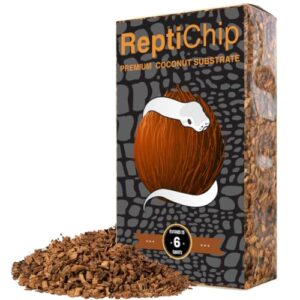
ReptiChip might just be the most complete substrate on this list for hatchling care.
Made from 100% organic coconut husk, it’s triple-washed to remove dust and tannins—so you won’t have to worry about particles irritating young respiratory tracts. That matters more than most keepers realize during early development.
It absorbs moisture efficiently, using micro pores to lock in humidity and neutralize odors between cleanings. For species like ball pythons or baby boas, that stable environment promotes healthy shedding and reduces stress.
The soft texture won’t scratch delicate skin, and it holds its structure well enough to support natural burrowing. A single compressed block expands to 72 quarts—plenty for a 55-gallon setup at six inches deep.
It’s also bioactive-compatible, eco‑friendly, and reusable. If you’re building a long‑term setup for a tropical hatchling, this substrate checks nearly every box.
| Best For | Reptile owners looking for an easy, eco-friendly substrate that works for both arid and tropical species. |
|---|---|
| Material Type | Coconut husk fiber |
| Odor Control | Odor-absorbing properties |
| Humidity Support | Adjustable — dry or moistened |
| Eco Friendly | Yes — 100% organic coconut husk |
| Maintenance | Easy spot-clean and maintain |
| Reusability | No — replace when spent |
| Additional Features |
|
- Great at absorbing moisture and controlling odors
- Made from 100% organic coconut husk and is eco-friendly
- Supports natural burrowing and is comfortable for reptiles
- Some users find it overpriced for the amount you get
- Can be dusty and may not hold moisture well for everyone
- Might attract flies or mold in certain setups
Safe Maintenance and Hygiene Practices
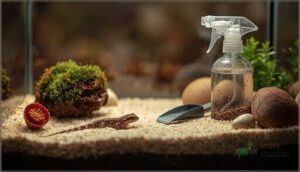
Keeping your hatchling’s enclosure clean is just as important as choosing the right substrate. Good maintenance helps prevent health issues and keeps their environment safe.
Here’s what you need to know about daily cleaning, replacement schedules, and spotting trouble signs.
Daily Spot-Cleaning Techniques
Spotting and removing waste quickly—within 15 minutes—keeps your hatchling’s enclosure clean and stress‑free.
Tool rotation and glove hygiene prevent cross‑contamination, while waste segregation ensures you don’t spread bacteria.
Morning inspection timing works well for catching overnight messes.
Blot liquid spills with paper towels, not reptile carpet, to preserve eco‑friendly options.
microbial swab for hidden spots, supporting substrate selection and overall reptile enclosure design cleanliness.
Monthly Substrate Replacement Schedules
Once spot-cleaning becomes routine, replacement timing is your next line of defense. Plan a full substrate swap every four to six weeks — tropical hatchlings need it closer to four due to humidity control demands and faster mold growth.
Watch for odor indicators like ammonia and check for mold detection signs regularly. Set calendar reminders so hatchling health and substrate safety never slip.
Sterilization and Heat Treatment Methods
After swapping substrate, sterilizing reusable materials keeps hatchlings safer between full replacements.
Oven sterilization at 180–200°F for 30 minutes works reliably for loose substrates like coconut fiber. Microwave sterilization is faster — two minutes for damp batches under two pounds.
Boiling and scalding treat wood pieces well. freezing treatment beforehand if you’ve collected outdoor materials. Chemical disinfection treats hides and decor that contact the substrate.
Signs of Substrate Contamination or Replacement Need
Even with good sterilization habits, substrate doesn’t last indefinitely. Visible mold growth, foul odor that lingers after spot‑cleaning, and discoloration signs like yellowing or dark staining all signal it’s time to replace.
Excess moisture creates soggy clumps and raises impaction risks for hatchlings. Watch for health symptoms — lethargy, scale rot, or runny droppings often appear before contamination becomes obvious. Trust what you see and smell.
Frequently Asked Questions (FAQs)
What substrate is safe for baby bearded dragons?
For baby bearded dragons, paper towels and ceramic tiles are your safest bets.
They eliminate impaction risk and simplify reptile health management — keeping your hatchling’s enclosure clean, safe, and stress‑free from day one.
What substrate is best for baby leopard geckos?
For baby leopard geckos, paper towels are your safest hatchling substrate.
They eliminate impaction risk, support long‑term health, and make daily cleaning simple — a cost-efficient choice any new keeper can trust.
What substrate is best for bearded dragon eggs?
Vermiculite is the reference point for bearded dragon egg incubation. Its moisture balance keeps humidity steady without waterlogging.
For egg support, make small dents so eggs stay put. Sterile substrate prevents mold and ensures healthy reptile egg care.
What substrate should I use for a baby bearded dragon?
Start with paper towel or ceramic tile. Both eliminate impaction risk and make monitoring droppings simple.
Save the dig box, coconut fiber, or bioactive mix for when your dragon is older and healthier.
What is the best substrate for incubating reptile eggs?
For reptile egg incubation, a one-to-one mix of vermiculite and water offers stable moisture retention, gentle egg insulation, and reliable support.
Perlite provides better aeration, reducing mold risk.
Choosing sterile media ensures safety across species-specific substrates.
What bedding should I use for my baby bearded dragon?
For your baby bearded dragon, paper towel bedding or newspaper substrate works best in the first eight weeks.
Both prevent impaction while keeping reptile care simple, hygienic, and safe during this critical stage.
What is the best substrate for reptiles?
The best substrate depends on your species’ habitat and needs. Tropical reptiles thrive on coconut coir for humidity and gentle texture, while desert species require sand alternatives.
Always prioritize dust-free, digestible options for cost efficiency, environmental impact, and safe reptile care.
How deep should substrate be for hatchlings?
Aim for 2 to 3 inches of substrate depth for most hatchlings. Smaller species start at 5 inches. Burrowing needs, humidity levels, and enclosure size all guide the right choice.
Are there substrate alternatives for hatchlings with allergies?
For hatchlings prone to respiratory distress, you’ll find paper-based liners, coconut coir, aspen shavings, and shelf liner alternatives that provide hypoallergenic, dust‑free support.
These eco‑friendly products help maintain reptile health and wellness, especially in sensitive species‑specific substrates.
When should hatchlings transition to adult substrate types?
Feeding stability, body size thresholds, and health indicators guide your progression.
Once you observe steady eating, reliable basking, and controlled digging after quarantine duration, growth milestones signal readiness for SpeciesSpecific Substrates—ensuring Reptile Health and Wellness in Reptile Enclosures.
Conclusion
Picture a hatchling stepping onto its first patch of earth—each grain, fiber, or bark piece is a shield and a foundation. The right reptile substrate options for hatchlings act as both armor and a launching pad, protecting fragile skin while supporting natural behaviors.
By choosing carefully, you’re building a safe bridge between the wild and captivity. Your attention to substrate details won’t just prevent harm; it will nurture healthy growth, ensuring those tiny reptiles thrive from their very first days.
- https://www.visionproducts.us/blog/reptile-substrate/
- https://reptilesmagazine.com/choosing-the-right-reptile-substrate/
- https://newagepet.com/blogs/learning-center/choosing-reptile-substrate
- https://www.lllreptile.com/articles/211-substrates-ideal-for-holding-humidity
- https://www.familyreptiles.com/post/what-substrate-or-bedding-is-safe-and-best-to-use-for-my-reptile-s-habitat