This site is supported by our readers. We may earn a commission, at no cost to you, if you purchase through links.
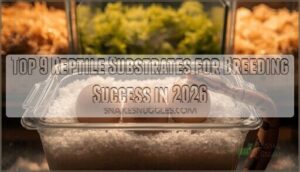
I’ve spent fifteen years breeding ball pythons, and I’ve learned that the difference between a clutch of healthy hatchlings and a disappointing season often comes down to what’s beneath your eggs. The right substrate doesn’t just cushion delicate shells—it creates a microenvironment that regulates moisture, prevents contamination, and even influences whether your gravid females choose to lay in the first place.
Too many breeders invest thousands in genetics and climate control, then undermine everything with substrates that harbor bacteria, dry out overnight, or scratch emerging neonates. The substrates you choose affect respiratory health, skin integrity, and behavioral cues that trigger nesting instincts.
Whether you’re working with moisture-dependent species like green tree pythons or arid breeders like leopard geckos, your substrate selection determines whether your breeding program thrives or struggles.
Table Of Contents
- Key Takeaways
- Key Features of Breeding Substrates
- Top 9 Substrates for Reptile Breeding
- 1. Zilla Reptile Terrarium Bedding Mix
- 2. Zilla Reptile Terrarium Bedding
- 3. Pangea Reptile Egg Incubation Substrate
- 4. Riare Coconut Fiber Reptile Substrate
- 5. Coconut Fiber Reptile Substrate
- 6. Exo Terra Bioactive Volcanic Substrate
- 7. Zilla Reptile Bark Blend Substrate
- 8. Natural Cork Bark Reptile Bedding
- 9. ReptiChip Coconut Reptile Bedding
- Choosing The Right Substrate for Your Species
- Maintenance and Hygiene for Breeding Substrates
- Enhancing Breeding Success With Proper Substrate Use
- Frequently Asked Questions (FAQs)
- Conclusion
Key Takeaways
- Substrate selection directly impacts breeding success by regulating moisture levels, preventing contamination, and triggering natural nesting instincts in gravid females across different reptile species.
- The best breeding substrates share critical features including soft texture to protect hatchling skin, dust-free composition for respiratory health, high absorbency for odor control, and loose structure that supports natural digging and nesting behaviors.
- Match your substrate choice to your species’ natural habitat requirements—tropical breeders need moisture-retentive options like coconut fiber, while arid species require coarser materials that maintain moderate humidity without waterlogging.
- Maintain substrate effectiveness through daily spot-cleaning, monthly replacement during breeding cycles, heat sterilization between uses, and constant monitoring of moisture levels to prevent bacterial growth and ensure optimal incubation conditions.
Key Features of Breeding Substrates
After years of working with breeding programs, I’ve learned that the right substrate can make or break your success. The best breeding substrates share specific features that protect your animals while creating the ideal environment for reproduction.
Let’s look at what separates top-tier substrates from the rest.
Importance of Substrate Softness for Sensitive Species
When you’re selecting breeding substrates, substrate texture matters more than you might think. Soft reptile substrates protect delicate hatchling skin from abrasion during emergence, reducing cutaneous injuries in sensitive species. Fine-textured materials provide tactile comfort that influences early exploratory behaviors and fosters natural nesting behavior.
For successful reptile breeding, pliable bioactive substrate options minimize pressure on fragile integument while encouraging sensory stimulation and improving overall hatchling health.
Pairing the right substrate with proper ball python egg incubation techniques ensures your hatchlings emerge strong and healthy.
Researchers can explore language patterns to better understand the complex communication of reptiles.
Dust-free and Hypoallergenic Properties
Beyond texture, you’ll need bioactive substrates that safeguard respiratory health. Dust-free reptile substrates with particulate control below 0.5 mg/L prevent airborne irritants that compromise breeding stock and hatchlings.
Pair these substrates with reliable reptile breeding supplies that maintain stable microclimates throughout incubation and early development stages.
Hypoallergenic materials—especially coconut fiber processed with minimal mechanical agitation—deliver dust reduction without sacrificing burrowing function.
For allergy prevention in your breeding room, choose biodegradable options with low volatile compounds and verified hypoallergenic performance through third-party testing.
Absorbency and Odor Control Benefits
High absorbency keeps your breeding setup cleaner longer—coconut-based substrates absorb moisture at rates two to three times higher than sand-based media, which matters when you’re managing waste during incubation.
That efficiency translates to odor suppression, reducing ammonia by 40–60% through rapid moisture sequestration.
You’ll maintain better humidity control and substrate sanitization with less frequent changes.
Eco-friendly and Biodegradable Materials
Sustainable materials work hand-in-hand with performance. Coconut fiber biodegrades within months, while recycled paper bedding composts in four to eight weeks under proper conditions. Hemp substrates break down faster than pine products, and bamboo-based options decompose in two to six months in home compost.
These natural fibers support bioactive setups without sacrificing absorbency or odor control, giving you green alternatives that actually perform. The use of such eco-friendly materials is supported by scientific study summaries that highlight their benefits.
Support for Natural Digging and Nesting Behaviors
Loose, friable textures let your breeders express their digging instincts—substrates with fine particles (0.5–2 mm) increase tunnel depth by 15% compared to coarse options.
Fine particles also mean less irritation to delicate respiratory tissues, helping you avoid common substrate mistakes that trigger health issues.
Gravid females benefit from soft, dampened nesting materials that reduce stress markers by 8–12%.
Proper soil structure in bioactive substrate setups encourages behavioral enrichment through natural burrowing techniques, ultimately supporting reptile breeding success while enhancing overall reptile care and maintenance in your reptile enclosure design.
Top 9 Substrates for Reptile Breeding
I’ve spent years testing substrates in my breeding facility, and the right choice makes all the difference between successful clutches and constant headaches.
That’s why I always recommend researching proven reptile tank substrate options before committing to anything long-term.
Years of testing substrates taught me the right choice transforms frustrating failures into successful clutches
The products below represent the most reliable options I’ve used across different species and breeding setups. Each substrate brings specific strengths to the table, so you’ll want to match your choice to your reptiles’ natural behaviors and your breeding goals.
1. Zilla Reptile Terrarium Bedding Mix
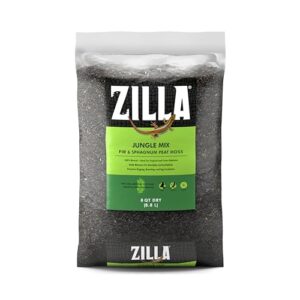
When you’re serious about reptile breeding, Zilla Reptile Terrarium Bedding Mix delivers on the essentials. This 100% organic blend of aged Douglas fir bark and sphagnum peat moss creates an ideal bioactive substrate that encourages natural digging and nesting behaviors your animals need for breeding success.
The soft, highly absorbent texture controls humidity naturally while supporting delicate eggs during incubation. At 8 quarts, it’s suitable for tropical and forest terrarium design, making it a practical reptile substrate option for breeders focused on both reptile health and eco-friendly materials.
| Best For | Reptile breeders and keepers who need an organic, humidity-controlling substrate for tropical species like frogs, geckos, and snakes that dig, nest, or incubate eggs. |
|---|---|
| Material Type | Moss & Wood Shavings |
| Odor Control | Yes |
| Moisture Retention | High |
| Reusable | No |
| Natural/Organic | Yes |
| Habitat Type | Tropical/Forest |
| Additional Features |
|
- 100% organic blend of aged fir bark and peat moss supports natural behaviors like digging and nesting while controlling humidity
- Soft texture is gentle on delicate eggs and hatchlings, making it ideal for breeding setups
- Works well in bioactive enclosures and aligns with eco-friendly disposal practices
- May contain clay dust or splinters that require rinsing and inspection before use
- Needs regular maintenance and replacement to prevent compaction and mold growth
- Not suitable for all reptile species, so compatibility should be verified for your specific animals
2. Zilla Reptile Terrarium Bedding
At 24 quarts, Zilla Reptile Terrarium Bedding gives you three times the volume of the mix version, making it cost-effective for larger breeding operations.
This fir bark and sphagnum peat moss blend maintains the same soft texture and high absorbency you need for proper humidity control during egg incubation.
The organic composition fosters bioactive substrates while encouraging natural reptile behavior like digging and nesting.
With a recommended depth of 1 to 2 inches, it’s straightforward for terrarium maintenance and works well across tropical species breeding setups.
| Best For | Reptile breeders and hobbyists managing larger tropical or forest terrariums who need cost-effective, high-volume substrate for humidity control and natural behaviors. |
|---|---|
| Material Type | Fir Bark & Peat Moss |
| Odor Control | Yes |
| Moisture Retention | High |
| Reusable | No |
| Natural/Organic | Yes |
| Habitat Type | Tropical/Forest |
| Additional Features |
|
- Three times the volume at 24 quarts makes it economical for bigger setups or multiple enclosures
- Soft organic blend of fir bark and peat moss absorbs moisture well and supports bioactive environments
- Encourages natural digging, nesting, and breeding behaviors in tropical species
- May contain sharp bark pieces that need manual removal before use
- Can develop mold or fungus if humidity isn’t monitored and substrate isn’t maintained
- Some users report needing to bake it first to eliminate potential mites
3. Pangea Reptile Egg Incubation Substrate
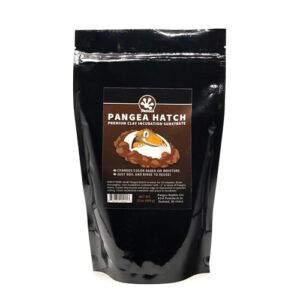
Pangea Reptile’s clay-based incubation substrate changes color as moisture levels shift, giving you real-time feedback during egg incubation without guesswork. This premium granular medium holds multiple times its weight in water while staying porous enough to prevent waterlogging—critical for successful breeding outcomes across leopard geckos and bearded dragons.
You can sterilize and reuse it through boiling, making substrate sterilization straightforward between breeding cycles. At 5.6 ounces per package, it won’t compact or break down, ensuring consistent egg monitoring and reliable reptile breeding results when you’re managing multiple incubation methods simultaneously.
| Best For | Reptile breeders who need reliable moisture control and visual monitoring during egg incubation, especially for leopard geckos and bearded dragons. |
|---|---|
| Material Type | Clay Granules |
| Odor Control | No |
| Moisture Retention | High |
| Reusable | Yes |
| Natural/Organic | No |
| Habitat Type | Incubation |
| Additional Features |
|
- Color-changing granules let you track moisture levels at a glance without disrupting eggs
- Holds multiple times its weight in water while staying porous enough to prevent drowning or mold
- Reusable after sterilizing by boiling, cutting down on long-term replacement costs
- Some users report mold growth despite the product’s design claims
- At 5.6 ounces actual weight, the package size may feel overpriced compared to alternatives
- Requires proper sterilization steps between uses to avoid contamination risks
4. Riare Coconut Fiber Reptile Substrate
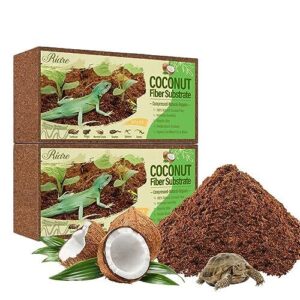
Riare’s compressed coconut fiber bricks expand into a soft, eco-friendly bioactive substrate that mimics the natural forest floor your breeding reptiles instinctively seek.
Each 2.88-pound package yields ample coverage while retaining moisture without waterlogging—essential for reptile health during egg-laying cycles.
You’ll appreciate how this dust-free material fosters natural behavior like burrowing and nesting, plus it’s fully biodegradable for straightforward substrate maintenance.
The coir absorbs waste odors effectively, and you can compost spent material between breeding seasons, making it one of the most practical reptile substrate options for conscious breeders.
| Best For | Reptile breeders who need a natural, moisture-retaining substrate that supports nesting behavior and maintains humidity for egg-laying species like turtles, frogs, and snakes. |
|---|---|
| Material Type | Coconut Fiber |
| Odor Control | Yes |
| Moisture Retention | High |
| Reusable | No |
| Natural/Organic | Yes |
| Habitat Type | Multiple |
| Additional Features |
|
- Expands from compact bricks into generous coverage that retains moisture without getting soggy, keeping humidity stable during breeding cycles
- Dust-free coconut fiber encourages natural digging and burrowing, helping reptiles feel secure during nesting
- Biodegradable and compostable material absorbs odors well and makes cleanup between seasons straightforward
- Some users find the compressed bricks tough to break apart and may need soaking before use
- Can get messy during handling and setup if you’re not careful with the expanded fibers
- Requires regular maintenance to prevent mold growth and may attract flies if waste isn’t cleaned promptly
5. Coconut Fiber Reptile Substrate
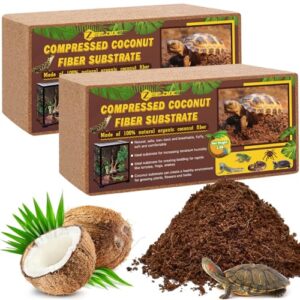
When you’re managing reptile substrate demands on a tight budget, ZeeDix coconut fiber offers unbeatable value—two compressed blocks that expand into soft, breathable bedding at roughly $1.40 per pound.
This 100% natural bioactive substrate balances pH naturally, absorbs odors efficiently, and won’t irritate sensitive respiratory systems during breeding cycles. You get compostable, eco-friendly materials that support proper terrarium maintenance while encouraging nest construction.
Just remember to rinse the coir before use and monitor moisture levels closely, especially in high-humidity breeding setups where reptile health management hinges on consistent substrate conditions.
| Best For | Budget-conscious reptile breeders who need reliable, eco-friendly substrate for egg-laying species and high-humidity enclosures. |
|---|---|
| Material Type | Clay |
| Odor Control | No |
| Moisture Retention | High |
| Reusable | Yes |
| Natural/Organic | No |
| Habitat Type | Incubation |
| Additional Features |
|
- Expands significantly from compressed blocks, offering excellent value at around $1.40 per pound with natural pH balance and odor control
- Soft, moisture-retentive texture that’s ideal for nest construction and maintaining stable humidity during incubation periods
- Fully biodegradable and compostable, making it an environmentally responsible choice that’s safe for sensitive respiratory systems
- Requires rinsing before use and careful moisture monitoring, as some users report inconsistent expansion and moisture retention
- May develop mold in high-humidity setups if not properly sterilized or replaced regularly during intensive breeding cycles
- Mixed customer feedback on smell control and performance, suggesting quality may vary between batches
6. Exo Terra Bioactive Volcanic Substrate
If your breeding program leans toward tropical species, Exo Terra’s volcanic substrate brings mineral-rich volcanic soil benefits to your reptile habitat design. This porous matrix suppresses ammonia while encouraging beneficial microfauna activity—key for long-term breeding environment optimization.
You’ll appreciate how it retains moisture without turning soggy, though substrate moisture management requires weekly checks to prevent anaerobic pockets. At 8.8 pounds, it’s pricier than basic options, but when paired with proper cleanup crews, this bioactive substrate creates naturalistic nesting conditions that mirror your reptiles’ wild habitats.
| Best For | Breeders working with tropical and subtropical species who want a naturalistic bioactive setup that supports live plants and beneficial microfauna. |
|---|---|
| Material Type | Coconut Fiber |
| Odor Control | Yes |
| Moisture Retention | Moderate |
| Reusable | No |
| Natural/Organic | Yes |
| Habitat Type | Multiple |
| Additional Features |
|
- Excellent moisture retention and drainage balance for maintaining stable humidity during breeding cycles
- Mineral-rich volcanic composition naturally suppresses ammonia and odors while supporting beneficial cleanup crews
- Creates authentic nesting conditions that encourage natural behaviors in egg-laying species
- Higher price point compared to standard inert substrates, which can add up for multiple enclosures
- Requires consistent monitoring and maintenance to prevent moisture pockets and mold growth
- Rock particle size may be smaller than expected, and some users question overall value for money
7. Zilla Reptile Bark Blend Substrate
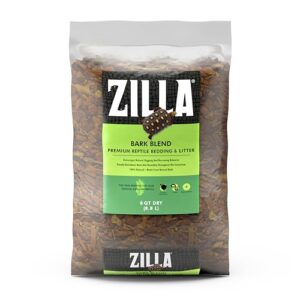
For breeders working with forest-dwelling species like skinks or rainforest geckos, Zilla’s Bark Blend offers a softer landing zone than volcanic substrates. This 100% organic fir bark mix facilitates natural burrowing behavior while maintaining substrate moisture levels that gravid females need for confident egg deposition.
You’ll find its 3:1 absorbency ratio keeps breeding enclosures fresher between cleanings, though watch for occasional fungal growth in overly humid setups. At 3.2 pounds and available in 8 or 24 quart formats, it’s an economical choice for seasonal breeding cycles.
| Best For | Breeders managing forest-dwelling reptiles like skinks and rainforest geckos who need a soft, moisture-retentive substrate that supports natural nesting behavior. |
|---|---|
| Material Type | Volcanic Soil |
| Odor Control | Yes |
| Moisture Retention | Moderate |
| Reusable | No |
| Natural/Organic | Yes |
| Habitat Type | Bioactive |
| Additional Features |
|
- Maintains steady humidity levels with a 3:1 absorbency ratio that helps gravid females feel secure during egg-laying
- Encourages natural burrowing and scratching behaviors while providing a softer surface than harder substrates
- Available in two size options (8 and 24 quart) at an economical price point for seasonal breeding cycles
- Can develop fuzzy fungal growth in overly humid environments, requiring careful moisture monitoring
- May contain long, narrow sticks that need manual removal before use
- Needs complete replacement between breeding cycles to prevent pathogen buildup
8. Natural Cork Bark Reptile Bedding
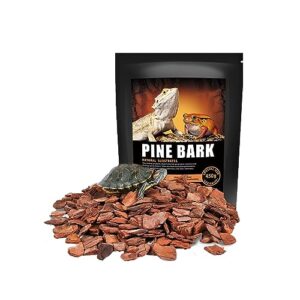
When you’re breeding arboreal species like chameleons or tree pythons, natural cork bark offers benefits that organic materials can’t match. Its lightweight, hydrophobic surface provides excellent grip during shedding cycles without promoting mold in high-humidity breeding setups—a real advantage for reptile care focused on bioactive supplies and eco-friendly options.
You’ll appreciate cork’s inert composition (no chemical binders), though spot-clean regularly since pieces can trap shed skins around nesting sites. This renewable substrate aids animal husbandry goals while giving gravid females secure hideouts for confident egg deposition.
| Best For | Reptile breeders working with arboreal species like chameleons or tree pythons who need a lightweight, mold-resistant substrate that supports high-humidity environments and provides secure nesting spots. |
|---|---|
| Material Type | Fir Bark |
| Odor Control | Yes |
| Moisture Retention | High |
| Reusable | No |
| Natural/Organic | Yes |
| Habitat Type | Tropical/Forest |
| Additional Features |
|
- Hydrophobic surface resists mold growth in humid breeding setups while offering excellent grip for climbing and shedding
- Lightweight and inert with no chemical additives, making it safe for bioactive enclosures and sensitive species
- Renewable and compostable material that creates natural hideouts and nesting sites for gravid females
- Some pieces arrive thin or broken, requiring you to sort through for usable chunks
- Needs regular spot-cleaning since cork pockets can trap shed skins and waste around nesting areas
- May not work well for larger reptiles that need more substantial hides or heavy-duty substrate
9. ReptiChip Coconut Reptile Bedding
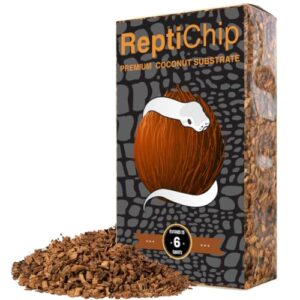
ReptiChip Premium Coconut Substrate ($14.95 for 6 quarts) transitions easily between arid and tropical setups—moisten it for humidity-sensitive breeders or use dry for desert species.
This coconut fiber substrate facilitates natural burrowing while absorbing odors through organic composition, making reptile care simpler during breeding cycles. You’ll find its 3:1 absorbency ratio manages waste effectively, though some keepers note moisture retention varies between batches.
For breeding success with eco-friendly products, pair ReptiChip with proper ventilation—its biodegradable material maintains reptile health without compromising your bioactive supplies or substrate moisture goals.
| Best For | Reptile breeders who need a flexible substrate that works for both arid and tropical species while supporting natural burrowing and nesting behaviors. |
|---|---|
| Material Type | Pine Bark |
| Odor Control | Yes |
| Moisture Retention | Moderate |
| Reusable | Yes |
| Natural/Organic | Yes |
| Habitat Type | Multiple |
| Additional Features |
|
- Versatile enough to use dry for desert reptiles or moistened for humidity-loving species
- Strong odor control through organic coconut fiber that absorbs waste effectively
- Biodegradable and environmentally friendly material that’s safe for bioactive setups
- Moisture retention can be inconsistent between different batches
- Smaller package size than expected at 6 quarts, which may require frequent reorders
- Higher price point compared to traditional wood-based substrates
Choosing The Right Substrate for Your Species
Not every substrate works for every reptile, and matching your choice to your species’ natural habitat makes all the difference in breeding success.
You’ll need to think about factors like moisture requirements, digging behavior, and whether your setup is bioactive before you commit to a substrate.
Here’s what you need to know to pick the right foundation for your breeding program.
Matching Substrate to Reptile Species Needs
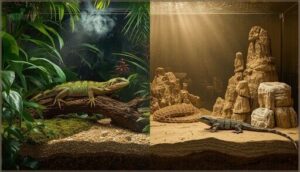
Your reptile’s natural habitat should drive every substrate decision you make. Species research reveals that arboreal geckos thrive on soft coconut fiber for digging, while arid monitors need coarser bioactive substrate that won’t compact.
Environmental factors like humidity tolerance directly influence breeding outcomes—what works in desert reptile enclosures will harm rainforest species.
Understanding reptile behavior and reptile nutrition needs ensures your substrate fosters both reptile health and successful reproduction.
Substrate Depth and Texture for Egg Laying
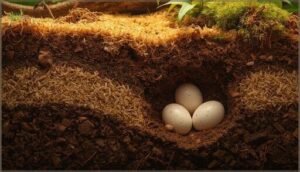
Proper egg laying depth makes the difference between successful clutches and frustrating failures. You’ll want a shallow, stable layer—2 to 5 centimeters works well for most small to medium reptiles.
Fine to medium-textured nesting material lets your female excavate easily without collapse, reducing egg trauma. Bioactive substrate with a softer top layer over a firmer base creates an ideal breeding habitat while supporting her natural digging instinct.
Humidity and Moisture Retention Considerations
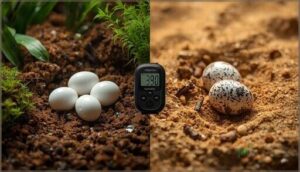
Without spot-on moisture levels, your eggs won’t survive. Substrate hydration drives successful egg incubation—coco coir and organic substrates excel at maintaining stable microclimate management.
You’ll need humidity control between species-specific ranges: tropical breeders demand higher retention, while desert dwellers require moderate moisture. Pair your substrate with a reliable incubator and calibrated hygrometer, then monitor daily.
Bioactive environments naturally buffer fluctuations, giving your reptile breeding program the edge it needs.
Compatibility With Bioactive Setups
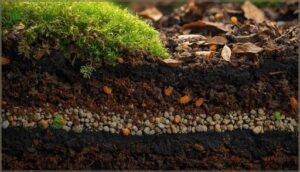
Bioactive environments for reptiles demand substrates that support microfauna balance without toxic additives. You’ll need organic substrates like Terra Flora or natural clay that maintain thermal stability and proper substrate depth for isopods and springtails to thrive.
Bioactive materials must resist compaction while managing moisture through fungal activity. Check particle size—it directly affects gas exchange and your detritivores’ survival in these self-sustaining bioactive environments.
Maintenance and Hygiene for Breeding Substrates
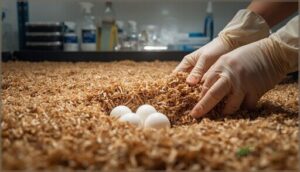
Even the best substrate won’t deliver breeding results if you’re not keeping it clean and safe. I’ve learned that proper maintenance directly impacts egg viability, hatchling health, and the overall success of your breeding program.
Let’s walk through the essential hygiene practices that’ll keep your substrates working at their best throughout the entire breeding cycle.
Cleaning Routines and Waste Management
You’ll want a tight cleaning schedule to keep your breeding operation running smoothly. Spot-clean daily to pull out feces and uneaten food—this keeps ammonia down and odor management under control.
During breeding cycles, replace or sterilize your dust-free substrate monthly for biohazard control. Use removable trays in enclosures to make waste disposal faster, and always log your cleaning schedules to track reptile health and disease prevention patterns.
Preventing Bacterial and Mold Growth
Mold and bacteria thrive when moisture sits stagnant—your reptile breeding operation depends on stopping them before they start. Microbial control comes down to managing what microbes need: water, warmth, and time.
Here’s your defense strategy:
- Choose substrates with controlled moisture retention to avoid standing water
- Maintain species-appropriate humidity management without excessive dampness
- Use pasteurization methods or substrate sterilization before introducing material to your incubator
- Guarantee proper depth and airflow to prevent anaerobic bacterial pockets
Smart mold prevention protects reptile health and wellness during critical breeding windows.
How Heat Treatment Enhances Substrate Safety
Heat treatment is your thermal processing shield against pathogens that threaten reptile health and wellness. When substrate sterilization reaches temperatures that denature microbial proteins, you’re implementing safety protocols proven by post-treatment assays. Proper microbial control through heat-treated material protects your reptile breeding investment—because dead spores can’t compromise hatch rates.
| Substrate Type | Heat Tolerance | Pathogen Reduction |
|---|---|---|
| Coconut fiber | Moderate heat safe | High bacterial control |
| Bark blends | Dry heat resistant | Effective spore kill |
| Volcanic materials | Low moisture needed | Reduced fungal load |
Monitoring Substrate Condition During Breeding Cycles
Check substrate moisture daily during breeding cycles to maintain species-specific humidity control. Temperature gradients at different depths affect retention rates directly.
Visual inspection every 24 to 48 hours catches mold before it compromises breeding outcomes. Track color shifts, unusual odors, and texture changes that signal when your reptile enclosure design needs intervention.
Proper microbial testing and humidity control protect your incubator investment and hatch success.
Enhancing Breeding Success With Proper Substrate Use
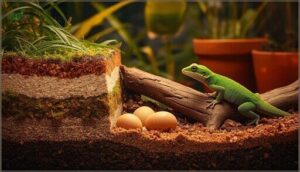
I’ve spent years learning that substrate choice isn’t just about keeping things clean—it’s about optimizing your reptiles’ breeding potential. The right substrate encourages natural behaviors, creates stable incubation conditions, and bolsters the health your animals need to reproduce successfully.
Let’s look at four practical ways you can optimize breeding outcomes through smart substrate management.
Encouraging Natural Shelter-building Behaviors
Your substrate choice directly impacts shelter site selection and burrow construction in breeding enclosures. Fine-to-medium textures encourage digging, while 4–6 cm depth facilitates stable tunnel formation without collapse.
Moisture-retentive nesting materials stimulate behavioral enrichment and hiding spots creation, especially for egg-laying females.
Clean, loosely packed substrates promote natural reptile care routines that foster successful breeding through environmental enrichment and instinctive shelter-building behaviors.
Creating Optimal Nesting and Incubation Environments
Once shelter-building behaviors are underway, you can fine-tune nesting site design and microclimate control for successful egg incubation. Focus on these five elements:
- Maintain incubation temperatures within 28–32°C using calibrated probes at egg level.
- Keep humidity management between 70–85% with gravimetric substrate checks.
- Position nesting sites near appropriate heat sources for stable thermal zones.
- Guarantee adequate ventilation to prevent condensation and mold on eggs.
- Use moisture-retentive substrates that support egg safety without oversaturation.
Supporting Overall Reptile Health and Wellness
Beyond nesting basics, wellness strategies encompass daily health monitoring and environmental control that form the bedrock of successful reptile breeding. Your substrate choice directly impacts animal health through moisture regulation, stress management, and respiratory safety. Here’s how key factors connect to your reptile’s condition:
| Wellness Factor | Substrate Impact |
|---|---|
| Reptile nutrition and supplementation | Clean surface facilitates feeding without contamination |
| Health monitoring | Visual substrate checks reveal digestive or hydration issues |
| Environmental control | Absorbency maintains humidity and temperature stability |
| Stress management | Soft, dust-free material reduces respiratory irritation |
| Reptile care and management | Easy maintenance enables consistent hygiene routines |
Proper substrate selection enhances immunity, metabolic rate, and overall reproductive success.
Tips for Substrate Replacement and Rotation
Every four to six weeks, you need fresh substrate in your breeding enclosure or incubator to keep pathogens in check. Rotate monthly between breeding cycles to reset microhabitats and disrupt mold hotspots.
Document each swap—track dates, moisture levels, and nesting success—so you adjust your rotation schedule and keep your reptile breeding program running at peak hygiene and performance.
Frequently Asked Questions (FAQs)
Can substrates affect reptile egg hatch rates?
Yes—your choice directly impacts egg incubation success. Proper substrate moisture can boost hatch rates by 10–20%, while texture and thermal conductivity influence embryo development, incubation duration, and overall reptile breeding outcomes.
What substrates work best for arboreal species?
While ground-dwellers need firm footing, arboreal species thrive on soft bedding that cushions falls and reduces abrasion.
Choose dust-free coconut fiber or paper-based reptile substrates with humidity control for climbing reptiles’ respiratory and skin health.
How often should breeding substrates be replaced?
Replace breeding substrates when visible waste buildup, persistent odors, or mold appears—usually between breeding cycles.
High-humidity environments and sensitive hatchlings require more frequent changes to maintain ideal incubator conditions and support successful reptile husbandry.
Are sand-based substrates safe for egg laying?
Sand-based substrates carry impaction and respiratory risks that threaten egg viability and reptile health. Most breeders avoid them for breeding outcomes, choosing moisture-retentive alternatives that support safer egg incubation and improved reptile breeding techniques.
Do different breeding stages require substrate changes?
Your breeding cycle demands different substrate moisture levels and textures as you progress from egg laying through incubation to hatchling care, optimizing conditions for each critical stage of reptile breeding success.
Conclusion
Your breeding program won’t stumble because you overlooked what’s underfoot. The reptile substrates for breeding you select today shape clutch viability, hatchling health, and whether your females feel secure enough to nest at all.
You’ve invested in bloodlines and equipment—don’t compromise that foundation with materials that work against your animals’ biology. Match substrate to species requirements, monitor moisture vigilantly, and refresh materials between cycles. Your next season’s success starts with the ground you prepare now.