
This site is supported by our readers. We may earn a commission, at no cost to you, if you purchase through links.

Most new snake keepers spend hours researching enclosure size, lighting, and substrate—then grab the first water bowl they see at the pet store. That decision costs more than they expect. A porous or unstable dish becomes a bacterial incubator within days, and a bowl that’s too deep for a small species creates a genuine drowning risk.
Water quality directly drives hydration, skin health, and disease resistance in snakes, making the dish one of the most consequential pieces of equipment in the enclosure. The right reptile water dishes for beginner snake keepers balance non-porous materials, weighted stability, and species-appropriate depth—criteria that separate safe setups from preventable problems.
Table Of Contents
Key Takeaways
- Non-porous materials like glazed ceramic, stainless steel, and food-grade resin are non-negotiable—porous or scratched surfaces let biofilm take hold within 36 hours and quietly push your snake toward dehydration before you notice a single symptom.
- Depth and size aren’t one-size-fits-all: hatchlings need bowls no deeper than 1.5 inches, while adult pythons require 10–12 inches across, and water should never exceed half your snake’s body thickness.
- Placement on the cool side of the enclosure, near the primary hide, slows bacterial growth and keeps your snake drinking consistently without the stress of crossing open ground.
- Daily water changes, a dedicated scrub sponge, and a weekly 10-minute chlorhexidine soak are the bare minimum maintenance schedule—skip any step and the bowl becomes a contamination risk, not a hydration tool.
Essential Features of Beginner Snake Water Dishes
Not every water dish is built with snakes in mind, and the wrong one can cause real problems fast.
Picking the right one matters more than most people realize, so it helps to browse reptile water dishes designed specifically for corn snakes before you commit to anything.
Before you start browsing, it helps to know exactly what separates a safe, functional bowl from one that will create more work — or worse, put your snake at risk.
Here are the features that actually matter.
Importance of Non-Porous Materials
Material choice isn’t cosmetic — it’s a health decision.
Nonporous surfaces like glazed ceramic, stainless steel, and food-grade resin are the foundation of smart reptile care. They resist bacterial growth prevention failures by denying biofilm a foothold, simplify easy disinfection, and eliminate chemical leaching safety risks.
For consistent snake hydration and long-term durability, your reptile water dish must be smooth, sealed, and uncompromising.
Fluker’s Reptile‑Bowl offers a heavyweight non‑porous design that resists tipping and bacterial growth.
Weighted, Stable Bowl Designs
A nonporous surface means nothing if the bowl flips every time your snake pushes against it. Heavy Base Construction keeps dishes grounded — Zoo Med’s large resin models weigh over 1 kg for exactly this reason.
Wide Footprint Design and Low Center Gravity work together to resist tipping. Textured Grip Exteriors prevent sliding, while an Integrated Bury Feature adds stability by anchoring into substrate.
Stable, easy to clean, and built to stay put. The Corner Water Bowl LG provides an ideal soaking spot for snakes.
Safe Size and Depth Guidelines
Size matters just as much as stability. A hatchling bowl should be roughly 4 inches wide with a maximum 1.5‑inch depth — enough for drinking, not drowning.
Juvenile depth tops out at 2 inches; adult python size calls for 10–12 inches across.
For corn snake depth, stay shallow at 1–2 inches.
The safety ratio: water never exceeds half your snake’s body thickness.
Easy-to-Clean Surfaces
Once you’ve nailed size and depth, cleaning becomes your next real priority.
Reptile water bowls with a Smooth Interior Geometry — rounded corners, flat base, Simple Rim Design — leave bacteria nowhere to hide. A Scratch-Resistant Finish on glazed ceramic or glass maintains Chemical Compatibility with disinfectants without degrading.
Low Mineral Buildup stays manageable on non-porous bowl material, keeping your snake’s water genuinely safe between weekly scrubs.
Choosing The Right Water Dish Material
The material your snake’s water dish is made from isn’t just a cosmetic choice — it directly affects how clean the water stays and how easy the bowl is to maintain. Some materials resist bacteria naturally, while others can become hidden health hazards faster than you’d expect.
Here’s how the most common options stack up so you can pick the right one from the start.
Pros and Cons of Ceramic, Glass, and Stainless Steel
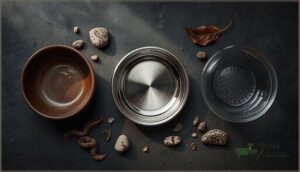
Each material brings a real trade‑off to your reptile hydration system. Ceramic wins on weight stability — a 10‑inch bowl hits 2–3 pounds, making it nearly tip‑proof. Stainless steel offers unbeatable cleaning convenience and biofilm resistance, going fully dishwasher‑safe. Glass looks stunning but shatters on impact.
- Ceramic: natural look, stable, but chips under pressure
- Stainless steel: easiest to clean, cost‑efficient at ~$8, rust‑proof
- Glass: clear and smooth for reptile water bowls for hydration, but breaks easily
- Ceramic durability: manages daily soaks without warping
- Steel longevity: lowest replacement cost over three years
Risks of Plastic and Porous Materials
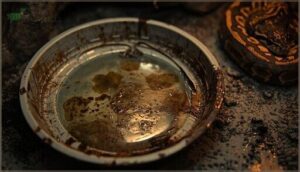
Plastic and resin dishes look convenient, but both materials hide real dangers.
Scratching damage from routine scrubbing opens micro-grooves where biofilm formation accelerates quickly. Even HDPE plastic leaches trace chemicals into standing water under enclosure heat. Porous decor and textured resin surfaces trap moisture, fueling mold growth and Salmonella colonies.
That combination — chemical leaching, biofilm, and mold — quietly drives your snake toward dehydration before symptoms appear.
Chemical leaching, biofilm, and mold silently dehydrate your snake before a single symptom appears
Non-Reactive and Non-Toxic Options
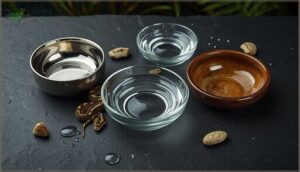
When safety is non‑negotiable, reach for medical‑grade steel (304 or 316 alloy), tempered glass, or lead‑free glazed ceramic — all chemically inert against tap water and common disinfectants.
BPA‑free resin and food‑grade plastic work too, provided they carry “reptile‑safe” certification.
Skip HDPE plastic without that label.
Your snake’s water bowl directly controls reptile hydration, so don’t compromise on material certification.
Safe Placement and Maintenance Tips
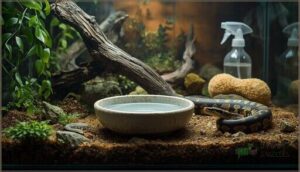
Even the best water dish fails if it’s sitting in the wrong spot or cleaned on the wrong schedule. Placement and maintenance aren’t afterthoughts — they’re what separates a safe hydration setup from a bacterial problem waiting to happen.
Here’s what every beginner snake keeper needs to get right.
Strategic Bowl Placement in Terrariums
Where you place the bowl matters as much as what it’s made of. Cool-side positioning slows bacterial growth and helps humidity gradient control without overheating the water.
Keep the dish near your snake’s primary hide — hide proximity means less open-ground travel and more consistent drinking. Corner versus center placement affects spill prevention and stability, so anchor the bowl in a back corner away from doors and decor.
Daily Water Changes and Weekly Cleaning
Consistency is what separates healthy snakes from sick ones. Follow this rinse routine every single day:
- Empty and refill with room-temperature water daily
- Scrub the water bowl with a dedicated sponge each rinse
- Weekly disinfection schedule: soak in 1:30 chlorhexidine for 10 minutes
- Practice bowl swapping with a spare dish during deep cleans
Biofilm monitoring starts the moment you notice sliminess — that’s your cue to act fast.
Preventing Bacterial Biofilm and Contamination
Biofilm doesn’t announce itself — it builds quietly until your snake’s water bowl becomes a contamination zone.
Keep the bowl on the cool side of the enclosure; water temperature control matters because bacteria multiply fastest between 20–40°C. Surface hydrophobic coating slows early colonization, while water source filtration reduces the nutrients biofilm feeds on. Bowl orientation hygiene and a regular disinfection schedule are your last line of defense.
Top 7 Reptile Water Dishes for Beginners
Not every water dish deserves a spot in your snake’s enclosure.
These seven options were chosen based on material safety, ease of cleaning, and real-world usability for beginners. Each one brings something different to the table, so find the fit that matches your setup.
1. Exo Terra Large Reptile Water Dish
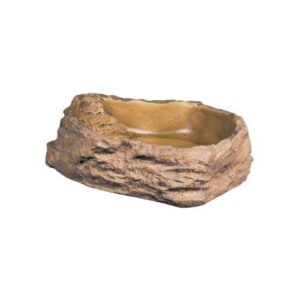
The Exo Terra Large Water Dish (PT2803) earns its spot on this list for good reason. Measuring roughly 21 cm long, 16 cm wide, and 4 cm deep, it gives medium-sized snakes enough room to drink comfortably without becoming a drowning hazard.
Food‑grade resin keeps the surface non‑porous — bacteria can’t grip smooth, sealed material the way it colonizes scratched plastic. The weighted base won’t tip when your snake climbs the rim, and cleanup takes minutes with mild soap and water.
| Best For | Medium-sized reptiles and amphibians that need a safe, hygienic spot to drink and soak without the risk of tipping or drowning. |
|---|---|
| Material | Plastic/Resin |
| Easy Cleaning | Smooth non-porous surface |
| Multi-use | Drinking and soaking |
| Reptile Compatible | Various reptiles and amphibians |
| Stability | Not easily tipped over |
| Natural Design | Natural terrarium look |
| Additional Features |
|
- Non-porous, food-grade resin surface makes cleaning quick and keeps bacteria from taking hold
- Weighted base stays put even when your reptile climbs or leans on the rim
- Blends naturally into a terrarium setup while still being practical and easy to maintain
- Reported dimensions may not match what actually arrives, so double-check before buying
- Size may be a poor fit for very small or very large reptiles
- Limited to medium-range species, so it won’t work for every setup
2. Boao Leaf Reptile Food and Water Bowls
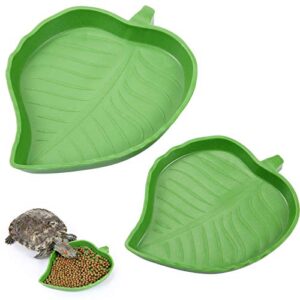
Not every setup needs something rugged and naturalistic. The Boao Leaf Reptile Food and Water Bowls offer a lightweight, budget-friendly option that works well for smaller species like corn snakes or juvenile ball pythons.
The large bowl measures 6.06 × 4.88 × 0.59 inches — shallow enough to prevent drowning risks. Smooth plastic surfaces resist biofilm when cleaned regularly, and the low‑profile leaf shape sits stable in corners.
Just tape it down if your snake’s an active pusher.
| Best For | Small reptiles and pets like corn snakes, juvenile ball pythons, lizards, and tortoises who need a simple, affordable feeding setup. |
|---|---|
| Material | Quality Plastic |
| Easy Cleaning | Smooth surfaces, easy to dry |
| Multi-use | Food and water |
| Reptile Compatible | Tortoises, lizards, snakes |
| Stability | Secure with tape option |
| Natural Design | Nature-inspired leaf shape |
| Additional Features |
|
- Leaf shape looks natural in any enclosure and sits low enough to prevent drowning risks
- Smooth plastic is easy to wipe down and dries fast
- Comes in two sizes, so you can use one for food and one for water
- Too small for larger or full-grown reptiles — a two-year-old tortoise will likely ignore it
- Lightweight build means active snakes can push it around without tape
- Shallow depth limits how much water it can hold at one time
3. SLSON Gecko Feeder Ledge with Suction Cup
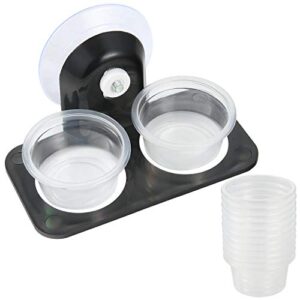
Not every snake feeds at floor level — and that’s where the SLSON Gecko Feeder Ledge earns its spot.
It mounts directly to terrarium glass via suction cup, positioning the included 1‑oz cups at an elevated height.
The food‑grade plastic frame measures 4.5 × 2.4 × 2.4 inches, compact enough for smaller enclosures.
It’s best suited for small species — geckos, juvenile snakes, frogs.
Suction grip stays solid on clean glass; just wet the contact point before mounting.
| Best For | Small reptile and amphibian owners who want an elevated feeding station for geckos, lizards, frogs, or juvenile snakes inside a terrarium. |
|---|---|
| Material | Food-grade Plastic |
| Easy Cleaning | Easy cleaning and maintenance |
| Multi-use | Food and water feeding |
| Reptile Compatible | Geckos, lizards, snakes, frogs |
| Stability | Suction cup support |
| Natural Design | Standard feeder design |
| Additional Features |
|
- Mounts easily to glass with a suction cup — no tools, no mess
- Comes with 20 replacement cups, so you’re set for a while
- Food-grade plastic makes it safe for both food and water use
- Suction cup can lose its grip over time, especially with heavier use
- The cups sometimes sit a little crooked in the ledge
- Not a great fit for larger or heavier reptiles
4. Zoo Med Reptile Rock Food Water Dish
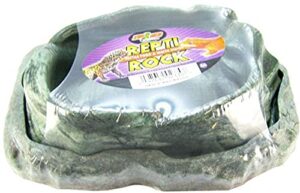
If floor-level hydration is what your snake needs, the Zoo Med Reptile Rock Food Water Dish delivers it cleanly.
The non-porous, recycled plastic surface resists bacterial buildup and wipes down in seconds — no scrubbing ridges, no trapped residue.
It doubles as a feeding dish, which simplifies your setup.
Available in five sizes from X‑Small to X‑Large, you can match it precisely to your snake’s dimensions.
Ball python owners consistently rate the larger sizes as a reliable, stable fit.
| Best For | Reptile owners who want a simple, natural-looking dish that handles both food and water without taking up extra space in the enclosure. |
|---|---|
| Material | Durable Plastic |
| Easy Cleaning | Easy to clean and disinfect |
| Multi-use | Feeding and water dish |
| Reptile Compatible | Bearded dragons, leopard geckos |
| Stability | Stackable and stable |
| Natural Design | Natural rock coloring |
| Additional Features |
|
- Combo food and water dish keeps your setup minimal and tidy
- Easy to clean and disinfect — great for busy pet owners
- Stackable design makes storage a breeze when not in use
- Insects can climb out easily, which is frustrating if you’re feeding live bugs
- Color isn’t selectable on Amazon, so it might not match your setup
- May be too large for baby or juvenile reptiles
5. Fluker’s Reptile Corner Bowl
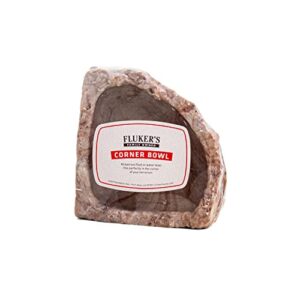
Corner real estate matters in a small terrarium.
Fluker’s Reptile Corner Bowl is engineered to fit flush against two tank walls, freeing up central floor space that your snake actually uses.
Medium size — 6 x 5 x 1.5 inches suits most beginner setups, and the non-porous resin resists bacterial colonization between cleanings.
Low-profile depth keeps water accessible without drowning risk.
One caveat: inspect it on arrival, as some units ship with hairline cracks that compromise containment.
| Best For | Reptile owners who want to save space in their terrarium while giving their snake, lizard, or gecko a spot to drink or soak. |
|---|---|
| Material | Plastic |
| Easy Cleaning | Easy to clean |
| Multi-use | Food and water |
| Reptile Compatible | Snakes, lizards, geckos |
| Stability | Sturdy, doesn’t tip |
| Natural Design | Earthy organic feel |
| Additional Features |
|
- Fits neatly into a corner, so it doesn’t eat up valuable floor space
- Low-profile and sturdy — won’t tip over when your reptile climbs in
- Easy to clean and resists bacteria buildup between washes
- Some units arrive with hairline cracks or holes, so check it carefully when it shows up
- The rough exterior texture can make scrubbing it down a bit of a hassle
- Runs on the smaller side — might not be what you pictured based on the photos
6. Flushbay Extra Large Reptile Bathing Bowl
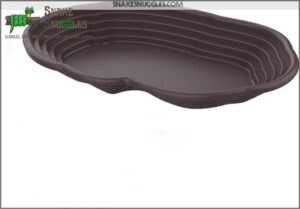
Size changes everything when you’re housing a larger snake.
The Flushbay Extra Large Reptile Bathing Bowl measures 15.35 × 10.63 × 1.97 inches — enough room for full-body soaking without crowding your snake.
Its ABS plastic construction resists impact, and the integrated ramp lets your snake climb in and out without straining.
That ramp isn’t just convenient; it actively reduces drowning risk.
At 1.97 inches deep, water stays accessible but safe.
One trade-off: this bowl demands real estate, so measure your enclosure first.
| Best For | Owners of larger reptiles — especially big snakes, lizards, or turtles — who need a roomy, easy-access soaking and feeding station. |
|---|---|
| Material | ABS Plastic |
| Easy Cleaning | Easy to clean and maintain |
| Multi-use | Bathing, feeding, and drinking |
| Reptile Compatible | Turtles, snakes, lizards |
| Stability | Stable base design |
| Natural Design | Terrace design aesthetic |
| Additional Features |
|
- Spacious enough for full-body soaking, so bigger reptiles actually fit comfortably
- The built-in ramp makes climbing in and out easy and reduces drowning risk
- Multi-functional — works as a bath, water bowl, or feeding dish all in one
- Takes up a good chunk of space, so it’s a tight fit in smaller enclosures
- Only about 2 inches deep, which won’t cut it for reptiles that need a deeper soak
- Not fully water-tight, which could get messy depending on your setup
7. Reptile Rock Corner Water Bowl
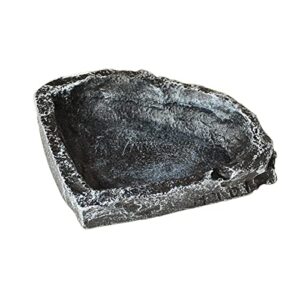
Space is often the first thing you sacrifice in a small enclosure — the Reptile Rock Corner Water Bowl gives it back. Its triangular footprint tucks flush against two walls, freeing up central floor space for hides and movement.
Made from 100% recycled, non-toxic plastic, it resists chipping and cleans easily with no seams to trap bacteria.
Available in small through extra-large sizes, it scales with your snake.
The earthy, rock-textured finish blends naturally into most setups without looking like a plastic afterthought.
| Best For | Small reptile owners — lizards, geckos, snakes, and iguanas — who want a natural-looking water dish that fits neatly into a compact enclosure. |
|---|---|
| Material | ABS Plastic |
| Easy Cleaning | Easy to clean and maintain |
| Multi-use | Water bowl or feeding dish |
| Reptile Compatible | Lizards, geckos, snakes, iguanas |
| Stability | Corner bowl design |
| Natural Design | Primitive stone style |
| Additional Features |
|
- Corner design saves floor space, leaving more room for hides and movement
- Easy to clean with no seams or grooves to trap bacteria
- The stone-textured finish blends right into a natural-looking setup
- Too small for larger reptiles that need more water depth or volume
- Shallow design won’t work for species that like to soak
- Some buyers find it smaller in person than it looks in photos
Buying Guide for Beginner Snake Keepers
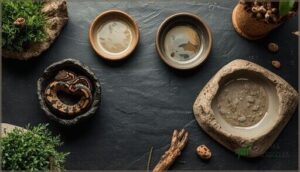
right water dish comes down to three things: your snake’s size, your budget, and where you’re buying from.
Get those right, and everything else falls into place.
Here’s what to look for before you add anything to your cart.
Assessing Your Snake’s Size and Species Needs
Your snake’s body is the blueprint — every water bowl decision starts there.
- Length‑Diameter Matching: Three‑foot snakes need 6–8‑inch bowls; five‑to‑six‑footers need 10–12‑inch bowls.
- Species‑Specific Depth: Ball pythons need 2–4‑inch depths; hognose snakes prefer shallow profiles.
- Growth‑Stage Scaling: Juveniles under one foot start at 4‑inch bowls.
- Body‑Proportion Guidelines: Bowl diameter should match your snake’s mid‑body length.
- Enclosure‑Space Allocation: Bowls shouldn’t exceed 10% of floor space.
Comparing Price, Durability, and Features
Price tells half the story — durability closes the deal.
Plastic water bowls start under $4, but their porous surfaces trap bacteria, driving up maintenance frequency fast. Ceramic and resin dishes cost $9–$25, yet deliver far better longevity benchmarks and value per volume.
For reptile hydration and reptile care and nutrition, the cost benefit is clear: pay more upfront, clean less often, protect your snake longer.
Where to Buy Quality Reptile Water Dishes
more options than you might think.
Online retail platforms like Chewy, Amazon, and Petco carry trusted brands with fast shipping.
Specialty reptile shops — including The Bio Dude and Swell Reptiles — stock bowls built specifically for snake care.
manufacturer direct sites like MS-Reptilien.de and Zoomed.eu handle reptile hydration needs efficiently.
local store options in Saxony, terraristik.com lists nearby dealers stocking quality reptile supplies.
Frequently Asked Questions (FAQs)
How often should I replace my snakes dish?
Change the water every one to two days. In warm enclosures hitting 80–90°F, bacterial growth timeline speeds up fast — biofilm can establish within 36 hours, compromising reptile hydration.
Can I use a regular pet bowl for snakes?
You can, but it’s risky. Regular pet bowls introduce chemical leaching, stability concerns, biofilm risk, size mismatch, and cleaning difficulty — all threats to proper reptile hydration and long-term snake health.
What signs show my snake is dehydrated?
Watch for wrinkled skin, sunken eyes, and unusual lethargy — those are your clearest dehydration red flags. Chalky, crumbling urates and stuck shed patches confirm your snake needs immediate hydration intervention.
Should hatchlings have a different dish than adults?
Yes. Hatchlings need shallower, smaller dishes — around 4 inches wide and 5 inches deep — to drink safely without drowning risk. Adults require larger, weighted bowls scaled to their full body size.
Is tap water safe for snakes to drink?
Tap water is generally safe for snakes once you address chlorine removal and chloramine concerns.
Treat it with a reptile-safe conditioner, maintain mineral balance, and your snake’s hydration stays on track.
Conclusion
Every snake keeper who ever lost a healthy animal to a preventable bacterial infection would tell you the same thing: water dish matters more than it looks. Choosing the right reptile water dishes for beginner snake keepers isn’t a minor detail—it’s the animal’s hydration, shedding, and disease resistance foundation on which your animal’s built.
Get the material, depth, and maintenance right, and that simple bowl becomes one of the most powerful tools in your enclosure.
- https://www.aussiepythons.com/threads/snake-water-bowls.154517/
- https://www.furrycritter.com/pages/articles/snakes/water_bowl_placement.htm
- https://smallpetselect.com/biofilm-lurking-in-your-pets-water-and-food-bowls/
- https://hardypaw.com/products/flukers-repta-bowl-non-porous-food-water-bowl
- https://www.wiredwhisker.com/blog/the-importance-of-non-porous-dishes-for-your-cat