
This site is supported by our readers. We may earn a commission, at no cost to you, if you purchase through links.

Your ball python turns down a meal at fifteen—and you might shrug it off as a typical snake mood. But what worked flawlessly for a decade can quietly become a health liability as metabolic rates drop 30-40% in aging reptiles.
Senior snakes don’t signal their changing needs with obvious distress—they simply process prey more slowly, store fat more efficiently, and face mounting strain from feeding schedules designed for younger animals.
The difference between thriving and struggling often comes down to precise adjustments in portion size, feeding intervals, and environmental conditions. Recognizing when your snake crosses into senior status—and knowing exactly how to recalibrate your care approach—can add years of quality life while preventing obesity, regurgitation, and metabolic complications that become exponentially harder to reverse after age eighteen.
Table Of Contents
Key Takeaways
- Senior snakes experience a 30-40% metabolic drop after age 15, requiring you to extend feeding intervals by 30-50% and reduce prey size from 1.5x to 1.0x body girth to prevent obesity and organ strain.
- Your snake won’t announce its transition into senior status—watch for reduced muscle tone, cloudy eyes, decreased shedding frequency, and longer digestion periods as reliable indicators that feeding adjustments are overdue.
- Maintaining juvenile feeding schedules into your snake’s senior years directly causes hepatic lipidosis, regurgitation, and metabolic disorders that become exponentially harder to reverse after age 18.
- Environmental factors—particularly temperature zones of 26-30°C and 50-75% humidity—play a more critical role in senior feeding success than portion size alone, with seasonal metabolism shifts reducing energy needs by over 90% during cooler months.
Key Feeding Changes for Senior Snakes
Your snake’s metabolism doesn’t stop on a dime when it hits a certain age—it gradually shifts down over months or years, demanding smarter feeding strategies to prevent obesity and metabolic strain. Recognizing when your snake enters its senior phase isn’t always obvious, but missing those cues can lead to serious health complications down the road.
Older snakes may refuse meals altogether or regurgitate more easily, so understanding common snake feeding problems and their solutions becomes essential for maintaining their health through these sensitive years.
Your snake’s metabolism shifts gradually with age, demanding smarter feeding strategies to prevent obesity and serious health complications
Here’s what you need to know about why these adjustments matter, how to spot the signs, and what happens if you keep feeding like nothing’s changed.
If you’re not sure where to start, this complete guide to feeding boa constrictors walks through portion sizes, timing, and common mistakes that lead to overfeeding or underfeeding.
Why Senior Snakes Need Feeding Adjustments
As your snake ages, its metabolism slows dramatically—adults require energy for maintenance rather than growth, making juvenile feeding frequencies excessive. Older snakes show reduced activity and digestive efficiency, struggling with large prey items that younger individuals handle easily.
Each species has its own timeline for this shift, so checking species-specific feeding schedules helps you adjust portions and timing as your snake matures.
Without adjusting feeding strategies to match declining metabolic demands and digestive capacity, you risk obesity, organ disease, and shortened lifespan in your aging companion. This highlights the importance of monitoring for snake health issues to guarantee proper care.
Signs Your Snake is Entering Senior Years
You’ll notice behavioral shifts before physical decline—decreased hunting enthusiasm, longer post-meal digestion periods, and preference for cooler basking spots all signal your snake’s progression into senior status. As your snake ages, understanding reptile care needs is vital for its health and well-being.
Watch for these key aging symptoms:
- Reduced muscle tone—your snake’s body feels softer, less firm when handled
- Cloudy or sunken eyes—indicators of metabolic shifts affecting hydration and nutrition
- Decreased shedding frequency—skin renewal slows as cellular regeneration declines
- Prolonged inactivity periods—extended rest cycles between minimal movements suggest declining energy reserves
These senior care markers usually emerge around age 15-18 in most species, though snake behavior varies by genetics and previous health history.
Risks of Not Adjusting Feeding Schedules
Maintaining unchanged feeding schedules creates serious health complications—metabolic disorders like hepatic lipidosis develop when excess calories accumulate in aging snakes with slowed metabolism.
Feeding errors, including oversized prey, trigger regurgitation and gastrointestinal dysfunction, while dietary imbalances from inappropriate intervals cause nutrient deficiencies or obesity.
These preventable health issues stem from ignoring how snake age fundamentally alters nutrition requirements, ultimately compromising organ function and longevity.
Adjusting Feeding Frequency and Portion Size
Getting your senior snake’s feeding schedule right isn’t guesswork—it’s about matching intervals and portion sizes to their slowing metabolism and changing energy demands. You’ll need to adjust both how often you feed and what size prey you offer to prevent obesity while maintaining adequate nutrition.
Here’s what you need to know about timing, prey selection, and caloric management for aging snakes.
Recommended Feeding Intervals for Senior Snakes

As your snake crosses the 18-year threshold, metabolic slowdown demands strategic feeding adjustments.
Senior corn snakes thrive on 10-to-14-day intervals—tighter than the standard 14-to-21-day adult schedule. Ball pythons over two years need meals every 20-to-30 days, with some individuals extending to 5-to-6-week cycles to prevent obesity.
If your ball python skips a meal or two, check out this guide on how long ball pythons can safely go without eating to understand normal fasting patterns.
Monitor body condition closely—feeding frequency directly impacts reptile health and nutrition outcomes.
Choosing Proper Prey Size for Older Snakes
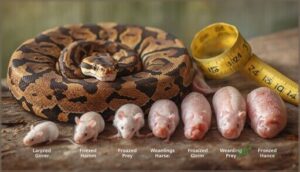
Physical capacity shrinks as aging affects muscle tone and jaw flexibility—your 20-year-old ball python can’t handle the same prey as a decade ago.
Ideal prey size guidelines for senior snakes:
- Maximum width: 1.0x the snake’s thickest girth (down from 1.5x for adults)
- Weight ratio: 8-10% of body mass for lean seniors
- Shift strategy: Shift from adult to weanling prey to minimize digestive strain
Frozen-thawed prey eliminates injury risk while supporting long-term snake health.
Caloric Needs and Preventing Obesity

Metabolic decline—up to 72% during brumation—means your senior snake needs far fewer calories than juveniles. Standard formulas (32 × body weight^0.75 at 30°C) overestimate senior nutrition needs; clinical guidelines suggest 50-75% of calculated intake prevents obesity risks.
| Body Weight | Max Caloric Intake/Day | Feeding Frequency | Prey Weight | Obesity Prevention |
|---|---|---|---|---|
| 500g senior | 4.0 kcal | Every 14-21 days | 40-50g | Monitor fat deposits |
| 1kg senior | 6.8 kcal | Every 14-21 days | 80-100g | Reduce portion if inactive |
| 1.5kg senior | 9.2 kcal | Every 18-28 days | 120-150g | Assess body condition monthly |
| 2kg senior | 11.4 kcal | Every 21-28 days | 160-200g | Adjust for decreased metabolism |
| 3kg senior | 15.3 kcal | Every 21-30 days | 240-300g | Track weight trends quarterly |
Feeding strategies emphasizing stomach capacity limits (2-5% body weight per meal) align caloric intake with reduced energy expenditure, safeguarding snake health and weight management throughout aging.
Monitoring Senior Snake Health During Feeding

Your senior snake’s health hinges on consistent observation—weight shifts, body condition changes, and feeding responses tell you what bloodwork can’t. You’ll need to spot the warning signs of both underfeeding and obesity before they escalate into metabolic disorders or organ stress.
Here’s what to monitor and when professional intervention becomes non-negotiable.
Tracking Weight and Body Condition
Your senior snake’s body weight tells a story—and you need to track it. Weigh your snake every two to four weeks using a digital kitchen scale, recording the data alongside body scoring observations.
Assess midbody girth and spine visibility to catch subtle shifts in nutrition status.
Feeding charts that pair weight monitoring with health tracking enable you to fine-tune your feeding schedule and nutrition planning before problems escalate.
Identifying Signs of Malnutrition or Overfeeding
Your snake’s body shouldn’t look like a lumpy sausage—but it shouldn’t resemble a bony rope, either. Malnutrition shows up as visible ribs, sunken eyes, and lethargy—clear health indicators you can’t ignore. Overfeeding risks include fat deposits near the tail, skin folds, and difficulty moving.
Both feeding disorders stem from misjudging your senior snake’s caloric needs, making precise nutrition monitoring essential for preventing long-term health issues.
When to Seek Veterinary Guidance
Persistent feeding issues demand professional veterinary care—waiting too long risks irreversible damage. If your senior snake refuses meals beyond two weeks, shows sudden weight loss, or regurgitates repeatedly, veterinary guidance becomes critical.
Snake health indicators requiring emergency evaluation include severe lethargy, dehydration, facial swelling, or inability to right itself—conditions where reptile care expertise in veterinary medicine can identify underlying metabolic or gastrointestinal health issues before they become life-threatening.
Environmental Factors Affecting Senior Snake Feeding

Your senior snake’s environment plays a bigger role in feeding success than most owners realize—temperature, humidity, and seasonal shifts directly influence appetite and digestion in aging reptiles. Getting these factors right means the difference between a healthy eater and a snake that refuses meals for weeks.
Let’s break down the three environmental adjustments that’ll keep your older snake feeding consistently.
Impact of Temperature and Humidity on Appetite
Temperature plays a surprisingly powerful role in your senior snake’s willingness to eat—most colubrids and pythons need enclosure zones around 26–30°C to trigger strong feeding responses and digestive efficiency. When ambient heat drops below species-specific ranges, metabolism slows and appetite vanishes.
Pair stable thermal gradients with 50–75% humidity to maintain hydration, which directly aids postprandial body temperature and prevents extended digestion times that suppress feeding frequency.
Creating a Comfortable Feeding Environment
Beyond dialing in the right temperature and humidity levels, you need to eliminate environmental stressors that make your older snake reluctant to strike—dim lighting during feeding windows, secure hide boxes near the feeding zone, and minimal foot traffic all reduce hesitation and encourage consistent appetite.
Consider dedicated feeding racks within snake enclosures to establish reliable comfort zones, and maintain environmental controls that replicate your pet snake’s natural feeding habitat throughout each meal.
Adapting to Seasonal and Activity Changes
Seasonal metabolism shifts can slash your senior snake’s energy needs by over 90 percent during cooler months—even in climate-controlled rooms, innate rhythms persist. Expect reduced feeding frequency as daylight shortens and temperatures drop, mirroring natural brumation cycles that override your standard feeding schedule.
Adjust your approach by:
- Extending feeding intervals by 30–50 percent during autumn and winter months
- Monitoring thermoregulation behavior and appetite cues rather than forcing meals
- Tracking activity patterns to align feeding rhythms with your snake’s seasonal energy expenditure
Environmental cues like photoperiod drive these changes, so respect innate feeding rhythms for peak digestion and animal health.
Top Products for Senior Snake Feeding Adjustments
Managing an aging snake’s nutrition requires more than just adjusting meal schedules—you’ll need the right tools to track weight, monitor intake, and guarantee proper caloric balance. A precise digital kitchen scale becomes essential for documenting gradual body condition changes that signal metabolic shifts in senior reptiles.
Below are three products that support evidence-based feeding adjustments for your older snake.
1. Babymouse Graphic Novel Boxed Set

You won’t find this award-winning graphic novel boxed set—featuring Babymouse: Queen of the World, Our Hero, and Beach Babe—in any snake feeding schedule or animal nutrition guide.
This collection, designed for readers aged 7–10 and packed with storytelling techniques that resonate with children’s literature fans, has zero relevance to reptile care, health issues, or dietary management.
If you’re researching proper feeding schedules for senior snakes, skip the book reviews and focus on evidence-based resources from veterinary professionals instead.
| Best For | Parents, teachers, or gift-givers looking for an engaging graphic novel collection for elementary-aged kids (7–10) who enjoy funny school stories and visual storytelling. |
|---|---|
| Brand | Random House |
| Weight | 1.11 lbs |
| Material | Paper |
| Age Range | 6-10 years |
| Package Contents | 3 books |
| Price | $22.34 |
| Additional Features |
|
- Award-winning series with over three million copies sold, recognized by both kids and literacy organizations for quality and appeal
- Great value pack that introduces young readers to a beloved character through three complete stories in one convenient boxed set
- Supports reading development and classroom learning through relatable themes like friendship and school challenges, while keeping reluctant readers engaged with humor and illustrations
- Some readers find the humor and storylines too silly or simplistic, especially compared to more complex graphic novels
- Quality concerns mentioned by a few reviewers who expected better production or more sophisticated content
- Not every child connects with Babymouse’s style—kids who prefer action-heavy or intricate plots might lose interest
2. Similac Infant Formula With Prebiotics

You won’t find any legitimate connection between Similac Infant Formula With Prebiotics—designed with human milk oligosaccharides for infant nutrition, immune support, and gut health—and senior snake feeding schedules.
Despite marketing claims about prebiotic benefits and formula safety backed by clinical trials in human infants, this product has zero application in reptile care or snake nutrition.
If you’re managing feeding frequency or addressing health issues in aging snakes, consult veterinary resources focused on species-appropriate animal nutrition instead.
| Best For | Parents looking for a formula that closely mimics breast milk’s prebiotic profile to support their infant’s immune system, brain development, and digestive health. |
|---|---|
| Brand | Similac |
| Weight | 6.8 lbs |
| Material | Powder |
| Age Range | 0-12 months |
| Package Contents | 3 canisters |
| Price | $175.22 |
| Additional Features |
|
- Contains 5 HMO prebiotics structurally identical to those in breast milk, which clinical studies show can help shift gut microbiota closer to breastfed infants and support immune function.
- Well-tolerated and safe according to multiple randomized trials, with no negative impact on growth and some evidence of reduced illness and medication use.
- Non-GMO with no artificial growth hormones, making it a cleaner choice for parents concerned about formula ingredients.
- Pricey at $175.22 for a 3-pack, which may strain budgets compared to standard formulas without added HMOs.
- Not suitable for infants with galactosemia, and like any formula, may still cause allergies or sensitivities in some babies.
- While research is promising, clinical guidelines still emphasize that human breast milk remains the gold standard—formula is a close second, not a replacement.
3. Amazon Basics Digital Kitchen Scale
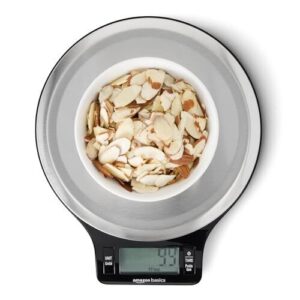
Precision matters when you’re tracking body weight and adjusting feeding frequency for senior snakes—the Amazon Basics Digital Kitchen Scale delivers measurements up to 11 pounds with ±1 gram accuracy, essential for monitoring nutrition and digestion trends.
You’ll measure prey items reliably using the tare function to exclude container weight, then switch between grams and ounces via the units button.
This food measurement tool facilitates evidence-based feeding schedule modifications, though large bowls may obscure the LCD display during kitchen weighing sessions.
| Best For | Home cooks and anyone tracking food portions who need accurate measurements for ingredients up to 11 pounds without spending a lot. |
|---|---|
| Brand | Generic |
| Weight | Not specified |
| Material | Stainless Steel/Plastic |
| Age Range | All ages |
| Package Contents | 1 scale |
| Price | Not listed |
| Additional Features |
|
- Measures down to 2 grams with solid accuracy, and the tare button makes it easy to weigh just the food without the bowl
- Switches between five different units (grams, ounces, pounds, milliliters, fluid ounces) so you can follow any recipe
- Comes with batteries included and wipes clean with a damp cloth after messy ingredients
- The LCD screen isn’t very bright, and large bowls can block your view of the numbers
- Auto-shutoff kicks in during longer prep sessions, and there’s no manual off switch
- Stainless steel platform shows fingerprints easily and only measures to the nearest gram, not decimal points
Frequently Asked Questions (FAQs)
Can senior snakes digest frozen prey safely?
Yes, senior snakes can safely digest frozen prey when it is completely thawed and properly warmed. This method eliminates bite injuries and parasites, while also supporting their slower metabolism through controlled, predictable meals. The approach ensures that meal sizes are appropriate for their declining digestive efficiency.
Do arthritis symptoms affect senior snake feeding?
Joint pain isn’t just stiff—it’s a strike-killer. Arthritis effects compromise feeding challenges in senior snakes through delayed strikes, weakened constriction, and decreased appetite—making pain management essential for maintaining health issues and proper snake care feeding schedule adjustments.
Should water intake increase for older snakes?
Aging physiology reduces renal function in adult snakes—so you’ll need to boost water quality and access rather than forcing higher intake volumes, preventing dehydration risks that compromise digestion, metabolism, and senior care outcomes.
How does shedding frequency change feeding schedules?
Shedding cycles directly alter feeding intervals—snakes generally refuse food 4 days before ecdysis timing, then resume eagerly post-shed.
Adjust your feeding schedule around these natural fasts to support snake metabolism and proper digestion.
Are vitamin supplements necessary for senior snakes?
Captive snakes fed appropriately sized whole vertebrate prey—rodents or rabbits—rarely need vitamin supplements because organs like liver supply complete nutrition.
Only diagnostic workups revealing deficiencies warrant supplementation, since fat-soluble vitamin excess creates toxicity risks.
Conclusion
Striking the right balance between underfeeding and overloading transforms senior snake care from guesswork into measurable precision. Your ability to implement senior snake feeding adjustments—reduced portions, extended intervals, optimized temperatures—directly determines whether your reptile faces metabolic strain or enters its final decade with lean muscle mass and consistent energy reserves.
The snakes that reach twenty-five aren’t the ones whose owners waited for problems to emerge—they belong to keepers who recognized aging before symptoms forced intervention.
- https://lafeber.com/vet/feeding-the-hospitalized-snake/
- https://thetyedyediguana.com/blog/8-things-you-need-to-know-about-caring-for-an-elderly-reptile/
- https://www.honeybrookfoods.co.uk/Help/Document/3
- https://veteriankey.com/diseases-of-the-musculoskeletal-system-5/
- https://timesofindia.indiatimes.com/etimes/trending/how-a-snakes-digestive-system-is-different-from-humans/articleshow/122528067.cms