This site is supported by our readers. We may earn a commission, at no cost to you, if you purchase through links.
Most new reptile owners obsess over lighting schedules and substrate depth—then drop any old bowl into the enclosure without a second thought. That bowl, sitting in the corner collecting bacteria, can quietly undermine everything else you’ve done right.
A scratched plastic dish soaking in stagnant water isn’t just an eyesore; it’s a health risk your reptile drinks from daily.
Choosing the right reptile water bowl comes down to three things: safe materials, the right size for your species, and a setup that’s easy to keep clean. The five picks and care tips ahead make that decision straightforward.
Table Of Contents
- Key Takeaways
- Best Reptile Water Bowls for Beginners
- Choosing Safe Bowl Materials
- Size and Stability Basics
- Cleaning and Placement Tips
- Frequently Asked Questions (FAQs)
- Do bearded dragons really need a water bowl?
- Do vets recommend stainless steel bowls?
- Does boiling water make it safe for reptiles?
- Can reptiles drink tap water safely?
- How often should I replace the bowl?
- Do different species need different bowl types?
- What if my reptile refuses to drink?
- Should I add supplements to the water?
- Can reptiles drink from drippers instead of bowls?
- What water conditioners are safe for reptiles?
- Conclusion
Key Takeaways
- The bowl material matters more than most beginners expect—non-porous surfaces like ceramic, food-grade resin, or stainless steel keep bacteria from building up between cleanings, while scratched plastic is a hygiene trap you can’t scrub your way out of.
- Size and depth aren’t one-size-fits-all: small climbers like geckos need shallow 60–120 ml dishes, while ball pythons need enough room to soak at mid-body depth, and juveniles of any species need low sides to drink safely without the risk of drowning.
- Daily water changes and weekly scrubs with a fragrance-free, reptile-safe soap aren’t optional habits—stale water breeds bacteria fast, and a bowl that smells after cleaning is already overdue for replacement.
- Where you place the bowl shapes the whole enclosure: keep it away from basking spots to slow evaporation, position it near a damp hide to support humidity, and use a barrier mat underneath to prevent substrate from turning your water dish into a contamination zone.
Best Reptile Water Bowls for Beginners
Finding the right water bowl doesn’t have to be complicated, but the wrong choice can cause real problems for your reptile.
Knowing what to look for—size, material, stability—helps you avoid common mistakes covered in this guide to water bowls for small reptile enclosures.
Material, size, and stability all matter more than most beginners expect.
Here are five bowls worth considering, each suited to different species and setups.
1. Exo Terra Reptile Water Dish
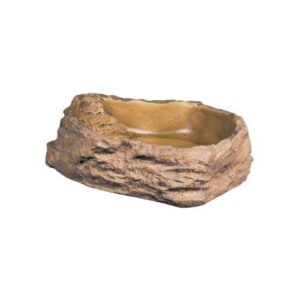
The Exo Terra Reptile Water Dish is a solid first pick if you’re just starting out.
At 8.7 × 6.7 × 2 inches and weighing nearly 2.4 lbs, it won’t tip when your ball python decides to investigate.
The food-grade resin interior is non-porous, so bacteria don’t get a foothold between cleanings.
Built-in safety steps mean small frogs or insects can climb out on their own.
At $13.85, it covers the basics without overcomplicating things.
| Best For | Beginner reptile owners keeping ball pythons, turtles, or small amphibians who want a stable, easy-to-clean water dish that looks good in any terrarium setup. |
|---|---|
| Material | Food-grade resin |
| Non-Porous | Yes |
| Easy Cleaning | Yes |
| Species Suitability | All reptiles/amphibians |
| Tipping Resistance | Heavy base |
| Natural Aesthetic | Rock-finish exterior |
| Additional Features |
|
- Non-porous food-grade resin means bacteria don’t build up between cleanings — quick wipe and you’re done.
- Heavy enough that even an active snake or turtle won’t knock it over mid-soak.
- Built-in safety steps let small frogs and insects climb out on their own, so you’re not fishing anyone out.
- The listed dimensions don’t always match what shows up at your door, so measure twice before buying for a tight enclosure.
- At nearly 2.4 lbs, it’s a bit of a hassle to pull out and reposition every cleaning day.
- The depth might be too much for very small or shallow-water species that struggle to get in and out comfortably.
2. Boao Leaf Reptile Food and Water Bowls
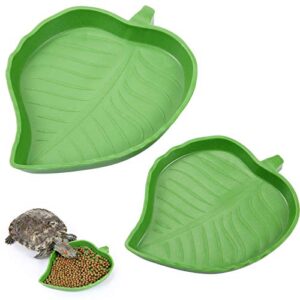
If budget is your first concern, the Boao Leaf Bowls are worth a look. For just $7.99, each package includes two bowls—small (4.72 × 3.74 in) and large (6.06 × 4.88 in)—both shallow, BPA-free, and easy to rinse after feeding.
Their leaf shape blends naturally into most terrariums, while the low profile prevents small tortoises and lizards from tipping water across the substrate.
Secure them in a corner with tape if your reptile is the pushy type.
| Best For | Budget-conscious reptile owners with small tortoises, lizards, or snakes who want a simple, no-fuss feeding setup without spending much. |
|---|---|
| Material | Plastic |
| Non-Porous | No |
| Easy Cleaning | Yes |
| Species Suitability | Small reptiles/insects |
| Tipping Resistance | Tape/corner placement |
| Natural Aesthetic | Leaf-shaped green design |
| Additional Features |
|
- Great value at $7.99 for two bowls — hard to beat for a starter setup
- Low-profile edges keep water and food in place, which means less mess to clean up
- Lightweight and smooth enough to rinse quickly after every feeding
- Too small for medium or large reptiles, so they’ll outgrow these fast
- Plastic won’t hold up well if your pet likes to chew or scratch at things
- No built-in grip or weight, so active pets can easily push them around
3. SLSON Gecko Ledge Feeder
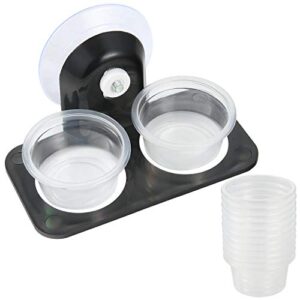
If your gecko or anole lives vertically—climbing walls and perching on branches—a floor bowl just doesn’t cut it. The SLSON Gecko Ledge Feeder mounts directly to your terrarium glass using a suction cup and screw-tightened nut, holding the feeding ledge at whatever height suits your animal.
For more help choosing the right setup, this guide to reptile water dishes for climbing lizards and beginner pets walks through what actually works for arboreal species.
The ledge’s smooth, non-porous surface also makes it easy to keep clean—something worth thinking about alongside your choice of safe reptile water dishes for humid hide setups.
It comes with 20 small 1-ounce cups for food or water, and each cup pops out for easy rinsing.
Just make sure the glass is spotless before mounting—dust breaks the seal fast.
| Best For | Owners of small climbing reptiles like geckos, anoles, and tree frogs who need a stable, off-the-floor feeding spot inside a glass or acrylic terrarium. |
|---|---|
| Material | Food-grade plastic |
| Non-Porous | Yes |
| Easy Cleaning | Dishwasher-safe cups |
| Species Suitability | Small reptiles/amphibians |
| Tipping Resistance | Suction cup mount |
| Natural Aesthetic | Minimal/functional look |
| Additional Features |
|
- Mounts securely to glass with a suction cup and screw nut—stays put even with active animals moving around it.
- Comes with 20 one-ounce cups that are easy to pop out, rinse, and reuse.
- Small and lightweight, so it won’t eat up precious space in a compact enclosure.
- Suction can weaken over time, especially in humid tanks—you may need to re-wet or re-tighten it now and then.
- The cups sit slightly crooked in the ledge holes, which some users find annoying.
- Glass has to be completely clean before mounting, or the seal won’t hold.
4. Zoo Med Reptile Rock Feeding Dish
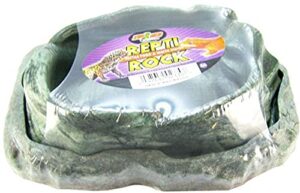
Not every reptile needs a wall-mounted solution. For ground-dwellers like bearded dragons and leopard geckos, the Zoo Med Reptile Rock Feeding Dish (model WFC30) keeps things simple.
Its non-porous resin surface resists bacteria and cleans easily with mild soap and warm water.
Low side walls let your animal spot food easily—and you can use it for water, salads, or both.
One honest heads-up: the shiny finish won’t fool anyone into thinking it’s actual stone.
| Best For | Ground-dwelling reptiles like bearded dragons and leopard geckos at any life stage, especially for owners who want a simple, no-fuss feeding and watering setup. |
|---|---|
| Material | Rigid plastic |
| Non-Porous | Yes |
| Easy Cleaning | Yes |
| Species Suitability | All reptiles/small animals |
| Tipping Resistance | Low profile |
| Natural Aesthetic | Rock-like coloration |
| Additional Features |
|
- Does double duty as both a food and water dish, so you’re not crowding the enclosure with extra gear.
- Non-porous plastic makes cleanup quick — just soap and warm water and you’re done.
- Low walls give your reptile a clear view of food, which is a real plus for prey-spotting species.
- The low edges are great for access but bad for keeping small live prey like mealworms in the dish.
- The finish looks pretty plasticky up close — don’t expect it to pass for actual stone.
- Color can vary by batch, so what arrives might be greener or shinier than what you saw in the listing.
5. Fluker Reptile Corner Bowl
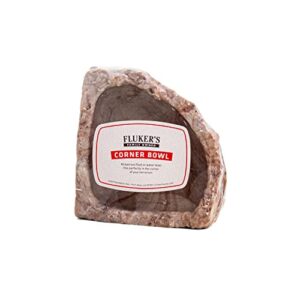
Space is always at a premium in a terrarium, and the Fluker Reptile Corner Bowl solves that quietly. Its triangular footprint tucks flush into any corner, freeing up floor space your reptile actually uses. At roughly 6 by 5 inches with a 2.25-inch interior depth, it works well for snakes, bearded dragons, and geckos.
The ceramic-stoneware build weighs about 14 ounces — heavy enough to stay put. This durable construction ensures stability, even with active reptiles.
The non-porous interior wipes clean easily and won’t harbor bacteria between daily water changes, maintaining a hygienic environment for your pet.
| Best For | Reptile owners who want a stable, easy-to-clean water dish that saves space in small-to-medium terrariums housing snakes, geckos, or bearded dragons. |
|---|---|
| Material | Ceramic/stoneware |
| Non-Porous | Yes (interior) |
| Easy Cleaning | Yes (boilable) |
| Species Suitability | Small-to-medium reptiles |
| Tipping Resistance | Heavy ceramic base |
| Natural Aesthetic | Earthy gray swirl pattern |
| Additional Features |
|
- Corner-fit design tucks neatly out of the way, giving your reptile more usable floor space
- Heavy ceramic build stays put even with active or burrowing species
- Non-porous interior resists bacteria, staining, and humidity absorption — easy to sanitize
- The rough exterior texture can trap debris and takes more effort to scrub clean
- At nearly a pound, it’s a pain to reposition and can crack or chip if dropped
- Some units have reported minor defects like tiny holes or surface damage from prolonged boiling
Choosing Safe Bowl Materials
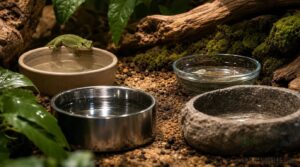
The bowl material you pick matters more than most beginners realize — it’s the difference between a safe habitat and one that harbors bacteria no matter how often you clean it. Not every option sold at pet stores is worth your money or your reptile’s health.
Here’s a breakdown of the materials worth knowing about before you buy.
If you work with large snakes, it’s worth checking out heavy-duty gloves designed specifically for large constrictor handling, including crossover picks like the Steiner Y Series that started life in welding but hold up surprisingly well in the field.
Ceramic and Stoneware Bowls
Ceramic and stoneware bowls are the ideal choice for reptile water bowls, and for good reason. Their glazed, smooth surface creates nonporous materials that won’t trap bacteria between cleanings. Glaze food safety matters here — always confirm it is lead-free.
The footed base adds stability, while the bowl’s weight resists tipping. Additionally, thermal shock resistance ensures they withstand temperature swings.
Watch for crazing durability issues if hairline cracks appear, though sealed glazes usually hold up well with durable construction.
For added safety, remember that no lead ceramic bowls are a key benefit of quality reptile water dishes.
Food-grade Resin Dishes
Food-grade resin dishes are a smart pick if you want variety without sacrificing safety. These resin printed bowls meet FDA Compliance standards, ensuring material safety for reptiles is built in from the start.
Their smooth nonporous design resists staining and biofilm buildup, and most are dishwasher safe on gentle cycles. UV stabilization prevents yellowing, while color options let you match your setup.
Just respect the resin heat limits — avoid prolonged direct heat exposure.
Stainless Steel Options
Stainless steel reptile water bowls are quietly one of the most practical choices you can make. Their smooth nonporous design and corrosion resistance keep bacteria from settling in, while material safety for reptiles is fundamentally built into the alloy itself.
Most are dishwasher safe, feature rimmed edges to block substrate, and include a weighted base that prevents larger lizards from tipping them.
A brushed finish ensures residue is easy to spot, combining hygiene with functional durability.
Avoid Scratched Plastic
Plastic bowls might seem like a budget-friendly starting point, but they scratch easily — and those scratches are where bacteria quietly set up home. Even with non-abrasive cleaning, etched surfaces resist thorough sanitation.
Opt for food-grade resin or smooth surface ceramic with scratch-resistant coatings instead. These materials prevent bacterial harboring and withstand cleaning without degradation.
Regular surface inspection matters too: replace damaged bowls the moment you notice discoloration or deep scoring. Proactive replacement ensures hygiene and prevents contamination risks.
Non-porous Surfaces
Consider a nonporous surface as a closed door—bacteria simply cannot enter. Smooth surfaces on food-grade resin or glazed ceramic resist absorption entirely, making your water bowl far easier to disinfect.
- Bacterial Resistance: No micro-crevices means nowhere for pathogens to hide.
- Chemical Compatibility: Withstands mild cleaners without surface breakdown.
- Scratch Prevention: Maintains integrity through repeated cleaning cycles.
- Longevity Benefits: Dishwasher safety greatly extends the usable lifespan.
Size and Stability Basics
Getting the size and stability right can make or break your reptile’s daily routine. A bowl that’s too deep, too small, or too easy to tip creates real problems — fast.
Here’s what to keep in mind before you buy.
Match Bowl to Species
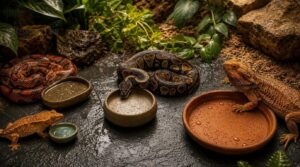
Getting species water volume right matters more than most beginners realize.
A bearded dragon needs 300–600 ml for drinking and occasional soaking, while gecko bowl sizing sits closer to 60–120 ml. Snakes’ soaking needs and lizards’ drinking access differ just as sharply.
| Species | Recommended Capacity |
|---|---|
| Gecko | 60–120 ml |
| Corn Snake | 150–250 ml |
| Ball Python | 200–500 ml |
| Bearded Dragon | 300–600 ml |
Shallow Bowls for Juveniles
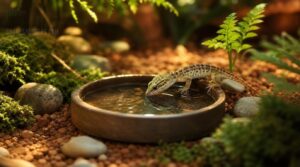
Once you’ve matched the bowl size to your species, depth becomes the next critical factor. For neonatal lizards and small lizards, a low-profile design around 1 inch deep ensures neonates’ soaking safety — deep sides pose a real drowning risk.
Ideal water depth for these reptiles also influences hydration frequency, visual accessibility, and the location strategy as juveniles progress through growth phases.
Soaking Space for Snakes
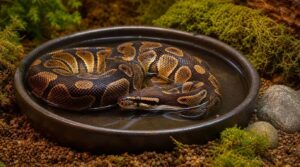
Snakes require more soaking space than beginners often anticipate. The ideal water depth for species like ball pythons should reach approximately the snake’s midpoint—deep enough to enable hydration but shallow enough to maintain a low-profile design that prevents escape.
Maintain water temperature between 85–90°F, monitor soak duration (under 10 minutes), and observe hydration cues to ensure safety.
Only provide soaks when shedding or dehydration signals appear, avoiding unnecessary frequency to align with the snake’s natural needs.
Low Sides for Access
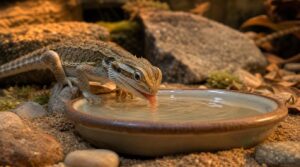
Low-profile designs matter more than most beginners realize. A rim height of just 1–2 inches gives small reptiles easy neck reach without forcing awkward angles. This facilitates juvenile drinking naturally, since young animals won’t strain over a tall edge. You’ll also notice minimal lifting effort during refills.
- Low sides reduce snout exposure during sipping
- Shallow rims encourage regular, stress-free hydration
- Easy cleaning comes standard with open, low-profile accessories
- Gentle slopes help reptiles self-correct at the bowl’s edge
Heavy Tip-resistant Bases
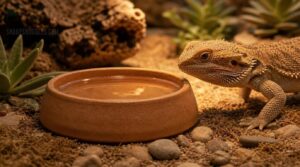
A bowl that tips over can leave your reptile without water for hours — not ideal when you’re still learning the ropes. Weighted base designs with a wide contact footprint and low center of gravity prevent dish tipping prevention issues before they start.
Integrated ballast systems and anti-spill rims keep water secure, while addressing instability risks. These features work together to minimize spills and maintain consistent access to hydration.
A low-profile design, paired with size matching for reptile accessories, ensures every reptile-friendly setup stays grounded and functional. This approach prioritizes stability without compromising usability in enclosed environments.
Cleaning and Placement Tips
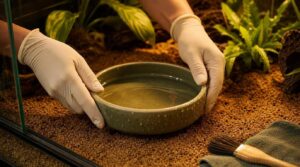
Even the best bowl won’t do its job if you’re not maintaining it right. Simple habits around cleaning and placement make a real difference in your reptile’s health.
Here’s what you need to know.
Change Water Daily
Daily water changes aren’t optional — they’re the backbone of your reptile’s health. Stale water breeds bacteria quickly, putting your animal at real risk. Stick to a consistent routine timing, replacing water every 24 hours to maintain water quality and support hydration monitoring.
Change your reptile’s water daily — stale water breeds bacteria fast
Match water temperature to enclosure conditions, practice regular bowl inspection for scratches, and keep placement out of direct light for algae prevention.
Wash With Mild Soap
Beyond daily water swaps, your cleaning schedule needs real scrubbing. Use a fragrance-free formula with gentle surfactants and neutral pH — reptile-friendly cleaners won’t leave chemical residue that irritates sensitive skin. Rinse thoroughly to remove every soap trace, then pat-dry before refilling.
Deep cleans weekly prevent bacterial growth that hides in overlooked corners, keeping water dish sanitation solid.
Treat Tap Water Safely
Tap water isn’t automatically safe for your reptile. Chlorine and chloramines can irritate sensitive skin, and ammonia detoxification matters more than most beginners realize. A water conditioner like ReptiSafe manages chlorine removal, neutralizes ammonia, and restores essential ions in seconds.
For extra caution, Boiling Water kills pathogens, while Carbon Filtration and Reverse Osmosis offer consistent Chlorine Reduction for sensitive species.
Place for Humidity Needs
Position it in a low heat area away from basking spots to avoid rapid evaporation spikes. This placement creates a central humidity hub, facilitating the maintenance of a humid environment and steady reptile hydration.
A nearby damp hide placement and misting zone, combined with a substrate moisture pocket, ensures the water source remains consistently effective. This integrated setup supports overall moisture control within the enclosure.
Prevent Substrate Contamination
Substrate sneaking into your water bowl is one of the sneakiest hygiene problems in terrarium water management. Use barrier mats under bowls and a low-profile design to limit splash transfer.
Moisture metering keeps substrate around 60% so loose particles stay put. Wear gloves and sanitized tools during batch labeling and substrate prep.
Daily visual inspection catches bacterial contamination before it starts, supporting regular cleaning and preventing water stagnation.
Frequently Asked Questions (FAQs)
Do bearded dragons really need a water bowl?
Yes, bearded dragons genuinely benefit from a water bowl. Daily access aids hydration for reptiles, especially on vegetable-heavy diets. Keep it shallow — about 1 inch deep — to stay safe.
Do vets recommend stainless steel bowls?
Most vets do recommend stainless steel bowls, citing veterinary hygiene standards and easy sterilization protocols. Grade 304 or 316 steel offers toxin-free assurance, long-term durability, and promotes reptile health and hydration reliably.
Does boiling water make it safe for reptiles?
Boiling kills bacteria and removes chlorine, but it won’t strip chloramine, ammonia, or nitrites. A water conditioner treats those gaps. Cool water fully before offering it — temperature safety matters.
Can reptiles drink tap water safely?
Most reptiles can drink dechlorinated tap water safely.
Use a water conditioner to handle chlorine removal, ammonia, and nitrites, following the conditioner dosage instructions carefully to maintain proper mineral balance and temperature safety.
How often should I replace the bowl?
Replace plastic bowls every 6–12 months. Ceramic or resin bowls should be replaced when chips, cracks, or persistent odors appear. Deep scratches signal bacterial buildup fast.
Trust your nose—if it smells after cleaning, it’s already overdue.
Do different species need different bowl types?
Arboreal species favor wide, shallow designs, adapting to their tree-dwelling habits. Desert snakes require weighted bases for stability in arid environments.
Aquatic submersion demands deeper bowls, addressing the need for water-based habitats.
Juveniles and geckos benefit from shallow, low-profile dishes, ensuring safety for smaller or more delicate animals.
What if my reptile refuses to drink?
Sometimes a reptile simply turns its nose up at the bowl. Try misting the enclosure, dripping water on the snout, or offering moisture-rich foods. Persistent dehydration signs warrant veterinary intervention.
Should I add supplements to the water?
Skip supplements unless your vet recommends them. Most additives alter taste, throw off hydration balance, and may cause medication interactions.
ReptiSafe water conditioner manages chlorine removal and adds safe electrolytes—that’s enough.
Can reptiles drink from drippers instead of bowls?
Some reptiles, like chameleons, hydrate better with a reptile drip system than a bowl. Species preference matters — drippers suit arboreal species, while ground dwellers usually drink from bowls.
What water conditioners are safe for reptiles?
ReptiSafe water conditioner manages chlorine neutralization, heavy metal binding, slime coat boost, and electrolyte enrichment in one dose — safe for bowls, drip systems, and soaking tubs across most reptile species.
Conclusion
The bowl you choose, the water you refresh daily, and the surface you keep clean—these small decisions shape your reptile’s health more than most beginners expect. Getting the right reptile water bowls for beginners isn’t about the ideal; it’s about building habits that quietly protect your animal every single day.
When the basics are handled well, everything else in the enclosure works harder. Simple choices, made consistently, are what separate a good setup from a great one.
- https://www.furrycritter.com/pages/articles/snakes/water_bowl_selection.htm
- https://www.thebiodude.com/collections/reptile-water-dishes?srsltid=AfmBOoqmY7jW1L6gaurLcKrBEMqaUyhtlQp85nhcLf1J8fcieMmApK9b
- https://reptilesmagazine.com/reptile-water-requirements/?srsltid=AfmBOoq_lp1AraY8C1AX5F74ji6VZOmyvlZFRT2vrePlDs3DzabdHE4Y