This site is supported by our readers. We may earn a commission, at no cost to you, if you purchase through links.

A northern Pacific rattlesnake can deliver a venomous strike in less than 0.05 seconds, moving faster than a veterinarian can reflexively pull away. When you’re restraining a gaboon viper for a physical examination or extracting an injured cottonmouth from a transport container, that split-second window between safe handling and severe envenomation depends entirely on what’s covering your hands and forearms.
Snake handling gloves for veterinarians aren’t optional equipment—they’re the critical barrier that allows you to work confidently with venomous and constrictor species without risking puncture wounds, lacerations, or worse. The right pair combines puncture-resistant materials with enough tactile sensitivity to perform clinical procedures, while inferior gloves leave gaps in coverage or sacrifice dexterity for bulk.
Table Of Contents
Key Takeaways
- Snake handling gloves for veterinarians must combine puncture-resistant materials like SuperFabric, Kevlar, or double-layer cowhide with sufficient tactile sensitivity to perform clinical procedures, as venomous strikes occur in under 0.05 seconds—faster than reflexive withdrawal.
- Professional-grade gloves should meet ANSI/ISEA 105 puncture resistance levels (ideally level 5), extend 22-23 inches to cover the forearm striking zone, and feature reinforced palms and fingers where bite force concentrates during restraint.
- The tradeoff between protection and dexterity is critical—thicker materials reduce tactile sensitivity by over 20 percent, so veterinarians must select gloves that balance safety with the finger mobility required for examinations, venipuncture, and species welfare.
- Proper glove selection depends on matching construction features to specific applications: extended cuffs for zoo enclosure work, adjustable sizing for precision clinical tasks, and certified bite resistance for venomous species handling, with maintenance practices like leather conditioning preserving long-term protective integrity.
Key Features of Snake Handling Gloves for Veterinarians
When you’re handling venomous snakes or aggressive reptiles in a clinical setting, your gloves become the barrier between a routine examination and a trip to the emergency room. The right pair needs to do more than just cover your hands—it should offer measurable protection against fangs, claws, and unexpected strikes while still letting you work with precision.
Once your gloves are on and you’ve secured your grip, knowing how to properly feed and care for young constrictors helps you anticipate their behavior during handling and reduces stress for both you and the animal.
In clinical snake handling, your gloves stand between routine examination and emergency room—they must stop fangs while preserving precision
Let’s look at the essential features that separate professional-grade snake handling gloves from basic protective gear.
Many handlers also rely on agricultural land snake pest control strategies to minimize encounters before gloves are even needed.
Bite and Puncture Resistance Technologies
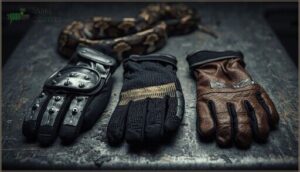
When you’re restraining a defensive rattlesnake, you need more than wishful thinking between fangs and skin. SuperFabric armor plate systems, Kevlar reinforced composites, and multi-layer leather designs each offer distinct bite-proof glove advantages for venom protection and fang resistance:
For handlers working with larger constrictors or venomous species, proper snake handling techniques paired with triple-layer gloves reduce strike injuries significantly.
- SuperFabric constructions with three offset layers prevent penetration during strikes from four-foot timber rattlesnakes, achieving ANSI needlestick puncture resistance levels up to 5
- Kevlar reinforced leather gloves combine cut resistance ratings of A8-A9 with targeted reinforcement at high-risk zones like fingers and palms where bite force concentrates
- Double-layer cowhide padding dissipates strike energy and reduces venom delivery by approximately 60-66 percent compared to single-layer options
Venom Defender gloves and similar bite-resistant materials undergo standardized puncture testing under ANSI/ISEA 105 and ASTM F2878 protocols, measuring the newtons of force required for hypodermic needle penetration at 500 millimeters per minute to classify snake bite-proof gloves into protection levels that matter during actual clinical handling. The selection of these gloves also depends on understanding puncture resistant materials to guarantee maximum protection.
Forearm Coverage and Glove Length Options
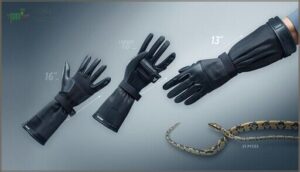
Beyond bite-proof materials, your forearm protection demands careful glove sizing and arm coverage selection. Standard reptile handling gloves range from 16-inch wrist coverage to 23.6-inch elbow-length gauntlets, with veterinarians choosing length based on snake species and strike zones:
| Coverage Type | Length Range | Best For |
|---|---|---|
| Mid-forearm | 16–18 inches | Small constrictors, non-venomous handling |
| Elbow-length | 22–23.6 inches | Venomous snakes, aggressive monitors |
Venom Defender puncture resistant gloves at 22 inches meet injury prevention safety standards while balancing dexterity with snake bite proof protection. When selecting gloves, consider the importance of cut resistance standards to guarantee maximum protection.
Adjustable Cuffs and Secure Fittings
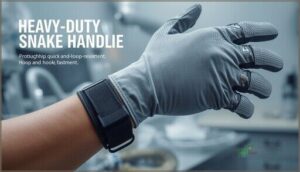
Even with proper forearm support, you’ll find that adjustable cuffs with secure fasteners are what prevent dangerous slippage during snake restraint procedures.
For beginners uncertain about technique, this guide to safe snake handling walks through proper grip positioning and restraint methods step-by-step.
Hook-and-loop or quick-release mechanisms on puncture-resistant gloves like Venom Defender models enable rapid donning while maintaining wrist protection, and elastic gussets accommodate varying sleeve thicknesses without compromising glove fit or your grip stability during reptile captures.
Comfort, Breathability, and Extended Wear
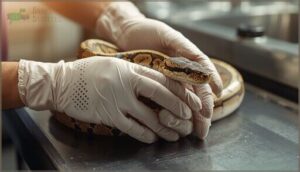
Secure fasteners alone won’t protect you if hand fatigue cuts your shift short, which is why glove ergonomics and moisture control matter as much as bite-proof construction in personal protective equipment. When snake bite proof gloves balance thermal regulation with wear durability, you’ll maintain precision through extended procedures without the distraction of sweat or cramping.
- Soft inner linings distribute palm pressure evenly, reducing hand fatigue during multi-hour restraint sessions
- Perforated backhand panels and moisture-wicking layers keep your hands dry in humid clinic environments
- Double-layer palm reinforcement extends glove life under repetitive grasping without sacrificing tactile sensitivity
- Heat-dissipating fabrics in animal handling gloves lower perceived warmth during prolonged snake contact
- Adjustable sizing in bite proof and puncture resistant gloves minimizes hotspots and readjustment needs during overhead maneuvers
Heat, Oil, and Scratch Resistance Benefits

Thermal protection becomes critical when you’re working near ultraviolet sterilizers or handling snakes in heated enclosures, and heat resistant gloves with surfaces that stay below 60°C during brief contact prevent burns without compromising dexterity.
Oil repellence in puncture resistant gloves maintains grip on slippery scales, while scratch guard features in bite proof gloves and cut resistant gloves like Venom Defender withstand 1,000-plus abrasion testing cycles against rough substrates.
Materials and Construction for Veterinary Safety
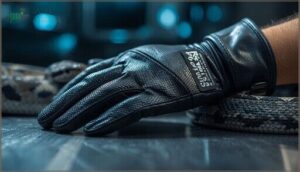
When you’re selecting gloves for handling venomous snakes or aggressive reptiles, the materials and construction methods determine whether you walk away unscathed or end up in the emergency room. Different fabrics, layering techniques, and certification standards offer varying levels of protection against fangs, claws, and hypodermic-like punctures.
Let’s examine the core materials and construction features that separate adequate gloves from those that truly safeguard your hands in high-risk veterinary situations.
Cowhide Leather Vs. Kevlar Vs. SuperFabric
When choosing snake handling gloves, you’ll find three dominant material types: cowhide leather, Kevlar, and SuperFabric. Cowhide leather offers natural abrasion resistance and breathability, ensuring dexterity during clinical procedures. Kevlar delivers excellent cut resistance through para-aramid fibers that withstand sharp bites. SuperFabric combines embedded protective shields with flexibility to resist punctures without excessive bulk.
Each material meets specific bite-proof glove requirements. Layered constructions balance leather flexibility, Kevlar strength, and SuperFabric technology for optimal fabric durability in veterinary applications.
For handlers new to protective gear, the beginner’s corn snake care guide covers essential safety practices alongside proper handling techniques.
Double-layer Padding and Reinforced Stitching
You’ll notice double-layer padding provides an inner cushion that absorbs bite force and distributes pressure across your palm, reducing puncture risk when handling reptiles—RAPICCA Animal Handling Gloves exemplify this design.
Reinforced seams with triple stitching patterns resist tears at critical junctions like your thumb base, ensuring durability during snake handling and safety procedures. Venom Defender gloves from Snake Professional use heavy-duty threads that maintain flexibility while preventing seam failure under repeated stress.
Certification Standards (ANSI, EC, Hypodermic Needle Resistance)
You need gloves that meet recognized safety ratings for puncture resistance and needle stick resistance—without them, you’re relying on luck, not science. Look for these certification marks when choosing personal protective equipment:
- ANSI/ISEA 105 rates puncture resistance from level 1 to 5, with professional snake handling gloves like Venom Defender R8E 3180 achieving the highest rating through standardized needle testing.
- EN 388 evaluates mechanical risks including puncture force, assigning numerical ratings that inform regulatory compliance across European facilities.
- EC Directive 89/686/EEC certifies hypodermic needle resistance, ensuring glove technology withstands venomous bite scenarios in clinical settings.
- SuperFabric constructions deliver ANSI levels 2–5 in puncture testing, combining multiple layers for enhanced protection during reptile restraint.
- CE marking indicates independent verification by notified bodies, supporting cross-border usage in wildlife rehabilitation and veterinary practice.
Importance of Palm and Finger Reinforcement
Your palms and fingers take the brunt of pressure during snake restraint, which is why reinforced materials in these zones aren’t optional—they’re essential personal protective equipment.
Palm protection distributes force evenly, reducing hand fatigue during prolonged reptile and snake handling sessions, while finger guards improve grip security on slippery scales and lower puncture risk from small fangs.
Top Snake Handling Gloves for Veterinarians
You need gloves that balance serious protection with the dexterity required for veterinary work, especially when handling venomous species or aggressive reptiles.
The models below range from budget-friendly options with solid bite resistance to professional-grade designs featuring Kevlar reinforcement and extended forearm coverage.
Each offers different combinations of length, material construction, and certified protection levels to match your specific handling requirements.
1. WZQH Leather Welding Gloves
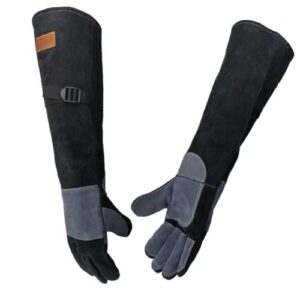
WZQH Leather Gloves offer a practical crossover between welding safety and reptile handling applications. Constructed from 1.2mm thick natural cowhide with reinforced double-layer finger palms, backs, and high-strength Kevlar stitching, these gloves provide superior leather durability and hand protection.
You’ll find these snake handling gloves offer puncture, scratch, and bite resistance while maintaining adequate finger dexterity during animal handling and safety procedures.
Available in medium, large, and X-large sizes, the adjustable cuffs secure your fit. However, glove sizing may run large for smaller hands, and you should expect some dexterity limitations compared to lighter-weight options.
| Best For | Animal handlers, veterinarians, and welders who need heavy-duty protection from bites, scratches, and heat in one versatile glove. |
|---|---|
| Material | Natural Cowhide Leather |
| Length | Not specified |
| Bite Resistance | Yes |
| Heat Resistance | Yes |
| Puncture Resistance | Yes |
| Care Instructions | Not specified |
| Additional Features |
|
- Thick 1.2mm cowhide with double-layered reinforcement and Kevlar stitching stands up to punctures, bites, and rough handling
- Works across multiple tasks—snake handling, welding, grilling, gardening—so you get more use out of one pair
- Adjustable cuffs keep the gloves secure and protect your forearms during extended-reach situations
- Sizing tends to run large, which can be a problem if you have smaller hands
- Thick leather limits finger dexterity, making delicate tasks harder to manage
- Strong leather smell out of the box may take time to air out
2. Rapicca Animal Handling Gloves
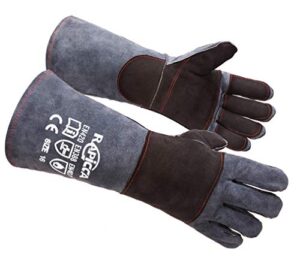
RAPICCA Animal Handling Gloves provide a different approach to hand protection, balancing finger dexterity with multi-layered puncture resistance through top grain leather construction and double reinforcement on finger palms and backs. These snake handling gloves extend 16 inches with 7.5-inch sleeves, offering adequate forearm coverage during reptile handling equipment procedures, and you’ll appreciate their cut, bite, heat, oil, and fire resistance across veterinary tools applications.
However, glove sizing tends large, potentially compromising animal safety and handling techniques for practitioners with smaller hands, and the thick cowhide may limit tactile sensitivity during delicate clinical procedures.
| Best For | Veterinarians, animal control staff, and reptile handlers who need extended forearm protection and multi-purpose durability but have medium to large hands. |
|---|---|
| Material | Top Grain Leather |
| Length | 16 inches |
| Bite Resistance | Yes |
| Heat Resistance | Yes |
| Puncture Resistance | Yes |
| Care Instructions | Not specified |
| Additional Features |
|
- Extended 16-inch length with reinforced finger areas provides solid protection against bites, scratches, and punctures from dogs, cats, birds, and reptiles
- Multi-functional design works beyond animal handling for gardening, grilling, and fireplace tasks thanks to heat, oil, and fire resistance
- Thick top grain leather construction delivers long-lasting durability and puncture resistance across various veterinary and handling scenarios
- Bulky fit limits fine motor skills and may be too large for people with smaller hands, reducing precision during delicate procedures
- Thick leather material sacrifices tactile sensitivity, making it harder to feel what you’re doing during clinical work
- Seams can be vulnerable to punctures from powerful bites if not positioned carefully during handling
3. Iclover Snake Bite Proof Gloves
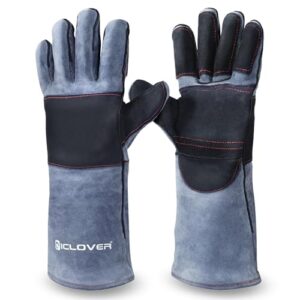
IC ICLOVER Snake Bite Proof Gloves offer 16-inch genuine cowhide split leather construction with insulated cotton fabric, providing adequate protection during venomous snake handling and reptile handling equipment operations. However, these gloves do not meet specialized PPE standards for chemical or welding applications.
The gloves feature Kevlar stitching that reinforces palms and fingers for enhanced bite resistance, while double leather padding creates barriers against scratches and punctures across snake handling procedures.
Glove materials include hand-wash-only construction, and sizing runs large—particularly the M and L options—which may compromise fit for practitioners with smaller hands during delicate veterinary restraint techniques.
| Best For | Reptile handlers, veterinary professionals, and animal trainers who need forearm protection when working with venomous snakes, aggressive birds, or animals with sharp claws. |
|---|---|
| Material | Cowhide Split Leather |
| Length | 16 inches |
| Bite Resistance | Yes |
| Heat Resistance | Yes |
| Puncture Resistance | Yes |
| Care Instructions | Hand Wash |
| Additional Features |
|
- 16-inch length protects your entire forearm during reptile handling, not just your hands
- Kevlar stitching and double leather padding create solid barriers against bites, scratches, and punctures
- Works for multiple tasks beyond snake handling—barbecue, gardening, and general animal care
- Sizing runs large, especially for people with smaller hands or slender builds
- Hand-wash-only care makes maintenance more time-consuming than machine-washable options
- Not rated for specialized protection like welding or chemical handling, so don’t use them outside basic animal work
4. Dly Bite Proof Leather Gloves
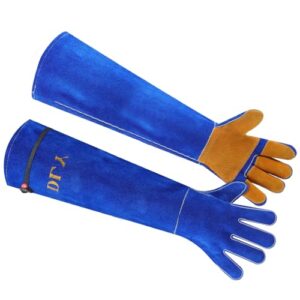
DLY Bite Proof Double Leather Gloves deliver adjustable forearm coverage ranging from 17.7 to 23.6 inches, allowing you to customize hand protection based on the species you’re restraining.
The 1.2mm thick AB grade reinforced double-layer cowhide construction provides bite resistance tested against small mammal and reptile dentition, while composite sponge lining maintains breathability during extended procedures.
However, glove sizing runs large in the fingers, which can reduce tactile precision when handling smaller snakes or administering venipuncture, and some users report color bleeding that may affect leather quality over time.
| Best For | Veterinary staff, animal control officers, and pet owners who regularly handle aggressive or unpredictable animals like feral cats, dogs, or reptiles and need durable protection during restraint or feeding. |
|---|---|
| Material | AB Grade Cowhide |
| Length | 17.7 or 23.6 inches |
| Bite Resistance | Yes |
| Heat Resistance | Yes |
| Puncture Resistance | Yes |
| Care Instructions | Hand Wash |
| Additional Features |
|
- Double-layer cowhide with reinforced fingers and palm offers solid bite resistance against small animal teeth and snake fangs, backed by puncture-resistant construction
- Adjustable cuffs and two size options (17.7″ and 23.6″) let you dial in forearm coverage depending on the animal you’re working with
- Composite sponge lining keeps your hands comfortable during longer sessions, plus the gloves handle heat and oil so you can use them for welding or grilling too
- Fingers run large and stiff, which makes it tricky to grip smaller animals or perform delicate tasks like giving injections
- Some users noticed the color bleeds or runs after washing, raising questions about long-term durability
- Thickness and stiffness might feel bulky if you’re used to lighter gloves, and there’s limited info on the sourcing of the cowhide
5. Surfante Animal Handling Gloves
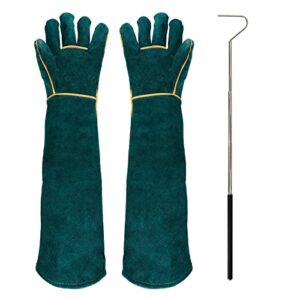
Surfante Bite Proof Animal Handling Gloves extend 23 inches along the forearm, providing arm protection that matches the striking range of midsize venomous species during veterinary use. The thickened cowhide construction delivers heat, bite, and scratch resistance suitable for wildlife handling gloves applications, though glove sizing runs snug for clinicians with larger upper arms, which can restrict circulation during prolonged snake handling procedures.
The included retractable stainless steel snake hook adds value as supplementary snake handling tools, but field testing reveals the hook bends under force when capturing defensive colubrids, limiting its utility beyond display or educational demonstrations where hand safety remains paramount.
| Best For | Veterinary professionals and animal handlers working with midsize reptiles, birds, and small mammals who need extended forearm protection and a basic hook for light-duty tasks. |
|---|---|
| Material | Thickened Cowhide |
| Length | 23 inches |
| Bite Resistance | Yes |
| Heat Resistance | Yes |
| Puncture Resistance | Not specified |
| Care Instructions | Not specified |
| Additional Features |
|
- 23-inch sleeves cover the forearm up to the striking range of midsize venomous snakes, offering more protection than standard gloves
- Thickened cowhide resists bites, scratches, and heat, making them versatile for wildlife handling and household tasks like welding or grilling
- Comes with a retractable stainless steel snake hook as a bonus tool for display or educational use
- Sizing runs snug, especially for users with larger hands or upper arms, which can restrict circulation during extended wear
- The included snake hook bends under force and isn’t sturdy enough for handling large or defensive snakes
- May not provide adequate protection against larger reptiles or animals with thicker teeth
6. Bite Proof Animal Handling Gloves
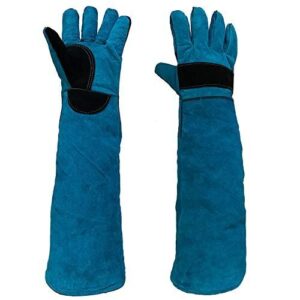
These Bite Proof Animal Handling Gloves feature 23.7-inch sleeves constructed from cowhide leather reinforced with Kevlar stitching, providing forearm coverage you need when restraining defensive reptiles in clinical settings.
The double-layer palm design enhances bite resistance against puncture forces from venomous snake fangs, though some veterinarians report quality control inconsistencies affecting protective performance.
Hand-wash maintenance preserves the leather’s integrity, and the manufacturer backs these animal handling gloves with a 90-day satisfaction guarantee covering defects in materials or construction.
| Best For | Veterinarians, animal control officers, and pet owners who regularly handle aggressive or defensive animals like snakes, cats, and dogs. |
|---|---|
| Material | Cowhide Leather |
| Length | 23.7 inches |
| Bite Resistance | Yes |
| Heat Resistance | Yes |
| Puncture Resistance | Not specified |
| Care Instructions | Hand Wash |
| Additional Features |
|
- 23.7-inch sleeves made from Kevlar-reinforced cowhide provide full forearm protection during high-risk animal restraint
- Double-layer leather construction offers reliable bite resistance against puncture forces from fangs and sharp teeth
- Heat-resistant and flame-retardant materials make these gloves versatile for grilling, camping, and other outdoor tasks beyond animal handling
- Quality control issues reported by multiple users, with some receiving defective products that failed to provide adequate protection
- Not completely bite-proof—several customers have been bitten through the gloves during use
- Hand-wash only maintenance requirement makes cleaning less convenient, though some users report machine washing success
Professional Applications in Veterinary Practice
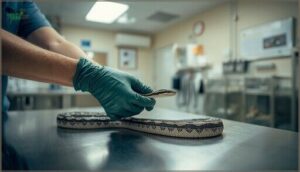
Snake handling gloves aren’t just protective gear—they’re essential tools that serve specific purposes across different veterinary and animal care environments.
You’ll find these gloves in settings ranging from emergency wildlife calls to routine clinic examinations, each demanding different balances of protection, mobility, and specialized features.
Understanding where and how professionals apply these gloves helps you choose the right model for your particular field work or clinical practice.
Safe Handling of Snakes and Reptiles
When you’re working with snakes in clinical settings, proper restraint isn’t just about protection—it’s about minimizing stress for both you and the animal. Species identification informs handling techniques, ensuring reptile behavior guides your approach to animal safety rather than forcing compliance through excessive restraint.
Snake handling gloves like Venom Defender gloves and other animal handling gloves support safe reptile handling by reducing snake bite prevention risks through documented puncture resistance, while your technique determines the real outcome.
Use in Wildlife Rescue and Animal Control
You’ll encounter unpredictable conditions during rescue operations, where animal safety depends on quick decisions and reliable reptile handling equipment.
Field protocols emphasize bite protection when you’re restraining stressed snakes on uneven terrain, and animal handling gloves with extended cuffs reduce forearm exposure during wildlife handling.
Grip-enhanced designs improve snake restraint control, while Venom Defender gloves and similar options meet certification standards for field-based animal safety requirements.
Applications in Zoos, Clinics, and Breeding Facilities
You’ll find snake handling protocols differ across zoos, clinics, and breeding facilities, yet each setting demands puncture-resistant gloves with forearm coverage to protect staff during routine reptile handling and facility management tasks:
- Zoo Safety: Enclosure maintenance and routine inspections require Venom Defender gloves with extended cuffs to minimize bite risk during wildlife handling.
- Clinical Protocols: Veterinary examinations and venipuncture procedures rely on certified gloves balancing dexterity with protection.
- Breeding Methods: Daily husbandry and health checks during breeding season demand reinforced, double-layer gloves for extended wear.
Balancing Dexterity With Protection in Clinical Settings
You’ll navigate a measurable tradeoff when selecting glove material for clinical tasks: thicker protective layers and reinforced personal protective equipment reduce tactile sensitivity by more than 20 percent on standardized dexterity tests.
Yet Venom Defender gloves and engineered animal handling gloves now incorporate localized Kevlar reinforcements and textured grip surfaces that preserve finger mobility during snake handling while maintaining ANSI level 5 puncture resistance in protective clothing and gear.
Maintenance, Durability, and User Feedback

Proper care extends the lifespan of your snake handling gloves while maintaining their protective integrity. Most manufacturers recommend wiping them clean with a damp cloth before hanging them to dry, avoiding machine washing or drying that can compromise the leather and Kevlar construction.
Many professional-grade gloves come backed by warranties ranging from 90-day satisfaction guarantees to five-year manufacturer coverage, reflecting the durability standards expected in veterinary applications.
Feedback from veterinarians, zoo workers, and reptile handlers consistently highlights how specific glove models perform in real-world scenarios, offering insights into comfort during extended wear, bite resistance with venomous species, and overall value for clinical or field use.
Cleaning and Care Tips for Longevity
After each use, wipe your gloves clean with a damp cloth to remove saliva, scales, and debris, then hang them to dry away from direct heat sources that can crack leather or degrade Kevlar fibers.
Hand washing with mild soap preserves the integrity of reinforced stitching and SuperFabric layers, while regular leather conditioning maintains flexibility without compromising puncture resistance, ensuring your protective gear remains reliable during critical animal handling procedures.
Warranty and Satisfaction Guarantees
Most manufacturers back their snake handling gloves with 90-day replacement guarantees or full refunds for defective products, while premium brands like Vet-Pro Trapper extend protection to five years, covering structural failures in leather, Kevlar stitching, and reinforced construction that compromises your safety during venomous reptile procedures.
Effective warranty claims require:
- Documented defects through product reviews and photos
- Proof of purchase for refund options processing
- Direct customer support contact within specified timeframes
Venom Defender gloves and animal handling gloves consistently achieve high satisfaction rates when return policies address legitimate manufacturing failures.
Insights From Veterinary Professionals and Institutions
When the American Veterinary Medical Association lists gloves as core PPE for veterinarians, you’re seeing institutional standards that prioritize risk assessment over blind reliance on equipment. Professional training emphasizes that thick animal handling gloves reduce tactile feedback, potentially increasing injury risk to snakes during restraint. Venom Defender gloves address this by balancing puncture resistance with dexterity, though veterinary guidance stresses they’re supplementary to proper handling techniques.
| Guidance Source | Primary Safety Recommendation | Role of Snake Handling Gloves |
|---|---|---|
| AVMA Standards | Training in proper restraint techniques | Core PPE component, not primary protection |
| University Protocols | Species-specific handling with adequate staff | Secondary defense requiring trained use |
| Wildlife Rehabilitation | Risk-based PPE selection with daily sanitation | Task-specific protection within broader system |
| Veterinary Journals | Preservation of tactile control for animal welfare | Discouraged when thickness compromises patient safety |
Customer Testimonials and Product Recommendations
Veterinary technicians at Kalamazoo Animal Hospital and Peak City Veterinary Hospital provide testimonials highlighting ArmOR Hand gloves’ effectiveness against fractious cat bites and raptor talons.
Product reviews consistently rank RAPICCA and WZQH models among top-rated options for snake handling.
Customer feedback emphasizes that Venom Defender and Surfante Bite Proof Animal Handling Gloves offer sturdy puncture resistance, though recommendation trends favor models balancing forearm coverage with maintained dexterity for clinical examinations.
Frequently Asked Questions (FAQs)
Can snake handling gloves be used for other animals?
Yes, these gloves protect you across species—cats, dogs, birds of prey, rabbits, and small mammals all benefit from the same bite and scratch resistance, making them adaptable tools for multi-purpose veterinary work.
How do you choose the right glove size?
To select your glove size, measure your hand circumference around the palm at the metacarpal joints and hand length from wrist to middle fingertip, then consult the manufacturer’s sizing chart for proper fit.
Are these gloves suitable for handling venomous snakes?
While some gloves offer puncture resistance and venom defense, they’re one piece of your snake safety puzzle—pair them with proper handling techniques, safety protocols, and regular inspections to protect against venomous snakes effectively.
Do thicker gloves reduce tactile sensitivity during examinations?
Thicker protective materials and double-layer padding reduce tactile sensitivity during examinations, requiring you to balance bite-resistant materials with hand dexterity.
Thinner glove construction preserves sensory feedback while maintaining personal protective equipment standards for snake safety.
Conclusion
An ounce of prevention is worth a pound of cure, especially when that cure involves antivenin and emergency transport. Your choice of snake handling gloves for veterinarians directly determines whether you can confidently perform examinations on venomous species or hesitate at critical moments.
The six options reviewed here offer proven puncture resistance, forearm coverage, and dexterity across different clinical scenarios—giving you the protection that turns high-risk procedures into controlled, professional interactions.
- https://snakeprofessional.com/products/venom-defender-snake-gloves
- https://www.macmor.com/blog/what-you-need-to-know-about-puncture-resistant-gloves-ff
- https://www.rapicca.com/products/rapicca-animal-handling-gloves-bite-proof-kevlar-reinforced-leather-padding-dog-cat-scratch-bird-handling-falcon-gloves-grabbing-reptile-squirrel-snake-bite-22in
- https://snakebootguide.com/snake-proof-gloves/
- http://www.nature-images.eu/contents/articles/gloves/index.html