This site is supported by our readers. We may earn a commission, at no cost to you, if you purchase through links.
Your snake hasn’t eaten in weeks, and the thermometer reads 68°F. You’ve checked for illness, tried different prey, adjusted the schedule—nothing works. Here’s what most snake owners don’t realize: winter feeding refusal isn’t always a problem to fix.
Many species naturally reduce or halt feeding when temperatures drop, even in captivity. This biological response protects them from digestive complications during periods of reduced metabolic activity.
However, distinguishing between normal seasonal fasting and a husbandry issue requires understanding your snake’s specific needs. Temperature inadequacies, stress factors, and species-dependent patterns all influence whether your snake’s food refusal signals a natural cycle or demands immediate intervention.
Table Of Contents
Key Takeaways
- Many snake species naturally reduce or stop eating during winter through brumation, a biological response that slows metabolism and protects against digestive complications when temperatures drop below optimal ranges.
- Environmental factors—particularly maintaining proper temperature gradients (26-32°C warm zones, 22-28°C cool zones), humidity levels, and consistent 12-14 hour lighting cycles—directly control your snake’s ability to digest food and trigger normal feeding behavior.
- Distinguish between normal seasonal fasting and health emergencies by monitoring for warning signs like persistent lethargy, weight loss, respiratory discharge, or feeding refusal extending beyond 2-3 weeks, which require immediate veterinary consultation.
- Accurate record-keeping of feeding attempts, enclosure conditions, weight trends, and shedding cycles transforms random observations into identifiable patterns that separate natural winter behavior from genuine husbandry problems requiring intervention.
Why Snakes Refuse Food in Winter
Winter feeding refusal often catches snake owners off guard, but it’s rarely a sign of trouble. Your snake’s appetite naturally declines when temperatures drop and daylight hours shorten, mimicking patterns from their wild ancestors.
Understanding why this happens starts with recognizing three key factors that drive winter fasting behavior.
Natural Seasonal Fasting Behaviors
Many snakes naturally reduce food intake when temperatures drop—a phenomenon called brumation. During this winter dormancy, your snake’s metabolic slowdown triggers seasonal fasting cycles that can last weeks or months. This natural fasting represents a normal physiological response, not illness.
Winter anorexia occurs because:
- Cold temperature suppresses digestive enzyme activity
- Brumation effects reduce energy requirements
- Feeding refusal protects against undigested prey complications.
Understanding language patterns can help explain complex biological behaviors.
Species-Specific Winter Feeding Patterns
Your snake’s winter behavior depends heavily on its origins. Temperate species like garter snakes halt feeding entirely during cold climate adaptations, relying on stored energy through brumation effects. Tropical pythons show irregular winter feeding cycles with less dramatic seasonal diet adjustments. Species metabolism varies markedly:
Regular feeding schedules help you track these seasonal changes, and maintaining a consistent adult snake feeding routine makes it easier to spot when your snake’s appetite naturally shifts.
Understanding these patterns and using scientific study methods prevents unnecessary concern about reptile nutrition.
| Snake Type | Winter Anorexia Pattern |
|---|---|
| Temperate (Rat Snakes) | Complete feeding cessation for 2-4 months |
| Tropical (Ball Pythons) | Reduced intake with sporadic meals |
| Desert (Kingsnakes) | Temperature-dependent feeding windows |
Age and Life Stage Influences
Growth patterns shift dramatically as your snake matures. Juvenile animals maintain higher metabolic rates, requiring frequent meals even during winter months. Adults often extend fasting periods due to reduced energy demands—age-related feeding behavior you’ll notice as developmental stages progress.
Hatchlings need smaller prey matched to their gape size, while mature specimens tolerate longer winter anorexia periods. Understanding these age factors prevents panic when feeding frequency naturally declines with reptile care experience.
Temperature plays a major role too—improper feeding during cool periods can lead to regurgitation or prey size issues that keepers often misinterpret as overfeeding.
Environmental Factors Impacting Winter Appetite

Your snake’s enclosure conditions directly control its ability to digest food and maintain normal metabolic function during winter months. Even minor fluctuations in temperature, humidity, or lighting can trigger feeding refusal that mimics natural hibernation responses.
Understanding these three environmental factors will help you distinguish between normal seasonal behavior and husbandry problems that require immediate correction.
Temperature Drops and Thermoregulation
When ambient temperature falls below your snake’s preferred range, its entire system shifts into energy-saving mode. This metabolic slowdown directly suppresses appetite—a survival mechanism hardwired into their physiology. Cold stress response triggers winter anorexia even in captive specimens.
Beyond temperature and shedding cycles, seasonal feeding patterns also influence how often your snake accepts meals throughout the year.
- Thermoregulation strategies rely on temperature gradients within the enclosure
- Digestive enzyme activity decreases as core body temperature drops
- Winter feeding cues are suppressed when basking zones fail to reach ideal heat
Humidity Levels During Colder Months
During colder months, central heating systems dry indoor air to 40-60 percent relative humidity, creating challenges for proper Snake Hydration and Winter Feeding success. You’ll need strict humidity control through substrate selection and humid microclimates within hides. Species requiring higher humidity levels show feeding strikes when conditions drop below their comfort zone—monitor multiple enclosure points with hygrometers to maintain cold climate stability.
Maintaining proper humidity while avoiding overfeeding is essential, as inactive winter snakes are prone to weight gain and obesity issues when their metabolism naturally slows.
| Humidity Issue | Impact on Feeding |
|---|---|
| Desiccated air from heating | Respiratory irritation, appetite suppression |
| Below species-specific range | Stress-induced feeding refusal |
| Inadequate moisture monitoring | Shedding complications, feeding disruption |
Lighting and Photoperiod Effects
Beyond temperature, lighting cycles profoundly affect your snake’s Circadian Rhythm and winter feeding behavior. Incorrect Photoperiod Cycles create conflicting biological signals that suppress appetite through cortisol elevation and disrupted Seasonal Adaptation patterns.
If your snake consistently refuses meals during darker months, understanding the full scope of snake ownership challenges helps you distinguish normal seasonal patterns from husbandry issues requiring intervention.
- Extended bright light exposure without proper Thermal Lighting cues confuses feeding motivation
- Light Spectrum quality alters thermoregulation preferences, impacting meal acceptance
- Artificial photoperiods misaligned with natural cycles represent common stress factors
- Species-specific lighting requirements prevent feeding refusal when properly matched
Common Husbandry Mistakes Leading to Feeding Strikes
Even experienced snake owners can unknowingly create conditions that trigger winter feeding strikes. Small errors in your husbandry practices often compound during colder months, turning a normally reliable eater into a persistent refusal case.
Let’s examine the most common mistakes that disrupt your snake’s willingness to feed.
Improper Enclosure Temperatures
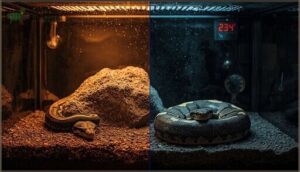
Temperature gradients matter more than you might expect when your snake won’t eat. Inadequate basking temperatures impair digestion and metabolic rates, while prolonged cooling below species-appropriate levels suppresses feeding drive entirely.
Thermal cycling between warm and cool zones helps digestion issues after meals. Inconsistent day-night temperature fluctuations disrupt natural feeding cues.
Improper husbandry, particularly with enclosure heating, frequently causes winter feeding refusal.
Inadequate Hiding Spaces and Stress
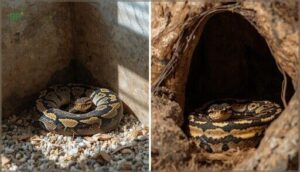
Limited hiding spots create chronic stress that directly suppresses your snake’s appetite. When your snake won’t eat, inadequate habitat often deserves blame—insufficient refuges keep cortisol-like stress responses elevated, disrupting normal feeding cycles.
- A proper hide box placed in both warm and cool zones aids thermoregulation while reducing environmental stress
- Stress reduction through environmental enrichment improves feeding reliability across colubrid species
- Refuge provision away from perceived threats encourages natural snake behavior and prey acceptance
Disrupted Feeding Schedules
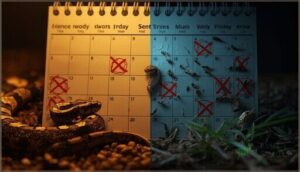
Inconsistent meal frequency disrupts your snake’s feeding rhythms and appetite stimulation, especially during winter anorexia periods. When your snake won’t eat, erratic feeding schedules often contribute—irregular prey presentation interferes with hunger cues and metabolic preparation.
Maintain a stable weekly feeding schedule aligned with your species’ digestion rate, documenting each attempt to detect patterns that inform adjustments and prevent feeding refusal.
Inappropriate Prey Presentation
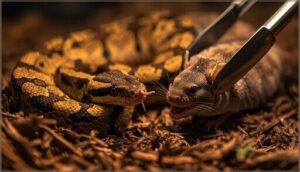
Prey size matters more than you might think—an oversized rodent creates feeding refusal, while undersized prey fails to trigger predatory responses.
Your snake won’t eat when presentation techniques feel threatening or unnatural. Maintain consistent feeding cues by presenting prey at appropriate temperatures using identical methods each time.
Avoid excessive handling, bright lighting, or abrupt movements that disrupt snake preference and cause feeding strikes.
Health Concerns Linked to Winter Feeding Refusal
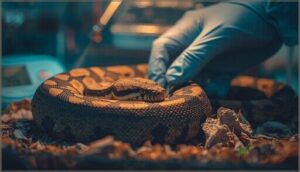
Not every winter feeding refusal stems from natural seasonal fasting. Sometimes your snake’s appetite loss signals an underlying health problem that requires immediate attention.
You’ll need to distinguish between normal behavior and genuine medical concerns to protect your animal’s wellbeing.
Illnesses That Suppress Appetite
Illness presents a serious barrier when your snake won’t eat during winter. Viral infections and bacterial septicemia create systemic weakness that eliminates appetite entirely. Parasite burdens drain energy reserves, while respiratory infections cause mouth rot and breathing difficulties. Watch for these warning signs:
- Excessive mucus around nostrils or mouth
- Lethargy paired with weight loss
- Regurgitation or abnormal stool consistency
Metabolic disease and toxicosis symptoms also trigger profound appetite loss requiring immediate veterinary attention.
Shedding and Feeding Behavior
Your snake’s shedding cycle directly impacts feeding triggers and appetite signals. During ecdysis patterns, cloudy eyes and dull skin often suppress appetite for 7-14 days. Observe these physiological changes:
| Shed Phase | Feeding Response |
|---|---|
| Pre-shed (eyes cloudy) | Reduced appetite |
| Active shedding | Refuses food |
| Post-shed (1-2 days) | Appetite returns |
| Normal cycle | Regular feeding |
| Incomplete shed | Continued refusal |
Monitor your snake’s weight throughout winter to distinguish normal shedding-related pauses from genuine snake nutrition concerns.
Signs of Stress Versus Sickness
After your snake sheds, watch for behavioral changes that reveal more than seasonal fasting. Stress indicators like persistent hiding differ from physiological signs of illness—lethargy paired with appetite loss, abnormal respiration, or nasal discharge.
Pain detection requires attention to defensive strikes during handling or rigid coiling.
Health monitoring through weekly weigh-ins helps distinguish whether your snake won’t eat from temporary stress or genuine sickness requiring veterinary care.
Solutions for Winter Feeding Problems
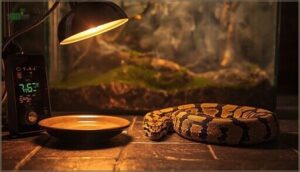
When your snake refuses food during winter, you don’t have to wait helplessly. Several practical strategies can restore your pet’s appetite and guarantee its wellbeing through the colder months.
The following approaches address environmental conditions, stress reduction, veterinary consultation, and tracking methods to help you navigate this common seasonal challenge.
Adjusting Enclosure Conditions
Temperature gradients form the foundation of proper enclosure design. Maintain warm zones at 26–32°C and cooler areas at 22–28°C to support thermoregulation.
Monitor humidity levels with reliable hygrometers, targeting ranges appropriate for your snake’s species.
Establish consistent lighting cycles—12–14 hours of light, 10–12 hours dark—to regulate metabolic function.
These environmental conditions directly influence winter feeding behavior and overall health.
Minimizing Stress and Handling
Cut back on handling during winter months to prevent stress-related feeding refusal. Use gentle support across the snake’s mid-body, avoiding sudden movements that trigger defensive responses.
Create calm environments with minimal noise and visual disturbances, allowing your snake acclimation time after any interaction. These handling practices reduce stress indicators like rapid breathing and support normal animal behavior.
Consult a reptile veterinarian if stress signs persist despite adjustments.
When to Consult a Reptile Veterinarian
Immediately contact a reptile veterinarian if your snake won’t eat despite addressing environmental factors. Veterinary care becomes critical when feeding refusal extends beyond 2–3 weeks or you notice emergency signs indicating serious reptile health concerns.
- Persistent lethargy, weight loss, or regurgitation alongside feeding disorders
- Nasal discharge, mouth rot, or visible lesions affecting snake behavior
- Abnormal feces or bloating suggesting internal complications
- Continued refusal after successful shedding cycles
Monitoring and Record-Keeping Strategies
Accurate feeding logs transform guesswork into data-driven care when your snake won’t eat. Record every refusal alongside enclosure temperature gradients, prey type, and weekly weights. Trend tracking reveals patterns invisible to casual observation, helping you distinguish normal winter fasting from genuine feeding refusal requiring intervention.
Detailed feeding logs turn random observations into patterns that separate normal winter fasting from real health problems
| Record Category | What to Track |
|---|---|
| Feeding Logs | Date, prey size, acceptance/refusal |
| Health Monitoring | Weight, body condition, behavior changes |
| Environmental Data | Temperature gradients, humidity levels |
| Snake Health Events | Shedding cycles, veterinary visits |
| Data Analysis Notes | Patterns, thresholds, corrective actions |
Review records quarterly to verify your snake’s health remains stable throughout winter.
Frequently Asked Questions (FAQs)
Can snakes survive entire winter without eating?
Yes, many snakes can survive winter without eating through brumation, a dormancy state that dramatically slows metabolism.
Healthy individuals rely on stored fat reserves, tolerating several months of fasting with minimal risk when conditions remain stable.
Should I force-feed my hibernating snake?
Never force-feed a hibernating snake. Brumation care requires respecting natural winter anorexia—forcefeeding disrupts essential metabolic processes and risks serious injury.
If your snake won’t eat during hibernation patterns, seek veterinary guidance immediately.
Do wild snakes eat differently than captive ones?
Wild snakes hunt opportunistically based on prey availability, while captive feeding habits involve consistent schedules and standardized prey.
Environmental influences shape prey selection strategies differently, affecting feeding behavior comparisons between wild and captive populations.
Will winter fasting cause permanent metabolic damage?
Healthy snakes mobilize energy reserves during winter fasting without lasting harm. Metabolic recovery occurs when proper refeeding strategies resume feeding gradually. Hormonal changes reverse naturally, making permanent damage unlikely with appropriate temperature control and veterinary monitoring.
How do I restart feeding after winter ends?
Gradually reintroduce feeding by offering appropriately sized prey during peak temperature hours. Start with a 7-10 day feeding schedule once appetite returns, monitoring weight and adjusting prey size accordingly throughout this critical post-winter shift.
Conclusion
Your snake’s empty food dish doesn’t always signal danger—but it might. The difference between natural winter fasting and a critical health issue often comes down to precise temperature readings, species-specific knowledge, and careful observation.
When your snake refuses food in winter, you’re not helpless. You have the tools: thermometers, hygrometers, veterinary expertise. Use them methodically. Document patterns. Trust the data, not assumptions. Your snake’s survival depends on distinguishing normal biology from genuine crisis.
- https://academichelpexpress.blog/2024/08/please-use-the-bulleted-points-and-the-rubric-below-to-guide-your-work-your-pa/
- https://www.onelook.com/?loc=olthes1&w=subpoint
- https://www.sciencedirect.com/science/article/pii/S0749208123000268
- https://pmc.ncbi.nlm.nih.gov/articles/instance/9553038/bin/pone.0275964.s005.docx
- https://www.scribd.com/document/356795007/Research-Methods-Knowledge-Base