This site is supported by our readers. We may earn a commission, at no cost to you, if you purchase through links.

A snake that won’t shed completely isn’t just having a bad day—retained skin can cut off circulation, damage eyes, and open the door to serious infections if you don’t catch it early.
Most keepers assume their snake is healthy right up until they notice a dull, patchy appearance that just won’t clear up.
The truth is stuck shed usually signals something off in the enclosure long before it becomes a crisis.
Humidity, nutrition, hydration, stress—any one of these can quietly derail a normal shed cycle.
Knowing how to spot the warning signs and respond with the right snake stuck shed treatment makes the difference between a quick fix and an emergency vet visit.
Table Of Contents
Key Takeaways
- Low humidity is the leading cause of stuck shed, so keeping your enclosure at the right moisture level—with a dedicated humidity hide—prevents most problems before they start.
- A 15–20 minute lukewarm soak (80–85°F) followed by gentle damp-cloth stroking is your safest first move when your snake can’t finish shedding on its own.
- Retained eye caps can cause permanent blindness if left untreated, so don’t wait on veterinary help when shed clings around your snake’s eyes.
- Recurring stuck shed despite correct humidity usually signals a deeper issue—vitamin deficiency, parasites, or thyroid imbalance—and warrants a vet visit sooner rather than later.
Causes of Stuck Shed in Snakes
Stuck shed rarely happens out of nowhere — something in your snake’s environment or health is usually at the root of it. A few key factors tend to show up again and again in cases like these.
Understanding those root causes is the first step — this guide to incomplete snake shedding and stuck shed removal breaks down exactly what to look for and how to fix it.
Here’s what most commonly throws off a snake’s shedding cycle.
Low Humidity and Improper Enclosure Conditions
Most shedding issues trace back to one culprit: enclosure itself. Here’s what commonly goes wrong:
- Screen Top Management failures drop humidity to 30% without covers
- Poor Substrate Moisture from aspen shavings can’t hold the 50% needed
- Ventilation Balance issues evaporate moisture faster than you’d expect
- Temperature‑Humidity Interaction problems — basking at 100°F strips skin dry
- Missing Humidity Hide Design leaves snakes without that critical 80–85% microclimate
improper humidity levels are a common cause of dysecdysis.
Poor Nutrition and Dehydration
Beyond the enclosure itself, what your snake eats — and drinks — matters more than most owners realize.
Vitamin A deficiency causes skin cells to thicken and stick, while Calcium Deficiency disrupts scale regeneration entirely. Protein Deficiency slows skin growth, producing fragmented sheds.
Dehydration makes old skin brittle and nearly impossible to remove.
Simple fixes like prey dusting and fresh daily water transform reptile shedding outcomes substantially.
Increasing enclosure humidity can aid rehydration.
Illness, Stress, and Old Age
Your snake’s overall health plays a bigger role in reptile shedding issues than most owners expect.
Respiratory Infections block smooth ecdysis, while Mite Infestations irritate skin, triggering dysecdysis. Chronic stress causes Immune Suppression, raising dysecdysis risk substantially.
Scale rot and Hormonal Imbalance, including Age‑Related Hypothyroidism in older snakes, further complicate sheds.
When snake health declines, veterinary advice isn’t optional — it’s your first call.
Species-Specific Shedding Challenges
Not every species plays by the same rules. Ball Python Humidity needs to hover around 60–70%, with spikes to 80% during the blue phase — skip that, and dysecdysis shows up fast.
Corn Snake Tolerance sits lower, around 40–60%.
Keeping moisture in that sweet spot is easier than you’d think—check out these corn snake humidity and shedding tips to avoid the dry-air drama altogether.
Boas shed more often due to rapid growth.
Kingsnake Patch Issues stem from dry glass tanks, while Retic Scale Thickness makes manual removal genuinely tricky.
Recognizing Signs of Stuck Shed
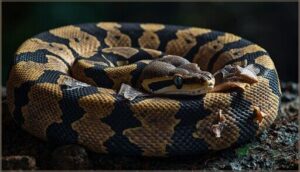
Catching a stuck shed early makes all the difference for snake’s comfort and health.
The good news is that your snake will usually tell you something’s off — you just need to know what to look for.
Here are the key signs that a shed isn’t going smoothly.
Retained Skin Patches
Retained skin patches are the clearest early warning sign of stuck shed. They tend to cluster on the tail tip, body rings, and belly scales — and that is where Patch Localization matters most.
Left alone, drying patches create Circulation Impact by constricting tissue, raising serious Infection Risk. Maintaining a Humidity Gradient and having Removal Tools ready makes all the difference.
Cloudy Eyes and Dull Appearance
When your snake’s eyes shift to a bluish‑gray haze, that’s pre‑shed eye cloudiness doing its job — lymphatic fluid is separating the old and new skin layers.
Skin dullness cues follow shortly after, with color change indicators fading across the body. These vision impairment effects are temporary, but eye cap retention after shedding signals a stuck shed problem needing prompt snake care.
Skin Irritation or Infection
When a stuck shed lingers, your snake’s skin can deteriorate from irritated to seriously infected quickly. Inflammation indicators like redness, puffiness, and fluid‑filled blisters signal bacterial growth taking hold — often within 24–48 hours.
Left unchecked, scale rot, necrotic tissue, and systemic illness follow. Catching these reptile shedding issues early means simpler blister management and avoids aggressive antibiotic protocols that prolonged snake health problems often demand.
Behavioral Changes and Decreased Appetite
Your snake’s behavior tells the real story when shedding goes wrong. Watch for these warning signs:
- Hiding Frequency spikes for days, paired with lethargy duration stretching 3–7 days and total appetite refusal
- Irritability Triggers like handling cause striking, rigid posture, and elevated tongue flick rate
- Weight Loss Trends of 5–10% signal prolonged stress
Trust your snake’s behavior — it’s your clearest pet owner guidance tool.
Step-by-Step Stuck Shed Treatment
Once you’ve spotted the signs of stuck shed, it’s time to actually do something about it. The good news is that most cases can be handled safely at home with the right approach.
Here’s what to do, step by step.
Safe Soaking Techniques
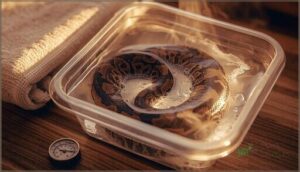
lukewarm soak is often the gentlest first step when snake shedding goes wrong. Keep the water temperature between 80–85°F — Container Choice matters here, so use a snug plastic tub with ventilation.
Soak Duration should run 15–20 minutes, with stress monitoring throughout. Towel Friction after soaking provides gentle assistance without pulling.
| Factor | Ideal Range | Why It Matters |
|---|---|---|
| Water Temperature | 80–85°F | Prevents overheating |
| Soak Duration | 15–20 min | Hydrates retained skin |
| Enclosure Humidity | 50–70% | Aids reptile shedding |
Gentle Manual Removal Methods
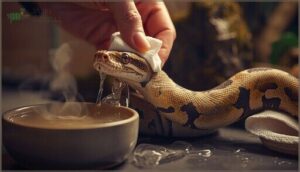
Once your snakes have had a proper lukewarm soak, gentle assistance is all it usually takes.
Try Damp Cloth Stroking first — run a soft cloth head to tail, letting light friction lift retained patches.
Finger Peeling works well for loose edges; peel slowly, never tug.
For Tail Tip Removal, use circular rolling motions.
Paper Towel Rubbing helps active snakes.
Avoid Eye Cap Handling without veterinary guidance.
Using Shedding Aids and Moisturizers
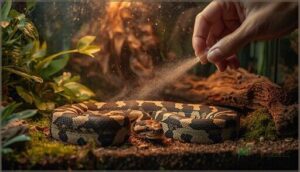
After gentle removal, a good shedding aid can do the heavy lifting on stubborn patches.
When choosing between oil and spray, sprays like Zoo Med’s glycerin-based formula win for species compatibility — especially with sensitive ball pythons. For application frequency, follow these steps:
- Apply spray directly to stuck areas
- Rub gently with clean fingers
- Target tails and backs specifically
- Combine with proper humidity levels for environmental synergy
Avoiding Common Mistakes During Treatment
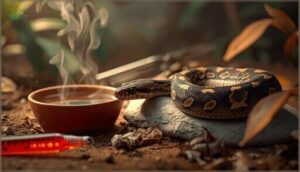
Even with the best tools in hand, a few missteps can make stuck shed worse.
Overheating water above 90°F burns sensitive skin, while inadequate soak time under 15 minutes won’t soften retained patches. Using tweezers near eye caps risks serious injury. Excessive handling stresses your snake further. Watch for hissing or striking — ignoring stress signals during reptile husbandry undermines every step of gentle assistance.
Preventing Stuck Shed in The Future

Once you’ve helped your snake through a rough shed, the real win is making sure it doesn’t happen again.
The good news is that most stuck shed problems come down to a handful of manageable factors in your snake’s environment. Here’s what to focus on going forward.
Maintaining Proper Humidity Levels
Keeping humidity levels right is one of the most reliable ways to prevent stuck shed before it starts.
Ball pythons need 50–60% daily, climbing to 70% during shedding. Use digital Humidity Monitoring Tools, check twice daily, and calibrate monthly.
Substrate Moisture Retention matters too — coconut fiber and cypress mulch hold moisture well.
For consistent Enclosure Humidity, Automated Misting Systems and smart Ventilation-Humidity Balance make reptile shedding far smoother year‑round.
Providing Humidity Hides and Water Access
Once humidity levels are dialed in, the next step is giving your snake a dedicated space to hold that moisture. A humidity hide — made from opaque Container Materials like plastic food storage bins — creates a microclimate perfect for reptile shedding.
- Hide Placement: Position on the warm side to boost evaporation naturally
- Moss Substrate: Layer damp sphagnum moss 1–2 inches deep, never dripping
- Bowl Size: Choose a bowl exceeding your snake’s mid-body width for soaking
- Access Position: Smooth entry edges prevent scale damage during shed removal
Regular Enclosure Cleaning and Monitoring
A clean snake enclosure isn’t just about appearances — it directly shapes how well your snake sheds.
Build a spot cleaning routine by removing waste daily and wiping water bowls every other day. Schedule deep cleans every four to six weeks, using disinfectant-safe products like chlorhexidine.
Regular hygrometer calibration keeps enclosure humidity accurate, making reptile husbandry and welfare far easier to manage.
Optimizing Nutrition and Health
Feeding your snake well is one of the most overlooked pieces of stuck shed prevention. Match prey size to your snake’s widest body section, and stick to a consistent schedule — juveniles every five to seven days, adults every one to two weeks.
Follow Body Condition Scoring monthly to catch slow weight changes. Schedule Parasite Screening annually, since hidden worms quietly drain nutrients before you notice anything wrong.
When to Seek Veterinary Assistance
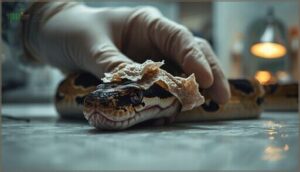
Home care goes a long way, but sometimes your snake needs more than a warm soak and a humid hide.
Knowing when to call a vet can make the difference between a quick fix and a serious health crisis.
Here are the key signs that it’s time to get a professional involved.
Persistent or Severe Stuck Shed
Some stuck shed cases go beyond what home treatment can fix.
Multi‑layer accumulation across three or more shed cycles resists soaking and needs veterinary intervention options like povidone‑iodine soaks or medicated baths.
Tail necrosis risk rises fast when constricting bands cut circulation for days.
Eye cap complications can permanently cloud vision.
Don’t wait — reptile health deteriorates quickly when enhanced humidity control alone isn’t enough.
Signs of Infection or Injury
Infection doesn’t announce itself loudly — it creeps in quietly. Watch for swelling redness around retained patches, discoloration patches turning brown or black, and oozing discharge with a foul odor.
A cloudy spectacle that lingers after shedding, painful behavior like flinching or biting, or signs of scale rot all signal that reptile health is declining fast. Don’t delay veterinary advice.
Underlying Health Problems
Sometimes stuck shed is just the tip of the iceberg. Conditions like Vitamin A Deficiency, Thyroid Imbalance, Fungal Infection, and Bacterial Septicemia all quietly sabotage reptile health from the inside out.
Stuck shed is often a symptom, not the problem — hidden conditions silently sabotage reptile health from within
Internal Parasites and Nutritional Deficiencies reduce nutrient absorption, while Hydration Issues and Scale Rot compound the damage.
Watch for these red flags:
- Recurring dysecdysis despite correct humidity
- Persistent lethargy or appetite loss
- Progressive Scale Rot under retained patches
Veterinary advice can identify these hidden culprits early.
Finding a Qualified Reptile Veterinarian
Not all vets are equal regarding reptile care. Look for certification verification — credentials like ABVP or ECZM signal real expertise in veterinary medicine and treatment.
Ask about experience metrics: how many snakes they treat weekly matters. Check facility equipment and referral networks. Resources like ARAV’s directory help you find a qualified reptile vet who truly understands snake shedding issues.
Frequently Asked Questions (FAQs)
How to help corn snakes with a stuck shed?
Helping your corn snake through a stuck shed starts with warm soaks, a moss hide, and steady humidity levels.
A proper humidity gradient, water dish size, and shedding spray make reptile shedding smoother every time.
Can stuck shed affect a snakes vision permanently?
Yes, retained spectacles from eye cap retention can cause permanent blindness. Without treatment, layers build up, triggering corneal ulcers and vision loss risk.
Prompt veterinary advice for reptiles keeps your snake’s sight intact.
How does shedding frequency change with age?
Hatchling shedding happens every 2–4 weeks, juvenile molting slows to monthly, and adult frequency drops to 3–6 times yearly. Senior decline means some snakes barely shed at all—growth-linked timing drives everything.
What role does lighting play in shedding health?
Lighting shapes reptile shedding more than most people realize.
A stable thermal gradient, UVB benefits, and photoperiod consistency all support healthy skin renewal, while light-induced stress or microclimate balance issues can quietly disrupt the entire process.
Can two snakes help each other shed safely?
Two snakes won’t help each other shed — mutual shedding myths aside, cohabitation risks like humidity hide competition and stress from crowding make stuck shed worse.
Solid reptile husbandry beats companionship every time.
Does shedding season vary by geographic origin?
Shedding season absolutely varies by geographic origin.
Temperate snakes follow seasonal brumation effects, pausing through winter. Tropical species shed year-round, with rainfall-triggered shedding peaks.
Latitude-driven timing shapes every reptile’s natural ecdysis cycle.
Conclusion
shed gone wrong can snowball from a dull patch into a full-blown health crisis faster than most keepers expect. A snake’s stuck shed treatment isn’t complicated, but it demands your attention before small problems become serious ones.
Fix the humidity, offer a warm soak, and handle your snake gently—your enclosure conditions tell the real story.
Get those right, and your snake won’t just survive each shed. It’ll thrive through every single one.
- https://vcahospitals.com/know-your-pet/snakes-problems
- https://www.furrycritter.com/pages/health/snakes/shedding_in_pieces.htm
- https://vetericyn.com/blogs/vetericyn/dysecdysis-in-reptiles-everything-you-need-to-know
- https://www.pets4homes.co.uk/pet-advice/retained-eye-caps-in-snakes-explained.html
- https://thetyedyediguana.com/blog/stuck-shed-why-it-happens-and-how-to-safely-help-your-reptile/