This site is supported by our readers. We may earn a commission, at no cost to you, if you purchase through links.
You can keep a snake in a studio apartment—provided you choose the right enclosure and set it up correctly. The challenge isn’t about square footage; it’s about vertical efficiency, proper environmental controls, and selecting a species that thrives in compact quarters. Ball pythons, rosy boas, and Kenyan sand boas don’t need sprawling estates—they need secure, well-maintained terrariums with precise temperature gradients and adequate hiding spots.
Small-space snake keeping demands strategic product selection: from moisture-retaining substrates that won’t require constant replacement to mesh screens that optimize airflow without sacrificing security. The five terrariums and accessories reviewed here address the specific constraints you’re working with—limited floor space, restricted access points, and the need for maintenance efficiency that won’t disrupt your living area.
Table Of Contents
Key Takeaways
- You can successfully keep a snake in a studio apartment by prioritizing vertical terrarium design, proper environmental controls, and species that thrive in compact enclosures like ball pythons, corn snakes, and rosy boas—space efficiency beats raw square footage.
- Small-space snake keeping demands strategic product selection including moisture-retaining substrates, secure mesh screens for ventilation, and bioactive supplements that maintain microfauna populations without constant replacement cycles or maintenance disruptions.
- Calculate minimum tank size by multiplying your snake’s full adult length by 1.5-2.0 gallons per inch, then add a 25% buffer and reassess every 3-6 months during growth periods to prevent stress and health complications from undersized housing.
- Compact terrariums require sharper environmental vigilance—maintain 4-6 air changes per hour for ventilation, perform daily spot-cleaning, and monitor temperature gradients within 2-3°C to prevent the rapid substrate fouling and respiratory issues that escalate faster in limited air volume.
Best Snake Terrariums for Small Spaces
Small spaces demand terrarium setups that prioritize vertical efficiency, secure closures, and manageable maintenance access—all without sacrificing the environmental precision your snake requires.
The following enclosures balance compact footprints with the ventilation, visibility, and escape-proof features necessary for long-term reptile welfare.
Each option tackles specific constraints you’ll face when working within tight room dimensions.
1. Zilla Reptile Terrarium Bedding Mix
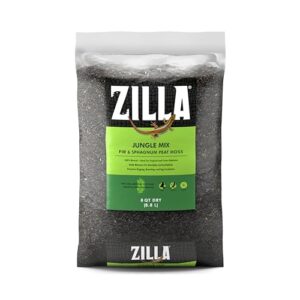
Zilla Reptile Terrarium Bedding Mix combines aged Douglas fir bark with sphagnum peat moss—absorbent, organic, and engineered for humidity control in compact snake terrariums. You’ll find it facilitates burrowing behaviors in corn snakes and ball pythons while maintaining bioactive substrate health in 10–20 gallon enclosures.
Rinse thoroughly before use to eliminate clay dust that risks respiratory irritation. Replace substrate every 4–6 weeks in small reptile enclosures to prevent mold accumulation and odor buildup. This substrate safety standard ensures your terrarium setup promotes natural snake behavior without compromising ventilation or terrarium maintenance protocols.
| Best For | Snake keepers with compact terrariums who want a natural, absorbent substrate that supports burrowing and humidity control for species like corn snakes and ball pythons. |
|---|---|
| Material Type | Organic bark/moss blend |
| Weight | 5.8 Pounds |
| Primary Use | Substrate for habitats |
| Natural/Organic | 100% organic |
| Color | Brown |
| Maintenance Required | Regular replacement |
| Additional Features |
|
- Highly absorbent organic blend maintains stable humidity and controls odor in small enclosures
- Soft texture encourages natural digging, nesting, and shedding behaviors
- Works well in bioactive setups and mimics forest floor conditions
- Contains clay dust that requires rinsing before use to prevent respiratory issues
- Some batches may include splinters or debris that need removal
- Needs replacement every 4–6 weeks in humid conditions to prevent mold buildup
2. Zoo Med Terrarium Mesh Screen
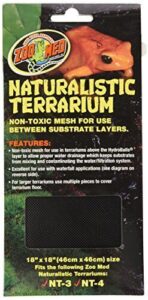
Once your substrate foundation is secure, proper ventilation systems become non-negotiable. The Zoo Med Terrarium Mesh Screen offers a lightweight metal construction, measuring 19 × 3 × 2 inches, designed to prevent snake escape while maintaining critical airflow in compact reptile enclosures.
You’ll install it atop standard Zoo Med frames with existing hardware, creating a physical barrier that regulates humidity without compromising visual access. Inspect quarterly for bent edges or corrosion that could compromise terrarium setup integrity.
This screen installation assists terrarium maintenance protocols by reducing condensation buildup and ensuring your snake care and maintenance standards remain uncompromised in space-limited environments.
| Best For | Snake owners using Zoo Med enclosures who need reliable ventilation and escape prevention in compact setups. |
|---|---|
| Material Type | Plastic mesh |
| Weight | 0.04 Kilograms |
| Primary Use | Drainage layer separator |
| Natural/Organic | Synthetic material |
| Color | Black |
| Maintenance Required | Cut to size |
| Additional Features |
|
- Lightweight metal mesh provides airflow while preventing escapes and maintaining visual access to your snake
- Fits standard Zoo Med frames with existing hardware for quick, secure installation
- Reduces condensation and regulates humidity without compromising enclosure integrity
- Only compatible with specific Zoo Med models, requiring verification before purchase
- Requires quarterly inspections for rust, bent edges, or loose mounting that could create gaps
- Some users report gaps on sides or middle that may not cover substrate completely
3. NOW Foods Brewers Yeast Powder
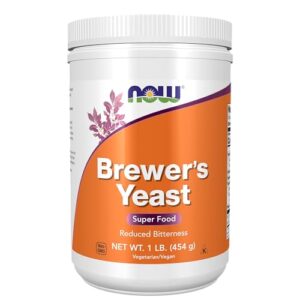
Beyond ventilation hardware, your bioactive substrate requires microbial fuel—that’s where NOW Foods Brewers Yeast Powder enters terrarium setup protocols. This debittered Saccharomyces cerevisiae powder, packaged in 16-ounce containers, delivers B-vitamins and approximately 2,000–3,000 mg protein per 100 grams to support springtail and isopod populations within snake terrariums.
You’ll introduce 1–2 tablespoons sparingly across leaf litter zones, monitoring for yeast allergens in sensitive species. Store sealed in cool, dry conditions to prevent caking.
Yeast benefits include enhanced cleanup crew activity, though supplement safety demands veterinary consultation before reptile nutrition modifications—human-grade formulations lack standardization for humidity control environments or temperature gradients.
| Best For | Reptile keepers maintaining bioactive terrariums who want an affordable way to boost their cleanup crew (springtails and isopods) with a B-vitamin and protein-rich supplement. |
|---|---|
| Material Type | Powder supplement |
| Weight | 1 Pound |
| Primary Use | Nutritional supplement |
| Natural/Organic | Natural cultivation |
| Color | Natural tan |
| Maintenance Required | Store airtight |
| Additional Features |
|
- Delivers 2,000–3,000 mg of protein per 100g plus B-complex vitamins to fuel springtail and isopod activity in bioactive setups
- Shelf-stable powder form allows precise dosing and doesn’t require refrigeration, making it practical for terrarium use
- Inexpensive compared to specialized reptile supplements and comes in a 16-ounce container that lasts through multiple applications
- Human-grade formulation lacks standardization for reptile environments, so nutrient content can vary between batches
- May trigger yeast allergies in sensitive species and can cause gastrointestinal upset if overused without veterinary guidance
- Bitter taste and smell can be unpleasant, and the product may cake if not stored properly in cool, dry conditions
4. Live Oak Leaf Litter Substrate
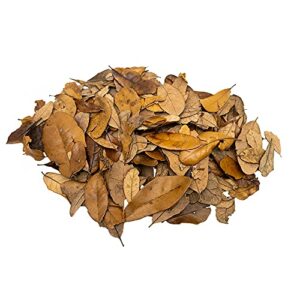
Once your cleanup crew gets fed, they need somewhere to thrive—Live Oak Leaf Litter Substrate transforms bioactive substrate zones into layered microfauna support systems. Chemical-free oak leaves, measuring approximately 10×9×2.5 inches and covering 1.5 square feet at one-inch depth, shelter springtails while decomposing slowly to maintain humidity control and substrate sterilization protocols.
Boil leaves for 15–20 minutes before introducing them into snake terrariums; this kills pathogens without compromising terrarium design integrity. Replace every 1–2 months in bioactive enrichment setups, monitoring for mold in compact terrarium setup environments with limited airflow.
| Best For | Snake keepers running bioactive terrariums who want natural substrate that feeds their cleanup crew while creating hiding spots and keeping humidity steady. |
|---|---|
| Material Type | Natural oak leaves |
| Weight | 0.15 Kilograms |
| Primary Use | Terrarium leaf litter |
| Natural/Organic | Chemical-free natural |
| Color | Natural brown |
| Maintenance Required | Decomposes naturally |
| Additional Features |
|
- Decomposes slowly so you’re not replacing it constantly, and it feeds springtails and isopods while breaking down into nutrients for your substrate
- Chemical-free oak leaves are safe for reptiles and amphibians, plus they trap moisture to create those humid microclimates some species need
- Adds natural shelter and visual barriers that help reduce stress by mimicking what snakes would find in the wild
- Some buyers got mostly small leaf pieces instead of full leaves, which doesn’t work as well for larger enclosures or bigger snakes
- You have to boil or bake the leaves for 15-20 minutes before use to kill off pests and pathogens, which adds prep time
- A few customers thought it was overpriced for what you get, especially if the product description made them expect more than one pack
5. Bugzy Bugs Isopod Food Blend
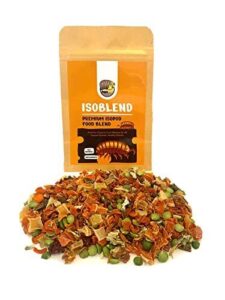
Your microfauna population won’t self-sustain on leaf litter alone—Bugzy Bugs Isopod Food Blend delivers controlled protein and fiber to stabilize bioactive ecosystems in compact terrarium setups.
This dry vegetable-based mixture (split peas, carrots, sweet potato) fosters microorganism growth and isopod nutrition across all life stages, fueling the terrarium microfauna that processes waste in bioactive substrates.
Sprinkle 1–2 tablespoons weekly onto substrate or shallow dishes, rotating food blend options to prevent mold in humid bioactive setups. Remove uneaten portions within 48 hours—overfeeding fouls small-volume terrarium design faster than you’d expect.
| Best For | Terrarium keepers maintaining bioactive microfauna populations in compact setups who need a controlled supplement beyond leaf litter to support healthy isopod breeding and waste processing. |
|---|---|
| Material Type | Dry food blend |
| Weight | 0.05 Kilograms |
| Primary Use | Isopod food |
| Natural/Organic | Premium organic |
| Color | Mixed vegetable |
| Maintenance Required | Remove uneaten portions |
| Additional Features |
|
- Complete vegetable-based blend with vitamins and minerals supports isopods across all life stages, fueling the cleanup crew that keeps bioactive substrates balanced
- Simple feeding routine (1–2 tablespoons weekly) with 12-month shelf life means you’re not constantly restocking or guessing portions
- Dry powder form lets you sprinkle directly onto substrate or serve in dishes, adapting to different terrarium layouts and isopod species preferences
- Prone to mold growth in humid environments, requiring you to remove uneaten food within 48 hours or risk substrate fouling in small spaces
- Acceptance varies by isopod species—some populations consume it rapidly while others show slower uptake, making it less universal than expected
- Needs airtight storage in dry conditions to maintain freshness, adding an extra step compared to whole-food alternatives like rotting wood
Choosing The Right Snake and Enclosure Size
Your snake’s adult length determines every dimension of its enclosure—not the other way around. Cramming a ball python into undersized glass because it fits your apartment creates stress, feeding refusal, and eventual health complications you’ll regret.
Your snake’s adult size dictates enclosure dimensions—forcing a python into undersized glass triggers stress, feeding refusal, and lasting health damage
Let’s calculate exact minimum dimensions, compare species-specific needs, and plan for growth before you commit to the wrong tank.
Ideal Snake Species for Compact Terrariums
You’ll find corn snakes and ball pythons at the top of every compact species list—both averaging 3–4 feet and thriving in 20–29 gallon vertical terrariums. Rosy boas stay under 3 feet, demanding tighter enclosures with moderate humidity. Kingsnakes and eastern fox snakes also work well in small-space setups, provided you prioritize secure barriers, dense furnishings, and elevated basking spots for snake welfare.
When creating a care guide, it’s vital to follow proper writing research papers to confirm the information is clear and concise.
Calculating Minimum Tank Size for Your Snake
Start with your snake’s full length—nose to tail—and multiply by 1.5 to 2.0 gallons per inch for minimum tank volume calculations. A 12-inch juvenile needs roughly 18–24 gallons, while a 36-inch adult requires 54–72 gallons minimum.
- Measure stretched length for accurate enclosure size guidelines
- Use length × 1.5–2.0 gallons per inch for tank size
- Add 25% buffer for space utilization optimization
- Vertical terrariums reduce footprint without sacrificing snake health
- Reassess every 3–6 months during rapid growth rate factors
When planning the terrarium, consider research methodology to guarantee proper snake care.
Planning for Snake Growth in Small Spaces
Young snakes grow 12–20% annually over two years—your compact habitat must accommodate that trajectory without constant upgrades. Increase enclosure height by 1.5× current length to enable vertical climbing and arboreal enrichment as they mature.
Reassess dimensions monthly during year one, adjusting hides and substrate depth to match growth projections while maintaining humidity control and optimizing space in your snake terrariums.
Differences in Enclosure Needs by Species
Species temperature tolerances dictate every aspect of your terrarium setup—corn snakes thrive at 75–85°F, while ball pythons demand tighter 78–80°F baselines with minimal fluctuation. Humidity control separates arid species (20–40% relative humidity) from tropical morphs requiring 60–90% for proper snake health and shedding cycles.
- Substrate depth: Burrowing species need 3–4 inches; climbers require shallow layers with vertical branches
- Ventilation systems: Screen-top enclosures suit arid species; glass terrariums retain moisture for tropical snakes
- Snake behavior patterns: Terrestrial pythons demand horizontal space; arboreal colubrids utilize vertical reptile enclosure designs
Enclosure materials and locking mechanisms reflect escape tendencies—active corn snakes require reinforced latches unavailable on basic snake terrariums.
Essential Features for Small-Space Terrariums
Selecting the right terrarium for tight quarters demands attention to four core design elements—orientation, security, airflow, and access mechanics. Each factor directly impacts your snake’s health, your maintenance workload, and how much floor space you’ll actually surrender.
Here’s what separates functional compact enclosures from cramped compromises.
Vertical Versus Horizontal Terrarium Designs
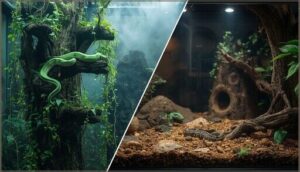
Vertical terrariums enhance space efficiency in tight quarters—height trades floor area for climbing structures that arboreal snakes crave. Horizontal tanks emphasize ground coverage, ideal for terrestrial species needing sprawl room.
You’ll notice vertical setups create distinct tiered designs with varied microclimate control zones, while horizontal enclosures simplify ventilation systems.
Choose based on your snake’s natural behavior—climbers versus burrowers dictate ideal terrarium setup and design priorities.
Escape-proofing in Limited Areas
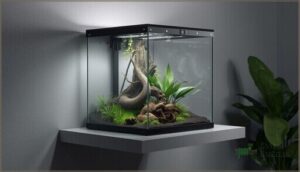
Secure lids with locking mechanisms that require multiple steps to open to prevent your snake from pushing through weak points—tamper-proof hardware matters in tight quarters.
Install door gaskets and weather-stripping for gap sealing around all terrarium panels, then check weekly for new openings.
Mount your reptile enclosure on stable, elevated surfaces using anti-tip brackets—escape prevention starts with rigid tank positioning and inward-facing hinge designs that deny interior leverage.
Optimizing Ventilation and Humidity Control

Lock-tight enclosures need smart ventilation design—you’re aiming for 4–6 air changes per hour to crush condensation control problems and mold before they start. Position intake vents low and exhaust ports high to maintain temperature gradients while hitting humidity targets of 40–60% for terrestrial species.
Cross-flow air exchange rates prevent stagnant pockets that sabotage heat mitigation in your snake terrarium without drying out moisture-retentive substrates.
Space-saving Access Options (sliding Doors, Lids)
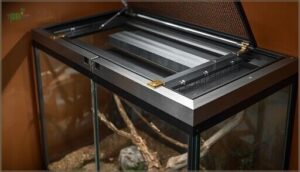
Sliding door designs with aluminum tracks save you clearance space in tight corners—interlocking rails prevent sag while twist-lock lids give quick access without removing entire panels.
Dual-compartment tops let you feed through smaller openings, and secondary latches add escape-proofing redundancy your snake enclosures desperately need.
Compact hardware with foam-rubber seals maintains humidity in reptile enclosure options without sacrificing tank size efficiency.
Maintenance Tips for Healthy Small Terrariums
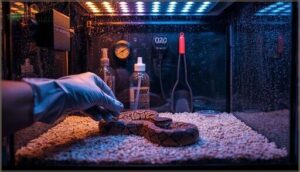
Small terrariums demand sharper attention to environmental stability—mistakes compound faster in limited air volume. You’ll need consistent routines for spot-cleaning, temperature checks, and humidity adjustments to prevent respiratory issues and substrate fouling.
Here’s how to maintain a thriving enclosure when space works against you.
Managing Cleaning in Compact Environments
Small-space enclosures demand efficient sanitation tools—store dedicated brushes and reptile-safe cleaners vertically to optimize counter space.
Spot-clean waste management daily, refresh 25% of bioactive substrate every 2–4 weeks, and sanitize water dishes with dechlorinated rinses to prevent bacterial buildup.
Monthly full-tank cleaning schedules protect your snake terrarium from mold while preserving beneficial microbes in bioactive maintenance systems.
Monitoring Temperature and Humidity Stability
Daily sensor checks at snake eye level—not mounted on walls—catch fluctuations before stress symptoms emerge.
Temperature gradients must hold within 2–3°C across 24-hour cycles, while humidity sensors track species-specific targets: 40–60% for temperate snakes, 60–80% during shedding windows.
Automated thermostats and digital hygrometers reduce manual variance by half, ensuring environmental stability without constant intervention in compact terrariums.
Supporting Bioactive Setups in Small Tanks
You’ll need a substrate depth of 5–8 cm to house detritivores—isopods and springtails that maintain microbe balance in bioactive substrates.
Tank cycling over 4–6 weeks establishes invertebrate care routines before introducing your snake, while bioactive filters through leaf litter and cork bark stabilize humidity control without mechanical assistance.
Vertical layering maximizes reptile habitat design in compact snake terrariums, supporting temperature gradients and ecological function simultaneously.
Health Checks and Shedding Assistance in Limited Space
Vigilance prevents shedding issues before they escalate into skin infections—monitor eye clarity, body hydration, and appetite twice weekly in your snake terrarium.
- Maintain 60–75% humidity during pre-shed phases to support complete sloughing and prevent retained spectacles.
- Verify temperature gradients daily—basking zones at 30–32°C accelerate metabolic readiness for shedding cycles.
- Document shed dates to track health monitoring patterns and predict environmental control adjustments.
Compact setups heighten reptile health risks when humidity control falters.
Frequently Asked Questions (FAQs)
What local regulations govern snake keeping at home?
Your municipality likely mandates permits for exotic pet ownership and sets animal enclosure standards under animal welfare codes. It also enforces zoning laws restricting reptile care practices.
Licensing fees and regulatory compliance vary regionally for snake health protection.
How often should substrate be completely replaced?
Complete substrate replacement depends on your setup. Non-bioactive systems need full changes every 6–12 months, while bioactive terrariums with cleanup crews extend that interval to 1–2 years if odor control and humidity management remain stable.
Can multiple snakes share a small terrarium safely?
Even docile corn snakes housed together compete for basking zones—stress spikes, then one stops eating.
Multi snake housing rarely succeeds: territorial behavior, size disparity, and uneven heating make separate enclosures the safest choice for snake compatibility.
What lighting schedules work best for snake health?
Set automated timers for 12-hour photoperiod control—UVB lighting runs 8–12 hours daily to support calcium metabolism.
Monitor temperature gradients and humidity management during lighting cycles to prevent shedding issues and maintain reptile health and wellness.
How do you safely transport snakes temporarily?
Use a secure escape-proof container with ventilation, maintain species-appropriate temperature during transport, and minimize handling stress. Line with non-abrasive substrate, avoid feeding beforehand, and monitor conditions throughout transit.
Conclusion
Your studio apartment won’t magically expand—but your snake doesn’t care about your landlord’s square-footage deception. Snake terrariums for small spaces succeed through calculated efficiency: vertical optimization, species-appropriate dimensions, and maintenance protocols that won’t transform your living room into a humid jungle.
The ball python coiled in a properly configured 40-gallon setup experiences better welfare than most reptiles warehoused in oversized, poorly maintained enclosures. Precision trumps spaciousness—execute the fundamentals correctly, and your compact terrarium outperforms negligent luxury every time.
- https://www.morphmarket.com
- https://www.xyzreptiles.com/product/live-oak-leaf-litter
- https://thriveecosystems.com/products/live-oak-leaf-litter
- https://www.wellspringherpetoculture.com/single-post/2019/10/17/the-basics-of-setting-up-a-bioactive-system-for-puffing-snakes
- https://terrariumtribe.com/leaf-litter-guide