This site is supported by our readers. We may earn a commission, at no cost to you, if you purchase through links.
Pine shavings look harmless in the pet store aisle. In your boa’s enclosure, they’re a slow poison. The phenols and aromatic oils in pine and cedar inflame the lungs and damage the liver, and the symptoms often show up too late.
Choosing a boa constrictor substrate means balancing three demands at once. Your snake needs 60-70% humidity, rising to 75-85% during shedding. It needs bedding loose enough to burrow in. And it needs a surface that won’t cause impaction or mold.
Coconut-based options hold 150-200% of their weight in water, which makes them a strong starting point. Here’s how to pick the right one.
Table Of Contents
- Key Takeaways
- How to Choose Boa Constrictor Substrate
- Compare Boa Substrate Types and Safety
- Top 9 Boa Constrictor Substrate Options
- 1. Riare Natural Coconut Fiber Substrate
- 2. ReptiChip Coconut Chip Bedding Reptile Substrate
- 3. Zilla Jungle Mix 8-Quart Substrate
- 4. Repti360 Coconut Chip Reptile Substrate
- 5. Legigo Coconut Husk Reptile Substrate
- 6. Riare Coconut Fiber Reptile Substrate
- 7. Riare Coconut Husk Chip Substrate 2Pack
- 8. Riare 8 Pack Coconut Fiber Reptile Bedding
- 9. Bio Dude Terra Sahara Substrate 6 Quarts
- Set Boa Substrate Depth and Manage Humidity
- Clean and Replace Boa Constrictor Substrate
- Frequently Asked Questions (FAQs)
- What is the best substrate for a boa constrictor?
- What bedding should a boa have?
- What is the ideal habitat setup for a boa constrictor?
- How hot is too hot for a boa?
- Can I mix different substrate types together?
- How much does quality substrate typically cost?
- What substrate works best for baby boas?
- Do substrates affect a boas feeding behavior?
- Where should I buy substrate for boas?
- Can I use newspaper or paper towels for boas?
- Conclusion
Key Takeaways
- Skip pine, cedar, and scented bedding, because their phenols and aromatic oils inflame your boa’s lungs and damage its liver, often before you see any symptoms.
- Choose a coconut-based substrate like coconut fiber or husk chips, since it holds 150-200% of its weight in water and helps you keep humidity at 60-70%, rising to 75-85% during sheds.
- Keep the bedding damp but never soggy and at least 3-4 inches deep, so your boa can burrow while the lower layers hold moisture and mold and respiratory infections stay away.
- Spot-clean daily, replace the substrate on a regular schedule or right away if you find mold, mites, or odor, and feed your boa in a separate container to cut impaction risk.
How to Choose Boa Constrictor Substrate
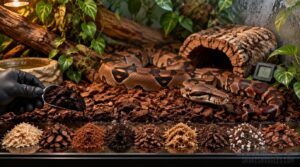
The right boa constrictor substrate protects your snake’s health, and the wrong one can hurt it fast. Five factors matter most: humidity retention, safety, depth and texture, cleaning, and cost. Use them to judge every option below before you buy.
Since substrate works hand in hand with heat and humidity, it helps to check it against the full boa constrictor tank requirements before you set up the enclosure.
Humidity Retention
Coconut fiber holds water far longer than aspen. Coconut husk chips retain 150-200% of their weight in water, so moisture retention stays strong between mistings.
Aim for 60% humidity by day and 75% at night. Boa constrictors generally do best within a 60-70% humidity range, which should be increased during shedding.
Don’t oversaturate. Keep your substrate depth at 3-4 inches and the mix damp, never wet. A bioactive substrate needs weeks to stabilize.
Substrate Safety
matters as much as moisture. Humidity means nothing if your boa breathes bad air.
Skip pine and cedar. Their phenols and aromatic oils irritate airways and damage the liver. Phenol toxicity can kill. Avoiding toxic substrates for snakes also means skipping scented or deodorized bedding and "digestible" calcium sand.
Skip pine and cedar, because their aromatic oils and phenols irritate airways, damage the liver, and can kill your snake
Feed in a bare container so your boa never swallows loose chips.
Depth and Texture
Safe bedding still fails if it’s too thin. Aim for a substrate depth of 4 to 6 inches. That gives you real humidity control, because the lower layers stay slightly moist while the surface dries.
Choose a loose substrate texture, like coconut fiber or fine bark. It allows burrowing behavior without collapsing. Running a bioactive substrate? Layer leaf litter on top.
Cleaning and Replacement
Depth only works if you keep it clean. Do spot cleaning daily. Remove feces and urates right away, and pull shed skin and food debris within 24 hours. That’s your best odor control.
Plan a deep cleaning every 4 to 6 months. Replace everything sooner if mold or odor persists. Rinse the enclosure with a 5% vinegar solution afterward.
Cost and Longevity
Most keepers underestimate the cost of snake substrates. Aspen runs $3.50 per 24-quart bag, but you’ll replace it weekly. Coconut fiber costs more upfront, around $20 per block with shipping, but lasts months.
Check the longterm cost of snake substrates, not the sticker price. Affordable reptile substrate options help most when your substrate replacement schedule allows longterm snake enclosure maintenance.
Compare Boa Substrate Types and Safety
Cypress mulch and coconut husk give you the best balance of humidity retention and substrate safety. Cypress holds 60-70% humidity with proper depth and ventilation. Coconut husk releases moisture slowly, resists mold, and kicks up very little dust.
Aspen is a different story. It holds almost no moisture and sheds dust that irritates your boa’s respiratory health. Skip it.
Every loose substrate carries some impaction risk, especially for juveniles. Feed in a separate container or use tongs, and you cut that risk sharply.
Paper towels eliminate impaction risk completely. They also offer zero burrowing enrichment, and you’ll replace them weekly. Want a bioactive substrate? Coconut husk is your starting point. Match your choice to your boa’s age and cleaning routine.
Top 9 Boa Constrictor Substrate Options
You’ve got nine boa constrictor substrate options to review below. Each one is built to hold humidity, support burrowing, and keep your snake safe. Pick the one that fits your setup, and you’ll control your enclosure with confidence.
1. Riare Natural Coconut Fiber Substrate
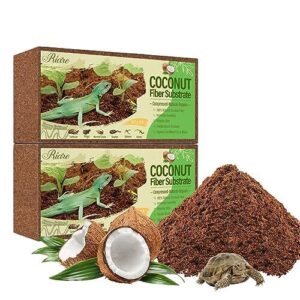
Want a substrate that holds humidity without turning into a swamp?
Our guide to the best substrate for large reptile enclosures compares six options and shows how to layer them so moisture stays balanced and mold stays out.
Riare’s kit gives you 2 compressed bricks, each 7.8 x 3.9 x 1.97 inches. Soak them and they expand into a fluffy, odorless bedding that retains moisture and absorbs waste. Your boa can dig and burrow, which keeps it secure.
Know the catch. Some owners report a sour smell, and the fibers break apart easily. Drying takes 1-2 weeks, so plan ahead. It’s biodegradable, so compost the old stuff.
| Best For | Reptile, amphibian, and invertebrate owners who want a natural, biodegradable bedding that holds humidity and encourages burrowing. |
|---|---|
| Material | Coconut fiber |
| Weight | 2.86 lb |
| Volume | N/A |
| Humidity | Retains humidity |
| Brick Size | 7.8 x 3.9 x 1.97 in |
| Main Drawback | Sour smell |
| Additional Features |
|
- Holds humidity well and expands into a fluffy, odorless substrate once soaked
- Absorbs liquids, waste, and odors to help keep the enclosure cleaner
- Biodegradable and compostable, so old bedding can go into the garden, and it suits a wide range of animals
- Some customers report a sour smell after use
- The substrate can break apart easily during handling
- Drying can take 1-2 weeks, so it takes some planning ahead
2. ReptiChip Coconut Chip Bedding Reptile Substrate
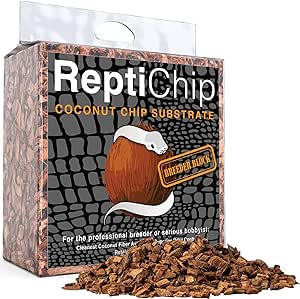
Picture a dense brown brick, then watch it swell into a deep, earthy bed of coconut husk chips. That’s ReptiChip’s 72-quart block: one 9.93-pound brick expanding to 2.5 cubic feet of bedding.
It holds humidity well, so your boa’s tropical setup stays steady. Wet it as needed, then let it dry after expansion. Skip that step and mold can creep in.
Know the downsides. Breaking the block apart takes effort, and some keepers report mites. Inspect your enclosure regularly.
| Best For | Keepers of tropical reptiles like ball pythons, tortoises, and hermit crabs who want a humidity-holding, odor-absorbing bedding that expands from a compact block. |
|---|---|
| Material | Coconut chips |
| Weight | 9.93 lb |
| Volume | 72 quarts (2.5 cu ft) |
| Humidity | Superior retention |
| Brick Size | 12 x 6 x 12 in |
| Main Drawback | Mite reports |
| Additional Features |
|
- One 9.93-pound brick expands to 2.5 cubic feet of bedding, giving you plenty of substrate from a small package.
- Holds humidity well and can be wetted as needed to match your species’ requirements.
- Absorbs waste and reduces terrarium odors.
- Needs to dry after expansion, or mold can develop in some enclosures.
- Customer feedback is mixed on how easy the compressed block is to break apart.
- Some users report mite infestations, so results on mite resistance vary.
3. Zilla Jungle Mix 8-Quart Substrate
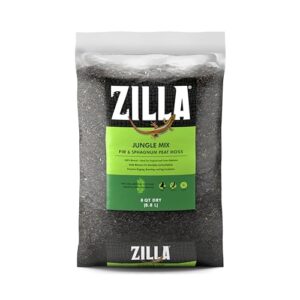
Want natural humidity control without constant fiddling? Zilla Jungle Mix delivers it.
This 8-quart bag blends aged Douglas fir bark with sphagnum peat moss, a 100% organic mix that absorbs moisture well. It encourages natural behaviors like digging and nesting.
Handle it right, though. Dry bark can splinter, so moisten it first. Rinse it outside, because clay dust clogs pipes. Keep the bag sealed, too. Open bags can attract cockroaches in infested areas.
At 5.8 pounds, it’s plenty for setup.
| Best For | Keepers of tropical and forest species like frogs, rainforest geckos, toads, and snakes who want a natural, humidity-holding substrate for bioactive enclosures with live plants. |
|---|---|
| Material | Douglas fir bark, peat |
| Weight | 5.8 lb |
| Volume | 8 quarts |
| Humidity | Natural control |
| Brick Size | N/A |
| Main Drawback | Splinters when dry |
| Additional Features |
|
- Made of 100% organic aged Douglas fir bark and sphagnum peat moss, with high absorbency for natural humidity control
- Encourages natural behaviors like digging, breeding, nesting, and egg incubation
- Works well in bioactive setups with live plants and drainage layers, helping keep humidity stable
- Can produce splinters when handled dry
- Needs to be rinsed outside to keep clay dust from clogging pipes
- Can attract cockroaches looking to lay eggs if left open in infested areas
4. Repti360 Coconut Chip Reptile Substrate
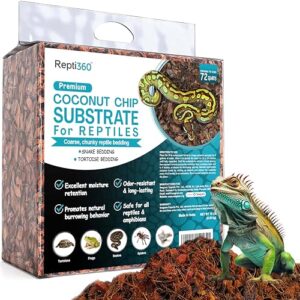
Need a lot of bedding without hauling a lot of bags? This one’s built for that. The Repti360 Coconut Chip substrate is 100% natural coconut husk, and a single 10 lb block expands to 72 quarts.
It holds humidity well in tropical setups and rehydrates quickly. It also works in bioactive enclosures. Suits tortoises too.
Don’t skip the prep, though. Expansion can be uneven, so break up any dry layers by hand. Sift out plastic bits, and expect some dust.
| Best For | Reptile and amphibian keepers, such as owners of ball pythons, bearded dragons, tortoises, or frogs, who want a large amount of humidity-holding bedding from one compact block. |
|---|---|
| Material | Coconut husk |
| Weight | N/A |
| Volume | 72 quarts |
| Humidity | Maintains humidity |
| Brick Size | 12.36 x 11.85 x 5.47 in |
| Main Drawback | Plastic bits |
| Additional Features |
|
- Made from 100% natural coconut husk, and one 10 lb block expands to 72 quarts
- Holds humidity well in tropical enclosures and rehydrates quickly
- Works in bioactive setups and for aerating soil for plants
- Expansion can be uneven, so dry layers need to be broken up by hand
- Some customers report finding plastic bits that need to be sifted out
- Dust can be a problem for some users
5. Legigo Coconut Husk Reptile Substrate
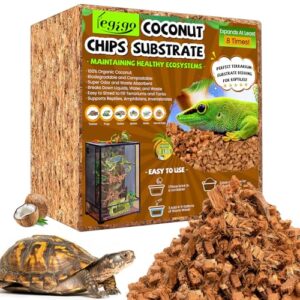
Want another 10 lb block option? Legigo’s coconut husk chip brick measures 11.81 x 11.81 x 5.31 inches and weighs 9.39 pounds. Add water and it expands into loose bedding.
It absorbs odors and excess moisture while holding humidity, which helps tropical setups. Ball pythons, other snakes, and tortoises all do well on it.
Don’t expect perfect results, though. Some owners say the chips break up easily, and a few report a foul smell. Durability varies, so check it very often.
| Best For | Owners of tropical reptiles like ball pythons, snakes, and tortoises who want a 10 lb coconut husk brick that expands with water and holds humidity. |
|---|---|
| Material | Coconut husk chips |
| Weight | 9.39 lb |
| Volume | N/A |
| Humidity | Retains humidity |
| Brick Size | 11.81 x 11.81 x 5.31 in |
| Main Drawback | Breaks up easily |
| Additional Features |
|
- Absorbs odors and excess moisture while retaining humidity, which suits tropical setups
- Made from 100% organic, sustainable coconut husk and expands easily when water is added
- Can also be used as garden mulch, a soil amendment, or a hydroponic medium
- Some customers report the chips break up easily
- Feedback on odor is mixed, with some noting a foul smell
- Durability varies, with some reports of long-lasting use and others of short-term use
6. Riare Coconut Fiber Reptile Substrate
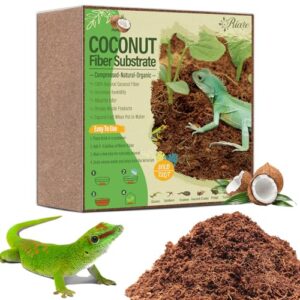
Need more bulk? This Riare coconut fiber brick is a heavy hitter. It measures 11.81 x 11.81 x 4.72 inches and weighs 10 lb (9.86 lb actual). Soak it and it swells into fluffy coconut fiber you can pile deep.
It’s odorless, holds humidity, and soaks up liquids and waste, so smells stay down. Your boa will love digging into it.
Watch the downsides. Some owners report a sour smell after use, and the fiber can break apart easily. Drying may take 1 to 2 weeks.
| Best For | Reptile and amphibian keepers who want a deep, burrowable, humidity-holding substrate in bulk, such as owners of frogs, snakes, lizards, turtles, hermit crabs, or spiders. |
|---|---|
| Material | Coconut fibre |
| Weight | 9.86 lb |
| Volume | N/A |
| Humidity | Retains humidity |
| Brick Size | 11.81 x 11.81 x 4.72 in |
| Main Drawback | Sour smell |
| Additional Features |
|
- Made from natural, organic coconut fibre that is odourless and holds humidity well
- Expands when soaked into a fluffy substrate that encourages natural digging and burrowing
- Absorbs liquids and waste to keep odours down, and is compostable for garden reuse
- Some users report a sour smell after use
- Can break apart easily during handling
- May take 1 to 2 weeks to dry, according to some users
7. Riare Coconut Husk Chip Substrate 2Pack
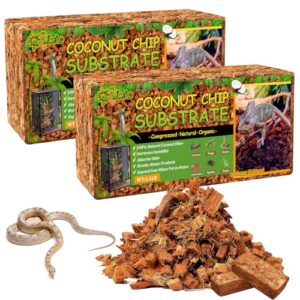
Prefer chunkier bedding over fiber? Try this Riare coconut husk chip 2-pack. You get two compressed bricks, 2.2 lb total, each measuring 8.2 x 4.1 x 2.2 inches. Soak them in warm water for about 30 minutes and they swell to several times their size.
The chips hold humidity for tropical boas and soak up waste and odors. Drain the extra water first, so it feels moist, not soggy.
Watch for mold growth. Owners report it within days. Check often.
| Best For | Keepers of tropical reptiles and amphibians, such as ball pythons, boa constrictors, turtles, and frogs, who want a chunky, humidity-holding coconut husk bedding and don’t mind checking it often for mold. |
|---|---|
| Material | Coconut husk chips |
| Weight | 2.2 lb |
| Volume | N/A |
| Humidity | Maintains humidity |
| Brick Size | 8.2 x 4.1 x 2.2 in |
| Main Drawback | Mold growth |
| Additional Features |
|
- Holds humidity well, which suits tropical species
- Absorbs waste and odors to keep the enclosure cleaner
- Compressed bricks expand to several times their size once soaked in water, so two packs go a long way
- Some owners report mold growth within days, so it needs frequent checking
- Feedback is mixed on whether it protects against scale rot
- Particle size varies from fine ground to 1/2 inch chunks, which may not suit every species
8. Riare 8 Pack Coconut Fiber Reptile Bedding
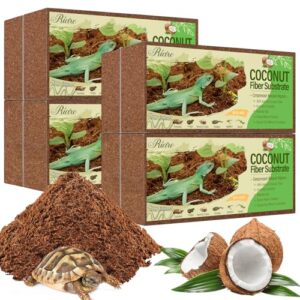
Want finer fiber instead of chips? This Riare 8-pack gives you eight compressed bricks, each 7.8 x 3.9 x 1.97 inches. Soak one in water and it swells into fluffy coconut fiber bedding.
Boas love to dig, and this stuff stimulates natural burrowing. It absorbs liquids, waste, and odors to keep your enclosure cleaner.
For tropical boas, choosing the best substrate for your snake’s terrarium matters, since cypress mulch and coconut fiber hold humidity without growing mold.
Know the trade-offs. Some owners say it breaks apart easily, a few notice a sour smell, and drying can take 1 to 2 weeks. Plan ahead.
| Best For | Reptile and amphibian owners who want a natural, compostable coconut fiber substrate that encourages burrowing and are happy to soak and dry it ahead of time. |
|---|---|
| Material | Coconut fiber |
| Weight | 11.26 units |
| Volume | N/A |
| Humidity | Retains humidity |
| Brick Size | 7.8 x 3.9 x 1.97 in |
| Main Drawback | Breaks apart easily |
| Additional Features |
|
- Soaked bricks expand into fluffy, odorless coconut fiber that holds humidity well.
- Encourages natural digging and burrowing while absorbing liquids, waste, and odors.
- Degradable and compostable, so it can be reused in the garden.
- Some customers say the substrate breaks apart easily.
- Odor feedback is mixed, with some noting a sour smell.
- Drying can take 1 to 2 weeks, so it needs planning ahead.
9. Bio Dude Terra Sahara Substrate 6 Quarts
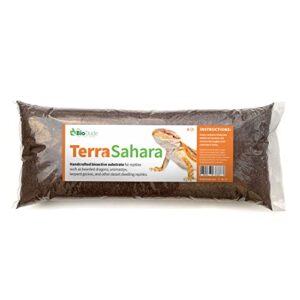
The Bio Dude Terra Sahara substrate is built for desert reptiles, so it’s a poor match for most boa constrictors. Skip it for tropical species unless you’re ready to modify it.
It keeps the surface warm and dry while holding water in the lower layers, and it allows burrowing and tunneling.
You get 6 quarts, 8 pounds, made in the USA. But the larger chunks pose an impaction risk, so feed your boa separately. Save it for arid sand boas.
| Best For | Owners of desert and arid-species reptiles, like sand boas, who want a bioactive-friendly substrate that stays dry on top and supports burrowing. |
|---|---|
| Material | N/A |
| Weight | 8 lb |
| Volume | 6 quarts |
| Humidity | Doesn’t raise humidity |
| Brick Size | N/A |
| Main Drawback | Impaction risk |
| Additional Features |
|
- Keeps the surface warm and dry while holding proper water balance in the lower layers
- Supports burrowing and tunneling, and provides aeration and drainage for bioactive setups
- Recycles waste and returns nutrients, and doesn’t raise humidity in desert environments
- Larger chunks may pose an impaction risk if swallowed
- Requires feeding the animal separately to reduce the chance of ingestion
- Customer feedback is mixed on appearance and size suitability
Set Boa Substrate Depth and Manage Humidity
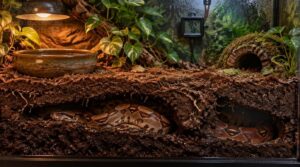
How deep should you go? Start with 3 inches of coconut fiber. Proper substrate depth lets your boa burrow and keeps moisture locked in. Running a bioactive substrate? Go 4 inches or more.
Dial in your humidity levels with these steps:
- Keep ambient humidity at 55-75%, and push it to 75-85% during shedding.
- Mix water into the substrate until it’s damp, never muddy.
- Put a large water bowl under the heat source and a humid hide on the cool side.
- Place a digital hygrometer probe mid-enclosure and check it daily.
Don’t let it stay soggy. Constant wetness invites respiratory infections. Good substrate maintenance means spot-checking moisture and stirring the top layer once weekly. Pair that with steady, consistent humidity control.
Clean and Replace Boa Constrictor Substrate
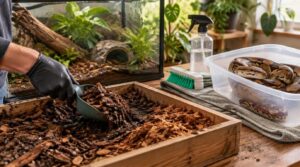
Imagine this: you open your boa’s enclosure on Sunday and catch a sharp ammonia smell. That’s your warning. Ignore it, and respiratory stress follows.
Solid substrate maintenance starts with daily spot cleaning. Remove feces and urates immediately. Replace soiled patches weekly. Then schedule full substrate replacement every 4 to 6 weeks for adults and every 2 to 4 for juveniles.
Don’t wait if you spot mold, mites, or compacted, dusty bedding. Change it now.
Strip the enclosure, scrub it with hot soapy water or a 1:32 bleach solution, rinse thoroughly, and let it dry completely. Damp leftovers wreck your humidity control. Follow the enclosure size recommendation, too, because a bigger tank dilutes waste. Feed in a separate tub. Stay consistent.
Frequently Asked Questions (FAQs)
What is the best substrate for a boa constrictor?
Go with coconut fiber. Its humidity retention keeps humidity levels steady between 55 and 75 percent, and it encourages natural burrowing behavior.
Don’t use pine or cedar. Spot cleaning daily keeps your substrate fresh and safe.
What bedding should a boa have?
Boas lose up to 20% of their comfort when humidity drops below 50%. Use coconut fiber or coconut chips, at least 3 inches deep. You’ll get solid humidity retention, easy burrowing behavior, and fewer headaches. Skip pine and cedar.
What is the ideal habitat setup for a boa constrictor?
Nail the enclosure fit first: adults need 6’L x 3’W x 3’H. Keep a 88-92°F basking spot, 55-75% humidity, two hides, and climbing branches. Meet substrate depth requirements with 2-4 inches for natural burrowing behavior.
How hot is too hot for a boa?
Myth: boas handle 100°F basking. False. Past 95°F, neurological damage looms. Keep your temperature gradient at 75-95°F, track humidity levels, and check heat penetration through substrate. A thermal gradient in reptile tanks keeps you safe.
Can I mix different substrate types together?
Substrate mixing for best performance works. Mix coconut fiber with cypress mulch for humidity control in terrariums. Skip pine or cedar. Keep chunks coarse after a substrate texture comparison, since fine particles raise impaction risk.
How much does quality substrate typically cost?
Expect to pay $17 to $20 for a Zoo Med or similar coconut coir bag. Bulk packs drop the price per quart.
Humidity control and substrate depth mean you’ll stick to a four-to-six-week replacement schedule.
What substrate works best for baby boas?
Want a baby boa that sheds clean and stays healthy? Choose coconut fiber. It offers strong humidity retention and enough substrate depth for burrowing behavior. Watch for safe substrate ingestion, and keep spot cleaning daily.
Do substrates affect a boas feeding behavior?
Yes, your substrate directly shapes your boa’s feeding behavior. Poor substrate safety raises ingestion hazards and impaction risk, which kills appetite fast.
Use a feeding dish, keep humidity at 60-75%, and you’ll avoid most refusals.
Where should I buy substrate for boas?
Buy from reputable reptile retailers. PetSmart and Petco carry Zoo Med Eco Earth, while Walmart and Amazon stock ReptiChip coconut husk. Want eco friendly savings? Garden centers sell organic coco coir, but check it’s pesticide-free.
Can I use newspaper or paper towels for boas?
Wondering if paper works? Newspaper and paper towels are a safe substrate for boa constrictors and ideal quarantine tank substrate, since waste shows instantly.
Long term, humidity suffers, so plan enclosure size and substrate volume.
Conclusion
Picture a keeper who swapped pine for coconut husk last spring. Her boa’s sheds now come off in one clean piece, and the mouth-open breathing is gone.
Choosing a boa constrictor substrate comes down to humidity, safety, and depth. Pick a coconut-based mix, keep it 4 to 6 inches deep, and spot-clean weekly. Skip anything with aromatic oils.
Your snake can’t tell you what’s wrong. The bedding will show it first. Get it right early.