This site is supported by our readers. We may earn a commission, at no cost to you, if you purchase through links.

Most snake owners obsess over enclosure temperatures and feeding schedules, yet overlook the one element their snake interacts with every single day: water.
A dehydrated snake won’t just skip a shed—it’ll face digestive shutdown, organ stress, and a cascade of health problems that creep up silently until they’re critical. The difference between a thriving snake and one that’s barely hanging on often comes down to water quality, bowl placement, and understanding your snake’s hydration signals.
Whether you’re setting up your first enclosure or troubleshooting mysterious health issues, getting water right isn’t optional—it’s the foundation everything else builds on.
Table Of Contents
Key Takeaways
- Dehydration silently triggers digestive shutdown and organ stress in snakes, making water quality and bowl placement more critical than most owners realize—wrinkled skin, sunken eyes, and incomplete sheds are your early warning signs.
- Your snake’s water bowl should match its size (5–20 ml for hatchlings up to 2 liters for large adults), use ceramic material to prevent tipping, and sit at the cool end of the enclosure 2–5 cm above substrate level.
- Daily water changes and weekly bowl sanitization prevent bacterial counts from spiking to dangerous levels, while dechlorination methods like sodium thiosulfate drops or 24-hour aeration remove harmful chlorine that irritates mucous membranes.
- Maintain water pH between 6.5–7.5 and temperature at 77–86°F, provide 2–7 cm depth for soaking during shed cycles, and watch for intermittent evening drinking patterns as signs of healthy hydration.
Importance of Water for Snake Health
Water isn’t just a nice-to-have for your snake—it’s essential for almost every biological process, from digestion to temperature regulation. Without proper hydration, even the healthiest water snake can develop serious health issues that affect everything from their skin to their organs.
Let’s look at why keeping your snake properly hydrated matters so much and what happens when they don’t get enough water.
Role of Hydration in Snake Physiology
Hydration levels drive every essential process in your snake’s body—from reptile metabolism to snake digestion. Without proper water intake, fluid balance crashes, making it impossible for nutrients to move through tissues or waste to exit efficiently. Think of water as the highway system for everything happening inside your snake. When hydration dips, that highway shuts down, compromising reptile health fast.
Water is the highway system for every process in your snake’s body—when hydration drops, that highway shuts down fast
Water quality and smart water management aren’t optional—they’re foundational to snake care. Understanding AP study resources can help you appreciate the importance of detailed guides in maintaining your snake’s health.
Signs of Dehydration in Water Snakes
When reptile health begins to slide, your snake’s body broadcasts clear warnings. Watch for wrinkled skin behind the eyes—this shows up in roughly 68% of dehydrated snakes. Sunken eyes, rapid weight loss (6–12% over a week or two), and lethargy tell you water intake isn’t cutting it.
Health monitoring catches these dehydration symptoms early:
- Decreased skin elasticity and visible wrinkling
- Dry, tacky mucous membranes with reduced activity
- Prolonged or incomplete shedding cycles
Understanding web server issues can help you address similar unknown errors in your snake care setup. Stay alert to hydration levels, adjust water quality, and your snake care stays on track.
Hydration and Shedding Cycles
Your snake’s water intake directly powers its shedding process. When hydration levels drop, the old snake skin won’t separate cleanly—you’ll see stuck patches or incomplete sheds.
Before each cycle, boost humidity to 50–60% and keep that water bowl full. Regular water changes guarantee your snake drinks enough to loosen its skin naturally, making cycle management straightforward and stress-free.
Choosing The Ideal Water Bowl
The right water bowl isn’t just about aesthetics—it’s about making sure your snake can drink comfortably and soak when needed. You’ll want to factor in size, material, and placement in the enclosure to keep your snake healthy and hydrated. Let’s break down what actually works in practice.
Recommended Bowl Sizes by Snake Age and Species
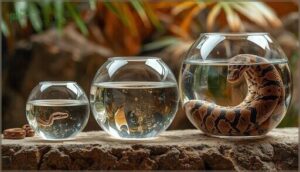
Think of your snake’s water bowl as a tailored drinking fountain—too small and they’ll go thirsty, too big and you’re asking for a mess.
Hatchlings need shallow dishes holding just 5–20 ml, while juveniles do well with 60–200 ml bowls.
Adult colubrids generally use 200–500 ml containers, though larger snakes may need up to 2 liters to support their hydration needs and occasional soaking habits.
Material and Design Considerations
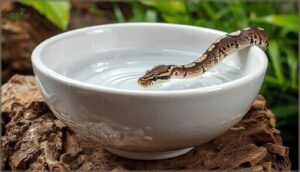
Ceramic bowls dominate 78% of reptile setups because they won’t tip when your snake decides to bulldoze through at feeding time. Wide, shallow designs—preferred in 41% of studies—let your water snake drink without awkward neck angles, while smooth interiors prevent scratches that harbor bacteria.
Skip porous materials; they absorb odors and crack under repeated soaking, compromising both hygiene and your snake’s access to clean water.
Placement in The Enclosure for Accessibility
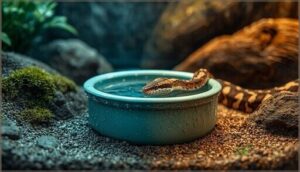
Position your water bowl at the cool end—72% of keepers swear by it for reducing heat stress and encouraging drainage. Keep the rim 2–5 cm above substrate height so your snake doesn’t strain while drinking.
Bowl placement matters more than you’d think: repositioning weekly can boost drinking instances by 15%, while keeping it away from substrate leaks cuts mold risk by 38%.
Maintaining Clean and Safe Water
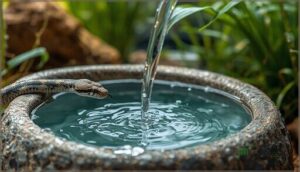
Keeping your snake’s water fresh isn’t complicated, but it does require consistency. A clean bowl prevents bacterial buildup and keeps your pet healthy, especially since snakes often soak and even defecate in their water.
Let’s cover the three essential practices that’ll keep your snake’s water safe and invigorating.
Frequency of Water Changes
You might think water changes are a small detail, but they’re actually your first line of defense against illness. Here’s what you need to know about keeping your snake’s water fresh:
- Daily changes work best for most setups – bacteria don’t wait around
- Every 2–3 days minimum in tropical enclosures to maintain water quality
- Increase frequency during shedding cycles when hydration metrics matter most
- Watch for debris or cloudiness between scheduled water changes
- Weekly sanitization prevents biofilm buildup even with automated systems
Dechlorination and Water Treatment Methods
Tap water often contains chlorine that can irritate your snake’s mucous membranes, so dechlorination methods matter. Sodium thiosulfate works fastest—just one drop per liter neutralizes chlorine instantly. Activated carbon filters handle chloramines better, while simple aeration removes chlorine naturally in 10–30 minutes.
Test your water quality regularly, especially if you’re maintaining higher humidity levels that increase chemical exposure.
Preventing Bacterial and Fungal Contamination
Stagnant water becomes a microbe factory fast—bacterial counts can spike to 1.0×10^3 CFU/mL within days, creating visible biofilm. Higher humidity and temperatures above 25°C double microbial growth rates, making tank sanitizing and water bowl maintenance non-negotiable for reptile care.
Here’s how you protect your snake water quality:
- Replace water every 24–48 hours to cut bacterial loads by 60–80%
- Scrub bowls weekly with reptile-safe cleaners for biofilm removal
- Use UV disinfection systems to eliminate 99.9% of waterborne bacteria
- Remove debris immediately—organic matter accelerates fungal growth
- Sanitize monthly with diluted enzymatic solutions
Water Quality Parameters for Snakes
You’ve set up the bowl and you’re changing the water daily—great start. But here’s the thing: not all water is created equal, and what comes out of your tap mightn’t be ideal for your snake.
Let’s talk about the specific parameters you need to keep an eye on to make sure your water is actually safe and supportive of your snake’s health.
Optimal Water PH and Temperature Ranges
Think of water chemistry as your snake’s invisible safety net. You’ll want to maintain pH balance between 6.5 and 7.5 for ideal aquatic health—most water snakes thrive here.
Temperature control matters too: keep snake water at 77–86°F to support proper hydration levels. Reptile hydration depends on stable water quality, so monitor water temperature and water depth regularly to avoid stress during shedding cycles.
Monitoring for Chlorine and Other Chemicals
Beyond pH balance, you’ll need to tackle chlorine—most tap water contains 0.2–1.0 mg/L, which irritates your snake’s mucous membranes. Water testing weekly catches chemical spikes before they harm your pet.
Effective dechlorination methods include:
- Using commercial water purification drops
- Letting water sit 24 hours for chlorine detox
- Installing in-line chemical removal filters
- Monitoring for chlorine rebound after treatment
Keep free chlorine below 0.1 mg/L for ideal reptile care.
Encouraging Healthy Drinking and Soaking
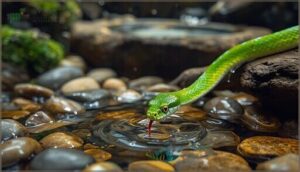
Getting your water snake to drink regularly and soak when needed isn’t always automatic—sometimes you’ll need to recognize what’s normal and troubleshoot when things seem off. Understanding how snakes interact with water in captivity helps you create an environment where hydration comes naturally.
Let’s break down what healthy drinking looks like, how to set up proper soaking opportunities, and what to do when your snake isn’t staying hydrated.
Recognizing Normal Drinking Behaviors
Your water snake’s drinking patterns tell you a lot about its health. Most snakes drink intermittently—not continuously—often in the evening hours. You’ll notice increased water intake after meals, which aids digestion. Healthy reptile hydration shows up as periodic sipping from shallow pools, while dehydration signs include prolonged drinking or complete refusal.
| Normal Behavior | Timing & Frequency | Red Flags |
|---|---|---|
| Intermittent sipping | Evening hours, post-feeding | Continuous drinking sessions |
| Tongue-flicking near water | 1–3 day cycles | No water intake with dehydration signs |
| Brief soaking visits | After meals for digestion | Sporadic intake unrelated to feeding |
Understanding snake water requirements and animal care means watching these hydration cues closely.
Providing Soaking Opportunities
While drinking keeps your snake hydrated, soaking fulfills a different purpose—especially during shed cycles. Your water bowl should allow partial submersion without drowning risk: 2–3 cm depth for smaller species, up to 5–7 cm for larger ones.
This soaking area design aids humidity control and helps loosen old skin. Just verify the bowl’s stable and accessible, complementing your basking alternatives for complete reptile hydration management.
Troubleshooting Common Hydration Issues
If your snake skips meals, struggles with stuck shed, or acts lethargic, dehydration signs could be hiding in plain sight.
Snake hydration isn’t just about a bowl—test water quality, check humidity control, and keep the bowl spotless.
Track weight and skin elasticity to catch issues early. Reliable water testing and regular Water Bowl Maintenance support overall Snake Health and Hygiene.
Frequently Asked Questions (FAQs)
Can snakes drink distilled or purified water?
Think of distilled water as a blank canvas—it won’t harm your snake, but long-term use can deplete essential minerals.
Dechlorinated tap water offers a better mineral balance for ideal reptile hydration and snake health.
How often do snakes typically drink water?
You’ll notice most snakes drink 2–4 times weekly under stable conditions, though drinking frequency jumps when humidity dips below 40% or during hot periods—watch for dehydration signs and make sure fresh water’s always available.
Should water bowls be elevated or ground-level?
Most keepers find ground-level bowls work best—they’re stable, reduce spillage, and allow easy water accessibility.
Elevated setups suit arboreal species or climbing-heavy enclosure designs, but secure mounting prevents tipping disasters affecting snake health.
Can tap water harm my snakes health?
Yes, tap water risks include chlorine irritation and contaminants that affect snake health. Dechlorination methods prevent waterborne diseases and support proper reptile hydration.
Always treat water to guarantee quality meets your snake’s water requirements.
Conclusion
Your snake won’t tell you it’s thirsty. It won’t complain about stale water. It won’t ask for a bigger bowl. But its body will show you—through failed sheds, refused meals, and declining health.
This snake water requirements guide gives you the knowledge to prevent those silent struggles. Clean water, proper placement, and vigilant observation aren’t complicated tasks—they’re non-negotiable commitments.
Get the water right, and you’ve secured the foundation for everything else your snake needs to thrive.
- https://developers.cloudflare.com/support/troubleshooting/http-status-codes/cloudflare-5xx-errors/error-522/
- https://www.cloudflare.com/5xx-error-landing?utm_source=errorcode_522&utm_campaign=familysnake.com
- https://www.reptilesmagazine.com/
- https://www.avma.org/resources-tools/pet-owners/petcare/reptiles
- https://www.ncbi.nlm.nih.gov/books/NBK481583/