This site is supported by our readers. We may earn a commission, at no cost to you, if you purchase through links.

A snake that won’t shed cleanly is one of those problems that looks minor until it isn’t. Retained skin—especially over the eyes or tail tip—can cut off circulation, cause infections, and turn a routine shed into a vet visit.
The stuck shed soaking method is the most reliable first response you have, and when done right, it works fast. Warm water softens the old skin, loosens its grip, and lets your snake finish what its body started. Knowing exactly how to set it up, how long to soak, and what not to do makes all the difference.
Table Of Contents
- Key Takeaways
- What Causes Stuck Shed in Snakes?
- Preparing for The Soaking Method
- Step-by-Step Stuck Shed Soaking Method
- Common Mistakes to Avoid During Soaking
- Preventing Stuck Shed in The Future
- Frequently Asked Questions (FAQs)
- How to help snakes with stuck shed?
- How do you remove a stuck shed?
- How do you unstick a shed?
- How do you remove stuck shed from a snake?
- Can stuck shed cause permanent scarring in snakes?
- Which snake species are most prone to shedding problems?
- Can stress alone trigger a stuck shed episode?
- Is stuck shed contagious between snakes in enclosures?
- Conclusion
Key Takeaways
- Soaking your snake in 80–85°F water for 15–30 minutes is the most reliable way to loosen a stuck shed without damaging the new skin underneath.
- Low humidity is the leading cause of a stuck shed, so keeping enclosure levels between 60–80% (species‑dependent) prevents most problems before they start.
- Never force or pull a stuck skin — always use a damp cloth in a head‑to‑tail motion, and skip direct pressure around the eyes entirely.
- If you see a darkened tail tip, retained eye caps after 48 hours, or repeated shed failures across three or more cycles, skip the home remedies and call a reptile vet.
What Causes Stuck Shed in Snakes?
Stuck shed doesn’t just happen randomly — there’s almost always a reason behind it.
Most of the time, it traces back to husbandry issues you can fix — and knowing the usual culprits makes diagnosing and treating snake stuck shed a lot more straightforward.
Key factors consistently show up as the main culprits, and knowing them puts you in a much better position to help your snake.
Here’s what’s most commonly working against a clean shed.
Low Humidity and Environmental Factors
When humidity drops below 35 percent, your snake’s enclosure becomes a desert — and shedding turns into a struggle.
Poor ventilation balance, intense basking spots, and seasonal humidity shifts in winter all strip moisture fast.
Microclimate design matters here: substrate moisture from cypress mulch or coconut coir, a humidity hide, and careful temperature-humidity interaction keep enclosure conditions stable enough for a clean, complete shed.
Dehydration and Poor Nutrition
Low humidity isn’t the only culprit. Dehydration directly weakens skin elasticity, making old skin cling instead of slide.
Vitamin A deficiency causes thickened scales and stubborn retained patches, especially around the eyes.
Poor feeding frequency and metabolic stress compound the problem quickly.
Watch for weight loss and dull coloration — those are your early warning signs that reptile health and snake shedding are both suffering.
Monitoring cloudy eyes indicator can signal an upcoming shed.
Species-Specific Shedding Challenges
snake sheds the same way. Species humidity requirements aren’t one-size-fits-all.
Ball python humidity needs sit at 60–80%, while corn snake eye caps often appear when UK homes drop below 40% in winter.
Leopard gecko toe shed is a different beast entirely — retained layers act like tiny tourniquets.
Boa shedding frequency slows with age, demanding longer prep. Low humidity often triggers shedding issues in corn snakes, as explained in the guide on low humidity causes.
Recognizing Early Signs of Stuck Shed
Species differences matter, but catching a stuck shed early is where good snake care really begins. Watch for these warning signs right after a shed:
- Patchy skin patches that look dull or papery instead of smooth
- Retained eye caps leaving eyes cloudy or slightly raised
- Excessive rubbing against hides or décor to loosen tight skin
- Reduced appetite signaling lingering discomfort from shedding issues
When in doubt, check the tail tip first.
Preparing for The Soaking Method
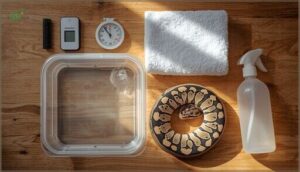
Before you run the water or reach for your snake, it helps to have everything lined up and ready to go.
Gather your thermometer, a spare water bowl, and maybe a quick read on small snake breeds that stay manageable in size so you know exactly what setup you’re working with.
A little prep work now means fewer surprises once your snake is in the water.
Here’s what you’ll need to set yourself up for a safe, stress‑free soak.
Gathering Safe Supplies
Before you start, gather everything in one place — ideally in a labeled storage bin so nothing gets missed mid-session.
You’ll need dechlorinated water, unscented paper towels to line your smooth plastic container, and a reptile-safe disinfectant for cleanup afterward. A damp towel for gentle wiping rounds out the basics.
Being prepared before the lukewarm soak begins keeps the whole process calm and controlled.
Setting The Correct Water Temperature
Getting the temperature right makes or breaks the soak method. Aim for 80–85°F — warm water that rehydrates retained skin without causing stress or burns.
Use these thermometer selection and temperature calibration checkpoints:
- Target 80–85°F for most species
- Ball pythons: 81–86°F
- Corn snakes: up to 86°F
- Use a digital probe thermometer
- Heat mat use keeps temps steady throughout
Monitor throughout the soak.
Choosing a Safe Soaking Container
Picking the right container is a quiet cornerstone of good reptile enclosure management. For Material Safety, smooth, non-toxic plastic is your best bet — it won’t leach chemicals or snag delicate scales.
Follow Size Guidelines: a 10‑gallon tub suits most small snakes, while adults need 20 gallons.
Prioritize Design Features like clear walls and rounded corners. A solid Cleaning Protocol and Secure Stability round out safe snake health practices.
Ensuring Proper Supervision
Never leave your snake alone during a soak — even five distracted minutes can turn into a crisis. Think of it as your personal Supervision Checklist in action.
- Drowning Prevention: Keep water shallow, just belly‑deep, and watch constantly.
- Stress Observation: Exit immediately if your snake thrashes or gapes.
- Escape Monitoring: Secure the lid; snakes are surprisingly fast problem‑solvers.
Step-by-Step Stuck Shed Soaking Method
Now that everything’s ready, it’s time to walk through the actual soak.
Each step matters, so take it slow and stay focused on your snake’s comfort throughout the process. Here’s exactly what to do, from start to finish.
How Long to Soak Your Snake

Timing matters more than you’d think when treating a stuck shed. Most snakes do well with an ideal soak time of 15 to 20 minutes — long enough to soften stubborn skin without adding stress.
Species duration limits vary, so use this quick guide:
| Species | Soak Time | Temperature |
|---|---|---|
| Ball Python | 20–30 min | 85°F |
| Corn Snake | 15–20 min | 82°F |
| Leopard Gecko | 20 min | 80°F |
Monitor progress throughout. Temperature impact is real — water cooling below 80°F slows the shedding process substantially.
Gently Assisting With Stuck Skin
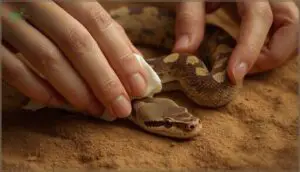
After soaking, the real work begins — and how you touch your snake matters just as much as how long it was soaked.
Use the damp towel technique, wiping gently from head to tail. That’s the correct Direction of Removal — always with the scales, never against them. For Pressure Technique, think “stroking,” not “gripping.”
Watch for these Stress Monitoring signals:
- Repeated pulling away or sudden tensing
- Hissing or striking during handling
- Rapid, anxious tongue flicking
For Sensitive Area Care around the eyes, skip direct pressure entirely.
When and How to Repeat Soaks
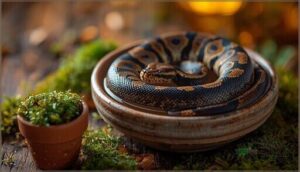
One soak often isn’t enough. Repeat Interval Timing matters here — wait 48 hours between sessions, giving skin time to rehydrate naturally.
Pair each repeat with Humidity Boost Strategies like a damp humidity hide packed with sphagnum moss.
Progress Monitoring Signs: loosening edges mean you’re winning. Stress Indicator Checks each time.
If tail darkens after three rounds, those are Veterinary Consultation Triggers — don’t wait.
Safety Tips During Soaking

Safety doesn’t stop once your snake hits the water. Keep these non-negotiables in mind every session:
- Water Depth should reach only mid-body — shallow enough that your snake holds its head up easily
- Temperature Monitoring means checking 80–85°F before and during the soak
- Constant Supervision lets you catch stress signs fast
After soaking, use the damp towel technique to pat — never rub — scales dry, then return your snake to a warm humidity hide immediately.
Common Mistakes to Avoid During Soaking
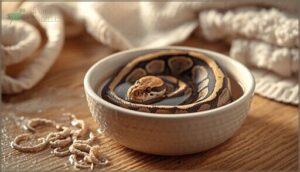
Soaking is one of the gentlest ways to help your snake through a tough shed, but a few easy missteps can turn a helpful session into a stressful one.
The good news is that most of these mistakes are completely avoidable once you know what to watch for.
Here are the key things to skip when you’re helping your snake soak.
Overheating or Overcooling The Water
Getting the water temperature wrong is one of the fastest ways to turn a helpful soak into a stressful ordeal. Here’s what to watch for:
| Mistake | Risk | Fix |
|---|---|---|
| Water above 95°F | Burns, heat stress | Use gradual heating |
| Water below 80°F | Cold shock, sluggishness | Insulate container |
| Skipping thermometer | Guessing wrong | Use probe thermometer |
Consistent temperature monitoring protects your snake’s reptile health throughout. Thermometer placement matters — check at body level, not the surface. Water insulation using a towel around the container slows cooling, preventing shedding issues caused by drifting temperatures.
Excessive Handling or Force
Pulling at a stuck shed is where good intentions go wrong fast. Skin tear risk is real — yanking old skin can rip the delicate new layer underneath, opening the door to scale rot infection within days.
Yanking stuck shed from a snake risks tearing new skin and inviting infection within days
Tail tip damage from constriction or rough handling is equally serious.
Stick to reptile husbandry basics: patience, damp cloth, gentle strokes only.
Leaving The Snake Unattended
Walking away — even for five minutes — turns a simple soak into a serious hazard. Drowning risk spikes fast; snakes tip containers and submerge without you there to correct it.
Temperature fluctuations drop water below safe levels within ten minutes, triggering stress buildup and respiratory issues.
Escape attempts happen quickly too. Stay present for every soak, no exceptions.
Using Unsafe Additives or Tools
wrong product or tool can make a stuck shed far worse.
Detergent soak risks are real — bath soap strips natural oils and burns sensitive eyes. Essential oil toxicity is equally serious; tea tree and eucalyptus damage a snake’s nervous system fast. Metal tweezers injury, rough substrate abrasion, and petroleum jelly infection round out the list of common errors.
Stick to plain lukewarm water and a damp cloth.
Preventing Stuck Shed in The Future

Soaking helps in a pinch, but your real goal is making a stuck shed a rare event rather than a recurring problem.
The good news is that most cases come down to a few fixable things inside the enclosure. Here’s what to focus on going forward.
Maintaining Optimal Humidity Levels
Humidity levels are the backbone of clean shedding. If your enclosure runs too dry, a stuck shed is almost guaranteed. Use these three practices to stay ahead:
- Invest in quality Humidity Measurement Tools — digital hygrometers with Hygrometer Calibration Practices checked annually beat cheap analog dials that drift badly.
- Apply Substrate Moisture Management using cypress mulch or coconut coir.
- Follow Ventilation Design Tips and Seasonal Humidity Adjustments, especially in dry winters.
Providing Humidity Hides and Fresh Water
Think of a humidity hide as your snake’s personal spa before a shed.
Fill a plastic container with damp sphagnum moss — proper Hide Size Ratio means your snake can coil and touch the walls comfortably.
For Bowl Placement, position your water dish near warmth to boost evaporation naturally.
Stick to a daily Water Refresh Frequency, and practice Moisture Monitoring to catch dryness before stuck shed starts.
Regular Enclosure Cleaning and Monitoring
clean enclosure is your first defense against shedding issues.
Daily Spot Cleaning removes waste before bacteria takes hold, while Weekly Deep Cleaning resets enclosure conditions fully.
Follow solid Disinfectant Protocols using F10SC or diluted chlorhexidine, and never skip Equipment Calibration on your thermometers and hygrometers.
Logbook Management helps you track humidity levels and spot patterns before they become real reptile care problems.
When to Seek Veterinary Help
Some shedding issues go beyond what a warm soak can fix. If you’re seeing tail necrosis signs like blackened tips, eye cap retention lasting over 48 hours, or scale rot indicators such as raised, discolored belly scales, call a reptile vet immediately.
Watch for these systemic illness cues:
- Repeated shed failures across three or more cycles
- Weight loss exceeding 10% of body mass
- Swelling or discharge under stuck patches
- Appetite loss persisting three days post‑soak
Veterinary care for reptiles isn’t a last resort — it’s smart snake ownership.
Frequently Asked Questions (FAQs)
How to help snakes with stuck shed?
Every snake keeper faces stuck shed eventually.
Fix it fast by soaking your snake in 80–85°F water, maintaining proper humidity levels, and monitoring for Veterinary Intervention Signs like swelling or infection.
How do you remove a stuck shed?
Remove the stuck shed with a lukewarm soak, then use the damp cloth technique to gently wipe the scales head-to-tail.
For stubborn patches, moisturizer application helps.
Pay special attention to eye cap removal and tail tip assistance.
How do you unstick a shed?
When in doubt, soak it out. A lukewarm soak softens stuck shed in minutes, making the damp cloth technique easy and safe for your snake.
How do you remove stuck shed from a snake?
Soak your snake in lukewarm water, then gently use a damp washcloth technique to wipe loosened skin away. For stubborn tail tip or eye cap areas, a wet cotton swab works best.
Can stuck shed cause permanent scarring in snakes?
Yes, stuck shed can cause permanent scarring.
Chronic dysecdysis effects include long-term skin damage, permanent scale deformities, and scar tissue formation — especially on tails and toes where constriction cuts off blood flow entirely.
Which snake species are most prone to shedding problems?
Ball pythons and boa constrictors, leopard geckos, corn snakes, and kingsnakes top the list.
Each species faces unique shedding issues tied to humidity needs, growth rate, and diet — making species-specific care absolutely essential.
Can stress alone trigger a stuck shed episode?
Stress alone rarely causes stuck shed.
It raises corticosterone levels, disrupting ecdysis, but husbandry flaws like low humidity or dehydration almost always share the blame.
Think of stress as fuel — it accelerates existing problems.
Is stuck shed contagious between snakes in enclosures?
Stuck shed isn’t contagious — that’s a Contagion Myth worth clearing up fast.
No Transmission Evidence exists of it spreading between snakes.
It’s an individual husbandry issue, not a reptile health crisis requiring Species Isolation.
Conclusion
shedding like a zipper—when conditions are right, it glides clean. When they’re not, everything snags.
The stuck shed soaking method gives your snake’s skin the moisture it needs to release naturally, without force or frustration. Warm water, the right container, and calm hands are all it takes.
Stay consistent with humidity between sheds, and most of the time, you won’t need to intervene at all.
- https://enviroliteracy.org/animals/what-can-i-use-to-help-my-lizard-shed/
- https://d0ct0rjaysrept0l0gy.com/pages/beginner-s-guide-to-stuck-shed-in-ball-pythons
- https://thetyedyediguana.com/blog/stuck-shed-why-it-happens-and-how-to-safely-help-your-reptile/
- https://www.petmd.com/reptile/conditions/skin/dysecdysis-reptiles
- https://companion-animals.extension.org/shedding-management-for-companion-reptiles/