This site is supported by our readers. We may earn a commission, at no cost to you, if you purchase through links.
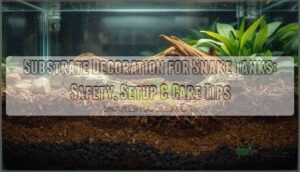
Most snake keepers obsess over temperature gradients and feeding schedules, but the substrate beneath their animal’s belly quietly shapes everything—respiratory health, shedding success, hydration, stress levels, and whether a $300 bioactive build collapses into a mold-ridden mess by week three. The wrong material can trigger liver damage before you notice anything’s wrong.
The right layering system, paired with thoughtful decoration, transforms a glass box into a functional habitat that works with your snake’s biology. Substrate decoration for snake tanks isn’t cosmetic—it’s husbandry, and getting the details right separates thriving animals from ones that merely survive.
Table Of Contents
Key Takeaways
- Substrate choice directly impacts respiratory health, shedding success, hydration, and stress levels—with species-specific needs requiring different materials like coconut fiber for tropical snakes (60–80% humidity) versus dry aspen for desert species with 4–6 inches depth for burrowing.
- Avoid cedar, pine, clumping cat litter, and fine sand entirely as they cause liver damage, respiratory issues, impaction risks, and eye irritation—while feeding in separate bare tubs prevents substrate ingestion during meals.
- Bioactive substrates using 2–3 inch drainage layers, topsoil-sand-clay blends, and microfauna like springtails create self-cleaning ecosystems that naturally regulate humidity and reduce maintenance demands.
- Functional decor like cork bark hides, hardwood branches matching your snake’s body width, and strategically placed moss zones serve dual purposes—supporting natural behaviors like thermoregulation and stress reduction while maintaining visual appeal.
Choosing The Right Substrate for Snake Tanks
Your substrate choice affects everything from respiratory health to shedding success, so you can’t afford to get it wrong. Different materials offer distinct trade-offs in moisture retention, odor control, and ingestion risk—and what works for a ball python won’t necessarily suit a corn snake or boa.
For a deeper look at how moisture needs vary by species, this guide on snake breeding humidity requirements breaks down exactly what each snake needs to thrive.
Here’s what you need to know about the most common options, species-specific recommendations, and bioactive setups that can simplify your maintenance routine.
Pros and Cons of Popular Substrates
Aspen shavings support burrowing and make waste easy to spot, but they mold quickly in humid setups and don’t hold moisture well.
Coconut fiber maintains humidity control for tropical species and traps odors, yet it hides feces and risks scale rot if too wet.
Paper towels simplify tank maintenance and quarantine monitoring, though they offer zero burrowing enrichment and dry out fast, limiting snake behavior expression.
For more details on substrate options and hazards, consider expert advice before choosing material for your snake’s tank.
Substrate Selection by Snake Species
Once you’ve weighed trade-offs, match the substrate to your snake’s biology. Rainforest species like green tree pythons demand moisture-holding coconut fiber or cypress mulch for 60–80% humidity control. Desert hognose and sand boas thrive on dry aspen or coarse sand mixes, though a humid hide filled with damp substrate aids in clean sheds.
Burrowing materials matter: give hognose 4–6 inches of depth for natural tunneling, while surface-cruising corn snakes need only thin layers plus branches.
| Species Type | Substrate Components | Substrate Depth |
|---|---|---|
| Tropical ground (ball pythons) | Coconut husk, cypress mulch | 2–4 inches |
| Desert (hognose, sand boas) | Dry aspen, coarse sand mix | 4–6 inches |
| Climbing (corn snakes) | Chip or shredded bedding | 1–2 inches |
Strong, heavy-bodied constrictors need dense soil blends or cypress that won’t shift when they push through burrowing materials. Small juveniles start on paper for health monitoring, then graduate to enriched reptile habitat decoration. Species with respiratory sensitivity require low-dust options—washed mulch or moistened fiber—to protect lungs. Scale-rot-prone individuals need substrates that dry between mistings, preventing moisture from pooling against belly scales.
Never use cedar or pine; aromatic oils damage the liver and lungs across all snake behavior profiles, regardless of size or origin. For further details on substrate safety and selection, consult expert guidelines.
Bioactive Substrate Options
Bioactive substrates transform static bedding into living ecosystems. You’ll layer 2–3 inches of lightweight clay balls as a drainage system, cover them with mesh, then add 4 inches of topsoil-sand-clay blend—your soil composition base.
Once your layers are in place, choosing the right plants ties everything together—explore tropical snake terrarium plant and substrate guides to match slow-growing, humidity-loving species to your soil blend.
Seed springtails and isopods for microfauna management of waste and mold. This setup regulates humidity control naturally while providing substrate depth for burrowing, turning terrarium decor into functional bioactive terrariums that clean themselves.
Safe and Unsafe Substrate Materials
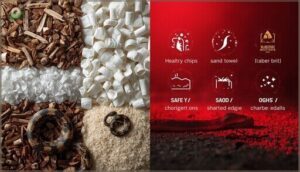
Not all substrate materials support your snake’s health equally—some pose serious respiratory, digestive, or dermatological risks that can escalate into chronic conditions or emergency vet visits. Understanding which substrates to avoid and why they’re dangerous helps you make informed decisions that protect your animal’s long-term welfare.
The following sections break down specific materials you should keep out of your snake’s enclosure and explain the physiological mechanisms behind each risk.
Substrates to Avoid for Snake Health
Toxic materials like cedar shavings and clumping cat litter pose serious respiratory hazards and digestive issues when used in snake tanks. Cedar releases phenolic oils that damage airways, while bentonite clay expands inside the gut, causing life-threatening impaction risks.
Fine silica sand irritates eyes and lungs, and calcium sand contributes to dehydration. Choosing safe substrates protects reptile health and prevents costly veterinary emergencies.
Allergen and Toxin Considerations
Chemical Exposure in reptile enclosure safety extends beyond visible threats. Toxic material risks hide in seemingly harmless decorations, demanding careful vigilance on your part.
- Pressure-treated wood and coated branches leach preservatives and solvents, creating respiratory hazards in warm, humid tanks
- Pesticide residues from landscaped bark or leaves introduce allergen sources through skin contact and inhalation
- Off-gassing plastics and artificial plants release VOCs when heated, undermining bioactive substrates and reptile health
- Fragrance-heavy cleaners leave chemical films on porous decor, compromising terrarium safe conditions and reptile care standards
Preventing Impaction and Respiratory Issues
Prevention starts with the details most keepers overlook. For impaction prevention, feed in a separate bare tub — loose substrate clings to prey and gets swallowed.
For respiratory health, lightly mist suitable substrates to bind dust before it becomes airborne.
Proper thermoregulation and humidity gradients support gut management by keeping digestion moving.
Consistent hydration control through clean water and bioactive substrates rounds out solid reptile care.
Naturalistic Decoration Ideas for Substrate
Once you’ve sorted your substrate, the next step is building a space that actually feels alive. The right combination of natural elements can reduce stress, support thermoregulation, and encourage the behaviors your snake would exhibit in the wild. Here’s what works best regarding rocks, plants, and hides.
Integrating Rocks, Branches, and Moss
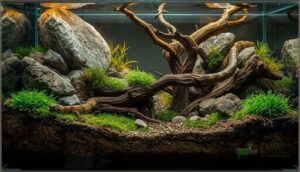
Rock placement, branch stability, and moss selection work together as the structural backbone of naturalistic reptile habitats.
Always set heavy rocks directly on the tank floor — never loose substrate — to prevent crushing injuries.
Choose hardwood branches like manzanita or grapevine, matching diameter to your snake’s body width.
Layer sphagnum moss in targeted zones to build humidity pockets within your basking zones and climbing structures.
Using Live and Artificial Plants
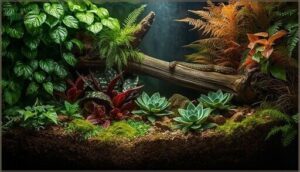
Plant species selection can make or break your naturalistic reptile habitat. Live plants for terrariums regulate humidity through transpiration, support bioactive ecosystems, and reduce snake stress with natural visual barriers.
Artificial plant safety matters too — inspect for frayed edges or loose parts that cause impaction. Both options serve as functional terrarium accessories and reptile habitat decoration when chosen and maintained correctly.
Creating Hiding Spots and Shelters
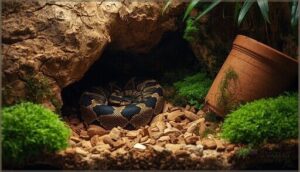
A snake without a proper hiding spot is a stressed snake — and stress kills. Hiding spot design shapes everything from feeding response to immune function. Build your enclosure layouts around these core shelter materials:
- Cork bark hides create lightweight, mold-resistant snake hideaways ideal for cool-side thermal hides
- Resin caves deliver easy-clean reptile shelter and hides with uniform heat absorption
- Humid moss-filled enclosures support shedding as reptile enclosure enrichment
- Terracotta pots retain belly heat, boosting digestion through habitat enrichment
Themed and Enrichment-Oriented Decor
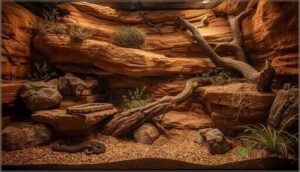
Your snake’s enclosure doesn’t have to look like a bare plastic box — themed decor has come a long way, and it can do real work beyond just looking good.
The right pieces spark natural behaviors, reduce stress, and give your setup a personality that reflects how much you actually care.
Here’s what’s worth considering when you’re ready to go beyond the basics.
Dinosaur and Fantasy Decor Options
Themed reptile terrarium decor has moved well beyond simple rocks and logs—and honestly, that’s great news for your snake’s environment. Dinosaur-themed decor and fantasy castles now serve real functional purposes inside themed reptile enclosures, not just visual ones.
Resin dinosaur skull hides, for example, give snakes a dark interior chamber for security while the flat top doubles as a basking ledge. Dino Decor kits pair a prehistoric accent piece with driftwood and seed pods, building cohesive prehistoric landscapes without overcrowding your floor space. Fantasy castles work similarly—hollow structures that become reptile shelter and hides when positioned correctly on substrate.
| Decor Type | Primary Function | Safety Note |
|---|---|---|
| Dinosaur Skull Hide | Dual hide + basking ledge | Inspect for sharp resin edges |
| Dino Decor Kit | Prehistoric landscape enrichment | Check natural pieces for mold |
| Fantasy Castle Structure | Cave-style reptile hides | Avoid narrow gaps or tight tunnels |
| Themed Background Panel | Visual security + shedding aid | Seal foam with terrarium-safe coating |
| Aquarium-Crossover Pieces | Terrarium decor versatility | Confirm smooth surfaces, no flaking paint |
Before placing any themed reptile enclosures decor, always verify that every opening accommodates your snake’s full body width—snakes will attempt gaps that look too tight, and entrapment is a real risk.
Balancing Aesthetics With Functionality
A beautiful enclosure and a safe one aren’t mutually exclusive—but you do have to plan deliberately. Visual balance means keeping roughly 70% of your floor space in a consistent base substrate, then layering decor intentionally around that foundation.
- Position taller pieces toward the back for depth without blocking sightlines
- Limit high-contrast accent pieces to one or two items
- Anchor branches and cork to prevent rolling injuries
- Match background panels to substrate tones for cohesive reptile habitat design
- Leave a clear front strip for hygiene checks without sacrificing aesthetic themes
Functional design and spatial planning work together—every piece earns its place by serving both form and your snake’s wellbeing.
Encouraging Natural Behaviors Through Decor
Decor that looks good and works hard is the real goal. A well-planned naturalistic vivarium isn’t decoration—it’s applied reptile behavior and psychology made physical.
A naturalistic vivarium is applied reptile psychology made physical
Thermal gradients improve when you stack climbing structures at varied heights, so your snake thermoregulates by choosing elevation. Visual barriers reduce stress, while sensory stimulation from rotating textures and scent-rich wood drives natural foraging.
Maintenance and Hygiene of Substrate Decor
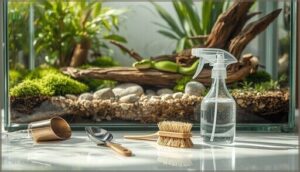
Keeping your snake’s habitat clean isn’t just about appearances — it directly affects your animal’s health, stress levels, and longevity. Substrate decor collects waste, shed skin, and moisture over time, turning even the most thoughtfully designed enclosure into a liability if you ignore routine maintenance.
Here’s what you need to stay on top of it.
Cleaning and Disinfecting Decorations
Keeping your reptile habitat decoration clean isn’t optional — it’s a core part of reptile care. For decor sanitizing, start by scrubbing with dish soap, rinse thoroughly, then apply your chosen disinfectant. Bleach (10%) works on nonporous reptile enclosure accessories, while chlorhexidine suits routine cleaning schedules without harsh fumes. Always dry completely before returning items to your terrarium decor.
Managing Humidity and Mold Prevention
Once your decor is clean and dry, humidity control becomes your next line of defense. Mold thrives where airflow management fails — aim for 60–80% humidity with short misting cycles rather than heavy daily soaks.
Cross ventilation and mesh lid sections stabilize humidity gradients without waterlogging your substrate moisture.
Non-porous reptile habitat decoration like sealed resin resists fungal films, making terrarium maintenance much easier over time.
Signs of Wear and When to Replace Decor
Even small warning signs in your reptile enclosure deserve immediate attention. Watch for fading colors, chalky surfaces, or peeling coatings — these signal decor damage that threatens reptile health. Cracked hides and worn edges harbor bacteria and risk skin cuts.
Build replacement schedules into your terrarium maintenance routine every 3–4 months, and run safety inspections on high-traffic terrarium decor monthly.
Frequently Asked Questions (FAQs)
How to decorate a snake terrarium?
Think of your reptile enclosure as a living room your snake actually uses.
Start with snake hides, add decorative rocks, and layer in visual barriers to create a naturalistic vivarium your snake will thrive in.
What is the best substrate for a snake tank?
Your best substrate for a snake tank depends on species-specific humidity control needs, safety factors, and maintenance preferences.
Tropical snakes thrive on coconut husk or cypress mulch, while desert species require drier, looser materials.
How often should substrate be completely replaced?
Your snake’s substrate usually deserves a complete replacement every 1–3 months, though bioactive terrariums may last years.
Spot-clean daily, monitor humidity control, and swap bedding sooner if odor or mold appears—that’s solid reptile care.
Can substrate depth affect a snakes burrowing behavior?
Absolutely. Depth directly influences burrowing behavior, thermoregulation, and stress levels. Species like hognose and corn snakes need 3–4 inches minimum to tunnel comfortably, create microclimates, and express natural digging instincts within their snake habitat.
What substrate works best under a heat mat?
Like a conductor under a blanket, heat mat safety depends on substrate depth—paper towels or newspaper let warmth reach your snake, while thick coconut fiber can cut thermal efficiency by 15 to 20 degrees.
How do you transition a snake to new substrate safely?
You shift a snake to new substrate safely through gradual introduction, mixing 25–50 percent old material with fresh bedding initially, then replacing remaining portions over two to three changes spaced days apart for stress reduction.
Conclusion
One misstep—a single piece of cedar shavings, a sharp-edged rock, a decoration that traps humidity—can unravel months of careful planning. Your snake won’t complain until damage is irreversible.
But when you nail substrate decoration for snake tanks, everything clicks: shedding completes in one piece, behaviors look natural, and maintenance becomes predictable. The difference between guesswork and precision is measurable.
You’ve got the blueprint now—build something that works, not something that just looks good.
- https://www.thecritterdepot.com/blogs/news/best-substrate-for-ball-pythons-and-other-common-snakes
- https://www.thebiodude.com/blogs/bioactive-terrarium-maintenance-guides-and-faqs/what-is-the-best-type-of-decor-for-arboreal-reptiles
- https://www.coherentmi.com/industry-reports/reptile-enclosure-market
- https://www.animalsathome.ca/best-substrate-for-ball-pythons/
- https://www.familyreptiles.com/post/what-substrate-or-bedding-is-safe-and-best-to-use-for-my-reptile-s-habitat