This site is supported by our readers. We may earn a commission, at no cost to you, if you purchase through links.
Your boa constrictor doesn’t need to bask like a bearded dragon, but dismissing UVB entirely means gambling with calcium metabolism and immune function. Wild boas occupy Ferguson Zone 2—they’re occasional baskers in dappled sunlight, not cave dwellers.
Without proper UVB exposure, even well-fed snakes develop subtle deficiencies that surface as incomplete sheds, respiratory vulnerability, and weakened bone density over time.
The challenge isn’t whether to provide UVB, but which system delivers consistent 2.0-3.0 UVI readings without excessive heat buildup or coverage gaps. From fixture design to bulb longevity, the right lighting setup transforms husbandry from guesswork into measurable, replicable health outcomes.
Table Of Contents
- Key Takeaways
- UVB Lighting Needs for Boa Constrictors
- Choosing The Right UVB Lighting System
- Top 10 UVB Lighting Systems for Boas
- 1. Kasa Smart Power Strip Surge Protector
- 2. Reptile UVB Light Fixture Combo Kit
- 3. Hygger Reptile Light Fixture Combo Kit
- 4. QZQ Reptile UVB Light Fixture
- 5. Repti Zoo UVB Reptile Light Fixture
- 6. QZQ UVB Reptile Light Fixture
- 7. Repti Zoo T5 UVB Lighting Kit
- 8. Reptile UVB Light Fixture
- 9. Lucky Herp Reptile Uvb Light Bulb
- 10. Hygger Reptile UVB Light Fixture
- Setting Up and Maintaining UVB Lighting
- Enhancing Boa Constrictor Health With UVB
- Frequently Asked Questions (FAQs)
- Conclusion
Key Takeaways
- Boa constrictors require Ferguson Zone 2 UVB exposure with basking UVI readings between 2.0-3.0 to support calcium metabolism, vitamin D3 synthesis, and immune function—not optional supplementation but measurable preventive medicine.
- T5 HO linear fixtures outperform compact fluorescent options by delivering 20-40% more consistent output across enclosure zones, though all UVB bulbs degrade significantly within 6-12 months and require scheduled replacement regardless of visible light output.
- Proper UVB setup demands precise positioning 6-18 inches above basking zones, verified with a Solarmeter 6.5 rather than guesswork, since mesh screens and glass can block up to 95% of therapeutic UV transmission.
- Consistent 12-14 hour photoperiods automated through smart timers anchor circadian rhythms and prevent metabolic disruption, while seasonal adjustments of 1-2 hours weekly mirror natural light cycles without triggering stress responses.
UVB Lighting Needs for Boa Constrictors
Your boa constrictor needs UVB lighting that matches its natural exposure patterns—not too intense, not too weak. These semi-arboreal snakes fall into Ferguson Zone 2, which means they’re partial-sun baskers requiring a UVI of 2.0-3.0 and consistent 12-14 hour photoperiods to support calcium metabolism and immune function.
A complete boa constrictor lighting guide can help you select the right UVB bulb strength and placement for your enclosure setup.
Let’s walk through what your snake actually needs before we get to the specific lighting systems that deliver those results.
Ferguson Zone 2 and Basking UVI Recommendations
Your boa constrictor falls under Ferguson Zone 2, which designates occasional baskers in partial sun.
You’ll want to aim for a basking UVI between 1.1 and 3.0 at the basking spot itself, while maintaining 0.7 to 1.0 UVI in the surrounding air. Use a UVB meter to verify zone calibration—lighting gradients matter, and precise UVI targets at the basking area prevent both underexposure and overexposure in your boa constrictor UVB setup.
For a more detailed explanation of Ferguson’s UVB exposure zones, consult reptile husbandry science resources.
Photoperiod Requirements for Optimal Health
Consistent light cycles anchor circadian rhythms in your boa. Aim for 12 to 14 hours of daylight during active seasons, paired with 10 to 12 hours of uninterrupted darkness.
Gradual seasonal shifts—adding or subtracting one hour per week—mirror natural photoperiod transitions and prevent metabolic disruption. Abrupt changes trigger elevated cortisol and appetite fluctuations, so maintain stable reptile lighting schedules.
Use smart timers to automate thermal gradients and support predictable snake behavior tied to boa constrictor care and health monitoring.
Effects of UVB on Calcium Absorption and Immunity
UVB therapy drives vitamin D synthesis in your boa’s skin, which converts to calcitriol—the active hormone that ramps up calcium absorption in the intestinal lining. Higher calcium metabolism promotes bone health and muscle function during growth.
UVB lighting triggers vitamin D synthesis in your boa’s skin, driving the calcium absorption that builds strong bones and powers muscle function
Beyond skeletal benefits, vitamin D levels modulate immune response by:
- Boosting antimicrobial peptide production in mucosal barriers
- Supporting regulatory T cells that maintain immune tolerance
- Enhancing digestive-tract immunity against common infections
- Influencing cytokine profiles tied to inflammation control
Adequate UVB lighting sustains vitamin D3 stores, reducing infection susceptibility and ensuring steady calcium homeostasis. Recent research has shown that are more pronounced than those from UVA exposure under controlled conditions. That’s why meeting UVB requirements for reptiles isn’t optional—it’s physiological support your snake can’t manufacture on its own.
Risks of Insufficient or Excessive UVB Exposure
While UVB lighting facilitates vitamin D3 synthesis and circadian rhythms, improper UVB exposure brings real health consequences. Too little weakens immunity and calcium metabolism; too much causes skin damage, eye irritation, and thermal stress—especially in juveniles with delicate scales.
High-intensity lamps without proper distance trigger erythema, dehydration, and behavioral changes like repetitive basking. Meeting UVB requirements for reptiles means balancing output, duration, and placement to avoid UVB toxicity.
Choosing The Right UVB Lighting System
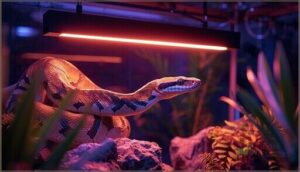
Selecting the right UVB system for your boa constrictor requires balancing output consistency, fixture durability, and safe placement within the enclosure. You’ll need to compare T5 HO linear fixtures against compact fluorescent options, evaluate bulb longevity and replacement schedules, and guarantee proper lamp positioning to avoid eye strain or underexposure.
Let’s walk through the technical considerations that separate effective UVB systems from suboptimal setups.
T5 HO Linear Fixtures Vs. Compact Fluorescent Options
When you compare T5 HO linear fixtures to compact fluorescent options, lamp efficiency and lighting uniformity tilt decisively in favor of T5 HO systems. These fixtures produce higher lumens per watt, deliver brighter central irradiance, and create even UVB lamp placement and distance across your boa’s basking zone.
Fixture design also aids better heat management, while energy costs remain lower despite the higher initial investment.
Bulb Output, Durability, and Replacement Intervals
You need to track bulb degradation carefully because UVB intensity drops 20 to 40 percent within the first six to twelve months, even when the lamp stays lit. T5 HO linear fixtures maintain higher output consistency and lamp efficiency compared to compact options.
Mark replacement schedules on your calendar every six months to preserve therapeutic UVB UVA exposure and prevent silent deficiencies in your boa’s calcium metabolism.
Proper Lamp Placement and Enclosure Coverage
Position your T5 HO linear fixtures 6 to 12 inches above the basking zones to deliver UVI readings of 2.0 to 3.0 without overheating. Use a reflector hood in your reptile enclosure setup to direct UVB lighting for reptiles onto target surfaces, ensuring lamp positioning creates even coverage across basking zones.
Angle lighting systems so UVB reflection reaches mid-enclosure areas while avoiding sleeping hides.
Safety Considerations for Boa Constrictors
Improper lighting guards turn helpful UVB lighting into a hazard for your boa constrictor. Protect your snake from burns, electrical risks, and escape attempts with these critical safety measures for boa constrictor husbandry:
- Install tamper-resistant fixtures to prevent heat stress and direct contact burns
- Use secure enclosure lids to eliminate snake escapes near electrical cords
- Monitor for eye protection needs by checking for squinting or light avoidance behaviors
These steps safeguard reptile health and wellness in your reptile lighting systems.
Top 10 UVB Lighting Systems for Boas
You’ve narrowed down your requirements—now let’s look at specific products that deliver reliable UVB for boa constrictors. Each system below offers different fixture sizes, bulb compatibility, and installation options to match your enclosure setup.
I’ve selected these ten based on performance data, keeper feedback, and compatibility with Ferguson Zone 2 parameters.
1. Kasa Smart Power Strip Surge Protector
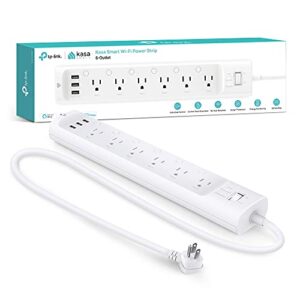
You’ll find few lighting solutions as practical as the Kasa Smart Power Strip Surge Protector for managing your boa’s photoperiod. With 6 independently controllable outlets and ETL-certified surge protection rated at 500V clamping, you’re protecting both your snake and your investment.
The 2.4 GHz Wi-Fi connectivity syncs with local sunrise-sunset patterns—eliminating the guesswork from your 12-14 hour photoperiod schedule.
Energy monitoring at the outlet level lets you track UVB fixture performance over time, while voice control integration simplifies daily management.
| Best For | Reptile owners who want reliable, automated control over their boa’s lighting schedule with energy monitoring and surge protection for expensive UVB fixtures. |
|---|---|
| Power | 1875W max |
| UVB Output | N/A |
| Material | Plastic |
| Weight | Not specified |
| Color | Multi |
| Special Features | Smart control |
| Additional Features |
|
- Six independently controlled outlets let you manage heating, lighting, and accessories on separate schedules
- Energy monitoring helps you catch failing UVB bulbs before they stop producing the light your snake needs
- Surge protection rated at 500V keeps your expensive reptile equipment safe from power spikes
- The 31-command limit per outlet might be restrictive if you’re running complex lighting cycles
- USB ports don’t fast-charge, so you can’t quickly power up backup thermometers or humidity monitors
- The always-on LEDs can disturb nocturnal snakes if the strip is placed near the enclosure
2. Reptile UVB Light Fixture Combo Kit
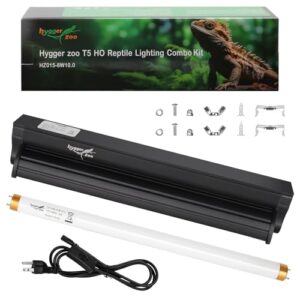
When you’re ready to consolidate heat and UVB in a single unit, the Reptile UVB Combo Kit delivers Ferguson Zone 2 conditions through its dome-style reflector design. The ceramic socket accommodates bulbs up to 150-200 watts, while the reflective metal interior concentrates UVB rays toward your boa’s basking zone—generally maintaining a 2.0-3.0 UVI at proper distances.
Built-in ventilation dissipates heat without compromising UVB transmission. You’ll need to replace bulbs every 6-12 months to sustain therapeutic output levels for calcium absorption.
| Best For | Reptile owners seeking a space-saving fixture that combines heat and UVB output in one unit, especially for desert species like bearded dragons that need Ferguson Zone 2 conditions. |
|---|---|
| Power | 8W |
| UVB Output | 10.0 |
| Material | Aluminum |
| Weight | 1.06 lbs |
| Color | Black |
| Special Features | Curved reflector |
| Additional Features |
|
- Dual-purpose design consolidates heating and UVB in a single fixture, reducing clutter and simplifying setup
- Reflective aluminum construction concentrates UVB rays effectively while providing good heat dissipation for longer bulb life
- Versatile mounting options allow placement on mesh tops or inside enclosures to fit different tank configurations
- Requires bulb replacements every 6-12 months to maintain proper UVB levels, adding ongoing maintenance costs
- May not provide adequate coverage for larger enclosures like 120-gallon tanks
- Some users have reported durability concerns and issues with the fixture staying securely in place
3. Hygger Reptile Light Fixture Combo Kit
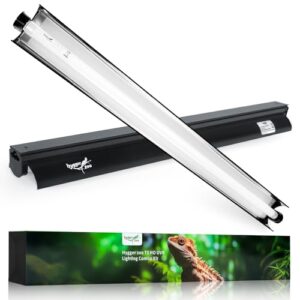
The Hygger T5 HO fixture (24W, 10.0 UVB) shifts from dome-style to linear coverage, distributing Ferguson Zone 2 lighting across 23-inch enclosures. Its curved reflector boosts spectral efficiency, delivering 2.0-3.0 UVI at 4-14 inch distances depending on your setup.
You’ll appreciate the removable power cable with an integrated switch for daily cycling. Replace the bulb every 6-12 months—some users report early burnout, so monitor output with a Solarmeter 6.5 to maintain calcium-supporting UVB levels.
| Best For | Reptile owners with 23-inch enclosures who need reliable linear UVB coverage for desert or tropical species like bearded dragons and tortoises. |
|---|---|
| Power | 24W |
| UVB Output | 10.0 |
| Material | Glass |
| Weight | 1.17 lbs |
| Color | Black |
| Special Features | On/off switch |
| Additional Features |
|
- Curved reflector increases UVB efficiency across the entire enclosure length
- Removable power cable with on/off switch makes daily light cycling easy
- Energy-efficient 24W design with safety features like flame-retardant materials
- Some users experience bulbs burning out faster than expected
- May produce dimmer output compared to other 24W fixtures
- Quality control issues reported, including loose parts and faulty contacts
4. QZQ Reptile UVB Light Fixture
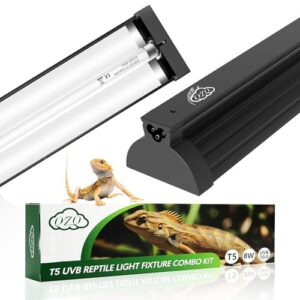
The QZQ LED fixture replaces traditional fluorescent tubes with a 24-watt aluminum module, lowering heat output while maintaining Ferguson Zone 2 UVB. Four preset modes—UVB, UVA, combined white, and dimmed night—suit varied keeper schedules, and the built-in timer eliminates external controllers.
Mount it 12-18 inches above your boa’s basking perch to achieve 2.0-3.0 UVI. The memory function restores settings after power cuts, and a low-UVB indicator prompts replacement before output drops. Replace bulbs every 6-12 months despite the 50,000-hour LED lifespan claim.
| Best For | Desert reptile owners who want a reliable, easy-to-install UVB lighting solution for small to medium-sized terrariums housing bearded dragons, geckos, or tortoises. |
|---|---|
| Power | 8W |
| UVB Output | 10.0 |
| Material | Plastic |
| Weight | 1.06 lbs |
| Color | Black |
| Special Features | Detachable cord |
| Additional Features |
|
- Built-in timer and on/off switch make daily lighting schedules simple without extra equipment
- High UVB output (10% UVB, 30% UVA) helps prevent metabolic bone disease and encourages natural basking behavior
- Lightweight and compact design with multiple mounting options for flexible installation
- May not provide enough UVB coverage for larger tanks without additional fixtures
- Bulbs typically need replacement every six months, adding to ongoing maintenance costs
- Requires removing protective blue film from reflector before use for proper UVB output
5. Repti Zoo UVB Reptile Light Fixture
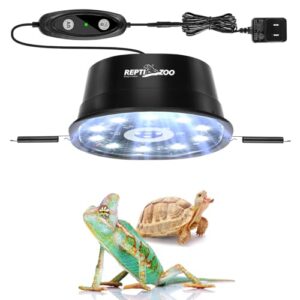
The Repti Zoo fixture houses two lamps—one UVB, one heat—in a single 1.97 × 3.94 × 3.94-inch dome, streamlining your enclosure overhead. Its dual-mode switch toggles between UVB 5.0 (Tropical) and UVB 10.0 (Desert); you’ll want Tropical mode to hit Ferguson Zone 2 targets.
Mount the detachable reflector 8–14 inches above basking zones, then verify output with a Solarmeter 6.5. The ETL-listed ballast manages high temperatures, and the 6-watt LED draws minimal power.
Replace bulbs every six months to sustain therapeutic UVI.
| Best For | Reptile owners who need an all-in-one fixture with adjustable UVB settings for different species and want to save space with a dual-lamp setup. |
|---|---|
| Power | 6W |
| UVB Output | 5.0/10.0 modes |
| Material | ABS/LED |
| Weight | 7.1 oz |
| Color | White |
| Special Features | Dimming function |
| Additional Features |
|
- Combines UVB and heat in one compact fixture, keeping your enclosure setup simple
- Switchable between tropical (5.0) and desert (10.0) modes so you can match your reptile’s natural habitat
- Energy-efficient 6W LED that pulls way less power than traditional bulbs
- Higher price point compared to basic single-lamp fixtures
- On/off button placement on the cord can interfere with automatic timers
- Some durability concerns with units failing within six months of use
6. QZQ UVB Reptile Light Fixture
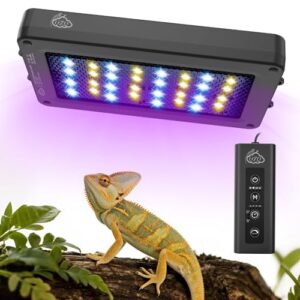
If you prefer an all-in-one LED solution, this 24-watt fixture packs UVB, UVA, daylight, warm light, and moonlight modes into a 9.65 × 7.72-inch housing. Toggle between modes or dim intensity to match your boa’s basking height—4 to 18 inches—and target a UVI of 2.0–3.0.
The built-in timer automates 12–14-hour photoperiods, and a memory function restores your schedule after outages. Aluminum housing dissipates heat effectively, extending LED lifespan while keeping your enclosure safe.
| Best For | Reptile owners who want a single fixture that handles day, night, and UV lighting without juggling multiple bulbs. |
|---|---|
| Power | 24W |
| UVB Output | UVB LEDs |
| Material | Plastic |
| Weight | 1.28 lbs |
| Color | Black |
| Special Features | Timer/memory |
| Additional Features |
|
- Four lighting modes (daylight, warm, UV, moonlight) plus dimming let you dial in the exact conditions your reptile needs
- Built-in timer automates your 12–14-hour light cycle and remembers settings after power outages
- Compact aluminum design runs cool and fits smaller enclosures without overheating
- Some users report weak UVB output—you may still need a separate UVB bulb for larger reptiles like bearded dragons
- Timer only supports one daily schedule, so you can’t program different weekend routines
- Short cord length forces you to buy an extension for bigger setups
7. Repti Zoo T5 UVB Lighting Kit
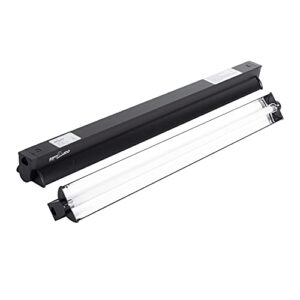
This 24-watt T5 HO kit ships with a Rainforest 5.0 UVB lamp and a detachable curved reflector that concentrates UVB forward, boosting exposure in your boa’s basking zone.
Mount it 4 to 18 inches above substrate to reach a UVI of 2.0–3.0, depending on your Solarmeter reading.
The low-profile design fits tight vivariums, the on/off switch simplifies photoperiod control, and the ETL-certified ballast ensures rapid, consistent start-up.
Replace the bulb every 6–12 months to maintain therapeutic output.
| Best For | Keepers who need a space-efficient UVB solution for moderate-output desert or forest species in standard-sized enclosures. |
|---|---|
| Power | 24W |
| UVB Output | 10.0 |
| Material | Metal/Glass |
| Weight | Not specified |
| Color | Black |
| Special Features | Removable cable |
| Additional Features |
|
- Curved reflector concentrates UVB rays forward, increasing effective output without higher wattage
- Low-profile housing fits under mesh tops or into tight cabinet setups where bulky fixtures won’t work
- Built-in on/off switch and detachable cord make daily light cycles and maintenance easier
- Some users report bulbs burning out faster than the advertised 6–12 month lifespan
- Replacement T5 HO bulbs run more expensive than standard fluorescent tubes
- 100–120V input only—international users need a step-down transformer or risk damaging the ballast
8. Reptile UVB Light Fixture
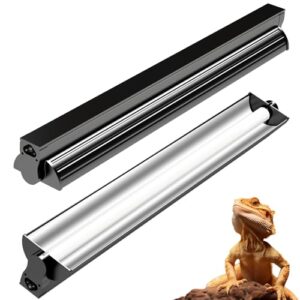
This 8-watt T5 HO system pairs a replaceable UVB 10.0 bulb with an alloy reflective layer that maximizes output across your boa’s habitat.
You’ll adjust the distance from 4 to 18 inches above the basking site to dial in a UVI between 2.0 and 3.0—use your Solarmeter to confirm.
The detachable cable and integrated on/off switch simplify photoperiod management, and the space-saving profile suits compact enclosures.
Replace the bulb every 6–12 months to sustain therapeutic UVB levels.
| Best For | Boa keepers who need a reliable UVB system with adjustable placement to maintain proper vitamin D3 synthesis and calcium absorption in compact to mid-sized enclosures. |
|---|---|
| Power | 8W |
| UVB Output | 10.0 |
| Material | Aluminum |
| Weight | Not specified |
| Color | Black |
| Special Features | Alloy reflector |
| Additional Features |
|
- Alloy reflective layer maximizes UVB output, letting you fine-tune UV exposure by adjusting height between 4 and 18 inches
- Replaceable bulb design keeps long-term costs manageable while the built-in ballast and on/off switch simplify daily photoperiod control
- Space-saving profile fits snugly in smaller setups without crowding heat lamps or décor
- Some buyers reported receiving broken or defective units on arrival, suggesting inconsistent quality control
- Bulbs need replacement every 6–12 months to maintain therapeutic UVB levels, adding recurring maintenance
- May not suit all reptile habitats or species—double-check your boa’s specific UVB requirements before committing
9. Lucky Herp Reptile Uvb Light Bulb
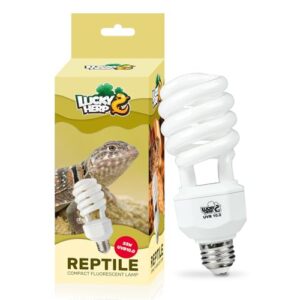
This compact fluorescent option delivers 10% UVB and 30% UVA from a standard E26 socket, making it an easy retrofit for existing domes.
You’ll position the 23-watt bulb 4–14 inches above your boa’s preferred perch, then confirm a basking UVI of 2.0–3.0 with your meter.
The 90% CRI mimics natural sunlight and aids calcium metabolism, though you’ll need to replace it every 6–12 months to maintain effective UVB output.
Monitor closely—heat from nearby sources can shorten lifespan.
| Best For | Reptile owners looking for an affordable, easy-to-install UVB solution that fits standard lamp sockets and works well for desert species like bearded dragons and tortoises. |
|---|---|
| Power | 23W |
| UVB Output | 10% |
| Material | Glass |
| Weight | 4.7 oz |
| Color | White |
| Special Features | E26 base |
| Additional Features |
|
- Fits any standard E26 socket, so you can use it with domes you already own
- Delivers solid UVB (10%) and UVA (30%) output with a high 90% CRI that mimics natural sunlight
- Supports essential calcium metabolism and encourages natural behaviors like foraging and exploring
- Needs replacement every 6–12 months, and some users report the bulb dying even sooner
- Heat from nearby lights can damage the bulb and shorten its lifespan
- You might receive a defective unit—quality control seems inconsistent based on user reports
10. Hygger Reptile UVB Light Fixture
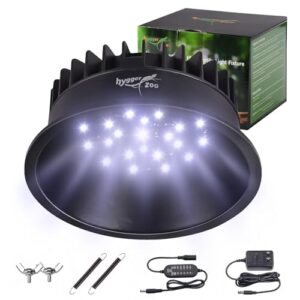
This LED fixture replaces traditional fluorescent tubes with a 5-watt LED array that emits UVA and UVB in ratios similar to natural sunlight. The aluminum housing dissipates heat efficiently, extending service life beyond standard bulbs.
You’ll mount the curved reflector 4–18 inches above your boa’s basking zone, then verify UVI with your Solarmeter. Hygger’s built-in timer and adjustable brightness let you program gradual sunrise–sunset transitions.
Though the fixture offers advanced features, you’ll still need to confirm consistent UVB output every 90 days to maintain Ferguson Zone 2 conditions.
| Best For | Reptile keepers who want an energy-efficient LED alternative to fluorescent UVB tubes with programmable lighting schedules for their bearded dragons, geckos, or turtles. |
|---|---|
| Power | 5W |
| UVB Output | High UVB |
| Material | Aluminum |
| Weight | 14 oz |
| Color | Black |
| Special Features | Timer function |
| Additional Features |
|
- Built-in timer and adjustable brightness let you automate sunrise-sunset cycles without extra equipment
- Aluminum construction dissipates heat better than plastic housings, extending bulb life
- Curved reflector design concentrates UVB rays more effectively than flat fixtures
- UVB output needs verification every 90 days to ensure it stays within safe ranges
- Some users report temperature fluctuations that require additional heat sources
- May produce light that’s too intense for species requiring lower UVB levels
Setting Up and Maintaining UVB Lighting
Proper setup and ongoing maintenance determine whether your UVB system actually delivers therapeutic benefits or simply wastes electricity. You’ll need to establish correct lamp positioning, measure output with precision tools, and maintain replacement schedules that align with actual bulb degradation—not manufacturer marketing claims.
Let’s walk through the four critical steps that separate functional lighting from guesswork.
Determining Optimal Lamp Distance and Angle
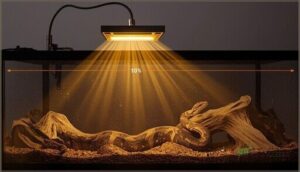
You’ll need to place your UVB bulb 12 to 18 inches above the basking platform to achieve Ferguson Zone 2 conditions. Distance guidelines recommend tilting the fixture at a 25 to 35-degree angle so the beam targets the basking surface directly.
Proper lighting geometry ensures your boa receives adequate exposure without hot spots, while mesh or screen lids can reduce UVB transmission by up to 50%.
Using Solarmeter 6.5 for Accurate UVI Readings
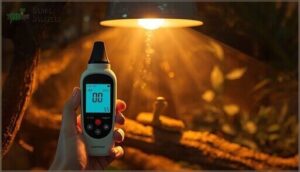
Accurate UVI calibration starts with understanding how your meter reads the UV index across your reptile lighting systems. The Solarmeter 6.5 delivers precision of 0.1 UVI, but reading consistency depends on four factors:
- Sensor placement directly above the basking zone, held parallel to the UVB bulb
- Lighting angles measured at 25-35 degrees to match your fixture tilt
- Meter accuracy verified quarterly against known reference sources
- Clean sensor windows to prevent dust-biased low readings
Scheduling and Automating Light Cycles
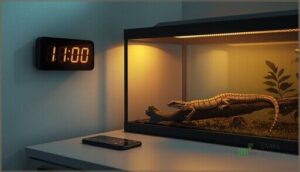
Once you’ve verified your UVI readings, automation tools become your best ally. Smart timers eliminate daily guesswork by syncing photoperiods with natural circadian rhythms—12 hours on, 12 hours off. Digital controllers allow you to customize lighting synchronization for seasonal shifts, while battery backups prevent schedule drift during outages.
Your reptile lighting requirements demand consistency. Set UVB cycles to mirror dawn and dusk, pair light cycle timing with basking heat, and enable override modes on feeding days to maintain routine without disrupting UVB lighting exposure.
| Controller Type | Key Benefit |
|---|---|
| Digital timers | Precise daily cycle optimization |
| Smart plugs | Remote monitoring via app |
| Built-in fixture timers | Multiple daily ramps |
| Battery backup controllers | Schedule stability during power loss |
Replacing Bulbs and Monitoring Output Regularly
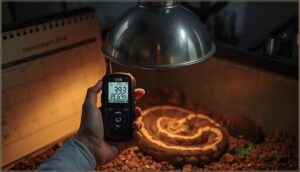
Your smart timer won’t mean much if UVB output fades below therapeutic levels. Replace UVB bulbs every 6 to 12 months—even when they still glow—because invisible UV decay happens long before visible dimming. Monitor snake behavior weekly for appetite shifts or lethargy, and measure UVB output quarterly with a Solarmeter 6.5 to confirm basking zones stay within Ferguson Zone 2 parameters.
- Track replacement dates in a log with bulb type, wattage, and recorded UVI values
- Inspect fixtures monthly for flickering or physical damage that reduces UVB UVA transmission
- Rotate lamp locations annually to even out wear and prevent uneven reptile UVB lighting coverage
Enhancing Boa Constrictor Health With UVB
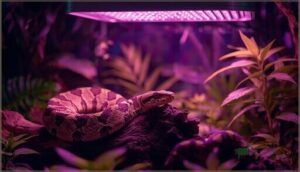
UVB lighting doesn’t work in isolation—it’s part of a complete health strategy that includes diet, seasonal adjustments, and behavioral observation. You’ll need to recognize what healthy activity looks like versus stress signals, then fine-tune your setup accordingly.
Let’s walk through the practical steps that transform good lighting into measurable health outcomes for your boa.
Signs of Healthy Vs. Stressed Snakes
A healthy boa constrictor shows rounded muscle tone, clear eyes, and steady breathing—no wheezing or open-mouth distress. You’ll notice consistent feeding cues and regular activity patterns throughout its enclosure.
Stress signals include prolonged lethargy, incomplete shedding, or unexplained weight loss lasting beyond a week.
Proper UVB lighting promotes these health indicators by enhancing calcium absorption and immune function, contributing to peak boa constrictor health and wellness.
Integrating UVB With Diet and Supplementation
Once your lighting meets Ferguson Zone 2 targets, pair UVB exposure with a diet rich in calcium and balanced phosphorus—usually a 1.5 to 2.0:1 ratio—to enhance calcium absorption and vitamin D balance. This synergy drives immune support and metabolic health.
- Vitamin D3 synthesis depends on consistent UVB and adequate dietary calcium working together
- Calcium optimization requires balanced phosphorus levels to prevent interference with gut uptake
- Supplement strategies adjust vitamin D3 doses during winter months when UVB exposure naturally declines
- Reptile nutrition and diet should include fortified prey or targeted mineral supplementation alongside UVB lighting
- Boa constrictor care improves measurably when you align feeding schedules with peak photoperiod activity windows
Seasonal Lighting Adjustments for Natural Cycles
Gradually ramping photoperiod by 1–2 hours per week during fall mimics shorter winter days and maintains your boa’s circadian rhythms without triggering stress. Pair these seasonal lighting adjustments with cooler basking zones and stable humidity control around 50–60 percent to maintain metabolic balance.
| Season | Photoperiod | Temperature Alignment |
|---|---|---|
| Winter | 10–12 hours | 28–30°C basking, 4–6°C night drop |
| Spring | Gradual 2–4 week ramp-up | Restore baseline temps |
| Summer | 12–14 hours | 30–32°C basking |
| Fall | Reduce 1–2 hours weekly | Lower basking by 2°C |
| Year-round | Consistent UVB exposure | 50–60% humidity |
This photoperiod management aligns reptile lighting with natural cycles, enhancing long-term health through precise light cycle and UVB lighting coordination.
Monitoring Behavior and Making Necessary Adjustments
Systematic behavior tracking reveals when photoperiod and UVB lighting need fine-tuning. Monitor these health indicators closely:
- Basking duration under 60 minutes daily for two consecutive weeks signals insufficient exposure or improper lamp placement.
- UVI drift beyond ±0.5 units at the basking site requires immediate lighting adjustments to maintain circadian rhythms.
- Appetite changes or lethargy indicate adjustment triggers for boa constrictor behavior optimization.
Document observations weekly to improve your snake monitoring protocol and reptile lighting setup.
Frequently Asked Questions (FAQs)
How much UVB do boas need?
Boa constrictors classified as Ferguson Zone 2 partial sun baskers thrive with a basking UVI between 0 and 0, supporting calcium absorption, vitamin D3 synthesis, and immune function without risking overexposure stress.
Is too much UVB bad for snakes?
Yes—excessive UVB exposure poses serious health risks for snakes. Prolonged high-intensity UVB lighting can cause skin burns, eye damage, and elevated snake stress levels. UVB toxicity from vitamin D3 oversynthesis may disrupt calcium metabolism in your boa constrictor.
Can boa constrictors survive without UVB lighting?
Long before electric lights existed, wild boas thrived. Captive specimens can survive without UVB exposure if you fine-tune calcium supplementation and diet.
However, UVB lighting improves calcium absorption, immunity, and overall vitality in boa constrictors.
Do different boa species need different UVB?
Most boa constrictor species tolerate similar Ferguson Zone 2 UVB levels—0 to 0 UVI—regardless of genetics or origin.
Individual behavior and basking habits matter more than species variations when adjusting reptile lighting and photoperiod schedules.
How does enclosure size affect UVB distribution?
You might assume a small cage needs weaker UVB, but enclosure size dramatically affects UVB gradients and coverage areas.
Larger habitats require higher-output fixtures or multiple UVB lamp technology units to maintain therapeutic distance effects across all reptile lighting zones.
What materials block or reduce UVB transmission?
Regular glass, polycarbonate panels, dense fabrics, and UV-blocking films markedly reduce UVB transmission—sometimes by over 95 percent.
Even fine mesh screens filter meaningful amounts of the UV spectrum your boa constrictor requires for proper calcium metabolism.
Should juvenile boas receive different UVB levels?
Across the board, juveniles need the same basking zones as adults—a UVI of 0 to 0.
UVB dosage promotes snake development and bone health when paired with proper photoperiod and reptile lighting schedules.
Conclusion
Think of UVB as preventive medicine, not an optional supplement. The right system—whether a T5 HO fixture or carefully positioned compact bulb—delivers measurable Ferguson Zone 2 exposure that aids calcium metabolism and immune resilience.
Your choice among these uvb lighting systems for boa constrictors determines whether you’re reacting to deficiencies or preventing them entirely.
Measure your UVI readings, replace bulbs on schedule, and watch your snake thrive with proper photoperiod discipline.