This site is supported by our readers. We may earn a commission, at no cost to you, if you purchase through links.

Your snake wedges itself behind the water bowl again. Or curls up in the far corner of the enclosure, exposed and anxious. This behavior tells you something’s off—and it’s likely the hide.
A proper hide isn’t just décor; it’s essential for your snake’s mental and physical health. Snakes need secure, dark spaces where they feel protected from perceived threats, whether that’s you walking by or ambient household activity.
Without a suitable hide, they experience chronic stress, which suppresses their immune system and can lead to feeding refusal or respiratory infections. The right hide fits your snake snugly, stays clean easily, and places correctly within the temperature gradient.
Getting these details right transforms your snake from a stressed, reclusive pet into a confident, thriving animal.
Table Of Contents
Key Takeaways
- Your snake needs at least two hides—one in the warm zone and one in the cool zone—sized 1.5 to 2 times its body length with snug entry points to prevent chronic stress that suppresses immune function and causes feeding refusal.
- Nonporous materials like ceramic and smooth plastic resist bacterial buildup and simplify disinfection, while porous options like wood and cork absorb moisture and harbor hidden microbes that compromise your snake’s health.
- Strategic placement of hides within your enclosure’s thermal gradient allows your snake to thermoregulate naturally, shuttling between a warm refuge at 86-88°F for digestion and a cool retreat below 80°F for temperature control.
- Weekly inspections for cracks, mold, and damage combined with daily spot cleaning and monthly deep disinfection keep hides safe and functional, preventing injuries and disease while supporting your snake’s natural behaviors.
Key Features of an Effective Snake Hide
A good snake hide isn’t just a decoration—it’s a critical piece of your snake’s health and happiness. The right hide can mean the difference between a stressed, skittish snake and one that thrives in captivity.
The right hide transforms a stressed, skittish snake into one that truly thrives in captivity
Let’s look at the four essential features every effective snake hide needs to have.
Size and Fit for The Snake
Size and Fit for The Snake matter more than aesthetics. Your snake hide should accommodate the widest body diameter with 2–3 diameters of coiling space inside—snug but not cramped. Ideal length? 1.5 to 2 times snake length. The entry size allows easy passage without exposing your snake. Proper hide clearance prevents stress-induced rubbing.
Once you’ve nailed the dimensions, explore the different types of boa constrictor hides to find materials and designs that suit both your snake’s behavior and your enclosure style.
Think custom suit, not circus tent—reptile hide sizing directly impacts your snake care and housing success. Ensuring the hide’s design is based on scientific study methods is essential for peak snake care.
Material Safety and Durability
Once you’ve nailed the fit, material safety becomes your next lifesaver. You need nonporous surfaces like ceramic hides or plastic hides that resist bacterial buildup—durable finishes won’t crack under cleaning cycles. Avoid toxic material that off-gases in warm enclosures.
Check secure fasteners stay tight and look for chemical resistance in any reptile hide. Wooden hides can absorb waste, so weigh trade-offs carefully. Your snake hide should outlast years of humidity without shedding fragments.
If you keep a corn snake, remember that their nocturnal activity patterns mean they’ll spend daylight hours inside the hide, so durability matters even more.
Darkness and Security
After choosing safe materials, darkness and security seal the deal. Your snake hide needs opaque entry points that block light intrusion—visual concealment keeps nocturnal species calm.
Low light inside mimics the natural camouflage effect, reducing stress-induced pacing. That consistent shading across the hide box maintains thermal stability without glare revealing your pet’s shape.
First-time owners can explore beginner-friendly hide box options that balance proper coverage with easy monitoring during health checks.
A secure entry means no direct line-of-sight exposure, so your reptile hide truly functions as a refuge.
Pairing your hide with natural reptile habitat decorations like branches or foliage creates visual barriers that enhance your pet’s sense of safety.
Ease of Cleaning and Maintenance
Once darkness provides security, cleaning becomes your next priority. Nonporous surfaces like polypropylene resist bacteria and mold better than wood—smooth finishes wipe down fast with reptile-safe disinfectants.
Check your snake hide weekly for debris, then deep-clean monthly using gentle sanitation protocols. Simple maintenance schedules keep your reptile enclosure healthy without disrupting your pet’s routine.
Best Materials for Snake Hides
Not all hide materials are created equal. Some hold up better to cleaning, while others pose hidden risks to your snake’s health.
Let’s break down the most common options so you can choose what actually works for your setup.
Pros and Cons of Plastic Hides
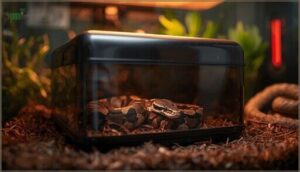
Plastic hides are the workhorse of reptile enclosures—affordable, lightweight, and surprisingly practical for your snake’s habitat. Let me break down what you need to know about plastic hide durability and safety features:
- Budget-friendly and easy to move: You won’t break the bank, and relocating them during cleaning is straightforward.
- Simple maintenance: Disinfecting between cage cleanings takes minutes with reptile-safe products.
- Variable heat retention: They don’t hold warmth like porous materials—consider placement carefully.
Benefits of Ceramic and Resin Hides
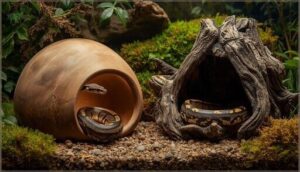
Ceramic hides and resin options are a lifesaver for long-term reptile enclosure design. Their nonporous surfaces resist bacterial buildup, making disinfection straightforward. You’ll love their thermal mass—they hold warmth beautifully, supporting your snake’s thermoregulation needs.
Pair them with damp moss for humidity control during shed cycles. These materials deliver microclimate stability, hide durability, and proven stress reduction benefits that keep your reptile hide investment solid for years.
Providing a suitable reptile hide environment is vital for your pet’s well-being, as discussed in reptile care resources.
Natural Options: Wood, Cork, and Log Hides

Natural aesthetics meet function when you choose wooden hides, cork bark hides, or log hides. These sustainable sourcing champions offer authentic wood texture and familiar cues that reduce stress.
Consider these cork benefits:
- Lightweight and naturally antimicrobial for easy handling
- Resistant to mold when kept dry
- Outstanding log durability in species with low warping tendencies
Your snake hide becomes a stress-reducing retreat with proper selection.
Comparing Porous Vs. Nonporous Materials

Think of your reptile hide choice as a long-term investment in health. Nonporous materials—like ceramic hides and smooth plastic—resist microbial growth and allow thorough surface disinfection after every deep clean.
Porous materials such as wooden hides and cork bark hides absorb moisture, creating hidden reservoirs for bacteria and mold.
Material comparison shows nonporous options win for moisture control and hide durability, especially in humid setups.
Placement and Design Tips for Snake Hides
You can’t just toss a hide anywhere in your snake’s enclosure and call it done. Strategic placement makes the difference between a stressed snake that won’t eat and one that thrives.
Let’s walk through the key design and placement principles that’ll turn your setup into a proper habitat.
Creating Temperature Gradients
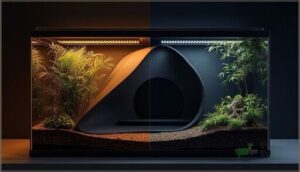
A proper thermal gradient is your snake’s personal climate control system. You’ll need a heat source positioned at one end to create a warm zone around 88–92°F, while the opposite side stays cooler at 75–82°F.
This temperature range lets your snake practice natural thermoregulation—moving between zones as needed. Good reptile habitat design means your snake picks the perfect spot, not you.
Positioning in Warm and Cool Zones
Your snake needs at least one hide in each thermal zone—a warm zone refuge around 86–88°F for digestion and a cool zone retreat below 80°F for temperature control.
Position each snake hide directly over or away from the heat source to create distinct microclimates in your enclosure. This dual-hide setup facilitates behavioral thermoregulation and keeps your reptile habitat design functioning like nature intended.
Multiple Entry Points and Accessibility
Once you’ve positioned your snake hide in the right thermal zone, accessible hides with multiple entry points make all the difference. Snakes aren’t fond of dead ends—they need exit strategies. A hide box with two or three openings reduces stress dramatically, letting your snake slip out without feeling cornered.
Ground-level entry point design with smooth edges prevents injuries and encourages natural snake movement throughout your reptile enclosure.
Stability and Preventing Tipping
Even the best reptile hide becomes a safety hazard if it tips over during feeding or exploration. Weight distribution matters—hides with a low, broad base resist tipping far better than tall, narrow ones.
For stability testing, gently rock each hide after setup. If it wobbles, you need better hide anchoring:
- Partially bury the base in substrate
- Add weight on top with rocks
- Wedge against enclosure walls
Balance design keeps your snake secure.
Health and Welfare Benefits of Good Hides

A well-designed hide isn’t just about comfort—it’s one of the most important tools you have for keeping your snake healthy and stress-free.
When snakes feel secure, their entire physiology responds in positive ways, from immune function to feeding behavior.
Let’s look at the specific ways a quality hide bolsters your snake’s physical and mental well-being.
Reducing Stress and Anxiety
Security transforms a terrified snake into a calm one. When your pet can retreat into a proper hide box, it stops scanning for threats and finally relaxes. That sense of control is huge for anxiety management and overall behavioral wellness.
Here’s what chronic stress reduction actually looks like in practice:
| Stressor | Without Hide | With Quality Hide |
|---|---|---|
| Novel sounds | Constant vigilance, defensive postures | Brief alertness, returns to rest |
| Handling proximity | Escape attempts, refusal to feed | Watches calmly, feeds normally |
| Light cycles | Poor shedding, erratic activity | Self-regulates exposure, healthy patterns |
| Cage cleaning | Prolonged stress hormones | Quick recovery, stable baseline |
| Unfamiliar scents | Excessive tongue-flicking, restlessness | Investigates briefly, settles quickly |
Research shows snakes with adequate environmental enrichment—especially dark, snug refuges—have lower glucocorticoid levels. That means less stress hormone flooding their system day after day. The result? Better immune function, consistent feeding, and a snake that actually enjoys its life.
Hide design isn’t just about aesthetics; it’s foundational animal welfare. Your snake’s snake behavior and psychology depend on having that safe zone to decompress.
Encouraging Natural Behaviors
When your snake finally stops pacing and starts exploring, you’re witnessing environmental enrichment in action. Quality reptile hide boxes trigger natural behaviors like thermoregulation—shuttling between zones, investigatory tongue-flicking, and realistic predatory sequences.
Naturalistic settings with proper enclosure complexity foster behavioral stimulation matched to species specificity—your corn snake will climb, your ball python will coil.
That’s animal behavior and welfare thriving, not just surviving, with natural aesthetics supporting instinct-driven snake behavior.
Impact on Physical Health and Activity
Thermoregulation depends on proper hide placement—without it, your snake’s digestive health tanks. Access to temperature gradients boosts activity levels, allowing healthy locomotion and exercise stimulation critical for muscle tone.
Studies show enriched environments increase exploratory behavior, supporting reptile health and wellness. Regular health monitoring becomes easier when hides encourage normal movement patterns.
That’s snake care and maintenance done right—your reptile’s habitat and environment directly shape reptile care outcomes.
Providing Enrichment and Comfort
Environmental enrichment transforms your snake’s world from bland to vibrant. Multiple refuges don’t just reduce stress—they spark natural curiosity and boost brain health. Research shows complex habitats with varied hide complexity increase exploration by nearly 30%.
Here’s what proper comfort zones deliver:
- Enhanced cognitive function and neural growth
- Varied thermal gradients for behavioral choice
- Reduced stereotypies and anxiety behaviors
- Increased voluntary activity and visibility
- Species-typical snake behavior patterns restored
Your reptile hide setup isn’t decoration—it’s a security lifesaver that directly impacts welfare.
Maintenance and Safety Considerations
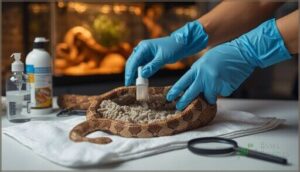
Even the best hide won’t do its job if you’re not keeping it clean and safe. Regular upkeep protects your snake from bacteria, mold, and hidden hazards that can compromise their health.
Let’s walk through the essential maintenance tasks every snake owner should stay on top of.
Regular Cleaning and Disinfection
Think of your snake’s hide like a dish you’d never skip washing—it needs routine attention. Daily spot cleaning removes waste and shed skin, while deep cleans every 4 to 8 weeks tackle hidden bacteria. Disinfectant types like chlorhexidine or F10 work wonders when you follow proper cleaning protocols.
| Cleaning Task | Frequency | Method |
|---|---|---|
| Spot cleaning | Daily | Remove feces and debris |
| Water bowl scrub | Every 2-3 days | Reptile-safe disinfectant |
| Deep enclosure clean | Every 4-8 weeks | Full substrate replacement |
Your sanitation methods should match the material. Nonporous plastic hides rinse clean easily, but porous wood absorbs moisture and harbors microbes. After applying disinfectant, rinse thoroughly and let everything dry completely before your snake returns.
These hygiene practices and microbial control steps are essential reptile care and maintenance routines that protect both reptile health and human safety. Proper reptile enclosure maintenance and consistent pet care and maintenance reduce stress-related illness while minimizing zoonotic risks. Good snake care means staying ahead of bacteria before problems start.
Inspecting for Damage or Mold
A tiny crack can turn into a breeding ground for trouble faster than you’d think. Weekly damage assessment means running your fingers along every snake hide surface, checking for chips, splits, or rough edges that could injure your pet.
Look closely at seams and entry points where moisture collects. In humid hides, mold detection requires sniffing for musty odors and scanning for dark spots—early signs your inspection schedules and humidity control need adjustment.
Replacing Worn or Contaminated Hides
When your snake hide can’t be fully disinfected anymore, it’s time to let it go. Cracked plastic, stained porous wood, or any hide box exposed to mites or disease should be replaced immediately—biosecurity measures demand it. Choose nonporous reptile hide options that tolerate repeated sanitation methods without degrading.
- Replace hides showing persistent stains after cleaning
- Discard all porous hides after ectoparasite infestations
- Switch to smooth plastic or sealed ceramic for easier disinfection
Avoiding Toxic or Hazardous Materials
Chemical safety in your snake habitat starts with one rule: avoid aromatic softwoods like cedar and pine unless they’re fully sealed. These woods off-gas phenolic compounds that can damage your snake’s liver and lungs.
Stick with non-toxic PVC, food-grade ceramic, or kiln-dried hardwoods sealed with reptile-safe coatings. Always cure sealants completely before adding any reptile hide to the enclosure—those fumes are no joke.
Frequently Asked Questions (FAQs)
How many hides does my snake actually need?
You’ll need at least two hides—one in the warm zone, one in the cool zone—so your snake can thermoregulate without sacrificing security.
Many setups benefit from adding a humid hide during shedding.
Can I make a DIY snake hide at home?
Yes, you can craft a homemade hide using non-toxic paper clay, diluted white glue, and water-based sealant—just verify it’s fully cured, smooth inside, and snug enough for your snake’s security.
Should hides be replaced after a snake sheds?
You don’t need to replace hides after every shed cycle impact. Regular hide sanitation and cleaning schedules matter more—spot-clean promptly, deep-clean monthly, and follow replacement guidelines only when damaged or contaminated.
Whats the ideal hide opening size for snakes?
Your hide opening dimensions should match your snake’s girth—just slightly larger than the thickest body section.
This entrance size maximizes hide security while preventing injury, creating that snug “burrow feel” snakes instinctively prefer.
Conclusion
Think of what makes a good snake hide as your pet’s foundation for confidence. When your snake has a snug, clean hide in both warm and cool zones, stress melts away. You’ll notice bolder feeding responses, consistent shedding, and natural exploration.
It’s not complicated—just proper fit, safe materials, and strategic placement. Get these three elements right, and you’ve built the cornerstone of a thriving enclosure. Your snake will show you the difference immediately.
- https://www.reptilebasics.com/jumbo-hide-box
- https://www.wilbanksreptiles.com/products/wilbanks-reptile-hide-boxes
- https://cdnsciencepub.com/doi/10.1139/cjz-2021-0135
- https://pets-crafts.com/product/snake-hide-box-large/
- https://exhibits.library.ucalgary.ca/files/original/856/Zool_567_Annotated_Bibliography_Part_3-converted.pdf