This site is supported by our readers. We may earn a commission, at no cost to you, if you purchase through links.

A snake terrarium isn’t complete without vegetation—but choosing the wrong species can turn your carefully crafted habitat into a toxic hazard. Many common houseplants contain compounds that cause oral irritation, digestive distress, or neurological symptoms when reptiles brush against sap-laden leaves or inadvertently ingest plant material during feeding.
The solution lies in selecting non-toxic varieties that mirror your snake’s natural environment while tolerating the specific humidity ranges, lighting conditions, and temperature fluctuations inherent to reptile enclosures. Pothos, sansevieria, and Boston ferns offer safe foliage that enhances behavioral enrichment—providing climbing structures for arboreal species and ground-level security for terrestrial snakes—without compromising health or requiring excessive maintenance that disrupts your animal’s routine.
Table Of Contents
- Key Takeaways
- Factors When Choosing Safe Terrarium Plants
- Recommended Safe Plants for Snake Terrariums
- Plants and Terrarium Design for Snake Well-Being
- Top Products for Snake Terrarium Plants
- Frequently Asked Questions (FAQs)
- What plants can go in a snake enclosure?
- What plants can be potted with a snake plant?
- Can bioactive setups work with live plants?
- How often should I water terrarium plants?
- What plants suit tropical versus desert snakes?
- Do plants attract pests into snake enclosures?
- Can I use grocery store plants safely?
- Conclusion
Key Takeaways
- Non-toxic plants like pothos, sansevieria, spider plants, Boston ferns, and live moss prevent oral irritation and digestive distress while providing climbing structures, humidity regulation, and behavioral enrichment that matches your snake’s arboreal or terrestrial lifestyle.
- Plant selection must account for your enclosure’s specific humidity range (30-80%), lighting conditions, growth patterns, and your snake’s contact behaviors—arboreal species need sturdy vines trained along branches while terrestrial snakes require low-profile ground cover that won’t obstruct movement.
- Layered plant arrangements using groundcovers, mid-height bushes, and overhead trailing vines create visual barriers and secure hiding routes that reduce stress indicators by up to 28% while maintaining the localized humid microclimates essential for healthy shedding cycles.
- Soil safety requires organic substrates free from fertilizers, perlite, and vermiculite that cause impaction risks, paired with drainage layers of clay aggregate and barrier mesh to prevent root rot, mold proliferation, and ammonia buildup in bioactive systems.
Factors When Choosing Safe Terrarium Plants
Selecting plants for your snake’s terrarium isn’t just about aesthetics—it’s about creating a functional environment that promotes your snake’s health and natural behaviors. You’ll need to evaluate toxicity, growth patterns, environmental requirements, and ongoing maintenance demands before introducing any species into the enclosure.
Live plants also influence whether you choose a naturalistic or glass setup, since natural vs. glass terrariums for snakes handle humidity and root systems differently.
The following factors will guide you toward plant choices that benefit your snake’s well-being while minimizing risks and simplifying long-term care.
Importance of Non-Toxic Plant Species
Plant toxicity stands as your first line of defense in choosing safe terrarium plants—because non-toxic species prevent snakes from ingesting harmful compounds like calcium oxalate crystals that burn the mouth and throat when leaves are chewed.
Non-toxic plants are your first defense against snakes ingesting compounds like calcium oxalate that burn the mouth and throat
Prioritizing snake safety through careful terrarium plant selection protects reptile health while supporting natural behaviors:
- Avoiding toxic species like dieffenbachia eliminates oral swelling and gastrointestinal pain
- Safe plants let snakes explore and climb without contact irritation
- Non-toxic choices simplify maintenance—fallen leaves won’t require emergency removal
- Ecofriendly options create responsible terrarium design that protects all household pets
Before selecting any plant, it’s important to be aware of toxic plants to avoid in bioactive enclosures for reptiles.
Matching Plant Selection to Snake Behavior
Your snake’s lifestyle—whether it climbs, burrows, or prowls—shapes every plant placement decision in the terrarium.
Arboreal species like green tree pythons thrive with sturdy climbing structures such as pothos vines trained along branches, while terrestrial ball pythons prefer low-profile ground cover like dwarf mondo grass that won’t obstruct movement.
Match terrarium plant selection to your snake’s natural behaviors, and you’ll create reptile enrichment that feels instinctive rather than decorative. It’s important to research the best plants for reptiles to guarantee plant choices are safe and suitable for your snake’s specific needs.
Humidity and Lighting Compatibility
Once you’ve aligned plant choices with your snake’s activity patterns, lighting systems and humidity control become your next critical checkpoint—because even nontoxic plants fail when environmental conditions clash with their adaptation thresholds.
- Tropical plants like pothos and Boston fern demand 60–80% humidity, pairing well with mist-loving snake species but risking fungal overgrowth above 80% without ventilation management
- Shade-tolerant varieties such as mosses and many ferns handle low to moderate light common in basic terrarium design setups with single overhead fixtures
- Sansevieria and spider plants tolerate 30–70% humidity ranges, making them forgiving choices across diverse climate control parameters
- Full-spectrum LED grow lights (6000–7000 kelvin) deliver plant-usable energy without excess heat, essential since standard UVB bulbs lack sufficient photosynthetically active radiation
- Photoperiods of 10–12 hours daily match most reptile schedules, supporting steady live plants growth while giving nocturnal snakes defined day–night cycles
Plant Size, Growth, and Maintenance Needs
Beyond environmental fit, plant height and growth rates dictate long-term terrarium plants upkeep—pothos vines stretch 6–10 feet unchecked, demanding weekly pruning needs, while compact sansevieria varieties stay under 12 inches with minimal trimming.
Root systems matter equally: snake plants’ fleshy rhizomes need excellent drainage to avoid rot, whereas spider plants form dense, pot-bound masses requiring periodic division.
Low-maintenance plants like mosses stay under 4 inches, resisting most disturbance, making live plants care manageable across diverse setups.
Pairing mosses with a natural substrate for snake enclosures creates a humidity-friendly base that mimics their wild habitat without adding extra work.
Soil and Drainage Safety Considerations
Soil composition directly impacts substrate safety—avoid fertilizers, perlite, and vermiculite that cling to prey and raise impaction risk, instead blending organic topsoil, coco fiber, and sand for stable burrows.
Drainage layers beneath catch excess water, protecting roots and preventing anaerobic pockets in bioactive systems:
- Water management: Clay aggregate ensures the soil stays moist without waterlogging
- Barrier mesh: Stops snakes reaching standing water
- Humidity control: Proper drainage prevents mold, rot, and ammonia buildup
Recommended Safe Plants for Snake Terrariums
You’ve narrowed your selection criteria—now it’s time to identify the species that actually deliver on safety, durability, and environmental compatibility. The plants listed here have proven track records in snake enclosures, balancing non-toxic profiles with practical resilience under the unique conditions captive snakes create.
Each option meets specific terrarium needs, from humidity regulation to structural support, without introducing the oxalate risks or maintenance headaches that disqualify 92% of common houseplants.
Pothos (Devil’s Ivy)
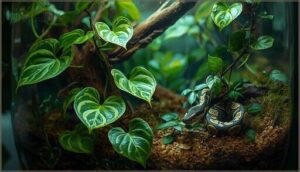
Pothos—scientifically known as Epipremnum aureum—earns its reputation as one of the most reliable petsafe plants for your snake terrarium through outstanding hardiness and vining growth that tolerates frequent contact without snapping.
This terrarium plant stabilizes substrate as roots spread through drainage layers, maintains humidity between 40-60% through moderate moisture tolerance, and provides climbing opportunities that work well across multiple enclosure types, making your plant care guide simpler.
Sansevieria (Snake Plant)
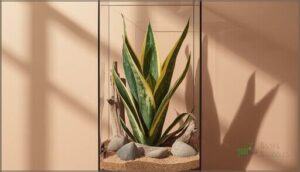
Sansevieria—now classified as Dracaena trifasciata and marketed as Sansevieria Laurentii in many nurseries—stands tall as one of the most low-maintenance plant options for your snake habitat, thriving in warm, dry air that suits enclosures kept toward lower humidity ranges.
This terrarium plant species tolerates infrequent watering and low light while offering vertical structure in terrarium design, though plant toxicity concerns for mammals don’t usually affect non-herbivorous reptiles that won’t chew its thick, saponin-containing leaves.
Spider Plant
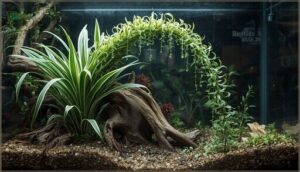
Spider plants—Chlorophytum comosum—cascade gracefully from terrarium backgrounds while remaining completely reptile-safe, making them ideal non-toxic plant options for your snake habitat where air purification and visual interest converge without chemical risk.
- Spider plant care requires moderate light and occasional watering, adapting well to most terrarium design layouts without demanding constant attention
- This live plant tolerates varied humidity levels, fitting enclosures from semi-arid to moderately moist without wilting or rotting quickly
- Plant propagation through natural offsets allows you to expand coverage or replace damaged sections without purchasing new specimens
- Arching foliage creates mid-level hiding zones in your reptile terrarium setup, giving snakes secure retreat options between floor substrate and climbing branches
- The plant’s flexible leaves bend rather than snap when contacted, reducing maintenance needs and keeping your snake habitat structurally intact longer
Boston Fern
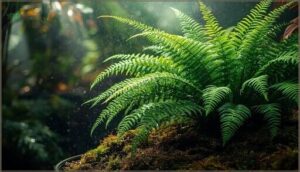
Boston fern—Nephrolepis exaltata—thrives in moderate to high humidity with indirect light, making it an excellent nontoxic plant option for tropical snake terrariums where moisture-dependent species need consistent environmental support.
Its tougher fronds withstand occasional contact better than delicate foliage, and terrarium design benefits from the dense, layered canopy that creates secure hiding zones—ideal for humidity control and natural snake habitat enrichment without introducing toxic risks.
Live Moss Varieties
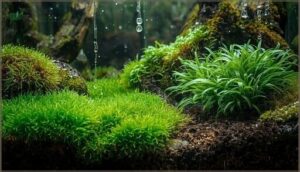
Sphagnum moss and sheet mosses hold large amounts of water and create localized humid pockets—critical for humidity control in snake terrariums where moisture-dependent species need microclimate support.
These moss species work effectively in terrarium design alongside live plants, and propagation occurs naturally in bioactive setups when you maintain moist substrate, clean debris weekly, and make certain proper drainage to prevent ammonia buildup in your vivarium.
Plants and Terrarium Design for Snake Well-Being
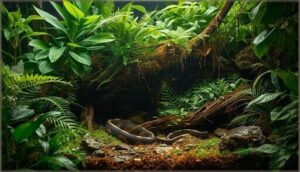
Choosing the right plants is only half the equation—arranging them strategically transforms your terrarium into a functional space that promotes your snake’s natural behaviors and overall well-being.
Dense foliage, layered layouts, and intentional placement create hiding spots, reduce stress indicators by up to 28%, and maintain the humidity levels your snake needs for healthy shedding. The following design principles will help you build an enclosure that works as both habitat and micro-ecosystem.
Creating Natural Hiding and Climbing Spaces
Climbing structures and hiding spots form the backbone of reptile habitat enrichment—turning a basic enclosure into a naturalistic terrarium design that facilitates natural behaviors. Strategic hide placement, vertical design elements, and natural textures combine to create functional zones where your snake can thermoregulate, explore, and feel secure without constant exposure.
- Install sturdy branches at least one-third your snake’s diameter to prevent rolling while climbing and to support arboreal movement between temperature zones.
- Position cork bark tubes and flats at multiple heights—ground level, mid-height, and elevated—so snakes can choose hiding spots that match their thermal needs without sacrificing security.
- Train climbing plants like pothos along cork backgrounds to create shaded tunnels and covered routes that give visual barriers even when your snake remains partially exposed.
- Use textured surfaces such as sandblasted manzanita or heat-treated cork to provide grip for climbing and anchoring during shedding without abrading delicate scales.
- Arrange dense foliage near perches and along vertical routes to build depth through plant selection for vivariums, allowing snakes to slip behind leaves and feel concealed while resting or moving through the enclosure.
Layered Plant Arrangements for Security
A well-layered terrarium—think groundcovers, bushy mid-height plants, and sturdy foliage overhead—forms living visual barriers, breaking sightlines for nervous snakes. This plant layering builds vertical gardens and secure enclosures, letting your animal slip from hide to hide unseen.
Strong clustering along edges and corners keeps room movement at bay and reinforces stress reduction. The following layering strategy can be applied to create a secure environment:
| Layer | Plant Type | Security Benefit |
|---|---|---|
| Groundcover | Live Moss | Concealed Movement |
| Mid-Level | Elevated Shrubs | Visual Barriers |
| Overhead | Trailing Vines | Canopy Shelter |
Using Plants for Humidity and Shedding Support
Plant transpiration isn’t just science—it’s practical reptile care and maintenance. Live plants consistently boost humidity gradients, a core part of your snake terrarium setup for easier shedding.
Dense leaves and microclimate creation around shedding aids, like broad-leafed pothos or moss, deliver humidity control precisely where it matters, softening old skin and improving plant selection for vivariums suited to natural rhythms.
Avoiding Toxic or Irritating Species
While plants regulate moisture well, they also introduce plant toxicity risks—philodendron, dieffenbachia, and hydrangea contain calcium oxalate crystals or cardiac toxins that irritate snake mouths and digestive tracts even after brief contact. Consult safe species lists before planting, and verify both common and scientific names to avoid confusion between similar-looking plants.
- Cross-check candidates against reptile-friendly alternatives from verified sources
- Remove any pretreated specimens to eliminate systemic pesticide residues
- Prioritize nontoxic plant options like spider plants over ornamental species with unknown mechanisms
- Monitor for drooling or mouth rubbing after introducing new foliage
- Replace suspect plants immediately with proven safe plants for reptiles
Top Products for Snake Terrarium Plants
Selecting the right products can make or break your terrarium’s success—you need items that balance your snake’s biological needs with the plants’ growth requirements.
The following products have been tested in reptile enclosures and consistently support safe, functional plant installations without compromising animal welfare. Each fulfills a specific purpose in creating a naturalistic environment where both flora and fauna thrive under controlled conditions.
1. Reptile Corner Branch Decor
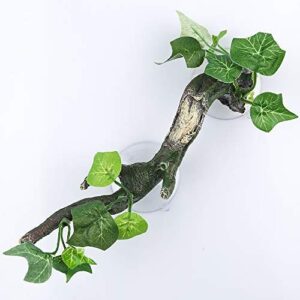
For snakes that naturally climb or bask above substrate level, reptile corner branch decor transforms wasted vertical space into functional enrichment zones—most designs wedge into terrarium corners using suction cups or brackets, freeing floor area for hides and water.
You’ll find resin models with molded bark texture that provide secure grip for ventral scales during climbing, while natural hardwood branches like manzanita resist rot in humid setups. Position branches away from heat sources so mounting hardware won’t soften, and choose pieces with multiple offshoots to give your snake varied perching heights and thermoregulation options.
| Best For | Snake and lizard owners who want to add vertical climbing space in corner areas without taking up valuable floor room in their terrarium. |
|---|---|
| Primary Use | Reptile Terrarium Decoration |
| Material | Resin and Glass |
| Maintenance Level | Low (Easy to Clean) |
| Ideal For | Snakes, Lizards, Frogs |
| Key Benefit | Natural Climbing Surface |
| Durability | Durable with Frequent Use |
| Additional Features |
|
- Corner design maximizes unused vertical space while keeping the floor clear for hides and water dishes
- Textured resin surface gives climbing reptiles solid grip, and the suction cups attach securely to glass tanks
- Easy to clean and holds up well in both humid and dry setups without special maintenance
- Suction cups can lose their grip on some glass surfaces, especially in high-humidity environments
- Fabric leaves may develop mold over time in wet terrariums and need replacing
- Size might not work for larger snakes or very small terrariums—the corner cut limits how you can position it
2. Live Moss for Reptile Terrariums
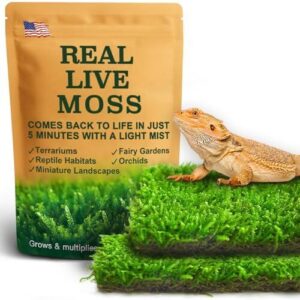
Live moss varieties—whether sheet, carpet, or pincushion varieties—holds several times its weight in water and releases it slowly, helping maintain stable humidity levels between 70–90% for species that need damp conditions.
The LUCKYRUNES moss pack covers 50 square inches and ships ready to revive with deep misting, creating soft microclimates where your snake can rehydrate before shedding. Place moss on moisture-holding layers like sphagnum or wood rather than burying it, and mist two to three times daily for the first three weeks while it establishes.
| Best For | Reptile and amphibian owners who need a natural humidity regulator for species like snakes, frogs, and geckos that require consistent moisture during shedding or daily care. |
|---|---|
| Primary Use | Terrarium Substrate/Bedding |
| Material | Natural Moss |
| Maintenance Level | Medium (Requires Misting) |
| Ideal For | Snakes, Turtles, Frogs, Geckos |
| Key Benefit | Humidity Regulation |
| Durability | Requires Care to Maintain |
| Additional Features |
|
- Holds multiple times its weight in water and releases it slowly to maintain 70–90% humidity without waterlogging
- Covers 50 square inches and arrives ready to revive with simple misting, no complicated setup needed
- Works as both functional bedding and attractive terrarium décor for naturalistic habitats
- Some batches brown or die despite regular care, with quality varying significantly between orders
- Needs misting two to three times daily for the first few weeks, which requires consistent attention
- Initial earthy smell can be off-putting, and longevity isn’t guaranteed even with proper maintenance
3. Live Reptile Terrarium Moss Variety
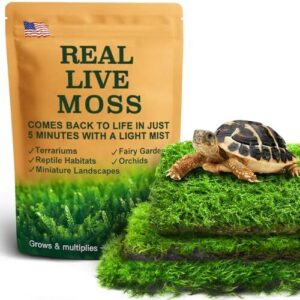
A three-moss variety pack—usually 9×7 inches with pillow, sheet, and fern moss species—delivers distinct textures that create both raised mounds and flat ground cover, helping nervous snakes feel less exposed when crossing open terrain.
Each hand-picked type anchors into slightly acidic, well-draining substrate and holds multiple times its dry weight in water, which stabilizes microclimates for moderate- to high-humidity species.
Mist regularly under indirect light, add springtails to clean debris, and make certain pre-cleaned, pesticide-free sourcing to avoid introducing harmful invertebrates or irritants into your enclosure.
| Best For | Reptile keepers who want live, moisture-holding ground cover that creates natural hiding spots and maintains stable humidity for tropical species like geckos, frogs, and snakes. |
|---|---|
| Primary Use | Terrarium Substrate/Accent |
| Material | Live Moss |
| Maintenance Level | Medium (Requires Watering) |
| Ideal For | Snakes, Turtles, Geckos, Frogs |
| Key Benefit | Moisture Retention |
| Durability | Long-Lasting, Reusable |
| Additional Features |
|
- Retains water efficiently to keep humidity steady without constant misting
- Three different moss textures let you build varied landscapes with both flat coverage and raised mounds
- Reusable and actually grows over time if you care for it properly
- Some buyers receive dry or brittle moss instead of the advertised live variety
- Rambunctious reptiles can tear it apart, making it less practical for destructive species
- Needs regular misting and springtail cleanup to stay healthy long-term
4. Costa Farms Snake Plant
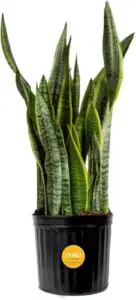
Costa Farms’ Sansevieria offers an ideal pairing of durability and low-light tolerance—12-inch potted specimens fit medium enclosures, while 10-inch nursery pots reaching 28 inches suit tall vivariums.
You’ll appreciate the upright, sword-like leaves that resist crushing when snakes brush past, and the minimal watering schedule—once weekly in bright light or less in humid bioactive setups—prevents root rot.
Place the entire pot on substrate for easy removal during deep cleans, ensuring it stays away from standing water and heating elements to avoid tipping hazards.
| Best For | Reptile owners who want a sturdy, low-maintenance plant that can handle occasional contact from snakes while improving enclosure aesthetics and air quality. |
|---|---|
| Primary Use | Indoor Plant Decor |
| Material | Live Plant in Plastic |
| Maintenance Level | Low (Beginner-Friendly) |
| Ideal For | Home, Room, Office |
| Key Benefit | Air Purification |
| Durability | Low-Maintenance |
| Additional Features |
|
- Extremely durable with upright leaves that won’t collapse when snakes brush against them
- Thrives in low-light conditions and requires minimal watering (once weekly or less), making it perfect for humid bioactive setups
- Easy to remove and clean since you can place the entire pot on substrate without permanent planting
- Toxic if consumed, so it must be kept away from curious pets or children outside the enclosure
- Can be damaged during shipping in cold weather, requiring extra care upon arrival
- Needs careful placement away from water dishes and heating elements to prevent tipping hazards
Frequently Asked Questions (FAQs)
What plants can go in a snake enclosure?
You can use pothos, snake plants, spider plants, Boston ferns, and live moss in your snake’s enclosure—these species tolerate terrarium conditions while providing natural cover without posing toxicity risks to your animal.
What plants can be potted with a snake plant?
Think of your planter as an arid coalition—snake plants pair with drought-tolerant allies like pothos, spider plants, ZZ plants, and aloe, all thriving on infrequent watering and well-draining soil.
Can bioactive setups work with live plants?
Yes—bioactive setups pair live plants with cleanup crew organisms like springtails and isopods, which break down waste into nutrients plants absorb, closing the nitrogen cycle while stabilizing humidity and reducing manual substrate changes.
How often should I water terrarium plants?
Watering frequency depends on whether your terrarium type is closed or open—closed setups need water every two to three months, while open enclosures usually require watering every one to four weeks based on soil moisture.
What plants suit tropical versus desert snakes?
Tropical snakes—ball pythons, green tree pythons—need moisture-loving plants like pothos, ferns, and bromeliads that thrive in 60–80% humidity.
While desert species such as Kenyan sand boas require drought-tolerant succulents like aloe and haworthia.
Do plants attract pests into snake enclosures?
Live terrarium plants frequently introduce fungus gnat eggs hidden in potting soil—research shows newly purchased plants can carry aphids, spider mites, or thrips on stems and leaf undersides that establish quickly once placed inside warm enclosures.
Can I use grocery store plants safely?
Grocery store plants can work if you strip away all original soil, rinse thoroughly to remove surface pesticides, and quarantine them for 4–6 weeks before introducing them to your snake’s enclosure.
Conclusion
Picture your snake gliding through humidity-regulated foliage that won’t trigger toxicity concerns—thriving greenery transforms sterile glass into a microhabitat that fosters thermoregulation, shedding cycles, and natural behaviors.
Understanding what plants are safe for snake terrariums enables you to build environments where Boston ferns filter air while pothos vines provide climbing enrichment without leaching irritants. Your species-appropriate selections become functional architecture—living systems that bolster welfare rather than simply decorating space.
- https://www.zenhabitats.com/blogs/reptile-care-sheets-resources/best-plants-for-corn-snake-enclosures-zen-habitats
- https://reptilesmagazine.com/list-of-plants-that-can-be-toxic-to-reptiles/
- https://www.reptilecentre.com/blogs/reptile-blog/best-reptile-safe-plants
- https://exo-terra.com/explore/academy/bioactive/how-to-set-up-a-bioactive-terrarium/
- https://reptifiles.com/how-to-build-bioactive-terrarium/