This site is supported by our readers. We may earn a commission, at no cost to you, if you purchase through links.

The first real sign your snake’s shed went smoothly isn’t the crinkled skin left behind—it’s the quiet confidence that returns when their colors shine again. Those bright eyes and glossy scales mean a clean slate, inside and out.
But the days right after shedding matter just as much as the process itself. Miss a stuck patch on the tail or forget to rebalance humidity, and small issues can snowball fast.
Knowing what to do after shedding keeps your snake comfortable, prevents skin problems, and helps them slip easily into their next cycle of growth.
Table Of Contents
- Key Takeaways
- How to Tell Shedding is Complete
- Immediate Steps After Shedding
- Inspecting Your Snake’s Health Post-Shed
- Adjusting Humidity and Environment After Shedding
- Feeding Guidelines After Shedding
- Handling Your Snake Safely Post-Shed
- Preventing Future Shedding Issues
- When to Seek Veterinary Help After Shedding
- Frequently Asked Questions (FAQs)
- How long does shedding usually last?
- What is considered excessive shedding?
- How to fix excessive shedding?
- Do you feed a snake when it is shedding?
- What to do during shedding season?
- How long does post-shedding hair feel different?
- Can routine scalp massages aid recovery after shedding?
- Is increased shedding normal during seasonal changes?
- Should haircuts be avoided directly after heavy shedding?
- How do medications interact with hair regrowth cycles?
- Conclusion
Key Takeaways
- After shedding, check for clear eyes, glossy skin, and a complete shed to confirm your snake finished the process cleanly.
- Remove any leftover skin gently with warm soaks and keep the enclosure clean, dry, and disinfected before returning your snake.
- Maintain steady humidity, proper heat gradients, and clean conditions to protect fresh skin and prevent future shedding issues.
- Wait 24–48 hours before handling or feeding, and call a reptile vet if you notice retained skin, dull eyes, or dark tail tips.
How to Tell Shedding is Complete
When your snake sheds, it’s important to know if the process is truly finished before moving on to cleanup or handling. A complete shed means your snake’s skin came off in one mostly intact piece, but sometimes a few areas get left behind.
If you’re unsure what to look for, this guide on how to inspect your snake’s shed for completeness breaks down the key signs of a successful shed.
Here’s how to tell if everything came off cleanly or if there’s still old skin to address.
Signs Your Snake Has Finished Shedding
Shed completion shows in every move your snake makes. During recovery time, watch for clear eyes, bright scales, and calm snake behavior replacing the restless shedding phase.
Post shed care often begins when you notice:
- Smooth, glossy skin
- Clear, normal eyes
- A full shed skin
- Renewed appetite
- Relaxed, curious movement indicating healthy skin inspection and recovery—much like balanced hair regrowth after natural hair shedding in the human hair care cycle.
If you notice incomplete shed pieces or stuck eye caps, you may need to consult a guide to the snake shedding process and adjust humidity or seek veterinary advice.
How to Spot Retained Shed
If your snake’s skin still looks patchy or rough after shedding, it may have retained shed. Watch for visible patches, dull eyes, or tight tail bands that look odd or faded against brighter areas.
Like understanding hair shedding in human hair care, good recovery means checking these details—similar to gentle postoperative care for fresh skin. These issues are often linked to dysecdysis and retained shed, a shedding disorder commonly associated with low humidity and inadequate hydration.
Immediate Steps After Shedding

Once your snake’s old skin is off, it’s time to focus on quick aftercare. A few small steps right now can make a big difference for its comfort and health. Here’s what you should do right after a shed.
Safely Removing Leftover Shed
After a shed, use Lukewarm Soaking to soften stuck patches without stress. The Moist Towel Method keeps humidity high so old skin slides off safely. Gentle Manual Removal with a damp cloth works only if the shed loosens easily—never force it.
Like good Hair Care or scalp health, patience and consistency matter, even in postoperative care or understanding hair shedding.
Cleaning The Enclosure Post-Shed
Once the last flakes of skin are gone, it’s time for cleanup—just like resetting after good hair care or scalp health. Focus on the following steps:
You can also check out this California kingsnake temperature guide to make sure your pet’s habitat stays balanced after shedding.
- Soiled Substrate Removal within 8–10 inches of waste spots.
- Surface Disinfection with reptile-safe spray.
- Decor Sanitization outside the tank.
- Rinsing the water bowl.
- Letting everything dry before your snake returns, starting its quiet hair regeneration phase.
Inspecting Your Snake’s Health Post-Shed
Once your snake has finished shedding, a quick health check is the next step. This helps you catch any small issues early, before they turn into bigger problems.
Here’s what to look for as you inspect your snake’s body after a shed.
Checking for Retained Eye Caps or Tail Tips
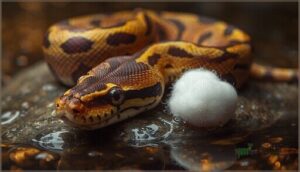
Watching for retained eye caps and tail tip issues is part of Safe Inspection after shedding, not optional. Eye Cap Signs include one eye looking dull, cloudy, or slightly wrinkled, sometimes with a faint “second ring,” and your snake rubbing its face more than usual. Tail Tip Risks show up as a tight, dry ring or stiff, darkening tip that doesn’t bend like the rest of the tail.
Use gentle Home Remedies only for mild problems: short lukewarm soaks, a humid “sauna” hide, and soft rubbing with a damp cotton ball, never scraping or picking. If anything looks worse, stacked, or doesn’t improve in a shed or two, you move from DIY to vet territory, just like you’d with stubborn hair shedding, hair loss, or stalled hair growth that doesn’t respond to better hair care.
| What to Check | What You Might See | What You Should Do |
|---|---|---|
| Eye caps | Cloudy, dull, or ringed eye | Try one short soak and recheck |
| Missing eye caps in shed | Eye caps not visible in shed skin | Inspect both eyes in bright, soft light |
| Tail tip | Dry, tight ring or stiff end | Add humidity, brief soak, gentle wipe |
| Color changes | Tip turning darker or shriveled | Stop Home Remedies, call a reptile vet |
| Behavior | Bumping into things, repeated face rubbing | Treat as urgent, book a vet visit fast |
Identifying Skin Injuries or Abnormalities
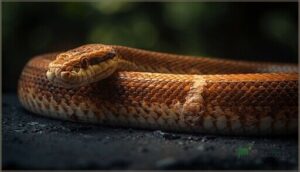
Trouble spots often hide under fresh scales—so pay close attention. Scale Discoloration, like new brown or black patches, signals possible infection or burns. Abnormal Texture, such as rough or peeling areas, means poor Scalp Health for your snake. Lumps, wounds, blisters, or crusts? That’s your cue to act fast. Stress, like Hair Shedding or Hair Loss, worsens everything.
- Dark or yellow patches (infection or burns)
- Rough, flaky, or blistered scales (bad environment)
- Swelling or firm lumps (abscesses)
- Open wounds or scabs (serious injury)
- Persistent rubbing or hiding (pain or irritation)
Adjusting Humidity and Environment After Shedding

Once your snake finishes shedding, it’s important to fine-tune its surroundings so the new skin stays healthy and hydrated. Small shifts in humidity, warmth, and cleanliness can make a big difference in recovery.
Here’s how to set up the right post-shed environment to keep your snake comfortable and thriving.
Optimizing Humidity Levels Post-Shed
Ever notice your snake’s new skin gleaming after shedding? That’s when humidity matters most. Keep Target Humidity steady, then use Gradual Reduction over two days to protect fresh scales. Add Humid Hides and mindful Substrate Choices for balance—just like steady moisture aids Recovery and Care in postoperative phases or Understanding hair shedding in humans.
| Environment | Target Humidity | Tip for Care |
|---|---|---|
| Temperate | 45–60% | Drop slowly over 2–3 days |
| Desert | 30–50% | Focus on airflow and gradual drying |
| Tropical | 60–70% | Maintain a moist hide, not a wet tank |
Maintaining Proper Temperature and Cleanliness
Fresh skin is surprisingly vulnerable — think of it like a clean slate that needs the right conditions to stay healthy. Temperature Gradients protect your snake’s comfort and digestion, so keep the warm side between 85–90°F and the cool side at 75–80°F.
- Use thermostats for Heating Safety — no guesswork, no burns
- Avoid loose heat rocks near new scales
- Practice daily Spot Cleaning to remove waste fast
- Schedule Deep Cleaning every one to three months
- Keep the enclosure Safe from sudden temperature swings
Feeding Guidelines After Shedding
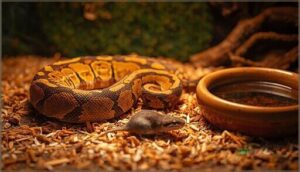
Once your snake’s shed is complete, it’s time to think about feeding again. Their appetite often changes right after a shed, so timing matters.
Here’s what to expect and how to handle those first meals back on track.
Best Time to Offer Food Post-Shed
Your snake just shed — so when’s the right time to feed? Timing depends on behavior, last meal date, and how clean the shed was. Same-day feeding works well when the snake looks calm and alert. A one-day wait suits nervous individuals. Unlike human hair shedding, where nutrition and stress affect hair growth and hair health over months, snakes bounce back fast.
| Situation | Feeding Timing |
|---|---|
| Clean shed, calm snake | Same day |
| Restless post-shed behavior | Wait 24 hours |
| Last meal was recent | Stick to normal schedule |
| Snake skipped meals while opaque | Feed promptly |
| First shed in new home | Wait one day |
Monitoring Appetite and Feeding Response
Watch for hunger cues like frequent tongue flicking, active roaming, or positioning near the warm side — these signal your snake is ready. Track feeding attempts in a simple log, noting dates and responses. Normal changes include skipping a meal or two post-shed.
Environmental impact matters too; cool temps or bright lights suppress appetite. Warning signs like ongoing refusals beyond two to four weeks need prompt attention.
Handling Your Snake Safely Post-Shed

Your snake’s new skin is sensitive, so how you handle it right now really matters. A calm, careful approach helps your pet adjust and prevents unnecessary stress.
Here’s when and how to handle your snake safely after shedding.
When It’s Safe to Handle After Shedding
Usually, after the shedding phase, patience is your best tool. Give your snake a 24–48 hour Waiting Period to confirm Physical Readiness. Watch for calm exploration, steady tongue flicks, and smooth breathing—those Behavioral Cues show comfort’s returned. Avoid Post-Meal Handling during this brief recovery, since every Individual’s hair growth cycle—like posttransplant recovery or hair regrowth timeline—takes time to reset.
- Wait 24–48 hours before handling.
- Confirm smooth, complete new skin.
- Look for relaxed movements and tongue flicks.
- Skip handling right after feeding.
- Respect each snake’s personal recovery rhythm.
Handling Techniques for Sensitive Snakes
Once your snake’s ready, approach from the side—never from above—using slow movements that won’t startle it. Support its full body length with both hands, keeping gentle pressure off the neck and tail.
Watch for stress signals like hissing or tight coiling during post-shed handling and recovery. If those show up, put it back. Calm, supported contact builds real trust over time.
Preventing Future Shedding Issues

Now that your snake’s finished shedding, it’s a good time to set things up for the next one. A few small changes can make shedding smoother and less stressful down the road.
Here’s how to create the best environment to keep the process healthy and consistent.
Improving Enclosure Setup for Healthy Shedding
Freedom for your snake starts with the right setup, not last-minute panic during a bad shed. Aim for a stable temperature gradient with warm and cool zones, pair moisture-holding substrate choices with a well-placed humid hide design, and pack in safe rough textures for rubbing. Think of it like hair care for scales: good hair maintenance, low stress, better hair health, fewer hair shedding–style problems later.
- Remember the frustration of tangled hair shedding? That’s what a dry, bare tank feels like to your snake.
- Picture your ideal hair care routine: your snake deserves that same steady, dialed-in environment every single day.
- When you fight for your own hair health and hair maintenance, you’re already halfway to understanding how to build a freer, healthier shedding setup for your snake.
Monitoring Hydration and Nutrition
Just like keeping your scalp healthy promotes hair growth and stops hair shedding, hydration fuels shed recovery and regrowth. Keep tabs on Water Intake, Weight Tracking, and Appetite to spot early Dehydration Signs.
Balanced feeding—think proper Nutrition Balance and hydration—is your snake’s version of steady hair care and maintenance for long-term vitality.
When to Seek Veterinary Help After Shedding
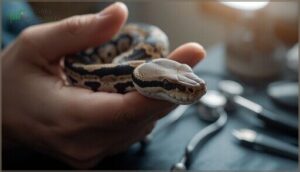
Sometimes a shed doesn’t go as smoothly as it should, and your snake might need a little extra help. A few warning signs will tell you it’s time to call your vet instead of handling it at home.
Here’s what to watch for after shedding that means professional care is the best next step.
Persistent Retained Shed
Ever notice old skin clinging after a shed? That’s persistent retained shed, or dysecdysis—a signal something’s off with humidity or hydration. You might see tight rings or dry patches trapping skin.
- Check humidity and hydration.
- Try gentle soaking methods.
- Avoid peeling.
- Seek quick vet intervention to prevent deeper health risks disrupting the shedding phase and skin’s natural “hair growth cycle” for proper care and maintenance.
Signs of Illness or Injury
Awareness matters most right after a shed. Watch for Breathing Issues, Skin Discoloration, or Appetite Loss—all warning signs of deeper trouble. Neurological Changes, such as wobbling or dull reactions, also spell danger.
Stress can trigger weakness just as it does Hair Shedding or Hair Loss in humans, reminding you that Scalp Health and Hair Care mirror proper reptile balance too.
Frequently Asked Questions (FAQs)
How long does shedding usually last?
Shedding usually runs as a full cycle length of about 7–14 days, from first dulling to the skin coming off.
This cycle includes a blue phase duration of a few days and post-clear timing of roughly 3–7 days, depending on species differences and conditions.
What is considered excessive shedding?
Don’t panic over one quick shed, but if your adult snake sheds more than every four weeks, that’s excessive shedding.
Frequent shed signs often point to poor humidity, parasites, or overfeeding—common causes of over-shedding issues.
How to fix excessive shedding?
To fix excessive shedding, focus on Soak Methods in lukewarm water, strong Humidity Control, and a smarter Substrate Choice that holds moisture. Additionally, use rough Rub Surfaces so your snake can help itself, supporting Hyd balance and even calming hair shedding worries. This approach is like dialing in a hair shedding treatment to stop hair shedding during a bad shedding phase.
Do you feed a snake when it is shedding?
During the shedding phase, it’s best not to feed your snake. Digestion slows, increasing Feeding Risks and Refusal Reasons. Avoid Live Prey, just as careful hair care prevents hair shedding causes and maintains overall hair health.
What to do during shedding season?
When your snake’s colors dull and its eyes turn cloudy—classic pre-shed signs—boost humidity, avoid handling, and respect its natural fasting. A calm environment ensures a smooth shedding phase, just like balanced hair care prevents scalp health and hair shedding issues from underlying hair shedding causes and solutions.
How long does post-shedding hair feel different?
Your hair can feel lighter, thinner, or different in texture for roughly 3 to 9 months post-shed.
Duration Perception varies, but new growth, Volume, and Density usually normalize as the recovery process progresses.
Can routine scalp massages aid recovery after shedding?
Like warm sunlight after a storm, routine scalp massages boost blood flow, improving hydration techniques and scale flexibility.
This simple recovery routine enhances scalp care, encouraging hair regrowth, hair shedding balance, and steady hair growth promotion benefits.
Is increased shedding normal during seasonal changes?
Yes, increased shedding often aligns with seasonal shedding patterns. Warmer temperatures speed up your snake’s growth cycle, while humidity shifts ease clean sheds.
It’s normal vs. trouble when skins come off whole, unlike stress-triggered hair shedding in humans. Watch for healthy eyes and appetite.
Should haircuts be avoided directly after heavy shedding?
You don’t need to avoid haircuts after heavy Hair Shedding or Hair Loss; trims don’t change Shedding Duration or Hair Growth, only the Appearance Impact and Perceived Loss.
Prioritize Scalp Comfort, gentle Hair Care, and Post-hair transplant scalp care if relevant.
How do medications interact with hair regrowth cycles?
Imagine your snake’s shed like chemo effects blasting hair growth—medications disrupt the hair growth cycle, shoving follicles into rest early via cycle disruption.
Hormone influence from pills shifts phases; growth stimulants like minoxidil regulate the hair cycle, boosting regrowth as medical treatments for hair loss reawaken follicles for thicker hair growth.
Conclusion
Funny how the wildest part of snake keeping isn’t feeding or handling, it’s mastering the quiet days after a shed. When you know what to do after shedding, you stop guessing and start guiding.
You check eyes, tails, skin, and humidity like a routine, not a crisis. You handle with respect, feed with intention, and watch for warning signs.
That’s how your snake sheds clean, grows strong, and keeps thriving with you for years ahead.
- https://dogtrainingmetrodetroit.com/tips-for-keeping-your-house-clean-with-a-shedding-dog/
- https://neakasa.com/blogs/all/say-goodbye-to-shedding-top-tricks-for-dog-grooming-with-a-vacuum
- https://puppytales.com.au/dog-shedding-essentials-for-a-tidy-home-dog/
- http://www.elliotshouse.com/reduce-dog-shedding-keep-home-clean/
- https://thetyedyediguana.com/blog/-top-methods-to-help-your-reptile-through-shedding/