This site is supported by our readers. We may earn a commission, at no cost to you, if you purchase through links.

One morning your snake’s eyes turn milky blue, and by the end of the week a perfect ghost of itself lies in the enclosure, shed in a single piece. That’s the snake shedding process at work, and it’s far more intricate than old skin peeling away.
New scales form underneath before the old layer ever loosens, hormones time the whole cycle, and humidity decides whether it succeeds. When shedding goes wrong, retained eye caps and stuck tail tips can threaten your snake’s health. Knowing each stage, from blue phase to full slough, lets you step in at exactly the right moments.
Table Of Contents
- Key Takeaways
- Why Snakes Shed Their Skin
- Snake Shedding Stages and Timeline
- How Often Snakes Shed
- Signs Your Snake is Shedding
- How to Support Healthy Shedding
- Healthy Sheds and Common Problems
- Frequently Asked Questions (FAQs)
- Do snakes feel better after shedding?
- Can snakes see when they’re shedding?
- Do snakes like to be held when shedding?
- Do snakes stay in the same place they shed their skin?
- How often should my snake shed throughout its life?
- Do different snake species shed at different rates?
- Can stress affect my snakes shedding schedule?
- What should I do with the shed skin after removal?
- How long does a complete shedding cycle typically take?
- Do snakes eat their shed skin?
- Conclusion
Key Takeaways
- A snake’s shed cycle runs about 1–2 weeks, starting with a 2–5 day milky "blue phase" caused by fluid building under the old skin, followed by a brief clear phase before the skin sloughs off—often in one complete piece.
- Shedding frequency tracks growth: juveniles shed every 4–6 weeks while adults shed every 6–12 months, so logging your snake’s shed dates helps you spot husbandry or health problems early.
- Support a smooth shed by keeping humidity steady (50–60%, raised to 60–70% during the blue phase), maintaining a proper thermal gradient, offering fresh water for soaking, adding a damp hide and rough rubbing surface, and handling your snake as little as possible.
- After the shed, inspect the skin like a report card—complete paired eye caps, an intact tail tip, and uniform coloration mean success—while retained eye caps lasting more than a few days, constricting tail skin, or lethargy and appetite loss warrant a vet visit.
Why Snakes Shed Their Skin
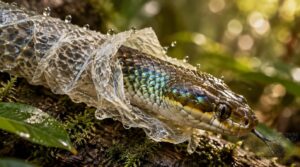
Shedding isn’t a flaw in your snake’s design; it’s how the animal grows. Because a snake’s outer skin can’t stretch, it must replace the entire layer in one synchronized cycle. Let’s look at what drives this process, starting with skin growth and the hormonal triggers behind it.
If you’ve ever wondered why snakes shed their skin in the first place, this guide on snake shedding breaks down the whole cycle step by step.
Skin Growth and Renewal
Because your snake’s skin can’t stretch indefinitely, it relies on constant ectotherm skin renewal. Epidermal cells turn over every two to four weeks, and new scales form beneath the old layer before sloughing. This epidermal regeneration thickens keratin at the ventral surface, supporting locomotion.
As an amniote integument, the dermis remodels through fibroblast activity, so skin regeneration restores elasticity and nerve function with each keratin shedding cycle.
Hormonal Shedding Triggers
What actually starts the snake shedding process is chemistry, not just growth. Hormonal changes orchestrate ecdysis, and understanding them helps you anticipate your snake’s needs. Three key drivers matter:
- Androgen surges during the preshed phase, boosting epidermal regeneration.
- Thyroid activity controls skin cell turnover speed.
- Corticosteroid spikes, often from stress, can trigger early sloughing.
Watch for these hormonal shifts, and you’ll read your snake’s behavior with confidence.
Snake Shedding Stages and Timeline
Once your snake enters the shedding cycle, the process follows a predictable pattern you can learn to recognize. Knowing the timeline helps you anticipate your snake’s needs and avoid unnecessary handling. Here’s what to expect during the pre-shed blue phase and the clear phase that leads to sloughing.
Pre-shed Blue Phase

Picture your snake’s scales turning the color of skim milk overnight. That’s the blue phase, and it’s completely normal.
If you want a full breakdown of what’s happening and how long it lasts, this guide to the blue phase covers the whole timeline.
During this preshed phase, a new skin layer forms beneath the old one, and fluid builds between them. That fluid scatters light, giving your snake its dull, milky look and cloudy eyes. Expect reduced appetite and extra hiding, too. Keep humidity steady, skip handling, and let the snake shedding process unfold.
Clear Phase and Sloughing
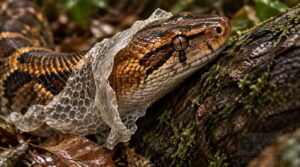
The blue fades as fluid reabsorbs, and the bright orange or pink sheen underneath signals the clear phase. Sloughing usually begins within a day or two. Watch for these steps:
- Color returns, eyes brighten.
- Old skin loosens along the shedding plane.
- The snake rubs its snout to start the shed.
- Skin peels back toward the tail, often in one piece.
- Eye caps release with the shed.
Stay hands-off during the snake shedding process.
How Often Snakes Shed
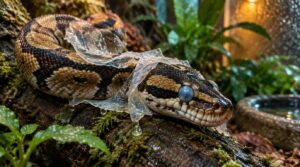
Usually, juvenile snakes shed every 4 to 6 weeks because their growth rate is rapid and their skin must keep pace. Adults slow down considerably, completing ecdysis every 6 to 12 months, with intervals lengthening as they mature.
If you keep a ball python, its ball python species profile explains how its natural habitat and temperament shape shedding patterns and everyday care.
Several factors shift that schedule, so track your individual rather than relying on averages alone:
- Species matters: smaller, fast-growing species shed monthly to bimonthly; large, slow-growers may shed yearly or less.
- Feeding drives frequency: caloric intake fuels growth spurts, which trigger sheds in the following weeks.
- Environment plays a role: temperature, humidity, and hydration can move timing by a full cycle in either direction.
- Season and stress count: breeding season, dormancy, handling, or enclosure changes can shorten or delay the shedding process.
Log each shed date and watch your snake’s overall snake health. Consistent intervals within your species’ norms signal good husbandry; irregular cycles deserve a closer look at care.
Signs Your Snake is Shedding

How do you know your snake is about to shed? Watch for a cluster of preshedding symptoms rather than one sign alone.
Understanding the full snake shedding process helps you recognize when those signs are adding up and how to support your snake through each stage.
The first clue is often appetite. Your snake may refuse food for days or even weeks before the shedding process begins. Alongside this, many snakes turn reclusive, hiding more than usual as they prepare.
Then comes the visual change. The skin looks dull and slightly darker, and the eyes turn cloudy or milky as fluid builds beneath the spectacles. This is the classic blue phase, when the whole body takes on a bluish haze and movement slows.
Within a few days, the eyes clear again, which can trick new keepers into thinking the shed is over. It isn’t. Sloughing usually follows within days. Check for loose skin around the ventral scales and softened eyecaps as your final confirmation.
How to Support Healthy Shedding

You can make a real difference in how smoothly your snake sheds. The right conditions during the shedding cycle prevent most common problems before they start. Here’s what to focus on, from enclosure setup to feeding decisions.
Humidity, Temperature, and Hydration
Humidity does the heavy lifting here. Keep enclosure humidity control steady at 50–60%, then raise it slightly during the blue phase.
Pair that with a proper thermal gradient: a basking spot of 28–32°C and a cooler side around 22–26°C.
Offer fresh water deep enough for soaking, since reptile hydration management directly affects skin pliability. Check your digital gauges daily, because stable conditions prevent stuck shed.
Shedding Aids and Safe Handling
Picture a ball python mid-shed, half its old skin clinging to its tail. Your job isn’t to peel it off but to make the environment do the work.
When your ball python sheds, don’t peel the old skin yourself—shape the environment so it does the work
Here’s what helps most:
- Raise humidity to 60–70% during the shedding process.
- Add a damp hide lined with moist sphagnum moss.
- Provide a rough surface, like a clean branch, for rubbing.
Handle minimally. If you must move your snake, support its body fully with soft towels or a snake hook, never the tail alone. Wait until it’s calm, approach slowly from the side, and skip handling entirely if it’s striking or visibly stressed. A small, secure tub works well for brief transport. Afterward, check that the shed came off in one complete piece, eye caps included.
Feeding During Shedding
Many snakes refuse food 1–2 weeks before a shed, and that’s normal. Don’t panic over temporary feeding refusal.
If your snake still shows interest, keep your usual schedule, maybe offer slightly smaller meals so digestion stays easy. Maintain your normal basking spot at 95–100°F.
Consistent fasting beyond the shedding process, though, warrants closer snake health monitoring.
Healthy Sheds and Common Problems

Once your snake finishes shedding, your job shifts from support to evaluation. You’ll want to check the shed skin and your snake’s body for signs of trouble. The sections below cover post-shed inspection, stuck shed and eye caps, and when a vet should step in.
Post-shed Skin Inspection
The shed skin is your best diagnostic tool. Once your snake finishes sloughing, examine it closely.
- Uniform coloration across the shed, bright and unbroken
- Complete eye caps, clear and paired
- Tail tip present, no frayed end
- Crisp ventral scale borders along the belly section
- No damp patches or torn fragments
Then check the snake itself. Dull or cloudy areas, gaps between scale rows, or crusting near the vent signal incomplete shedding. Log your findings within 24 to 72 hours; consistent snake health monitoring catches small problems before they escalate.
Stuck Shed and Eye Caps
If inspection reveals stuck shed or retained eye caps, don’t panic. Incomplete shedding, or dysecdysis, usually stems from low humidity or dehydration. Eye caps matter most; trapped skin over the eye blocks clearance.
| Problem | Cause |
|---|---|
| Retained eye cap | Ocular scale didn’t separate |
| Stuck tail tip | Dry conditions |
| Belly patches | Dehydration |
Soak in warm water, rub gently, never pull dry skin.
When Veterinary Care is Needed
Most incomplete shedding resolves with humidity fixes, but some cases need reptile veterinary care. Watch for:
- Retained eye caps lasting more than a few days
- Stuck skin constricting the tail tip
- Lethargy, refusal to eat, or labored breathing
Repeated dysecdysis despite proper husbandry signals deeper illness. Don’t pull skin; get professional help promptly.
Frequently Asked Questions (FAQs)
Do snakes feel better after shedding?
You can’t know for certain. Science doesn’t confirm snakes feel relief, though calmer post-shed behavior is common. What you can trust is this: proper humidity and postshedding care prevent shedding problems that cause real distress.
Can snakes see when they’re shedding?
You might assume snakes go blind during ecdysis, but that’s a myth. During the blue phase, the spectacle clouds over, causing snake vision impairment. They still detect movement and light, so avoid handling until eyes clear.
Do snakes like to be held when shedding?
Most keepers notice their snake hides or hisses the moment they reach in during the blue phase. That’s your answer: no, snakes don’t enjoy handling while shedding. Wait until skin comes off completely.
Do snakes stay in the same place they shed their skin?
No, your snake won’t stay fixed to one shed location. During ecdysis it may roam, seeking rough, textured surfaces that help peel old skin. Your enclosure setup should offer several dry, coarse spots so the shedding process goes smoothly wherever it settles.
How often should my snake shed throughout its life?
Picture a new suit stretching tight as your snake outgrows it. Shedding frequency tracks growth rate: hatchlings and juveniles shed every few weeks, subadults several times yearly, and adults usually once or twice.
Do different snake species shed at different rates?
Yes, shedding frequency varies widely by species. Growth rate, size, and metabolism drive the difference: fast-growing juveniles shed every few weeks, while large adults like anacondas may go a year or more between sheds.
Can stress affect my snakes shedding schedule?
You might expect stress to shift the schedule directly, but it doesn’t. Stress alters feeding, hydration, and activity, which changes body condition. Those environmental factors can delay or irregularize the shedding process, sometimes causing dysecdysis.
What should I do with the shed skin after removal?
Treat the shed skin like a small treasure. Wear gloves, keep it away from food areas, and store it flattened between acid-free paper in a sealed, dry container, or seal it in household waste.
How long does a complete shedding cycle typically take?
Like a costume change behind the curtain, your snake’s shedding cycle unfolds over 1–2 weeks. Expect a 2–5 day blue phase, then sloughing within 1–3 days. Juveniles finish faster, about 7–10 days.
Do snakes eat their shed skin?
Roughly half of captive snakes eat some shed skin. Your snake may swallow fragments or whole sheets, gripping them with its teeth. It’s normal snake husbandry behavior, but not universal, so don’t worry if yours doesn’t.
Conclusion
That crumpled ghost of skin on the enclosure floor isn’t waste. It’s a report card.
Each complete shed tells you your humidity, hydration, and handling are working together, while a missing eye cap or stuck tail tip points straight to what needs fixing.
Understanding snake shedding process turns you from a worried observer into a confident keeper.
Check the shed, adjust the setup, and your snake will handle the rest, one perfect slough at a time.