This site is supported by our readers. We may earn a commission, at no cost to you, if you purchase through links.

You check the enclosure and there it is again: a pale, papery husk curled beside the water bowl, barely a month after the last one. Your snake shed, again.
Snake shedding skin frequently isn’t automatically a problem. A hatchling can outgrow its skin every few weeks, while an adult slows down to a few times a year. But the same pattern can also signal mites, poor humidity, or stress, and retained eye caps won’t wait for you to figure it out.
Here’s how to tell a thriving grower from a snake in trouble, and what to do about each.
Table Of Contents
- Key Takeaways
- How Often Should Snakes Shed?
- Why is My Snake Shedding So Often?
- Is Frequent Shedding Normal or a Warning Sign?
- How Can I Help a Frequently Shedding Snake?
- When Should Frequent Shedding Prompt a Reptile Vet Visit?
- Frequently Asked Questions (FAQs)
- Why is my snake shedding so often?
- How often should a snake shed its skin?
- Is it safe to touch shedded snake skin?
- Is shedding snake skin lucky?
- Can snakes shed partially or incompletely naturally?
- How do wild snakes find suitable shedding locations?
- Do venomous snakes shed differently than non-venomous?
- What happens to shed snake skins in nature?
- Can diet composition alter shedding skin texture?
- What does the blue-eyed phase mean for snakes?
- Conclusion
Key Takeaways
- Frequent shedding is normal for young, fast-growing snakes, which can shed every 4 to 6 weeks, while adults slow down to every 4 to 8 weeks or less.
- You should judge your snake by how clean each shed comes off, because a snake that seems to shed constantly may really be failing the same shed again and again.
- Fast growth, heavy feeding, mites, rough decor, and stress are the usual causes of frequent shedding, and most come down to husbandry problems you can fix.
- You can help by stabilizing humidity, offering a soaking bowl, keeping hides smooth, and skipping handling until the skin is off, but retained eye caps or stuck skin call for a reptile vet the same day.
How Often Should Snakes Shed?

Usually, healthy snakes shed every 4 to 8 weeks while they’re actively growing, so your snake’s shedding frequency depends mostly on age and growth rate.
If you’re weighing a calm, manageable species, it helps to see whether rosy boas make good pets before planning around their shedding cycles.
Juvenile snakes shed most often because they outgrow their skin fast. Adults slow down once they reach full size.
Good feeding and growth spurts can shorten the gap between sheds. Stable humidity levels keep the process smooth, which helps natural shedding cycle regulation.
Track only complete sheds, not loose flakes. Your snake’s own baseline matters most.
Why is My Snake Shedding So Often?

A snake that sheds more often than expected isn’t random, and the cause usually falls into one of three groups. Some are normal and some need your attention, so knowing which one you’re dealing with helps you act early. Here are the three main causes to check, starting with the most common.
This guide to common snake shedding problems and their fixes helps you tell a healthy shed from one that needs help.
Age and Growth
While your snake is growing, its skin can’t keep up, so it sheds. Juvenile snakes molt every 4–6 weeks during rapid growth, which is why you’ll see them shed far more than adults. These growth spurts are normal.
As snake growth cycles slow with maturity, shedding frequency drops, and steady skin regeneration across each molt signals healthy development.
Feeding and Metabolism
Growth doesn’t happen on air, so Feeding and Metabolism drive your shed schedule too. Steady caloric intake fuels the growth that pushes your snake toward its next shed. Whole prey diets give better nutrient balance than processed alternatives, supporting smooth skin renewal.
Pairing the right prey size and feeding frequency with proper hydration is easier with this snake diet guide for healthy shedding.
Feed erratically and metabolic strains can rush or stall shedding. Keep meals consistent and track body condition closely.
Mites, Injuries, and Stress
Even a perfect feeding schedule can’t protect your snake from trouble on the skin itself. External parasites like mites irritate the skin and leave you with patchy, retained sheds. Mites multiply fast, so treat the enclosure too.
Injuries from rough decor or tight hides leave stuck shed behind. Chronic stress, from handling or unstable temperatures, throws shed timing right off.
Is Frequent Shedding Normal or a Warning Sign?
Why does the same behavior look healthy in one snake and alarming in another? Because interval matters less than quality. Frequent shedding is normal in a young, fast-growing snake, as long as each shed comes off clean.
Dysecdysis is the real warning. If you see retained skin on the eyes, head, or tail tip, or raw, discolored, or crusty patches, you’re likely dealing with husbandry problems or deeper shedding disorders. Retained patches that persist across cycles call for veterinary intervention.
How Can I Help a Frequently Shedding Snake?

Because of how much shedding depends on moisture, start with humidity management. Most frequent-shed cases trace back to husbandry problems you can fix. Try these four steps:
- Raise and stabilize enclosure humidity before and during each shed.
- Offer a properly sized water bowl for soaking.
- Remove rough decor and keep hides smooth to prevent snags.
- Skip handling until the skin fully comes off.
Solid enclosure environment control prevents most shedding disorders, which usually reduces the need for veterinary intervention later.
When Should Frequent Shedding Prompt a Reptile Vet Visit?
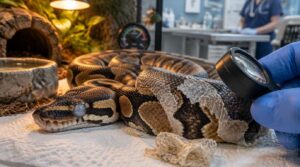
A snake that sheds constantly may barely be shedding at all. Frequent attempts can mean one shed that keeps failing, so watch shed quality, not just the calendar.
A snake that seems to shed constantly may really be failing the same shed again and again, so judge shed quality, not the calendar
Call a reptile vet the same day if you see retained eye caps or stuck patches of skin. Incomplete sheds across several cycles also need an exam.
Don’t wait if you notice wounds, discharge, or irritation. Those point to skin infections or mites. Bring your shed log. Early care limits shedding complications.
Frequently Asked Questions (FAQs)
Why is my snake shedding so often?
You’re likely seeing a shift in shedding frequency from fast growth, heavy feeding, or mites. Check temperature and humidity, hydration management, and shed quality. Environmental stressors often cause repeated, incomplete sheds.
How often should a snake shed its skin?
Most adult snakes shed every 4 to 8 weeks, though shedding frequency shifts with species and age. Juveniles shed more often because snake growth rates run high. Track each cycle, and you’ll spot your snake’s normal pattern.
Is it safe to touch shedded snake skin?
Yes, touching shed skin is safe. The skin is inert, but enclosure residue like mites or feces can cling to it. Wash your hands afterward, skip handling with open cuts, and wear gloves if soiled.
Is shedding snake skin lucky?
Ironically, the only thing luck changes is your mood. Shedding frequency, shedding behavior signs, and the shedding process reflect growth, not fortune. Treat them as snake health indicators and snake wellness clues, never lucky omens.
Can snakes shed partially or incompletely naturally?
A patchy shed doesn’t always mean something’s wrong. An occasional incomplete shed, like stuck shed on the tail, can happen naturally, especially if preshedding behavior was disrupted.
Watch your shedding behavior signs and shedding frequency.
How do wild snakes find suitable shedding locations?
Snakes will search what feels like forever before they commit.
Microhabitat selection is everything: they test rough surfaces for grip, check temperature and humidity levels, and favor concealed shedding sites like crevices, logs, and burrows.
Do venomous snakes shed differently than non-venomous?
A keeper once swore his rattlesnake shed differently. It didn’t. Venomous snakes follow the same shedding process as harmless ones, and snake shedding frequency tracks growth. Reptile husbandry and snake health monitoring matter far more.
What happens to shed snake skins in nature?
A shed skin rarely lingers outdoors. Scavengers, insects, and fungi dismantle each castoff skin within weeks, recycling nutrients after epidermal renewal. Animals hauling fragments away resemble zoochory, and inspecting fresh finds helps reptile disease prevention.
Can diet composition alter shedding skin texture?
One ball python I treated shed in torn, crumbly pieces after months of poor snake nutrition. Diet changes texture.
Vitamin A deficiency weakens the epidermal barrier, protein shapes keratin skin, and fats preserve skin elasticity. Beyond diet, a snake’s overall health and nutrition also influence how regularly shedding occurs, alongside species, age, temperature, and parasites.
What does the blue-eyed phase mean for snakes?
Your snake’s eyes look like frosted glass. That’s the blueeyed phase of the shedding process.
Cloudy eyes mean fluid separates old skin from new; eye cap separation follows. Snake physiology is working; vision dips briefly.
Conclusion
Shedding is your snake’s odometer, quietly logging every inch of growth and every bump in the road.
A snake shedding skin frequently is often just a young animal doing its job. Your task is reading the pattern. Check humidity, scan for mites, and watch the eyes after every molt. Retained eye caps or stuck shed mean it’s time to call a reptile vet.
Trust what you’ve learned here. You can tell growth from trouble now.