This site is supported by our readers. We may earn a commission, at no cost to you, if you purchase through links.
Your new ball python spends 22 hours a day tucked inside its hide, emerging only for water and the occasional cage tour. This isn’t laziness or antisocial behavior—it’s survival programming refined over 100 million years of evolution.
Snakes need hiding spots for far more than simple shelter. These concealed spaces regulate body temperature, provide security during vulnerable shedding periods, and reduce the chronic stress that weakens immune systems in captivity.
Wild snakes face constant threats from predators and competitors, making the ability to disappear a matter of life and death. Even well-fed pet snakes retain these instincts, and denying them adequate cover can trigger stress responses that manifest as feeding refusals, defensive strikes, and health problems.
Table Of Contents
Key Takeaways
- Snakes need hiding spots to regulate body temperature, manage stress, and express survival instincts hardwired over millions of years—without adequate hides, they experience chronic stress that leads to feeding refusals and health problems.
- Hiding spots serve multiple survival functions including predator avoidance, successful ambush hunting, and protection during vulnerable periods like shedding when vision becomes impaired and skin is delicate.
- Pet snakes require at least two hides positioned at warm and cool ends of their enclosure to create proper thermal gradients, with a third humid hide supporting healthy shedding cycles.
- Signs your snake needs better hiding options include escape attempts, food refusal, irregular shedding, defensive posturing, and spending excessive time pressed against enclosure walls instead of resting comfortably.
Why Do Snakes Need Hiding Spots?
Snakes aren’t just being shy when they tuck themselves away—they’re following instincts hardwired over millions of years. Whether you’re keeping a pet snake or just curious about these fascinating reptiles, understanding why they need hiding spots helps you see the world from their perspective.
Let’s break down the three main reasons snakes seek out those dark, cozy spaces.
Natural Instincts for Safety and Security
Survival tactics shape every snake’s behavior from birth. Your snake instinctively seeks enclosed refuges because predator avoidance is hardwired into its biology. In the wild, snakes can’t outrun hawks or mammals, so hiding spots become essential defensive behavior tools. This environmental adaptation isn’t learned—it’s an ancient survival pattern.
Your snake’s hiding instinct ties directly to temperature regulation, so choosing the right heat lamp setup helps create those warm microclimates they naturally seek in enclosed spaces.
Without secure animal safety zones, even captive snakes experience heightened stress because their natural instincts demand refuge selection for protection. Snakes also benefit from social stress relief in the presence of other snakes.
Stress Reduction and Well-Being
When your snake can retreat into a hide, its stress physiology stabilizes dramatically. Chronic stress management improves because hiding spots give snakes environmental control over their exposure to perceived threats. This behavioral stability translates into better psychological wellbeing—lower stress hormones, calmer postures, and healthier immune function.
Understanding how snakes protect themselves through hiding behavior helps explain why secure retreats are essential for their mental and physical health.
Hiding spots let snakes control their exposure to threats, stabilizing stress hormones and improving immune function
Without secure refuges, stress reduction becomes impossible, compromising both snake behavior and overall animal welfare beyond just thermoregulation needs. Understanding reptile captivity stress issues is vital for providing adequate care.
Expression of Natural Behaviors
Beyond stress relief, hiding spots reveal your snake’s full behavioral repertoire. Environmental enrichment through refuge seeking allows snakes to express animal instincts they’d use in their natural habitat—exploration from secure bases, spatial awareness while evaluating hide entrances, and even social aggregation in some species. These hiding behaviors aren’t just comfort; they’re cognitive exercise and natural fulfillment.
- Your corn snake investigating the edges of a new hide entrance before sliding inside
- Juvenile garter snakes choosing to share the same warm refuge with familiar companions
- A rat snake learning which shelter openings fit its body, avoiding tight squeezes
- Nocturnal species emerging from hides at dusk to explore their enclosure confidently
- Snakes alternating between resting inside refuges and climbing structures around them
Hiding Spots for Predator Avoidance
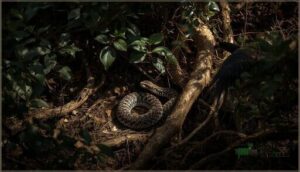
Snakes face real danger in the wild from hawks, larger mammals, and other predators that see them as a meal. When you understand their need to hide, you’re seeing a survival instinct that’s been honed over millions of years.
Let’s look at the specific ways hiding spots protect snakes from becoming prey.
Concealment From Natural Predators
In the wild, your snake’s survival depends on staying out of sight. Hawks and larger mammals hunt using sharp vision, so camouflage tactics like body patterns matching leaf litter become essential concealment strategies.
In captivity, replicating these natural hideaways with proper snake hiding spots helps reduce stress and mimics the security they’d seek under rocks or dense vegetation.
Many species rely on snake refuges—rocks, burrows, or dense vegetation—to break predator sight lines. These evasion techniques work because hiding spots physically block detection, letting snakes avoid becoming prey in complex predator-prey relationships.
Reduced Visibility and Escape Strategies
When a predator closes in, your snake relies on more than just camouflage tactics—it needs solid escape routes and visual disruption to survive. Motion camouflage becomes critical during these moments:
Understanding snake escape behavior and prevention helps you design enclosures that account for their natural instinct to flee short distances when startled.
- Zigzag patterns blur movement, making it harder for predators to track speed and direction
- Rapid retreat to nearby hiding spots reduces exposure time during predator evasion
- Flicker effects confuse pursuers when patterned snakes dart toward concealment
- Stationary crypsis transitions into active escape once detection occurs
These layered strategies increase your snake’s chances of avoiding capture.
Hiding During Vulnerable Life Stages
Vulnerability peaks during specific life stages when your snake depends entirely on refuge for survival. Gravid females shift to covered habitats, reducing predator encounters while maintaining stable temperatures for embryonic development.
Neonates face disproportionately high predation rates and spend several extra hours daily concealed in crevices or dense cover.
During shedding, impaired vision and delicate new skin force snakes into prolonged hiding behavior until sensory abilities and integument fully recover.
Thermoregulation: Controlling Body Temperature

Snakes can’t generate their own body heat like you do. They depend entirely on their surroundings to warm up or cool down, which makes hiding spots essential for survival.
Here’s how snakes use different hides to stay at the right temperature.
Ectothermy and Environmental Dependence
Snakes are ectothermic, meaning they can’t generate their own body heat like you do. Their temperature regulation depends entirely on their surroundings. Here’s why environmental adaptation matters for your snake’s survival:
- Body temperature directly tracks habitat conditions
- Metabolism speeds up or slows with temperature changes
- Preferred range sits around 26 to 32°C for ideal function
- Too hot or cold disrupts digestion and movement
- Hiding spots buffer extreme temperature swings
Thermoregulatory behavior keeps them healthy.
Selecting Warm and Cool Hides
Your snake won’t thrive without access to both warm and cool hiding spots. Thermal gradients let them move between temperature zones, raising body heat during active periods or cooling off when necessary.
Position hides at opposite ends of the enclosure to create microclimates your snake can choose from. This temperature control aids natural thermoregulation and reduces stress-related behaviors tied to poor hide placement.
Maintaining Optimal Humidity Levels
Humidity control inside hiding spots is just as important as temperature regulation for your snake’s health. Moisture management directly affects shedding success and respiratory function, making hide maintenance a critical part of thermoregulation.
Monitor humidity levels with these practical steps:
- Place hygrometers at snake-eye level inside hides to track moisture accurately
- Add damp substrate or moistened sphagnum moss to one hide for humidity monitoring
- Adjust ventilation if readings exceed species-specific ranges for extended periods
Hiding Spots and Successful Hunting

Snakes aren’t just hiding to stay safe—they’re also setting up the perfect ambush. Many species rely on concealment to hunt effectively, staying motionless until prey wanders close enough to strike.
Let’s look at how hiding spots help snakes become more successful predators.
Ambush Hunting Tactics
Your snake doesn’t just hide—it hunts from cover. Ambush strategies rely on stealth methods where the snake remains perfectly still, waiting for prey to wander close. These hiding spots improve strike success by reducing detection. Many species use elevated or sunken locations to surprise their target, aligning their hunting techniques with prey behavior patterns.
| Ambush Strategy | How It Works | Hunting Benefit |
|---|---|---|
| Concealed positioning | Snake hides in vegetation or substrate | Prey can’t detect predator threat |
| Elevated/sunken sites | Uses terrain advantage for strikes | Reduces prey escape opportunities |
| Nocturnal timing | Hunts when prey is most active | Maximizes ambush success rates |
Camouflage and Stealth
Beyond staying hidden, your snake relies on camouflage techniques and adaptive coloration to vanish in plain sight. Visual disruption through scale patterns and counter-shading breaks up their outline, making concealment methods incredibly effective. These stealth strategies support ambush tactics by letting snakes blend with substrate textures—leaf litter, sand, or rocks—so prey and predators alike fail to notice them.
Key Camouflage and Concealment Methods:
- Dorsal coloration mirrors surrounding textures like foliage or pebbles
- Irregular scale patterns disrupt visual continuity and hide body outlines
- Counter-shading reduces three-dimensional appearance in open spaces
- Slow, deliberate movement minimizes vibration and detection risk
- Tight coil posture decreases exposed surface area during rest
Proximity to Prey Sources
Camouflage alone won’t fill your snake’s belly. Smart ambush tactics mean positioning near prey distribution hotspots—rodent trails, burrow entrances, or fallen logs where small mammals travel. This hunting strategy maximizes foraging behavior while minimizing energy spent searching. Predator-prey relationships show that snake behavior centers on balancing predator avoidance with access to food-rich zones, making hiding spots near prey sources essential.
| Location Feature | Why Snakes Choose It |
|---|---|
| Fallen logs | Channels rodent movement past strike zones |
| Burrow edges | Intercepts prey entering/exiting shelters |
| Dense vegetation borders | Conceals snakes while watching travel routes |
| Rocky crevices near nests | Offers ambush access plus quick escape |
Importance of Hides During Shedding
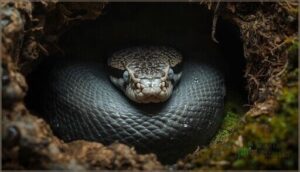
Shedding is one of the most vulnerable times in a snake’s life. During this process, your snake’s vision becomes cloudy, its skin loosens, and it can’t defend itself as effectively as usual.
That’s why access to secure hiding spots becomes absolutely critical—they provide the protection, moisture, and stress relief your snake needs to shed successfully.
Protection While Shedding Skin
When your snake enters ecdysis, it’s at its most defenseless. Hiding spots give your snake the security it needs during these vulnerable phases, reducing visibility to predators and lowering stress indicators.
The shedding process affects skin health, and proper moulting safety depends on sheltered spaces. Without adequate hiding spots, your snake may experience heightened anxiety, impacting its overall thermoregulation and natural snake behavior during this critical time.
Moisture Retention for Healthy Shedding
Your snake’s hiding spots do more than just offer safety—they create the right moisture levels for smooth shedding cycles. When ectothermic reptiles like yours prepare to shed, proper humidity control matters as much as thermoregulation. Here’s what hiding spots provide:
- Humidity levels between 60–80% support skin hydration and healthy epidermal health
- Moisture-retentive substrates prevent dehydration during shedding
- Enclosed spaces trap humidity, helping your snake complete clean sheds
These microhabitats directly influence snake behavior and shedding success.
Reducing Stress During Vulnerable Periods
Vigilance takes a toll on your snake during shedding or illness. Hiding spots offer stress management by reducing exposure to perceived threats and environmental stressors.
Studies show that access to secure hides lowers cortisol spikes and improves rest cycles during vulnerable times. This environmental enrichment fosters natural coping mechanisms, allowing your snake to regulate stress reduction through controlled hiding behavior and thermoregulation.
Providing Hiding Spots in Captivity
If you’re keeping a snake as a pet, you need to recreate those natural hiding opportunities in their enclosure. The right setup makes all the difference between a stressed snake and a thriving one.
Let’s look at the specific types of hides you should provide, where to place them, and how to tell if your snake needs more options.
Types of Hides for Pet Snakes
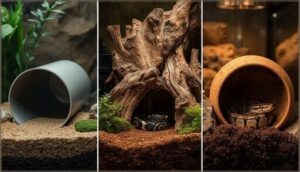
Your snake’s hiding spots should match its natural hiding behavior and support proper pet snake care. When selecting reptile hides for snake enclosures, consider these materials:
- PVC pipes create simple, tubular snake habitat and environment options for coiled resting
- Ceramic hides retain heat well, making them ideal near basking zones in reptile enclosure and environment setups
- Cork bark mimics natural hiding spots while maintaining humidity better than plastic alternatives
Avoid untreated cedar or pine, as resins irritate snakes.
Enclosure Placement and Environmental Enrichment
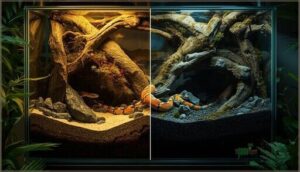
Strategic habitat layout transforms your reptile enclosure and environment into a functional ecosystem. Place hiding spots at both ends of thermal gradients so your snake can choose enclosed spaces while regulating temperature.
Environmental enrichment for animals includes branches, rocks, and varied substrate that create spatial complexity. This hiding and camouflage opportunity lets your pet express natural behaviors while maintaining secure shelter across temperature zones.
Signs Your Snake Needs More Hiding Options
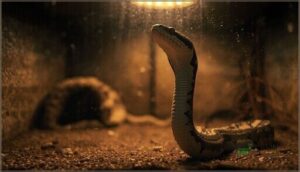
Your pet’s actions tell you when something’s missing. Watch for these behavioral red flags that signal inadequate hide availability and compromised snake welfare:
- Repeated escape attempts or pressing against enclosure walls
- Refusing food or showing irregular shedding patterns
- Spending excessive time clustered near heat sources without retreating
- Increased defensive posturing or aggression during routine care
- Visible body tension with frequent environmental scanning
These captive behavior changes indicate your snake needs better environmental enrichment through additional hiding spots.
Frequently Asked Questions (FAQs)
Can snakes share hiding spots with other snakes?
Good fences make good neighbors“—and so do separate hides. Most snakes prefer their own shelters due to territoriality and stress. While some species tolerate shelter competition briefly, proper hide design with multiple options prevents coexistence conflicts.
How many hides does one snake actually need?
You should provide at least two hides—one on the warm side and one on the cool side. A third hide near water helps during shedding and promotes overall comfort.
Do all snake species hide the same way?
Different snake species show real variation in hiding strategies—some burrow underground, others climb into branches, and many use rock crevices, adapting their concealment methods to match their habitat and body size.
What materials make the safest snake hiding spots?
Safe hiding spots use non-porous materials like rigid plastic, sealed wood, or ceramic that resist moisture and bacteria. Smooth surfaces prevent skin damage during shedding, while thermal compatibility aids your snake’s temperature regulation needs.
Will snakes stop hiding once they trust their owner?
Even with trust development and owner bonding, your snake won’t abandon its hiding behavior. Environmental cues and instinct drive shelter-seeking, not relationships.
Individual snake personality affects how openly they explore, but hides remain essential.
Conclusion
Without proper hiding spots, your snake faces a choice: remain exposed and anxious, or refuse food and hide in desperation. Neither option fosters long-term health.
Understanding why snakes need hiding spots transforms your approach from basic housing to replicating the security instincts evolution hardwired into every serpent.
Multiple hides—warm, cool, and humid—aren’t luxuries. They’re the difference between a thriving snake and one merely surviving in captivity.
- https://openjournals.ugent.be/vdt/article/75816/galley/199923/view/
- https://meridian.allenpress.com/herpetologica/article/72/1/64/196776/Effects-of-Body-Size-and-Reproductive-State-on
- https://pmc.ncbi.nlm.nih.gov/articles/PMC8833826/
- https://www.dpi.nsw.gov.au/dpi/animals/animal-welfare/advice/pets/snakes
- https://journal.iaabcfoundation.org/snake-neuroenrichment/