
This site is supported by our readers. We may earn a commission, at no cost to you, if you purchase through links.
You walk into your reptile room and find your ball python coiled in its water bowl—again. This isn’t coincidence or boredom. Snakes soak in water bowls for specific physiological reasons, most commonly to aid shedding, regulate body temperature, and maintain hydration through cutaneous drinking.
While occasional soaking is perfectly normal behavior, the frequency and duration tell you something important about your snake’s health and environmental conditions. Understanding why your snake seeks water helps you distinguish between natural behavior and warning signs that require immediate attention to husbandry or veterinary care.
Table Of Contents
Key Takeaways
- Snakes soak primarily to aid shedding through cutaneous drinking—absorbing moisture directly through their skin and oral tissues to loosen old scales and maintain hydration between water bowl visits.
- Excessive soaking beyond normal shedding cycles often signals environmental problems like inadequate humidity (below 40-60%), overheating (above 92°F), or health issues including mite infestations and skin infections requiring veterinary attention.
- Proper husbandry requires maintaining thermal gradients between 75-92°F and humidity levels at 50-60%, along with daily water changes in bowls large enough for your snake to submerge its head and partial body comfortably.
- Monitor soaking patterns closely since occasional dips represent natural thermoregulation and hydration behavior, while persistent submersion indicates underlying distress from parasites, respiratory issues, or poor enclosure conditions.
Why Do Snakes Soak in Water Bowls?
If you’ve noticed your snake spending time in its water bowl, you’re probably wondering what’s going on. Snakes soak for several specific reasons, and understanding these behaviors helps you provide better care.
One of the most common reasons is dehydration, which you can learn to spot early by checking signs like skin elasticity and shedding issues covered in this complete guide to snake water requirements.
Let’s look at the main reasons your snake might be taking regular baths.
Natural Shedding Process
Shedding—scientifically known as ecdysis—is one of the most fascinating and essential physiological processes in a snake’s life cycle. As your snake grows, it periodically replaces worn-out skin with new skin forming underneath.
The timing between sheds varies widely depending on age, health, and environmental factors—understanding your snake’s shedding frequency helps you track their overall wellness.
This shed cycle varies by age—young snakes shed more frequently (sometimes every 7-10 days) than adults. Soaking behavior usually increases during this period, as water helps loosen the old skin for easier removal.
If the old skin doesn’t come off completely, incomplete sheds can lead to health issues that require careful attention.
Hydration and Cutaneous Drinking
Beyond loosening skin, soaking behavior fulfills a critical hydration function. Your snake doesn’t just drink from its water bowl—it absorbs moisture directly through its skin and oral tissues, a process called cutaneous drinking.
If your snake isn’t soaking enough before a shed, you might need to step in with gentle manual assistance to prevent complications.
Snakes absorb moisture directly through their skin and mouth during soaking, a process called cutaneous drinking that serves a critical hydration function
This supplementary hydration pathway becomes particularly important when:
- Oral water intake is insufficient
- Environmental humidity drops below ideal levels
- Skin permeability increases in moist regions
- Your snake requires moisture balance between sheds
- Reptile health depends on maintaining proper fluid levels
Water absorption through soaking helps sustain overall physiological function.
Thermoregulation and Temperature Control
Water also acts as a powerful tool for temperature regulation. Your snake relies on behavioral thermoregulation—moving between warm and cool zones to control body temperature. When ambient conditions spike, soaking enables heat exchange, rapidly lowering skin temperature through water contact.
| Temperature Issue | Soaking Response |
|---|---|
| Overheating (>32°C) | Extended water immersion |
| Suboptimal gradient | Frequent bowl visits |
| Malfunctioning heat source | Prolonged cooling sessions |
| Poor thermal heterogeneity | Compensatory soaking behavior |
This ectothermic regulation depends on proper temperature gradients in your enclosure. Without a functional thermostat and varied basking spots, your snake may soak excessively to compensate for inadequate environmental control.
Stress and Environmental Triggers
Beyond temperature, your snake’s soaking behavior often signals environmental stress. Frequent enclosure changes, excessive handling, or nearby disturbances increase cortisol-like stress responses, prompting water immersion as stress relief.
Inadequate hiding spots increase perceived vulnerability, driving prolonged soaking sessions.
Owners can encourage better shedding outcomes by providing adequate humidity and gentle assistance techniques that reduce stress during this vulnerable period.
These habitat dynamics directly impact animal welfare—monitor for sudden behavioral shifts, as they reveal underlying issues with humidity levels, temperature gradient, or overall enclosure security affecting snake behavior.
Shedding: The Most Common Reason for Soaking
If you’ve noticed your snake spending more time in its water bowl than usual, there’s a good chance it’s preparing to shed. Soaking is one of the most reliable behaviors you’ll see during the shedding cycle—it’s how snakes hydrate their skin and loosen that old layer before it comes off.
Let’s look at how this process works, what signs to watch for, and why humidity plays such a critical role.
How Soaking Aids Shedding
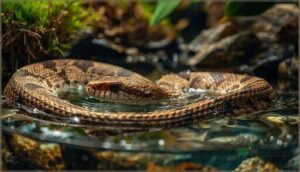
Think of soaking as your snake’s version of a warm bath before peeling off a full-body wetsuit—it’s all about making that process as smooth and painless as possible. Water therapy softens the old skin and creates separation between worn-out scales and fresh tissue underneath.
Proper skin hydration through snake soaking prevents tears and incomplete sheds, which can lead to serious scale health problems if left untreated.
Signs Your Snake is About to Shed
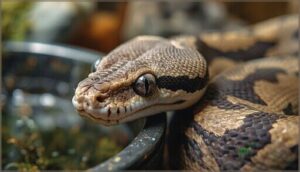
Your snake’s appearance offers clear shedding signs before the main event begins. Watch for cloudy, bluish eyes as the spectacle loosens—this is when many snakes start soaking more frequently.
You’ll also notice duller skin coloration and potentially some behavioral shifts like reduced appetite or increased defensiveness during handling.
These pre-shed care indicators help you anticipate your pet snake’s shedding process and adjust reptile care accordingly.
Importance of Humidity During Shedding
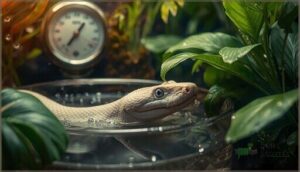
Proper humidity levels directly determine shedding success. Maintaining 60–70% relative humidity during the shedding process helps your snake’s skin separate cleanly from underlying layers. Without adequate environmental control, friction increases between old and new scales, leading to stuck eye caps and incomplete sheds.
Monitor humidity with calibrated gauges and adjust snake soaking access accordingly for ideal reptile care and thermoregulation tips.
Environmental and Husbandry Factors
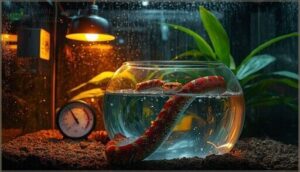
Sometimes your snake isn’t soaking because of shedding—it’s telling you something’s off with its environment. Poor husbandry conditions like incorrect humidity, temperature extremes, or an inadequate water source can drive your snake into its bowl repeatedly.
Let’s break down the three most common environmental factors that trigger this behavior.
Low Humidity and Dehydration
When your enclosure drops below 40–60% ambient humidity levels, you’ll often see compensatory soaking behavior. Chronic low humidity compromises shed quality and triggers dehydration signs like sunken eyes, wrinkled skin, and tacky mouth tissues.
Your snake’s water intake occurs through drinking and cutaneous moisture exchange, so maintaining proper humidity control directly aids skin health and hydration.
Overheating and Cooling Behavior
When your enclosure’s heat source pushes temperatures past 92°F, you’ll notice increased soaking frequency as your snake attempts cooling methods to combat thermal stress. Behavioral thermoregulation techniques include water immersion, which promotes rapid convective heat loss.
Without proper temperature regulation through thermal gradients, your snake relies heavily on its water bowl for heat management—a compensatory response to environmental factors you can easily correct.
Water Bowl Size and Placement
You’ll want a bowl that accommodates your snake’s head and neck without tipping—this simple criterion prevents unnecessary stress during hydration and soaking water sessions. Bowl depth matters for safety, particularly with juveniles.
Keep substrate management clean by elevating the dish slightly off bedding, and position it away from heat zones to maintain stable water quality and support ideal snake hydration in your reptile care routine.
Health Issues Linked to Excessive Soaking
While occasional soaking is perfectly normal, snakes that spend excessive time in their water bowls are often trying to tell you something’s wrong.
These prolonged soaking sessions can signal parasites, skin conditions, or more serious health problems that need your attention.
Let’s look at three common health issues that drive snakes to seek constant relief in water.
Snake Mite Infestations
When your snake suddenly becomes a bathtub enthusiast, spending hours submerged in its water dish, you might be witnessing a desperate attempt to escape one of the most frustrating parasites in reptile keeping—snake mites. These tiny bloodsuckers cause intense irritation, prompting your snake to soak repeatedly trying to drown them.
Watch for these infestation signs:
- Tiny black or red dots crawling on your snake’s scales, especially around the eyes
- White flecks floating in the water bowl after soaking sessions
- Restless behavior with frequent rubbing against cage decorations
Mite treatment requires immediate veterinary consultation. Your vet will recommend safe mite removal options—never use household pesticides.
Proper mite prevention includes quarantining new reptiles and maintaining clean enclosures.
Skin and Scale Problems
Beyond mites, your snake might soak excessively due to skin lesions or dermatitis. Fungal infections create scaly patches on dorsal skin, while bacterial issues cause redness and crusting around scale margins.
Keratinization disorders and scale rot both compromise skin health, often triggered by poor humidity levels.
If you notice ulcerations, circular patches, or lifting scales, veterinary intervention is critical—these conditions won’t resolve through soaking alone.
Signs of Illness Requiring Veterinary Attention
Respiratory issues like open-mouth breathing or nasal discharge signal serious snake health issues. Skin infections with blister-like lesions or foul odor need immediate veterinary medicine. Watch for gastrointestinal problems—persistent anorexia or regurgitation—and neurologic signs like stargazing or loss of coordination.
These systemic diseases won’t improve with better pet snake care alone. If soaking accompanies weight loss, lethargy, or abnormal breathing, schedule a vet visit promptly.
Monitoring snake health requires understanding of proper reptile care habits to prevent issues.
How to Support Your Snake’s Soaking Needs
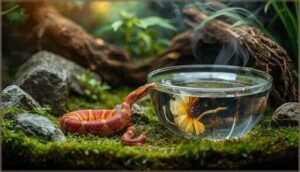
Supporting your snake’s natural soaking behavior starts with meeting its basic environmental needs. A well-maintained enclosure gives your snake the tools it needs to regulate temperature, stay hydrated, and shed successfully.
Let’s break down the key elements that make this possible.
Providing Clean Water and Proper Bowl Size
You can’t expect your snake to thrive without attention to water quality and bowl size. Choosing the right water dish directly impacts hydration, shedding success, and overall soaking behavior. Here’s what you need to prioritize:
- Bowl Size: Select a dish large enough for your snake to submerge its head and partial body comfortably
- Water Depth: Keep depth appropriate to prevent drowning while allowing adequate soaking water
- Cleanliness Tips: Replace water daily and scrub the bowl between refills to prevent contamination
Maintaining Ideal Temperature and Humidity
If your enclosure’s temperature or humidity swings too far off-target, your snake will instinctively turn to its water bowl as a makeshift climate control system.
Maintain thermal gradients between 75-92°F and humidity levels at 50-60% to support proper thermoregulation, hydration management, and shedding.
Use digital hygrometers and infrared thermometers for environmental monitoring—because precision beats guesswork every time.
Monitoring for Abnormal Soaking Behavior
Occasionally, your snake’s water bowl habits will shift in ways that signal trouble beneath the surface. Track soaking patterns over several days—prolonged immersion despite stable environmental factors warrants concern.
Behavioral signs like lethargy, weight loss, or skin abnormalities during repeated soaking episodes require veterinary guidance.
Health checks should connect the dots between shedding cycles, reptile health and wellness, and animal hydration to distinguish normal snake behavior and ecology from genuine distress.
Frequently Asked Questions (FAQs)
Can snakes drown while soaking in water?
Healthy snakes rarely drown while soaking—they control their buoyancy and surface for air. Drowning risks increase with deep water bowls, exhaustion, or underlying respiratory issues requiring immediate veterinary attention.
How often should I change my snakes water?
You should refresh your snake’s water bowl daily to maintain water quality and prevent bacterial buildup. Change it immediately if contaminated with feces or debris, ensuring proper hydration and snake hygiene year-round.
Do all snake species soak with equal frequency?
No—soaking frequency varies widely among species. Aquatic and semi-aquatic snakes naturally soak more than terrestrial species, while environmental influences like humidity levels and enclosure conditions also greatly affect individual soaking behavior.
Should I remove my snake while its soaking?
Let your snake finish soaking naturally—don’t interrupt this essential behavior.
Snake owners should avoid removal during shedding or thermoregulation unless water quality deteriorates or signs of distress appear, protecting reptile care routines.
What water temperature is safest for snake soaking?
Room temperature water (73–82°F or 23–28°C) is safest for snake soaking. Water hotter than 86°F can stress your snake, while temperatures below 68°F won’t effectively support shedding or hydration needs.
Conclusion
Your snake’s water bowl is more than a drinking station—it’s a diagnostic window into their health and comfort. When you understand why snakes soak in water bowls, you’re reading their silent language about humidity, temperature, and wellness.
Monitor soaking patterns closely: occasional dips signal natural behavior, while persistent submersion demands investigation.
Adjust your husbandry proactively, maintain ideal conditions consistently, and consult a reptile veterinarian when behavior shifts unexpectedly. Your attentiveness determines whether soaking remains beneficial or becomes a distress signal.
- https://www.merckvetmanual.com/all-other-pets/reptiles/disorders-and-diseases-of-reptiles
- https://www.wildlifedemonstrations.com/post/scale-rot-how-to-identify-and-treat
- https://en.wikivet.net/Snake_Mite_Infestation
- https://www.zenhabitats.com/blogs/reptile-care-sheets-resources/why-is-my-pet-snake-soaking-in-their-water-dish-zen-habitats
- https://dandavisreptiles.weebly.com/snake-mites.html