This site is supported by our readers. We may earn a commission, at no cost to you, if you purchase through links.
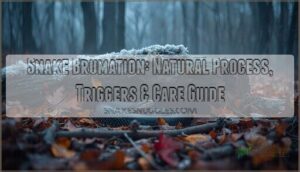
A snake curled beneath a log in late autumn isn’t just hiding from the cold—it’s embarking on a physiological transformation that rivals anything in the animal kingdom. Brumation, the natural process that slows a snake’s heartbeat and hushes its hunger, allows these reptiles to survive when food vanishes and temperatures plummet.
Unlike hibernation in mammals, brumation rewires a snake’s body for endurance, not deep sleep, and sets them up for the challenges ahead.
Understanding how brumation works gives you the power to care for your snake with confidence, ensuring its health and safety through every seasonal shift.
Table Of Contents
- Key Takeaways
- What is Snake Brumation?
- Why Snakes Undergo Brumation
- How Brumation Affects Snake Physiology
- Environmental Triggers for Brumation
- Hibernacula: Natural and Artificial Shelters
- Snake Behavior During Brumation
- Preparing Snakes for Brumation
- Ending Brumation and Post-Brumation Care
- Brumation’s Role in Snake Survival and Breeding
- Frequently Asked Questions (FAQs)
- Conclusion
Key Takeaways
- Brumation is a survival strategy where snakes slow their metabolism and remain semi-alert, allowing them to conserve energy and survive cold seasons without food.
- Environmental cues like dropping temperatures and shorter daylight hours trigger brumation, with species and regional differences shaping how long and how deeply snakes enter dormancy.
- Proper pre-brumation care—such as fasting, health checks, and gradual cooling—helps prevent health risks like dehydration, parasite outbreaks, and digestive problems.
- Safe recovery from brumation requires slowly raising temperatures, monitoring hydration and appetite, and watching for signs of illness to ensure your snake returns to normal activity.
What is Snake Brumation?
If you’ve noticed your snake getting sluggish as temperatures drop, you’re witnessing one of nature’s most essential survival strategies. Brumation is the reptilian version of shutting down for winter, though it’s far more complex than simply taking a long nap.
Let’s break down what brumation actually means, how it differs from hibernation, and why snakes rely on this process to survive and thrive.
Definition of Brumation
Reptilian torpor takes a unique form in snakes. When you observe snake brumation, you’re witnessing a specialized dormancy state where these ectothermic animals dramatically slow their metabolic rate without fully shutting down. Unlike deep sleep, this seasonal sluggishness allows intermittent activity—your snake might occasionally wake to drink or reposition itself.
Brumation triggers include dropping temperatures and shorter daylight, signaling winter’s approach through ectotherm physiology. It’s important to prepare snakes by ensuring they’re healthy before entering the brumation period.
Differences Between Brumation and Hibernation
Many people confuse brumation with hibernation, but these dormancy strategies differ substantially. Your ectothermic snake remains semi-alert during brumation, occasionally moving on warm days, whereas hibernating mammals like bears enter deep sleep. Metabolic rate drops differ too—squamates reduce metabolism 70% at 12°C, while bats achieve 97.9% suppression. Oxygen needs, sleep patterns, preparation differences, and dormancy duration also set these processes apart. Brumation is triggered by a drop in temperature and decreased access to food, whereas hibernation is more related to scarce food and harsh weather.
Key Differences Between Brumation and Hibernation:
- Awareness Level – Brumating snakes stay alert and responsive, while hibernating mammals sleep deeply throughout winter.
- Activity Patterns – Your snake may bask on sunny winter days, but hibernators remain continuously dormant.
- Water Requirements – Reptiles wake periodically to drink during brumation; mammals don’t drink at all.
- Heart Rate Changes – Snakes drop to 5% normal heart rate, less extreme than some mammalian hibernators.
- Oxygen Tolerance – Brumating reptiles handle low-oxygen environments through glycogen storage, unlike oxygen-dependent hibernators.
Brumation in Reptiles Vs. Other Animals
Brumation extends beyond snakes to all reptiles—turtles, lizards, and crocodilians rely on this ectotherm metabolism strategy. Mammals hibernate with dramatic metabolic shutdowns, but reptiles maintain flexibility.
Your bearded dragon or tortoise reacts to sensory cues like temperature drops differently than a groundhog does. Energy stores fuel both processes, though recovery speed varies: reptiles wake intermittently to drink, while mammals emerge once after months of deep dormancy.
Why Snakes Undergo Brumation
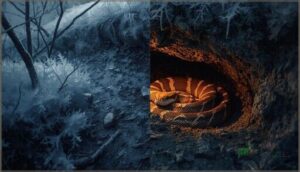
Brumation isn’t just a quirky reptile habit—it’s a survival strategy millions of years in the making. When temperatures drop and food becomes scarce, snakes enter this energy-saving state to weather the harsh conditions and emerge ready for the breeding season ahead.
Let’s break down the three main reasons why your snake’s biology is wired for this annual slowdown.
Evolutionary Purpose of Brumation
You might think brumation is just about waiting out winter, but this seasonal behavior evolved as a remarkable survival strategy for ectotherms facing harsh climates. Over millions of years, snakes developed this energy conservation tactic to boost reproductive success and survival rates.
Brumation even triggers aging slowdown through reduced metabolic wear, while genetic shifts refined habitat adaptation, allowing snakes to thrive in environments where constant activity would prove fatal.
Energy Conservation in Cold Seasons
When cold weather settles in, your snake’s brumation kicks energy conservation into high gear. Metabolic rate plummets, movement slows, and fat stores become the main fuel source. Thermal buffering in hibernacula keeps body temperatures stable, while rare activity reduction helps survival. Water balance remains key—snakes still arouse occasionally to drink, minimizing dehydration during extended ectotherm dormancy.
- Metabolic Rate drops up to 70%
- Thermal Buffering stabilizes body heat
- Activity Reduction slashes energy use
- Fuel Use relies on stored fat reserves
Preparation for Breeding Season
As winter fades, your snake’s body shifts gears—hormonal priming kicks in, prepping sperm quality and gamete readiness for the upcoming breeding season. Mating synchronization means snakes emerge together, maximizing mate encounters.
Female cycles respond to cooling, boosting fertility and clutch size. Pheromonal signaling ramps up, so when the mating season arrives, everyone’s ready for successful breeding right out of the gate.
How Brumation Affects Snake Physiology
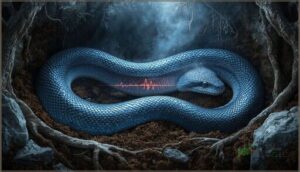
Brumation changes a snake’s body in some surprising ways, from how they breathe to how much energy they use. If you’re caring for snakes, understanding these shifts is key to keeping them healthy.
Let’s look at what happens inside their bodies during this dormant season.
Metabolic Rate Changes
When temperatures drop, your snake’s body largely shifts into low gear—its metabolism crashes dramatically to save precious energy. Here’s what happens inside:
- Metabolic rate plummets by 95% when temperature falls from 30°C to 5°C, far beyond what cooling alone would cause
- Oxygen consumption drops over 50% in snakes brumating underwater versus air
- Energy expenditure shrinks 55% during aquatic hibernation compared to terrestrial dormancy
- Digestive system downscales by 65%, with intestinal mass decreasing and nutrient absorption slowing greatly
- Lipid metabolism shifts completely, conserving fat stores while biosynthetic pathways shut down
Temperature sensitivity drives these changes—every 10°C drop roughly halves metabolic demands, allowing your snake to survive months without food.
Breathing and Activity Levels
Your snake’s breathing slows to a whisper during brumation—some snakes go minutes between breaths, their apneic heart rate dropping in sync with metabolic depression. Oxygen demand plummets so much that basking behavior on warm winter days barely dents the thermal envelope they maintain.
This respiratory slowdown protects snake health, as forced activity at low temperature can trigger respiratory infections when metabolism can’t keep pace.
Appetite and Weight Regulation
Once appetite shuts down—often weeks before true brumation—your snake’s metabolic depression kicks in, slashing resting energy demand by up to 72%. Fasting tolerance becomes striking: Oriental rat snakes go two to three months without food, relying on fat reserves and gluconeogenesis to fuel minimal activity.
Gut microbiota shift, lipid metabolism slows, and weight regulation stabilizes—healthy brumators lose very little mass because their metabolisms match the calorie drought perfectly.
Environmental Triggers for Brumation
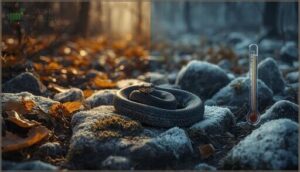
Snakes don’t just wake up one morning and decide it’s time to brumate—their bodies respond to specific environmental signals that tell them winter is approaching. Temperature drops and shorter daylight hours act as nature’s alarm clock, triggering the physiological changes that prepare them for dormancy.
Understanding these triggers helps you recognize what your snake needs, whether it’s living in the wild or in your care.
Role of Temperature and Daylight
When ambient conditions shift, your snake’s biology listens carefully to two master signals: temperature and daylight hours. These environmental cues work in tandem to flip the brumation switch, guiding your pet’s internal clock with striking precision.
Key environmental triggers include:
- Thermal thresholds dropping below 10–12 °C slow neuromuscular performance and signal dormancy readiness
- Photoperiod influence from shortened light cycles (10 hours or less) readies reptiles for seasonal rest
- Hormone regulation linking temperature changes to melatonin rhythms and reproductive timing
Microclimate selection becomes critical as consistent temperatures help snakes maintain safe brumation states despite climate impacts.
Seasonal Cues in Different Climates
Where you live shapes how—and when—your snake’s seasonal cycle unfolds. Regional variations matter: In middle Tennessee, timber rattlesnakes brumate for roughly five months, responding to environmental conditions near 10–15°C. Canadian snakes endure six-plus months below ground, whereas subtropical animals skip true brumation entirely.
Climate-driven shifts are evident in Mediterranean vipers, whose temperature sensitivity shortens their dormant window. These examples illustrate phenological traits tied to microhabitat influence and light cycles across vastly different climates.
Variation Among Snake Species
Beyond location alone, each species carries its own brumation blueprint. Temperate vs. tropical ancestry matters most: timber rattlesnakes cool for five months and often choose communal brumation in shared dens, while ball pythons from equatorial Africa never truly brumate and risk lethal stress if exposed to extended cold.
Brumation duration, temperature tolerance, and health outcomes all hinge on your snake’s evolutionary roots. Captive management must respect species-specific needs rather than apply a one-size-fits-all cooling protocol.
Hibernacula: Natural and Artificial Shelters
Finding the right spot to spend the winter can mean the difference between life and death for a snake. In the wild, they seek out shelters that stay consistently above freezing, protect them from predators, and allow them to maintain their delicate energy balance.
Whether you’re managing captive snakes or working on conservation efforts, understanding what makes a good hibernaculum—and how to create one—is essential knowledge.
Characteristics of Natural Hibernacula
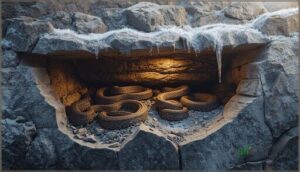
Natural hibernacula meet strict habitat requirements that keep snakes alive through winter. You’ll find these safe places where thermal stability, substrate composition, and landscape context converge:
- Deep crevices in fractured bedrock or talus extend below the frost line—often over a meter down—maintaining temperatures above freezing even when surface air plummets to −20 °C or lower.
- South-facing rocky slopes capture solar radiation, warming den entrances for occasional basking on milder days.
- Communal use sites like limestone sinkholes can shelter thousands of snakes, providing shared warmth and proximity to future mates.
Constructing Artificial Hibernacula
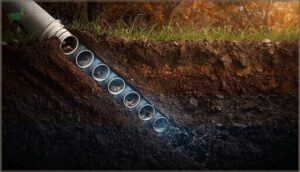
When rocky crevices or talus slopes aren’t available, you can replicate their thermal performance through artificial hibernacula construction. A 2024 design used PVC plumbing components—about 160 cm long and 10 cm diameter—with four internal chambers spaced 20 cm apart.
Installation depth matters: auger down roughly 115 cm at a 45-degree angle, reaching groundwater zones that averaged 5–6 °C.
Material selection stays simple, costing around $91 Canadian per unit, while occupancy rates match natural hibernacula when drainage solutions prevent flooding.
Importance of Location and Insulation
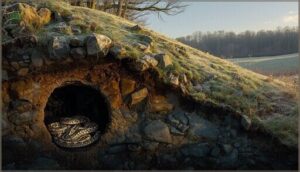
When you’re scouting a hibernaculum—natural or artificial—three environmental conditions determine success:
- Slope and aspect influence solar exposure, with south-facing sites gaining warmer substrate temperatures that buffer winter cold.
- Subsurface depth provides insulation; chambers 50 cm down stay stable while surface air swings wildly.
- Foraging proximity matters because snakes reuse dens near productive habitat, supporting communal use across seasons.
Snake Behavior During Brumation
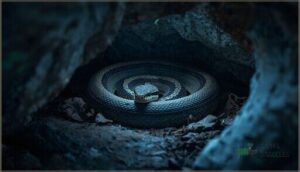
Once your snake enters brumation, you’ll notice some distinct changes in how it behaves, and understanding these shifts helps you provide better care during this vulnerable time.
Brumating snakes aren’t completely inactive, but their behavior differs markedly from their warm-season patterns. Let’s look at what you can expect to see during this dormant period.
Lethargy and Movement Patterns
During brumation, your snake enters a state of profound lethargy marked by dramatically reduced locomotion—think of it as nature’s energy-saving mode. While not completely immobile, movements become sluggish and infrequent, with most activity shifts confined to repositioning within hibernacula or brief basking behavior on unseasonably warm days.
This brumation inertia reflects temperature-driven changes in ectotherm behavior, as dormancy suppresses normal activity patterns until spring triggers reawakening.
Water Needs and Safety Risks
Despite dormancy, your snake still needs water throughout brumation. Field studies confirm that overwintering individuals drink from unfrozen sources even at temperatures near 4°C. Dehydration indicators like wrinkled skin signal trouble, so maintain 40–60% humidity levels and provide shallow, stable water bowls checked weekly.
Drowning prevention matters too: secure dishes to prevent spilling, which creates cold, saturated substrate that invites respiratory infections. In flooded hibernacula, lethargic snakes can become trapped underwater, leading to fatal consequences.
Preparing Snakes for Brumation
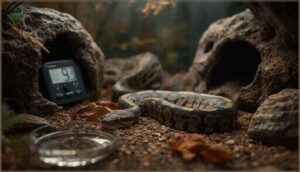
Getting your snake ready for brumation isn’t something you can rush into overnight, and cutting corners can spell trouble for your pet’s health. The process starts well before temperatures drop, requiring careful attention to feeding schedules, body condition, and environmental adjustments.
Here’s what you need to focus on to make certain your snake enters brumation safely and emerges healthy in spring.
Pre-Brumation Feeding and Fasting
Think of your snake’s digestive tract like a furnace—you wouldn’t shut it down while fuel’s still burning. Stop feeding one full month before cooling begins, giving your snake’s metabolism time to process everything completely. This fasting duration prevents undigested food from rotting inside during dormancy.
Pre-brumation gorging behavior helps with fat accumulation, as snakes naturally consume larger meals before physiological changes kick in, with species patterns varying across colubrids.
Health and Weight Assessment
Before cooling starts, evaluate each snake’s fitness like a pre-flight checklist—Body Condition Score, muscle tone, hydration level, and fat reserves matter. Palpate the epaxial muscles; you want moderate flesh over the vertebrae, not bony ridges.
Conduct parasite screening, because helminths compromise weight monitoring during brumation. Baseline weight records now predict post-brumation health outcomes, helping you distinguish normal energy use from worrisome decline in snake health and care.
Setting Up a Controlled Brumation Environment
You’ll need a dedicated, escape-proof brumation tub placed inside a thermostatically controlled cooling chamber—many keepers use mini-fridges or wine coolers set between 50–60°F. Add slightly moist substrate for hydration, verify thermostat reliability with an independent thermometer, and guarantee enclosure security.
Gradual cooling over one to two weeks prevents thermal shock, while stable temperature control for snakes throughout the dormant period protects your animal’s health.
Ending Brumation and Post-Brumation Care
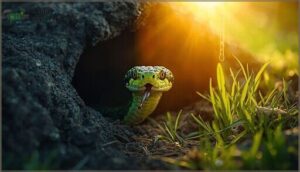
Bringing your snake out of brumation isn’t something you rush—it’s a careful, step-by-step process that mirrors the gradual warming of spring. You’ll need to monitor temperature changes closely, watch for signs of recovery, and understand what to expect as your snake returns to normal activity.
Here’s how to guide your snake safely through this change and make sure they’re ready to thrive.
Gradual Temperature Increase
Once you’ve decided to end your snake’s brumation, you’ll want to warm things up gradually—never all at once. Ramp duration usually spans two to six weeks, with most husbandry protocols recommending stepwise increments of just a few degrees each day. This careful temperature regulation for snakes allows their physiology to adjust without shock.
Coordinating photoperiod changes alongside thermal increases mimics natural spring conditions, supporting healthier physiological responses throughout the snake brumation process.
Monitoring Recovery and Appetite
After bringing your snake’s temperature up slowly, watch for the signs that tell you recovery is on track. Hydration status and appetite return are the first markers—your snake should drink within days and begin showing interest in food by week two. Weight loss beyond 10% of pre-brumation body mass, persistent refusal of prey, or abnormal indicators like lethargy signal trouble and warrant a vet visit.
Key recovery milestones to track:
- Daily observations for two weeks – Note responsiveness, tongue-flicking frequency, and posture to catch early warning signs of illness or environmental mismatch.
- Rehydration before feeding – Offer shallow soaks and confirm drinking behavior; dehydrated snakes risk regurgitation and kidney stress when fed too soon.
- First meal timing and size – Wait 7–14 days post-emergence, then offer prey at 50–75% of normal size once your snake shows active behavior.
- Feeding frequency adjustments – Resume standard schedules (every 7–14 days for most colubrids) only after initial meals digest smoothly and weight stabilizes.
Shedding and Return to Normal Activity
Once your snake settles back into feeding, expect that first post-brumation shed within two to six weeks—a natural reset marking full emergence. Males often shed around week two, females closer to week four, clearing worn winter skin and priming reproductive hormones.
After ecdysis finishes, you’ll see behavioral shifts: increased basking, wider-ranging movement, and a return to normal seasonal cycles, signaling complete activity restoration.
Brumation’s Role in Snake Survival and Breeding
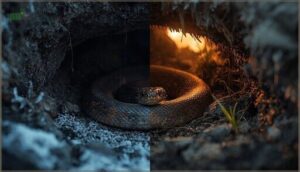
Brumation isn’t just a survival tactic for getting through winter—it’s the biological reset button that keeps snake populations thriving year after year. Without this dormant period, many species wouldn’t successfully reproduce, and their numbers would decline over time.
Brumation acts as nature’s reset button, ensuring snake populations survive winter and emerge ready to reproduce each year
Let’s look at how brumation shapes everything from mating success to the conservation strategies we use to protect vulnerable populations.
Impact on Population Cycles
Brumation survival shapes your snake population in dramatic ways. Winterkill events can wipe out tens of thousands in a single season, shifting age structure toward younger animals and reducing reproductive output for years.
Climate change and habitat loss now threaten hibernacula, lowering winter survival rates and disrupting the seasonal cycle that once synchronized breeding and maintained stable fertility across the population.
Timing of Mating After Brumation
As soon as temperatures climb consistently near 15°C, your snakes emerge ready to breed—most species mate within days to a few weeks of waking. Males generally surface first, priming themselves with stored sperm and pheromone cues, then swarm receptive females the moment they appear. This tight post-brumation window synchronizes the breeding season and maximizes fertility across the population.
- Northwestern garter snakes form mating balls within hours of spring emergence, concentrating copulations into a three-week frenzy.
- European adders gather at “mating grounds” near dens, with males engaging in courtship and combat dances shortly after females surface.
- Proper brumation resets appetite and aligns gamete maturity, boosting breeding responses and sperm viability in captive programs.
- Climate warming shifts emergence dates earlier each year, compressing the lag between brumation and the start of breeding season.
Conservation and Habitat Management
With habitat loss and climate impacts on the rise, you can’t overlook the importance of hibernacula protection and habitat restoration. Structurally complex snake overwintering sites—rock piles, deep crevices, and artificial shelters—anchor local populations.
Smart agricultural practices, like leaving grassy buffers and retaining woody debris, boost habitat quality, while careful habitat management keeps these critical hibernacula characteristics intact for the future.
Frequently Asked Questions (FAQs)
Can young or juvenile snakes safely brumate?
Imagine sending a rookie into a marathon—juvenile brumation risks are real. Age thresholds matter; most captive guidelines recommend waiting until snakes are at least a year old.
In the wild, overwintering happens, but snake health and weight loss are concerns.
How does brumation affect snake immune systems?
During brumation, immune suppression sets in—snakes’ leukocyte counts drop, making infection risk higher. Metabolic adjustments slow their immune system, while shifts in gut microbiota and hydration further impact reptile health and brumation recovery. Monitoring snake health is essential.
Do all snake species brumate every year?
Not all snakes brumate every year—temperate species in cold climates generally do, while tropical snakes often remain active year-round.
Captive brumation needs vary, and climate change is shortening dormancy periods for many populations.
What signs indicate brumation problems in snakes?
Watch for dehydration signs like wrinkled skin or sunken eyes, excessive weight loss beyond 15%, respiratory infections with wheezing, abnormal restlessness, and recovery issues including poor appetite—these health risks require veterinarian attention.
Are there risks of parasites during brumation?
Think of a dormant snake as an easy target—internal parasites can flourish when metabolism slows.
Brumation health risks include higher parasite prevalence and pathological impacts, making preventive measures like pre-season fecal testing essential for your snake’s wellbeing.
Conclusion
Picture your snake emerging from brumation, eyes bright and hunger rekindled, ready to reclaim its place in the rhythm of the seasons. That transformation doesn’t happen by chance—it’s the result of your careful preparation and understanding of the snake brumation natural process.
By respecting the triggers, monitoring conditions, and supporting recovery, you’re not just keeping your snake alive—you’re honoring the ancient cycle that has sustained these extraordinary reptiles for millions of years.