This site is supported by our readers. We may earn a commission, at no cost to you, if you purchase through links.
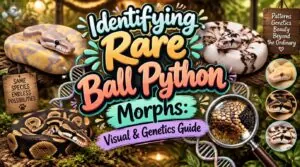
Some ball python morphs sell for thousands, while lookalikes barely cover shipping costs. The difference often hides in a single recessive gene you can’t see, or in details as small as the keels on a head scale. That’s why identifying rare ball python morphs takes more than a good eye.
Lighting fades amber tones, age creeps pale into dorsal patterns, and hidden hets pass rare genes silently through generations of normal-looking animals. Guess wrong, and you overpay for a common morph or underprice a genetic goldmine.
Here’s how to read the visual clues, confirm the genetics, and verify what your snake truly is.
Table Of Contents
- Key Takeaways
- What Makes Ball Python Morphs Rare?
- How to Identify Rare Ball Python Morphs
- How Genetics Confirm Rare Morphs
- Rare Ball Python Morphs Worth Recognizing
- Verify Rarity, Health, and Market Value
- Frequently Asked Questions (FAQs)
- What is the rarest ball python morph?
- How do I identify my ball python morph?
- Which ball python morphs to avoid?
- What is a holy grail ball python?
- How do I verify a morphs pedigree before buying?
- Can rare morphs be safely bred with common morphs?
- What tools are needed for at-home genetic testing?
- Do rare morphs have different care requirements than normals?
- How can I tell if a seller is misrepresenting morphs?
- How do I document rare morph breeding records?
- Conclusion
Key Takeaways
- Rare morph value often hinges on invisible genetics—hidden recessive hets and subtle visual cues like head scale ridges, eye color, and pattern inversion—so visual ID alone can’t confirm what a snake truly is.
- Lighting and age distort what you see: UV exposure fades amber tones within 6–12 months, and pale creep dulls dorsal patterns by age two, so photograph your snake yearly under identical light to track real phenotype.
- Genetics settle disputes that eyes can’t: recessive traits need two copies to show (hets look normal), dominant traits like Pinstripe appear with one copy, and test breeding or DNA testing (PCR or whole-genome sequencing) confirms genotype when photos conflict.
- Verify before you buy or breed—demand pedigree records, parent photos, and genotype proof, avoid wobble-carrying lines like Spider and Woma plus problematic Scaleless morphs, and remember rare morphs need the same husbandry as normals.
What Makes Ball Python Morphs Rare?
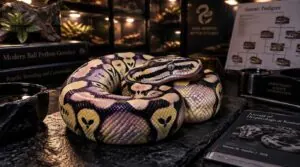
Why do some ball python morphs cost hundreds while others sell for thousands? It comes down to genetic rarity. A morph is rare when its alleles are uncommon in breeding populations, or when a novel combination produces a phenotype few keepers have seen.
If you’re weighing whether a high-ticket morph is worth the investment, this ball python price guide breaks down what actually drives those numbers.
You’ll notice two main paths to rarity. Recessive inheritance requires two copies of a gene, so carriers hide the trait and breeders need deliberate pairings to reveal it. Codominant inheritance can show intermediate forms, but unusual allele interactions still limit how often standout animals appear.
Small breeder collections also shift allele frequencies fast. Founder effects can make a rare gene vanish or spike within a few seasons. Add collector demand concentrating on a handful of flashy morphs, and genuinely scarce phenotypes stay overlooked. That’s exactly why verified rare morph buying matters, and why you should learn to spot rarity yourself.
How to Identify Rare Ball Python Morphs
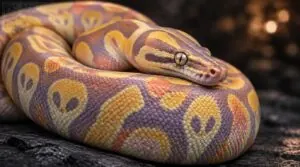
You can spot a rare morph with your own eyes if you know where to look. The next three sections walk you through color and pattern clues, head and eye traits, and how lighting and age change what you see. Read them in order, and you’ll build a reliable identification routine.
Color and Pattern Clues
How do you spot rarity in the skin itself? Start with color patterns. Saturation tells you a lot: darkest morphs show chocolate or black tones, and bleed-through carries base pigment into secondary scales.
Watch for these clues:
- Pattern inversion, where cross-bands break into patchy blotting.
- Light centers replacing typical landmarks across scale rows.
- Ground color shifting from olive toward lavender or pink.
- Speckling or peppering near ventrolateral scales.
Pigmentation changes under different lighting reveal phenotype expression that pattern recognition alone can miss, hinting at hidden genetic inheritance.
A solid grasp of snake morph genetics helps breeders separate what lighting and age reveal from what the animal’s genes actually dictate.
Head, Eye, and Scale Traits
The head tells its own story. Look for prominent scale ridges around the crown, a starburst pattern on cranial scales, or an offset eye-spot. These head markings often trace rare lines.
Check eye color next. Pale blue or lavender irises, slit-like pupils, or fine speckling signal uncommon genetic inheritance.
Then inspect scale patterns up close. Ribbed keels, pockmarked cranial scales, and a mottled pattern across the skull point to rare phenotype expression.
Lighting and Age-related Changes
Those head traits tell you a lot at day one, but a morph’s look shifts over time. Lighting conditions and age-related changes can mask or mimic rare visual traits.
For trickier cases, a solid ball python morph identification guide can help you compare traits side by side before making a call.
Watch for:
- Color fading after 6–12 months of UV exposure
- Amber and yellow morphs losing ventral sheen faster
- Pale creep along the dorsal pattern by age two
- High-contrast morphs dulling unevenly
Photograph your snake yearly under identical light, then compare. When photos conflict with your ID, genetic testing settles it.
How Genetics Confirm Rare Morphs
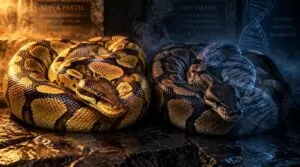
Looks can fool you. Two snakes with similar patterns might carry very different genes, and that’s where genetics settles the argument. Below, you’ll learn how dominant and co-dominant traits work, why hidden hets matter, and how test breeding and DNA testing confirm what your snake’s eyes can’t show you.
Dominant and Co-dominant Traits
One copy of a dominant allele changes the animal. That’s the whole trick. Pinstripe works this way: a single gene shows the stripe, and homozygous expression doubles the intensity.
Codominant morphs, like Pastel, mix when paired. Breed a Pastel to a Mojave and you get both patterns in one snake. Watch every clutch. If half the babies show the trait, one parent carries it.
Recessive Genes and Hidden Hets
Remember this rule: recessive morphs need two copies of the gene to show. A snake with one copy is a heterozygous carrier, or het. It looks completely normal, but it hides the allele like a secret in its pocket.
Since most morphs are bred rather than wild-caught, checking a full list of California king snake morphs helps you see which ones are recessive before pairing your animals.
Once you know which genes your snake carries, our pet snake breed information guide can help you match them to a species with the right care needs.
Breed two hets together and you’ll average 25% visual recessive offspring. Breed a het to a normal, and the morph stays invisible, passing silently down the line. That’s why hidden alleles can lurk in a bloodline for generations, then suddenly produce a surprise clutch.
Hidden recessive alleles can lurk silently in a bloodline for generations before a surprise clutch reveals them
Watch for subtle hints too. Odd pattern breaks or patchy scales in normal-looking babies sometimes whisper that something recessive is riding along underneath.
Test Breeding and DNA Testing
Take a hypo-looking clutch where two normal parents produced one odd hatchling. Test breeding solves the mystery. Pair that snake with a known wild-type, then run a backcross. Recessive behavior shows up in the F2 generation.
Pair your parentage log with DNA testing for genotype confirmation. Targeted PCR catches known alleles; whole-genome sequencing explains the weird ones. Keep pedigree tracking current.
Rare Ball Python Morphs Worth Recognizing
Picture a dim reptile room at midnight. Under a red bulb, a Krypton morph’s dark scale edges seem to swallow light, while a Sunset glows like embers. That’s the thrill of spotting Rare Ball Python Morphs in person.
Start with the showstoppers. The Hypo Pied Firefly stuns with high-contrast yellow-white banding. The Sunset morph deepens from red to burnt orange as it ages. Krypton’s near-void patterning shifts under indirect light, so move your light source when checking.
Don’t overlook subtler Genetic Mutations. Frost morphs carry cool, bluish translucence. Jungle combos show irregular ventral blotches, and Mojave-type mosaics flash that pearl-like belly sheen.
Build your own Phenotype Photo Archive and log Genotype Confirmation Notes for each animal. Your eyes improve with every comparison.
Verify Rarity, Health, and Market Value
Rarity means nothing without proof. A rare ball python morph only holds its value when you can document it.
Start with genetic testing or confirmed parent-offspring genotype matches. Pair that with independent pedigree records from recognized registries. Test breeding data across generations seals the deal.
Next, check health considerations. Some morphs carry linked genes that cause vision or spinal issues. Review lineage health records, shedding quality, and juvenile survival rates. Skip animals with repeated early-life malformations.
Then assess market value. Price tracks with confirmed genotype, clutch scarcity, and time since first reliable breeding. Reputable breeders who publish pedigrees set the price floor.
Frequently Asked Questions (FAQs)
What is the rarest ball python morph?
The Blue-eyed leucistic often tops the list. It combines two co-dominant genes, usually Lesser and Butter or Mojave. Proven breeders produce few, demand stays high, and each snake’s clean white scales and blue eyes make it unmistakable.
How do I identify my ball python morph?
Imagine flipping on a bright lamp over your snake’s tank. Start by photographing your ball python under good lighting, note its color patterns and eye color, then compare photos against morph guides online for a solid visual match.
Which ball python morphs to avoid?
Some morphs deserve caution. Avoid spider, woma, and hidden gene wobble lines; each carries wobble syndrome, a neurological disorder causing corkscrewing and poor feeding. Skip scaleless morphs too, given skin and shedding problems. Choose ethical breeding instead.
What is a holy grail ball python?
A holy grail ball python is the hobby’s top-tier dream animal. Think blue eyed leucistic or a piebald gene combo with supergene architecture. These rare ball python morphs combine striking looks, proven lineage, and serious market demand.
Before paying holy grail prices, it helps to see how ball python double gene combinations stack together, since the pairing often shapes both looks and value.
Pricing one of these animals starts with understanding what drives the market, and this guide to rare and expensive ball python morphs breaks it down clearly.
How do I verify a morphs pedigree before buying?
Pedigree verification starts with lineage paperwork. Ask trusted breeders for three generations of records, parental DNA test results, and registration numbers.
Cross-check morph names, inspect parent photos, and confirm genotype analysis matches every claim before paying.
Can rare morphs be safely bred with common morphs?
Like a river joining the sea, rare and common lines can merge safely. Yes, you can breed rare ball python morphs with commons. Plan breeding combinations carefully, use genetic testing, and track recessive alleles.
What tools are needed for at-home genetic testing?
You’ll need a cheek swab or saliva collection kit, sterile tubes, gloves, and a silica or magnetic bead DNA extraction kit. Add PCR reagents, fluorescent dye assays, and control DNA to confirm your at-home genetic testing results.
Do rare morphs have different care requirements than normals?
Here’s the good news: they don’t. Rare ball python morphs share the same husbandry as normals. The genetic mutation changes color, not care. Watch feeding, shedding, and stress individually, and schedule veterinary screening for health risks.
How can I tell if a seller is misrepresenting morphs?
Watch for vague lineage, missing heterozygous carriers proof, and prices that don’t match market data. Ask for genetic testing, parent photos, and health records. Check seller reputation, and always use escrow.
How do I document rare morph breeding records?
Think of your records as a genetic map, every entry a breadcrumb for future breeders. Log dam/sire pairings, clutch ID tracking, hatch dates, phenotypes, and genotype confirmation notes. Attach DNA results and photos. Your pedigree analysis depends on it.
Conclusion
Hold that hatchling under good light and look closely. The pattern tells one story, the genetics tell the truth, and identifying rare ball python morphs means trusting both. Check the head, question the lighting, and never assume a normal-looking snake carries nothing. When in doubt, breed or DNA test.
Your eye gets sharper with every clutch you hatch, and that skill, not luck, is what turns an ordinary enclosure into a genetic goldmine.