This site is supported by our readers. We may earn a commission, at no cost to you, if you purchase through links.

The trouble often starts before the first prey item disappears. A thawed rodent twitches on the tongs, one snake strikes, and its enclosure mate follows the scent and movement with an open mouth. In seconds, a routine meal can become a puncture wound, a swallowed mouthful of substrate, or, among unevenly sized snakes, a predation event.
Feeding multiple snakes together may save minutes, but it removes your control over prey assignment, strike direction, and post-meal recovery. Safe group husbandry depends on treating each feeding as an individual procedure: separate stations, measured prey, observation, and records that catch problems before they repeat.
Table Of Contents
- Key Takeaways
- Why Feeding Multiple Snakes Together is Dangerous
- Prepare Individual Feeding Stations
- Feed Each Snake Separately
- Monitor Feedings and Handle Conflicts
- Manage Long-Term Multi-Snake Feeding
- Frequently Asked Questions (FAQs)
- How long can snakes go between feedings?
- Do snakes remember who feeds them?
- Can you feed snakes in the same enclosure?
- How do you tell if a snake is hungry?
- Can snakes share the same water bowl?
- How often should cohabitated snakes be weighed?
- Do feeding schedules affect snake social behavior?
- Should humidity differ during feeding times?
- Can snakes recognize their individual feeding containers?
- Can snakes ever be conditioned to feed near others?
- Conclusion
Key Takeaways
- Feed each snake separately because prey scent and movement can trigger competition, misdirected strikes, serious injuries, or cannibalism among enclosure mates.
- Prepare a labeled feeding station for every snake, using correctly sized thawed prey, secure containers, long tongs, and dedicated clean equipment.
- Monitor each feeding from strike through complete swallowing, then return the snake to quiet housing and avoid handling for at least 48 hours.
- Keep individual records of weight, prey size, feeding dates, refusals, regurgitation, and unusual behavior so you can adjust care early and seek a reptile veterinarian promptly when needed.
Why Feeding Multiple Snakes Together is Dangerous

Feeding multiple snakes in the same space isn’t just inconvenient — it’s genuinely risky, and most keepers don’t realize how fast things can go wrong. A snake’s predatory response runs on scent and motion, not recognition, which means even familiar cage mates become potential targets the moment food enters the picture.
For safer routines, follow this snake feeding frequency guide and offer each snake prey in a separate enclosure.
During feeding, scent and movement can turn even familiar cage mates into prey
Here’s what you need to understand before you ever drop prey into a shared enclosure.
Food Competition and Aggression
When multiple snakes share a confined space and detect the same prey scent, feeding aggression escalates fast. Competition triggers powerful instinct-driven attacks that override normal enclosure boundaries. This mirrors broader animal behavior, where intraspecific competition for resources can drive intense conflicts over food, territory, and mates.
Common triggers for food competition:
- Equal-status snakes competing for identical prey
- Crowded foraging space with no established separation protocols
- High-value prey driving intense dominant monopolization
- No feeding protocols enforced to sequence individual access
Cannibalism and Misdirected Strikes
Food aggression doesn’t always stop at competition. When prey enters a shared enclosure, snakes can lock onto the wrong target entirely, striking tank mates instead of food.
Misdirected strikes cause real damage, from dental fractures to deep lacerations. Without strict separation protocols, cannibalism becomes a documented risk, particularly among juveniles where size similarities blur the line between rival and prey.
Size Disparities and Predation
Size disparities between co-housed snakes turn feeding time into a predation event. Larger individuals process smaller tank mates as viable prey, particularly once feeding stimuli activate.
Three ways size gaps create serious risk:
- Larger snakes target undersized cohabitants directly as prey
- Prey scent amplifies cannibalism risk among size-mismatched individuals
- Individual feeding containers neutralize size-driven predatory responses
Accidental Ingestion and Injuries
Predatory misfires don’t always stop with just a bite. When snakes strike inside a shared enclosure, they can accidentally ingest loose substrate or debris alongside prey, creating gastrointestinal obstruction risk at anatomical narrowings.
Your fingers remain exposed without long feeding tongs maintaining clear physical separation. One misread strike can simultaneously produce an external bite injury and an internal foreign-body complication.
Prepare Individual Feeding Stations
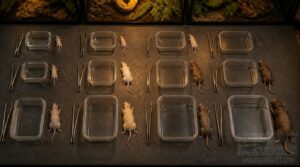
Getting your feeding stations ready before a single snake leaves its enclosure is what separates a smooth session from a chaotic one. Each snake on your roster needs its own dedicated setup — the right container, the right prey, the right tools — dialed in before you start. Here’s what to pull together for every station.
Use a snake feeding size chart to match prey safely to each snake’s size before the session begins.
Choose Correctly Sized Containers
The container you choose acts as your first line of defense against feeding chaos. Select a BPA-free container just large enough to allow full prey swallowing without prey touching the walls. Clear, smooth-sided options let you observe swallowing without disturbance.
Avoid oversized containers where prey can scramble freely, and always confirm the lid fits securely before you introduce your snake.
Match Prey to Each Snake
Knowing each snake’s measurements before feeding is non-negotiable.
- Measure girth at the widest point before each session
- Select prey one quarter to one third of body girth
- Account for size disparities between juveniles and adult snakes
- Use fresh-killed prey only, never live rodents
- Reject prey appearing excessively fatty or sickly
Prey size compatibility depends on girth, growth stage, and species.
Separate Prey Items by Size
Every prey item needs a designated spot before feeding begins.
When feeding multiple snakes together, size disparities between animals turn a simple oversight into a choking risk. Arrange prey in 1-inch increments by length, confirming the widest point won’t exceed your smallest snake’s gape width.
Individual feeding containers prevent mix-ups and keep your feeding routines on track.
Gather Long Feeding Tongs
The right tongs are non-negotiable in a multi-snake feeding setup. Reach for 12 to 24-inch stainless steel tongs that keep your hands well outside strike range while you position each prey item precisely at its station. Curved tips cradle mice and rats securely, while rubberized edges prevent slipping mid-transfer.
Assign dedicated tongs per enclosure to avoid cross-contamination between your snakes.
Disinfect Containers and Equipment
After each feeding session, every tray and tong set you’ve used carries residual prey fluids and biological debris that accelerate harmful bacterial growth.
Rinse first, then apply a 1:10 bleach dilution at manufacturer-recommended concentrations, letting surfaces stay wet for a full 10 minutes before rinsing clean. For a more convenient option, a dedicated reptile-safe enclosure disinfectant can replace the bleach solution while still meeting that critical 10-minute contact time.
Store disinfected containers in a designated clean area, kept well away from soiled equipment.
Feed Each Snake Separately
Once your stations are set up, it’s time to put that preparation to work. Feeding each snake separately is where your routine either holds together or falls apart, and the steps below make sure it holds. Follow this sequence every session, without shortcuts.
Review Individual Feeding Schedules

Before you open a single individual container, always pull your feeding records first.
- Check the last feeding date and interval
- Confirm prey size matches current weight
- Note any prior refusals or regurgitation
- Verify each snake’s assigned feeding zone
- Confirm feeding tools are staged and ready
Your feeding schedules tell you exactly who eats and when.
Isolate Snakes Before Feeding

Once your records confirm each snake is due, move each animal into its separate feeding container before anything else happens.
Don’t rely on proximity or barriers inside a shared enclosure. Snakes detect prey scent almost instantly, and that chemical trigger is enough to flip a calm animal into full feeding aggression. Isolation cuts that risk completely.
Offer Prey With Tongs

With each snake isolated, reach for your long feeding tongs and present prey at arm’s length, angling it slightly away from your body to encourage a clean forward strike rather than a head-on lunge.
Move slowly and predictably. Sudden gestures override feeding cues and shift the snake from a feeding response into defensive aggression. Hold your position and don’t pull back prematurely once the snake commits.
Confirm Complete Prey Swallowing
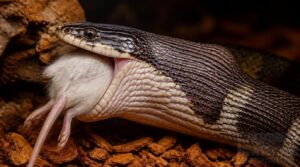
Once the strike connects, hold your position and watch for complete prey swallowing before moving on. A confirmed swallow shows laryngeal movement, a visible bolus traveling the esophagus within 1 to 3 seconds, and no prey remnants visible at the mouth within 10 seconds.
Choking sounds or prey reappearance signal a failed swallow and require your immediate attention.
Avoid Post-Feeding Handling

Once swallowing is confirmed, your job is to step back. Post-feeding separation isn’t optional; handling within 48 hours risks regurgitation, which can damage the esophagus and seriously disrupt the digestive process. Return each snake to its individual feeding container, close it, and leave it undisturbed.
For large constrictors, waiting well beyond the 48-hour mark is the safer threshold.
Monitor Feedings and Handle Conflicts

Stay with each snake from the strike through complete swallowing, because feeding behavior can change quickly. If a snake shows distress, misses repeatedly, or makes contact with another animal, act at once and assess it carefully. Use the following steps to monitor the feeding session and respond to problems safely.
Watch Each Snake’s Response
Watch each animal from outside its assigned feeding zone; individual observation is the backbone of feeding safety protocols.
A committed feeding response usually includes a raised, fixed head, slowing eye movement, reduced tongue flicking after prey is secured, and relaxed jaw extension around appropriately sized prey.
Record hesitation, repeated striking, or attention toward another container as early indicators requiring supervision.
Separate Fighting Snakes Immediately
Treat any feeding-time coil, gape, or strike as an emergency: Separate Fighting Snakes Immediately. This is the heart of feeding safety protocols and feeding conflict resolution; individual feeding containers are your first line of feeding aggression prevention.
- Block contact with a solid divider.
- Secure each lid.
- Use long tongs.
- Keep hands clear.
- Move aggressor to neutral housing.
Then reassess posture.
Check Mouths, Eyes, and Jaws
Inspect each snake once it is secure. Clear eyes, pink firm gums, and a moist mouth support normal recovery; cloudy eyes, retained caps, swelling, heavy film, or persistent gaping require intervention.
| Check | Normal finding |
|---|---|
| Eyes | Clear, open |
| Mouth | Moist, closed |
| Jaws | Aligned, firm |
A loose mandible, repeated prey-dropping, or asymmetric closure can follow feeding aggression triggers. Isolate and seek veterinary guidance.
Record Refusals and Regurgitation
Log every feeding attempt: date, snake, prey size, acceptance, and feeding stress signs such as defensive striking or prey-dropping. Record refusals alongside shed status, enclosure temperatures, and recent disturbances. A dedicated reptile care log journal makes it easy to spot behavioral patterns across multiple snakes and feeding sessions over time.
If regurgitation occurs, note timing, prey dimensions, and handling during postfeeding rest. Repeated events can reveal feeding trauma, oversized prey, or failures in your feeding safety protocols.
Contact a Reptile Veterinarian
Contact a reptile veterinarian after bite wounds, jaw misalignment, eye injury, repeated regurgitation, respiratory effort, marked lethargy, or refusal patterns that break your snake’s normal schedule. Don’t wait for the next feeding day.
Use an ARAV-listed or otherwise reptile-experienced clinic, then provide your feeding log, prey dimensions, temperatures, humidity, photographs, and details of the conflict. Clear records let the veterinarian distinguish feeding stress from trauma, husbandry failure, or disease.
Manage Long-Term Multi-Snake Feeding

Safe multi-snake feeding depends on the routine you maintain between feeding days, but also on what happens at the feeding station.
Your records, prey planning, and sanitation practices must stay specific to each animal.
Use the following long-term management steps to keep that system reliable.
Track Weight, Prey, and Dates
Your feeding records are the control panel for a multi-snake collection. Weigh each snake weekly on the same scale, recording grams and changes. A digital gram scale for reptiles gives you the precision you need to catch subtle weight shifts that might otherwise go unnoticed between weekly weigh-ins.
- Unexpected weight loss
- Refusal or regurgitation
- Visible feeding stress
Feeding documentation should list prey species, mass, length, condition, feeding schedule, and date. Use feeding monitoring notes to flag a 10 percent two-week change before prey selection for review.
Coordinate Compatible Feeding Days
Use your weight and outcome records to build predictable feeding schedules around each snake’s digestion, activity, and hunger cues. Assign calm, temperature-stable days, avoid enclosure cleaning or visitor traffic, and stagger animals that become alert at similar times.
Prepare labeled individual feeding containers and thaw reserved prey beforehand. A consistent feeding day lets staff follow feeding safety protocols without rushing or creating competing scent cues.
Adjust Prey Sizes Individually
Scheduled feeding days only work when prey size remains individualized. Measure each snake’s gape, maintain prey below 85 percent of comfortable jaw expansion, and match portions to weekly body weight, bite force, and recent digestion history.
Document millimeter measurements in each animal’s record. Where size disparities exist, reserve clearly labeled prey for individual feeding containers; one oversized item can turn routine feeding safety protocols into an injury event.
Prevent Enclosure Cross-Contamination
Individual prey labels mean little if your feeding workflow carries mites, bacteria, or viral material from one habitat to the next. Work from healthiest established snake to quarantine animal, use a physical feeding barrier at enclosure doors, and keep dedicated tongs, bowls, scrubbers, and décor with each enclosure.
Sanitize every feeding container after use, remove organic debris first, then apply reptile-safe disinfectant for its full contact time. Never move substrate, prey packaging, or water bowls between snakes.
Review Records Before Feeding
Before every feeding session, inspect your feeding log and compare each snake’s last meal, acceptance response, prey type, weight trend, and current shedding or breeding status. Clean equipment prevents pathogen transfer; accurate feeding records prevent husbandry mistakes.
- Confirm the feeding schedule and interval.
- Match prey from your feeding inventory to current weight.
- Flag refusals, regurgitation, or unusual behavior before offering food.
Frequently Asked Questions (FAQs)
How long can snakes go between feedings?
Coincidentally, two keepers housing the same species will often follow entirely different feeding schedules. Your adult snakes usually eat every 1-2 weeks, though slow-metabolizing giants like Burmese pythons can safely stretch intervals to 3-4 weeks.
Do snakes remember who feeds them?
Snakes don’t remember you the way a dog does. What actually registers is scent-triggered instinct, not recognition. Your familiar odor signals safety and food, which is pure hardwired survival behavior rather than any formed bond.
Can you feed snakes in the same enclosure?
While it’s physically possible, feeding snakes in the same enclosure is a practice that introduces unnecessary risk, from active competition and misdirected strikes to accidental ingestion of another snake’s prey or even the snake itself.
How do you tell if a snake is hungry?
Watch for hunger signals such as increased pacing, frequent tongue flicking, front-of-enclosure standing, and active pursuit of movement. Confirm a reliable feeding response against each snake’s feeding schedule before prey selection; behavior alone doesn’t justify overfeeding.
Can snakes share the same water bowl?
They can, but separate water bowls are safer. Shared water increases bacterial transfer, resource competition, and stress. Provide fresh water daily, use heavy wide bowls, and place them apart to improve the feeding environment.
How often should cohabitated snakes be weighed?
Weigh adults monthly, at the same point in their snake feeding schedule. Weigh hatchlings and juveniles more often, aligned with feeding frequency, to strengthen snake health monitoring while maintaining a calm feeding routine and stress reduction.
Do feeding schedules affect snake social behavior?
Yes. Regular feeding schedules reduce hunger-driven stalking, stabilize feeding hierarchy, and limit feeding competition.
Irregular or infrequent meals increase defensive interactions and stress-induced feeding problems, making feeding conflict more likely around expected food availability.
Should humidity differ during feeding times?
Maintain species-appropriate humidity during feeding, usually 40–60 percent. Avoid rapid changes; use humid hides rather than misting feeding zones. Stable feeding enclosure design helps with stress reduction and your feeding safety protocols.
Can snakes recognize their individual feeding containers?
Apparently, snakes keep tiny filing cabinets. In reality, feeding containers provide scent cues, not recognition; consistent feeding zones and feeding safety protocols let each snake anticipate food. Use this pattern only alongside feeding guidelines.
Can snakes ever be conditioned to feed near others?
Some snakes can learn feeding cues and remain calm near conspecifics, but this never eliminates risk. For feeding multiple snakes together, use feeding safety protocols, prevent feeding competition, and treat proximity feeding as feeding management.
Conclusion
Like a lock on every enclosure door, disciplined feeding prevents small lapses from becoming irreversible injuries.
Feeding multiple snakes together safely means separating animals, matching prey to current body mass, watching every strike and swallow, and recording what happened afterward. Never let convenience decide who eats where or when. Your feeding log becomes the early-warning system, revealing refusals, size changes, and recurring conflict before a shared enclosure turns one meal into a serious, preventable emergency.