This site is supported by our readers. We may earn a commission, at no cost to you, if you purchase through links.

A snake that bites during handling isn’t being aggressive. It’s reacting to a trigger, and in most cases, the trigger is your approach. That distinction matters because it means the behavior is predictable, and predictable behavior can be modified.
Hook training combats exactly this. It uses a simple tool and consistent technique to condition your snake to associate handling with safety rather than threat, lowering the defensive response before contact even begins. Whether hook training reduces snake biting depends on your technique, your consistency, and knowing when the method has its limits.
This guide covers all three.
Table Of Contents
- Key Takeaways
- Does Hook Training Reduce Snake Biting?
- Why Do Pet Snakes Bite?
- How to Hook Train Your Snake
- Choose The Right Snake Hook
- When Hook Training is Not Enough
- Frequently Asked Questions (FAQs)
- How to make a snake stop biting you?
- How did Native Americans treat rattlesnake bites?
- Will a rattlesnake chase you if you run?
- What neutralizes a snake bite?
- How long does hook training typically take?
- Can wild-caught snakes be successfully hook trained?
- Does hook training work for venomous snake species?
- At what age should hook training begin?
- Can multiple handlers use the same hook training?
- Conclusion
Key Takeaways
- Hook training reduces biting through behavioral conditioning: a consistent hook cue teaches your snake to predict calm, safe handling, lowering defensive reactions before contact begins.
- Most pet snake bites are either food-associated strikes (often from handling after touching prey or overlapping feeding schedules) or defensive bites triggered by feeling threatened, unsupported, or startled—so reading body language like rapid tongue-flicking and tight coiling matters as much as technique. Understanding a specific species’ baseline behavior helps enormously—for example, knowing the reticulated python’s natural temperament and defensive tendencies makes it far easier to distinguish routine curiosity from genuine agitation.
- The method only works with proper execution: match the hook to your snake’s size, use smooth rounded edges, support the mid-body continuously, keep sessions short and gradual, and reserve the hook exclusively for handling so the cue stays strong.
- Hook training has limits—it won’t stop bites caused by illness, poor husbandry, or acute stress, so if defensive behavior persists despite consistent training, stop handling, address enclosure conditions, and consult a reptile veterinarian.
Does Hook Training Reduce Snake Biting?

How reliably does hook training reduce biting? The honest answer is that no controlled studies have directly measured bite rates before and after hook training. What the evidence does support is that consistent handling cues can meaningfully lower defensive reactions during contact.
Practical guidance on reading snake body language and refining your approach can help handlers build the kind of calm, predictable routine that reduces defensive reactions over time.
Hook training works through behavioral conditioning in reptiles: when your snake repeatedly experiences the hook as a neutral signal that predicts safe, calm handling, it learns to anticipate that outcome. That learned anticipation reduces the agitation driving snake aggression during routine handling sessions. Over time, this association strengthens with each calm session, a process explored in depth in this guide to snake feeding-cue conditioning and hook training.
It won’t suppress a snake feeding response or bites triggered by illness or acute stress. Snake handling safety still depends on your technique, your snake’s individual temperament, and how consistently you apply this method overall.
Why Do Pet Snakes Bite?

Understanding why your snake bites is the foundation for reducing it. Most pet snake bites fall into two categories: food-associated strikes and defensive bites. Food-associated strikes happen when your snake mistakes your hand for prey, often because you’ve recently handled rodents or your feeding and handling schedules overlap too closely. A quick handwash before contact can cut this risk considerably. For extra reassurance, reptile handler odor-control gloves can mask residual prey scents that handwashing alone might miss.
Defensive bites come from feeling threatened, restrained, or unsupported during handling. Watch for snake body language cues first: rapid tongue-flicking, a forward-leaning posture, or a tight coil set into a striking position all signal elevated alertness. Sudden, brief contact after long gaps between sessions is another common trigger. Hunger, irregular feeding, and broader environmental stress compound all of these reactions.
How to Hook Train Your Snake
Hook training works best when you follow a consistent, repeatable sequence. There are three essential steps to get your snake comfortable with the hook. Each one builds on the last, so the order matters.
Introduce The Handling Cue

You don’t need a complicated routine to introduce a handling cue.
A simple touch-and-retreat approach, as outlined in this guide to corn snake temperament and handling, teaches your snake to associate your hand with calm rather than threat.
Present the snake hook at the same angle, in the same motion, before every pickup. Your snake isn’t learning commands; it’s learning a predictable pattern.
Two or three short sessions weekly are enough to build the association. Keep the cue exclusive to handling, not feeding or routine enclosure access.
Lift and Support Safely
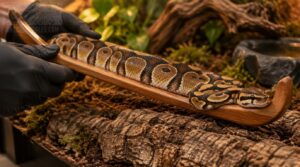
Once the cue is consistent, your lift matters just as much. Slide the hook under the mid-body, not near the head. Keep whole-body support continuous from start to finish.
Any gap forces the snake to try stabilizing itself, which raises defensive responses. Watch for tight coiling or repeated mouth gaping; those are defensive warning signs that your mechanics need adjusting.
Build Calmness Gradually
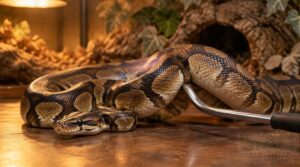
Across multiple short sessions, gradual desensitization works better than a single long exposure. End each session before your snake shows snake stress indicators like tight coiling or rapid recoiling.
Behavioral habituation builds when consistent hook cues reliably predict calm, low-pressure contact. Repeat that pattern across several sessions. Snake trust building doesn’t happen fast, but each calm trial reinforces the next.
Choose The Right Snake Hook
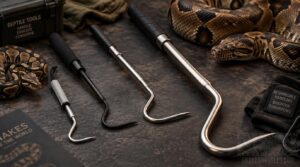
Not all hooks work equally well for every snake. The right hook depends on your snake’s size, how the tool feels in your hand, and how it’s built. These four factors will help you choose correctly.
Match Hook to Snake Size
An undersized hook forces extra repositioning during snake hook training, raising your snake’s arousal. Follow these hook sizing guidelines:
- Match hook width to your snake’s body diameter.
- Avoid point contact on a nonvenomous pet snake.
- Check that the snake hook covers enough body length.
- Replace your snake handling tools as your snake grows.
Consistent fit lowers defensive behavior over time.
Check Balance and Grip
Picture a snake’s body tipping sideways off the hook, its muscles tensing as it scrambles to correct. That loss of balance directly triggers defensive biting.
A snake that loses its balance on the hook will bite to defend itself
Proper support is central to handler safety. The snake’s weight shouldn’t dangle from a single contact point. Hold the snake hook level, grip the handle without twisting, and keep mid-body contact consistent throughout each lift.
Use Smooth Rounded Edges
Run your fingernail along a rough edge and feel it catch. That’s what a hook with burrs does to a snake’s scales.
Smooth rounded edges let the hook glide instead of snag, reducing friction that mimics a predatory grab. Consistent, snag-free contact is one of the most effective snake handling techniques in hook training and forms the foundation of long-term snake bite prevention.
Reserve Hook for Handling
Your hook is most effective when it signals one specific thing. Using it to shift hides, probe during feeding, or clean the enclosure weakens that signal. Keep it for handling only so your snake’s conditioning stays consistent.
- Don’t use it during feeding
- Avoid cleaning with it
- Store it away from other tools
- Use it at the same point each session
When Hook Training is Not Enough

Hook training works well for food-reactive and territorial biting, but it doesn’t cover every situation. Some snakes bite because they’re sick, injured, or overwhelmed, not because they lack conditioning. If handling feels risky despite consistent training, these are the signs to watch for and the steps to take.
Recognize Stress and Illness
Sometimes the real problem isn’t handling technique. Signs of stress include repeated food refusal, retained shed, wall-pressing, and persistent defensive postures. A snake is stressed when its husbandry is off, and stress reduction starts there, not with handling. Humidity issues are a common culprit behind retained shed, and a reptile shedding aid spray can help loosen stuck skin when enclosure moisture falls short.
Watch for open-mouth breathing or signs of mouth pain, which can signal infection, and skin lesions that need a vet’s attention soon.
Stop Handling Safely
When you notice those stress signals, stop the session immediately. Place the snake back using your hook, moving slowly.
Don’t restart your handling routine or hook training sessions until it settles. Avoid both snake prefeed handling and snake postfeed handling during this break. Snake feeding tongs usage can still continue as normal; feeding is generally far less stressful than contact.
Contact a Reptile Veterinarian
If your snake’s stress doesn’t ease after a rest period, contact a reptile veterinarian.
Watch for these signs:
- Repeated biting despite minimal handling stress
- Labored breathing or abnormal posture
- Weight loss or refusal to eat
- Open wounds requiring snake bite first aid
Reptile veterinary care needs a specialist. General practices often don’t have the expertise for proper snake health monitoring. A reptile care and health reference book can help you identify symptoms early and ask better questions when you do find a qualified specialist.
Frequently Asked Questions (FAQs)
How to make a snake stop biting you?
Calm builds on repetition, the way water slowly carves stone. You can’t train snakes not to bite instantly, but hook training conditions their responses over time, cutting defensive and feeding bites through preventive bite avoidance.
How did Native Americans treat rattlesnake bites?
The earth held the cure. Native Americans chewed plantain leaves and pressed them to the wound. They applied snakeroot poultroot poultices, used oral suction, and prepared remedies like black cohosh within thirty minutes of the bite.
The Menominee Indians also boiled witch hazel leaves and applied the liquid to reduce swelling, a practice later confirmed by witch hazel’s anti-inflammatory properties in a 1994 University of Strathclyde study.
Will a rattlesnake chase you if you run?
Good news: that movie-style pursuit is mostly fiction. A rattlesnake rarely chases you. It strikes when threatened, then retreats. Running triggers defensive bites; backing away slowly works better. That’s fundamental handling venomous snakes safety.
What neutralizes a snake bite?
Antivenom neutralizes venomous snake bites. It’s species-specific, so match it to the snake. For non-venomous bites, nothing neutralizes venom; rely on snake bite wound care: wash the wound, apply antiseptic, and monitor for infection.
How long does hook training typically take?
There’s no fixed timeline. Most snakes improve within a few weeks of short, consistent sessions. Your snake’s species, history, and stress level set the pace. Consistency is key: brief five-minute sessions, same cue, 48 hours after feeding.
Can wild-caught snakes be successfully hook trained?
The short answer: rarely. Wild animals keep defensive instincts, so conditioning vs training animals matters here. Expect calm extraction with gradual introduction, not full tameness. Captive-bred snakes habituate faster and more completely.
Does hook training work for venomous snake species?
You might assume venomous snakes can’t learn, but they can. Hook training works for many venomous snake species, including rattlesnakes and coral snakes. Consistent cues and rewards reduce defensive behavior, though it never eliminates envenomation risk.
At what age should hook training begin?
There’s no fixed age. Start once your snake feeds reliably, tolerates brief gentle handling calmly, and holds up on its own. Many keepers begin after the first shedding cycle, when temperament has stabilized.
Can multiple handlers use the same hook training?
Think of the cue as a shared language: yes, multiple handlers can use the same hook training, but everyone must deliver the same cue, timing, and support sequence. Consistency is herpetoculture best practice.
Conclusion
You might worry that a hook feels cold or impersonal. It isn’t. The tool simply replaces your hand as the first point of contact, giving your snake a predictable signal instead of a surprise.
So, does hook training reduce snake biting? Yes, when you pair it with consistency and read your snake’s signals honestly. The hook doesn’t tame your snake. Your patience and repetition do. Start small, stay steady, and trust builds on its own.