This site is supported by our readers. We may earn a commission, at no cost to you, if you purchase through links.

Watch a reticulated python long enough, and you’ll notice something strange: hours of stillness broken by a strike that takes 0.2 seconds. That gap between calm and reactive is the whole story of this species, and misreading it sends more keepers to the ER than any other single mistake in the hobby.
A true reticulated python temperament profile isn’t one trait, it’s a shifting balance of patience, curiosity, and hunger-driven reflex, shaped by genetics, upbringing, and how well you read the signals.
Understanding that balance, and what triggers each side of it, is what separates confident handling from a trip to urgent care.
Table Of Contents
- Key Takeaways
- Reticulated Python Temperament: Core Personality Traits
- Temperament by Origin and Life Stage
- Factors That Influence Reticulated Python Behavior
- Safe Handling and Trust Building
- Top 8 Products Supporting Reticulated Python Temperament
- Frequently Asked Questions (FAQs)
- What is the temperament of a reticulated python?
- Can reticulated pythons bond with humans?
- What is the friendliest snake you can get?
- Which python is the friendliest?
- Are reticulated pythons friendly?
- What is the calmest python species?
- Can reticulated pythons recognize their owners over time?
- How do feeding responses affect daily temperament?
- Do retics show territorial behavior in captivity?
- What triggers sudden temperament changes in adults?
- Conclusion
Key Takeaways
- Retics spend hours calm and still, but a feeding strike can hit in as little as 0.2 seconds, so reading body language before you reach in matters more than raw confidence.
- Origin and age shape temperament heavily: captive-bred snakes settle faster than wild-caught ones, and defensive hatchlings typically mellow into predictable, steady adults through consistent handling.
- Stable husbandry, proper temperature, humidity, secure hides, and gentle lighting directly reduce stress-driven defensiveness, making environment nearly as important as genetics.
- Trust with a retic builds through calm, repeated interactions like hook mood checks, proper body support, and choice-based handling, not through dominance or forced contact.
Reticulated Python Temperament: Core Personality Traits

Reticulated pythons carry a reputation, and like most reputations, it’s only half the story. Before you can predict how yours will act, you need to understand what actually shapes that behavior day to day. Here are the key traits worth knowing first.
Size, age, and handling history all play a role, which is why this breakdown of what shapes a reticulated python’s temperament is worth a look before bringing one home.
Typical Temperament and Activity
Watch a retic move and you’ll notice patience first, aggression never. They favor slow, deliberate exploration, resting in hides for 2 to 6 hours between bouts. Activity peaks during warm daytime hours, picking up again after dusk.
- Sensing precedes striking
- Curiosity varies by individual
- Comfort drives rest
Movement triggers include warmth, hunger, and vibration nearby.
Defensiveness Versus Aggression
That patience has limits. Defensiveness shows up as hissing, body coiling, or a pulled-back S-strike, all boundary enforcement, not aggression. True aggression (rare, forceful, sustained) differs sharply.
Read the body language: closed posture and retreat signal fear, not fury. De-escalation starts with a calm approach. Give your retic space, and defensive behaviors usually fade within seconds.
Feeding Response and Reactivity
Feeding overrides that calm baseline fast. Strike latency runs 0.2 to 0.5 seconds, sometimes stretching past 2.0 seconds under stress. Prey scent triggers heightened arousal, especially post-molt. Expect false strikes when presentation seems ambiguous, and feeding time agitation near mealtimes. Keep visual contact minimal beforehand.
Consistent feeding schedules and operant conditioning sharpen predictability, easing reactivity and reducing defensive behaviors tied to hunger cues.
Intelligence and Routine Recognition
Once hunger cues settle into a rhythm, something sharper takes over: pattern recognition. Retics track feeding schedules, light shifts, and enclosure geometry using memory retention built through repeated exposure.
They’re ranked among the smartest snakes for good reason:
- Predict feeding times
- Recall hide locations
- Read visual cues
- Adapt via conditioning
Individual Personality Differences
No two retics read the same. Personality trait assessment reveals real reactivity level differences, some bold and exploratory, others cautious and slow to warm.
Stress response coping styles vary too, one snake calms in minutes, another sulks for hours.
Social interaction preferences differ by individual, shaped by early socialization.
Trust building with reptiles means reading your specific snake’s temperament profile, not a species stereotype.
Temperament by Origin and Life Stage

A retic’s temperament isn’t fixed at birth—it shifts with where it came from and how old it is. Genetics set the starting point, but age and upbringing do most of the heavy lifting from there. Here’s how origin and life stage actually shape the snake in front of you.
Captive-Bred Versus Wild-Caught Retics
Origin shapes personality more than any other single factor. Captive-bred retics, raised across F1, F2, or later generations, acclimate faster and flare less. Wild-caught animals carry sharper defensiveness and longer wild-caught acclimation periods. This difference largely comes down to health and stress differences between the two sourcing methods.
- Lower parasite loads
- Faster enclosure adaptation
- Predictable handling techniques
- Traceable health records
- Ethical sourcing helps wild populations
Hatchling Defensiveness
When you first pick up a neonate retic, expect a defensive posture: tight coils, tucked head, jerky surveying movements. Strike frequency runs high, handling tolerance low, sometimes with defensive hisses thrown in.
Don’t take it personally. It’s biology, not attitude.
Calm, gradual, consistent early handling during those first weeks builds the socialization foundation for a stable adult temperament profile.
Juvenile Feeding-Response Volatility
Appetite swings hard here: a juvenile that strikes eagerly on Monday might refuse the same prey size by Thursday.
- Shed cycles suppress appetite
- Temp drops kill drive for 12–36 hrs
- Poor hides raise hesitation
- Abrupt handling near feeding backfires
- Late afternoon feeds work best
Consistent routines and gentle pre-feed handling smooth out this volatility, building trust that carries into calmer subadult feeding behaviors.
Adult Behavioral Stability
By the time your retic reaches adulthood, the volatility’s gone. What you get instead is behavioral stability, predictable activity, steady feeding response, and calm recovery within 90 minutes post-meal.
| Metric | Juvenile | Adult |
|---|---|---|
| Feeding predictability | Variable | Consistent |
| Thrashing during checks | Frequent | Down 20% |
| Weight fluctuation | Notable | Minimal (6 mo) |
Stable enclosures and handling routines build lasting trust.
Early Handling and Socialization
Trust isn’t inherited, it’s built, one calm session at a time. Gentle daily contact within the first two weeks, paired with hook training introduction, teaches hatchlings that hands mean safety, not threat.
Trust isn’t inherited, it’s built through gentle, consistent contact from a hatchling’s very first weeks
- Short handling bouts (1-5 minutes)
- Consistent schedules for feeding
- Positive reinforcement after calm behavior
Individual personality variation still applies. Some hatchlings settle fast; others need patience. Either way, early socialization pays off for years.
Factors That Influence Reticulated Python Behavior

Temperament isn’t fixed at hatching, it keeps shifting based on what’s happening around your snake every day. Genetics set the starting point, but your setup does most of the talking after that. Here’s what actually moves the needle on behavior, and why each factor deserves your attention.
Genetics and Individual Variation
No two retics read the same script. Genetic temperament markers shape baseline reactivity long before husbandry ever enters the picture, and individual personality variation within a clutch can be striking.
Some morph temperament trends get discussed among keepers, but a captive bred baby with calm lineage still needs consistent handling, since genetic stress sensitivity varies snake to snake regardless of pattern or color.
Temperature and Humidity Stress
Genetics load the gun, but temperature and humidity pull the trigger. Push past 88°F and appetite drops fast, while a basking spot locked at 92-96°F keeps digestion humming.
Humidity swings matter just as much. Dip under 40% and shedding turns rough; climb over 70% in heat and fungal risk creeps in. Thermal gradient stability isn’t optional, it’s the whole ballgame.
Hides and Enclosure Security
A stable thermal gradient means nothing if your retic feels exposed while using it. Place hides at both warm and cool microclimates, with dual-latch security and grip-friendly substrate underneath.
Ramp access into elevated hides cuts vertical stress. Skimp on hiding spots and you’ll see more escape attempts, more defensive posturing, period.
Lighting and Environmental Enrichment
A hide only works if the lighting around it doesn’t blow your retic’s cover. Keep intensity around 30 to 40 lux daytime, run dimmable fixtures for dawn/dusk shifts, and stick to consistent light-dark cycles.
- Full spectrum LEDs
- Dimmable dawn/dusk timers
- Two lighting zones
- Shatter resistant covers
- Red/amber night LEDs
Enclosure complexity through shadows and varied intensity satisfies natural surveying instincts.
Safe Handling and Trust Building
Trust with a reticulated python isn’t given, it’s built, one calm interaction at a time. That means reading your snake before you touch it, supporting it correctly once you do, and knowing who else belongs in the room when handling happens. Here’s how to make every session safer for both of you.
Hook Training and Mood Checks

A hook isn’t a weapon, it’s a mood ring. Tap the enclosure gently, watch the response, and let tool familiarity replace guesswork. Calm retics ignore it; defensive ones tense fast.
| Response | Meaning | Your Move |
|---|---|---|
| Ignores hook | Relaxed | Proceed slowly |
| Tenses, pulls back | Alert | Wait, reassess |
| Strikes at hook | Defensive | Stop, don’t handle |
Early socialization builds this trust over time.
Defensive and Feeding Warning Signs

Before any strike, your retic tells you a story through body language. Watch for head lifting off the coils, narrowed eyes with a fixed stare, and tail flicking signaling arousal.
Feeding response looks different: pupil dilation, mouth gaping, rapid tracking. That’s your cue to pause, not push forward.
Proper Body Support

Weight, not grip, is the real currency of trust. Cradle the midbody so the load spreads evenly, never gripping near head or tail.
- Sagging coils strain the spine
- Uneven support triggers defensive coiling
- Rushed lifts spike stress hormones
- Proper alignment builds lasting confidence
Match handling posture to body support platforms in the enclosure, distributing weight the way substrate cushioning already does.
Choice-Based Handling Techniques

What if your retic could vote on its own handling? Offer two safe options at chest height, pause, and let it move toward one. This handling choice builds trust, honors snake autonomy, and lowers stress.
If it retreats toward its hide, don’t force it, switch to neutral and try again later.
Children, Pets, and Handling Partners

A ten-foot retic and a curious toddler don’t mix, so supervising child handling isn’t optional, it’s the baseline.
Keep pets in separate zones during sessions, run quick mood checks first, and always work in a safe handling area with a second handler present.
Wash hands afterward.
Simple habits, real protection.
Top 8 Products Supporting Reticulated Python Temperament
Temperament isn’t just genetics and handling technique—it’s shaped daily by what surrounds your retic. The right setup can mean the difference between a snake that sits calm at the glass and one that stays defensive for years. Here are eight products worth having on hand to keep your python’s environment—and mood—stable.
1. Reptizoo Large Reptile Terrarium Tank

Ask any keeper who’s raised a retic past six feet, and they’ll tell you: undersized housing breeds defensive, stressed-out snakes. The Reptizoo 120-gallon tank solves that at 48 by 24 by 24 inches, giving your python real room to stretch, explore, and thermoregulate the way its biology demands.
Tempered glass panels hold thermal gradients steady, which matters since reptile stress behaviors climb when temperatures drift. The front sliding door lets you approach at eye level instead of looming from above, a small design choice that pays off in calmer handling sessions.
Add the anti-escape security buckle and waterproof raised base, and you’ve got a setup built for keepers who take husbandry seriously. Just know the glass can’t be drilled for custom modifications, and check that lock alignment before you trust it fully.
| Best For | Reptile keepers housing bearded dragons, adult pogona viticeps, juvenile sulcata and aldabrachelys tortoises, pythons, boas, or hedgehogs who need spacious, well-ventilated housing with full visibility. |
|---|---|
| Category | Enclosure |
| Primary Function | Housing space |
| Material | Tempered glass |
| Key Risk | Locking flaw |
| Retic Relevance | Space needs |
| Skill Level | All levels |
| Additional Features |
|
- Generous 120-gallon capacity (48” W x 24” D x 24” H) gives pets ample room for décor, climbing branches, and temperature gradients
- All-glass 360° view with a removable woven screen top improves UVB and infrared penetration
- Waterproof raised bottom plate supports ventilation, under-tank heating, and amphibian-friendly setups
- Tempered glass can’t be drilled and may crack if altered
- Some units have flimsy or misaligned locking mechanisms, so check the security buckle before relying on it
- Glass is a poor thermal insulator, making it less ideal for temperature-sensitive snake species
2. Zoo Med Forest Floor Bedding
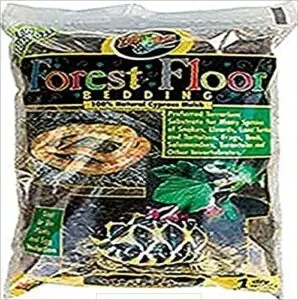
Glass and space handle the enclosure, but what your python actually crawls through matters just as much. Zoo Med Forest Floor Bedding is pure cypress mulch, untreated and free of dyes, and it does the one thing so many substrates fail at: holding humidity without going swampy.
That matters because humidity below 65% pushes retics toward defensive posturing, so a substrate that absorbs and slowly releases moisture keeps stress behaviors in check. It’s soft enough to cushion falls, breaks down gradually instead of turning to dust, and spot cleans easily between full changes.
One catch, some bags harbor pests, so baking it first isn’t a bad habit to build.
| Brand | Zoo Med |
| Material | Cypress |
| Model | CM24 |
Best For: Reptile keepers, especially snake and other humidity-loving species owners, who want a natural-looking substrate that maintains proper enclosure moisture without becoming soggy.
| Category | Substrate |
|---|---|
| Primary Function | Moisture retention |
| Material | Cypress mulch |
| Key Risk | Pest risk |
| Retic Relevance | Humidity needs |
| Skill Level | All levels |
| Additional Features |
|
- Naturally holds and slowly releases moisture, helping maintain humidity levels that keep species like retics calm and reduce stress behaviors
- Soft texture cushions falls and breaks down gradually instead of turning to dust
- Easy to spot clean between full substrate changes
- Some bags may harbor pests, so baking before use is recommended
- Requires occasional misting to keep humidity at optimal levels
- Costs more than many alternative substrate options
3. Vivosun Reptile Heating Pad Thermostat Combo

Bedding solves humidity. Heat solves everything else, and belly warmth is where most beginner setups fall apart.
The Vivosun Heating Pad Thermostat Combo covers a 40 to 108°F range, controlled through a digital thermostat wired to a probe inside the tank. No guesswork, no manual toggling.
Far-infrared tech spreads heat evenly across the pad instead of one scorching patch, and the IP67 waterproof surface shrugs off spills during misting or cleaning.
Worth knowing: this combo shines in juvenile setups and quarantine tubs, not full adult enclosures. The 6×8 inch size fits smaller tanks, adhesive backing holds it in place, and full-degree adjustment increments keep dialing in temps simple, if not perfectly precise.
| Best For | Reptile keepers with juvenile animals or quarantine setups who want automated, even heat without constant manual adjustment. |
|---|---|
| Category | Heating |
| Primary Function | Belly heat |
| Material | Metal/ceramic pad |
| Key Risk | LCD failure |
| Retic Relevance | Juvenile heat |
| Skill Level | Beginner |
| Additional Features |
|
- Digital thermostat with probe delivers precise, hands-off temperature regulation
- Far-infrared heating spreads warmth evenly instead of creating hot spots
- IP67 waterproof rating makes cleaning and misting worry-free
- Actual pad temperature can fall short of the thermostat’s setting, capping lower than expected
- Only full-degree adjustments are available, limiting fine-tuned control
- Some users report LCD or unit failure after a month or so of regular use
4. Fluker’s Ceramic Heat Emitter

Belly heat takes care of half the equation. The other half comes from above, and that’s where Fluker’s Ceramic Heat Emitter earns its keep.
Running at 60 watts, it radiates infrared warmth straight into basking surfaces rather than just warming the air, mimicking sun-baked branches your retic would seek out in the wild. No light means no clash with its day-night rhythm, so nighttime heating won’t leave it squinting or restless.
Pair it with a compatible ceramic clamp fixture, mount it over a screen top (never glass), and you’ve got a basking zone that stays warm around the clock.
| Best For | Owners needing steady 24-hour heat without light disruption |
| Wattage | 60W |
| Species Suitability | Reptiles, amphibians |
| Maintenance | Monitor surface temps regularly |
Best For: Reptile and amphibian owners who need reliable 24-hour heat without disturbing their pet’s natural day-night cycle.
| Category | Heating |
|---|---|
| Primary Function | Ambient heat |
| Material | Ceramic |
| Key Risk | Overheat risk |
| Retic Relevance | 24hr warmth |
| Skill Level | Intermediate |
| Additional Features |
|
- Delivers infrared heat without any light, ideal for nighttime warming
- Large circular design covers more basking area
- Works well with thermostats and adjustable positioning for precise temperature control
- May not produce enough heat for species with high-temperature needs at close range
- Requires careful distance and placement to avoid overheating or underheating
- Not powerful enough to serve as the sole heat source in larger enclosures
5. Repti Zoo Reptile Mister Fogger System

Heat solves one variable, humidity solves the other. Retics evolved in Southeast Asian rainforests, so anything under 65% humidity nudges them toward defensive posturing and stress. The Repti Zoo Mister Fogger System closes that gap, with a 10-liter tank built right in, so you’re not lugging a bucket across the room every other day.
The pump runs near silent, and the 360-degree nozzle controls timed spray cycles on its own once you’ve dialed it in. Internal backwatering keeps drips from pooling where they shouldn’t, and you can link up to 20 nozzles for multi-enclosure setups if you’re running more than one tank.
Worth knowing: some owners report timer glitches or pump failure around the month mark, so check function weekly rather than trusting it blind.
| Best For | Reptile and amphibian keepers who need consistent, hands-off humidity control across one or multiple enclosures without constant manual refilling. |
|---|---|
| Category | Humidity |
| Primary Function | Humidity control |
| Material | Plastic/metal |
| Key Risk | Pump failure |
| Retic Relevance | Rainforest humidity |
| Skill Level | All levels |
| Additional Features |
|
- Built-in 10-liter tank means fewer refills and no hauling a separate bucket around
- Near-silent pump and 360-degree timed nozzle keep misting consistent without disrupting the room
- Supports up to 20 nozzles, making it easy to scale across multiple terrariums with tee adapters
- Some units report pump failure or reduced performance after about a month of use
- Timer function can glitch or stop working, so cycles should be checked regularly rather than left unmonitored
- Nozzles may leak when idle, and the water system needs routine cleaning to prevent bacterial buildup
6. Stainless Steel Snake Hook Tool

If your hands are the last line of defense, a hook is the first, and the CL33 earns its keep fast. You get 33 inches of standoff distance, enough to redirect a defensive retic before it decides your forearm looks like dinner. The copper ferrule keeps the balance forward without adding bulk, so your wrist isn’t fighting the tool during a long repositioning session.
Grip matters more than people think. The rubberized handle holds firm even when a startled snake throws its weight sideways, which happens more often than beginners expect.
Use it for tap training, easing a snake off the enclosure door, or just establishing a calm mood check before contact. At 7.05 ounces, it won’t tire your arm on longer handling sessions, and the stainless steel and copper build should outlast most plastic hooks on the market.
| Best For | Reptile keepers and herpetologists who need a reliable, long-reach tool for safely handling and redirecting snakes from small ball pythons up to larger boas and retics in indoor enclosures or the field. |
|---|---|
| Category | Handling Tool |
| Primary Function | Safe redirection |
| Material | Steel and copper |
| Key Risk | Technique needed |
| Retic Relevance | Defensive handling |
| Skill Level | Intermediate |
| Additional Features |
|
- Durable stainless steel and copper construction built to outlast plastic alternatives
- Lightweight at 7.05 ounces, reducing arm fatigue during longer handling sessions
- Secure rubber grip keeps control steady even when a snake reacts unexpectedly
- Not suitable for lifting heavier snakes over 20–25 lbs
- Standard hook design may fall short for very large constrictors, requiring the MAX version instead
- Effective use depends on proper technique, so it may take practice for beginners
7. Galapagos Terrarium Sphagnum Moss

Moisture is the quiet variable behind every clean shed, and it’s easy to underestimate until your retic starts leaving skin patches behind. Galapagos Terrarium Sphagnum Moss solves that problem without turning misting into a daily chore.
This long-fiber moss soaks up 20 times its dry weight in water, then releases it gradually so your enclosure holds a stable microclimate instead of swinging between damp and bone-dry. Pack a handful into a hide box and you’ve built a humid retreat your snake will actually use, especially in the days leading up to a shed.
It’s washed, non-toxic, and sustainably sourced, so there’s nothing questionable going into the tank. Just watch the dyed color if you soak it heavily, since some batches leach green tint. Rinse before first use and you’re set.
| Best For | Reptile and amphibian keepers who need a reliable, humidity-boosting substrate for tropical or wetland terrariums, including geckos, frogs, snakes, tarantulas, and hermit crabs. |
|---|---|
| Category | Substrate |
| Primary Function | Shed support |
| Material | Sphagnum moss |
| Key Risk | Dye leaching |
| Retic Relevance | Shed cycle |
| Skill Level | All levels |
| Additional Features |
|
- Long-fiber, washed, and non-toxic moss that helps maintain stable humidity for shedding and naturalistic habitats
- Sustainably sourced and suitable for bioactive setups
- Comes in a convenient 4QT resealable bag for easy storage
- Dyed green color may leach when soaked heavily
- Some customers report inconsistent packaging, with excess air or crumbs
- Requires proper ventilation and upkeep to prevent mold growth
8. Reticulated Pythons Care Handbook

Gear solves half the equation. Understanding your snake’s behavior solves the other half, and that’s where the Reticulated Pythons Care Handbook pays off.
At 211 pages, it covers daily husbandry, genetics, locality types, and long-term health planning, the kind of context that helps you read defensive posturing versus a feeding response before it matters. For $11.49, it’s cheap insurance against guesswork.
| Best For | Enthusiasts, breeders, and keepers wanting a serious care reference |
| Brand | Unnamed |
| Primary Use | Reptile care guide |
| Species Suitability | Reticulated pythons |
| Ease of Use | Moderate |
| Product Format | Printed book |
| Additional Features | Safety protocols, ethical breeding guidance, 211 pages |
Keep it near the enclosure. You’ll reach for it more than you’d expect.
| Best For | Reptile enthusiasts, breeders, and keepers looking for a serious, in-depth care reference on reticulated pythons. |
|---|---|
| Category | Book |
| Primary Function | Care education |
| Material | Paper |
| Key Risk | Limited scope |
| Retic Relevance | Species-specific care |
| Skill Level | All levels |
| Additional Features |
|
- Covers husbandry essentials in depth, including housing, feeding, genetics, and long-term health care
- Includes practical safety protocols for handling large constrictors responsibly
- Addresses ethical breeding, egg incubation, and hatchling care for those looking to breed responsibly
- Self-published, so it may lack the formal editorial review found in traditionally published guides
- Narrow focus on reticulated pythons only, not useful for general snake care
- Published in September 2025, so it may not include the most recent scientific findings
Frequently Asked Questions (FAQs)
What is the temperament of a reticulated python?
Coiled, not coy: retics stay shy by nature, favoring hiding over confrontation. Left undisturbed, they’re calm and deliberate, settling into predictable routines, though individual personalities vary widely, from secretive homebodies to curious explorers.
Can reticulated pythons bond with humans?
Yes, through consistent handling and routine. Snakes learn to associate you with safety, not threat, tolerating proximity calmly. Trust builds gradually, individual personality varies, but steady, gentle sessions genuinely deepen a retic’s comfort around its keeper.
What is the friendliest snake you can get?
No single species wins that title outright, but captive-bred reticulated pythons raised with consistent handling often rank among the calmest, most tolerant snakes you’ll find, provided genetics, husbandry, and patience all line up together.
Which python is the friendliest?
Ball pythons usually top that list, but among retics, captive-bred lines raised with consistent handling come closest, calm enough to move slowly through your hands once trust is built over weeks.
Are reticulated pythons friendly?
Don’t expect a tail-wagging welcome. Reticulated pythons aren’t loyal like dogs, but captive-bred individuals grow calm and tolerant through consistent handling. They bond with routine, not affection — understand that distinction, and your handling sessions go smoothly.
What is the calmest python species?
For pure docility, ball pythons win, staying slow-moving and rarely biting. Retics can rival them too: with patient, consistent handling from a young age, they’ll calmly crawl through your hands like an old, trusted friend.
Can reticulated pythons recognize their owners over time?
Yes, though it’s scent and routine, not facial memory. Regular handling teaches your retic to link your presence with safety and food, so it grows calmer around you while staying cautious, even defensive, with unfamiliar handlers.
How do feeding responses affect daily temperament?
Right before feeding day, your retic already knows, watching the enclosure front with sharp focus. Hunger heightens alertness and strike readiness, but tension eases fast once the meal’s done, restoring calm within hours.
Do retics show territorial behavior in captivity?
What looks like territorial defense is usually cage defensiveness or a feeding cue, not true guarding. Retics rarely patrol borders. Pull one out of its enclosure, though, and that edge softens fast, often within minutes.
What triggers sudden temperament changes in adults?
Think of it as a hair-trigger buried in calm water: feeding scents, stress, or inconsistent handling ripple the surface fast. A hungry retic smelling prey on your hands can flip instantly, especially with hormonal shifts or hidden illness underneath.
Conclusion
Picture a keeper who spent six months hand-feeding tongs before ever touching her retic, and now controls a 12-foot adult solo without a hitch. That’s not luck, that’s earned trust.
A true reticulated python temperament profile rewards patience over bravado, and punishes shortcuts fast. Read the body language, respect the strike zone, and build routine into every interaction.
Master that rhythm, and you won’t just survive keeping this species. You’ll understand it, one calm, deliberate handling session at a time.