This site is supported by our readers. We may earn a commission, at no cost to you, if you purchase through links.
A snake that looks completely normal can carry a gene worth hundreds of dollars. That’s the strange reality of the het gene in ball pythons. "Het" means heterozygous: the animal holds one copy of a recessive gene, like Albino or Pied, but shows none of it visually.
This invisibility creates real problems. Sellers label animals "poss het" or "100% het," and the difference between those two words can swing a price by 60%. Buy wrong, and you wait years for eggs that never produce visuals.
Here’s the ball python het gene explained plainly: what het means, how the odds work, and how to buy with confidence.
Table Of Contents
- Key Takeaways
- What Het Means in Ball Pythons
- How Recessive Genes Create Visual Morphs
- Het, 100% Het, and Poss Het Labels
- Predicting Het Ball Python Offspring
- Buying and Pricing Het Ball Pythons
- Responsible Breeding and Genetic Recordkeeping
- Frequently Asked Questions (FAQs)
- What does 100% het mean in ball pythons?
- Which ball python morphs to avoid?
- What does it mean when a ball python is het?
- Can you explain the genetics of ball pythons?
- Can a het ball python ever look visual?
- Do het genes pass to every offspring?
- What happens when pairing two different het genes?
- Is a het female different from a het male?
- Can het traits skip a generation entirely?
- Conclusion
Key Takeaways
- A "het" ball python carries one hidden copy of a recessive gene and looks completely normal, so you can never confirm carrier status by eye alone — only genetic testing or verified lineage does that.
- The label on a snake matters as much as the snake itself: "100% het" guarantees carrier status, while "poss het" means you’re buying a statistical chance, which can swing the price by up to 60%.
- Breeding outcomes follow predictable odds — two hets paired together produce visuals only 25% of the time, and stacking two different het genes (double het) drops the odds of a rare visual like clown pied to just 6.25% per clutch.
- Morphs linked to neurological or physical defects — like spider (wobble) or super cinnamon (kinks) — are worth avoiding regardless of their visual appeal, since ethical breeding prioritizes animal welfare over aesthetics.
What Het Means in Ball Pythons

One term you’ll encounter constantly in ball python genetics is het. It’s short for heterozygous, meaning your snake carries one copy of a recessive gene without expressing it visually. The animal looks completely normal on the outside.
Because recessive traits like albino and axanthic only show up when a snake inherits two copies, a solid grasp of how snake color and pattern genes are inherited makes het labels far less confusing.
Het status doesn’t change how a ball python looks, which is what makes it so easy to overlook. You simply can’t confirm it by eye. Breeders rely on pedigree records, lineage documentation, and genetic testing to establish genetic certainty before pairing their animals.
A reptile DNA test kit can confirm het status with a simple shed sample, taking the guesswork out of your pairings.
How Recessive Genes Create Visual Morphs

That hidden gene matters because recessive genes only produce a visual morph when your snake inherits two copies, one from each parent.
Here are five popular visual morphs created through recessive inheritance:
- Albino
- Piebald
- Clown
- Hypo
- Cinnamon
A single copy stays invisible. A snake carrying one copy is heterozygous, and it’ll look completely normal. Two copies trigger full phenotype expression, showing the morph. Understanding these inheritance patterns helps you build real genetic certainty before you ever pair your breeding animals.
Het, 100% Het, and Poss Het Labels

Not every het ball python comes with the same level of genetic certainty, and that difference matters when you’re breeding or buying. Sellers use specific labels — 100% het, possible het, and proven het — to communicate how confident they’re in an animal’s carrier status.
If you’re untangling what these labels actually mean, this guide to ball python genetics — visual versus het — breaks down the difference in plain terms.
Knowing what each label actually means keeps you from overpaying for uncertainty or underestimating a snake’s value.
Confirmed 100% Het
Think of a confirmed 100% het snake as a locked safe. The treasure is inside, but you can’t see it yet.
A confirmed 100% het snake is like a locked safe—the treasure is inside, just invisible
Both alleles carry the recessive gene, so carrier status is guaranteed, not guessed. Genetic confirmation requires genetic testing or multi-generation lineage records. Visual vs het traits stay separate: this animal looks completely wild-type but carries exactly what you need.
50% and 66% Poss Het
Not every snake comes guaranteed. Poss het means carrier status is probable, not confirmed.
50% poss het comes from one carrier parent. 66% poss het applies when probability of inheritance shifts among non-visual siblings.
If you want to see how these odds play out across whole clutches, the ball python morph combination odds guide walks through real pairing examples step by step.
Here’s what that uncertainty costs:
- Some animals carry nothing at all.
- Breeding odds stay unclear until you test.
- Without genetic confirmation, your project rests on statistics.
Proven Het Verification
The strongest proof of het status comes from DNA-based genetic testing at the specific gene locus. Labs confirm carrier status directly, without requiring a single breeding. Pairing that data with pedigree records and offspring phenotypes builds a strong case. An at-home reptile DNA testing kit makes it easy to collect a shed or cheek sample and send it straight to the lab.
When your animal’s genetic lineage is documented across generations, proven het verification gives buyers and breeders real confidence in every pairing.
Predicting Het Ball Python Offspring
Once you know what genes your animals carry, you can start mapping out what their offspring might look like. Breeding outcomes follow predictable odds based on which combination of parents you choose. The three pairings below cover the most common het breeding scenarios you’ll encounter.
Het-to-het Breeding Odds

Pairing two hets gives you a classic 1:2:1 ratio. Run a Punnett square and you’ll see three outcomes: 25% of offspring should be visual recessives, 50% carry one recessive gene copy without showing it, and 25% inherit none.
These are genetic probabilities, not promises. A small clutch can still produce zero visuals even when the breeding odds clearly favor them.
Visual and Het Pairings
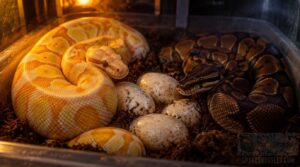
A breeder once paired her visual pastel to a 100% het expecting visual babies, and got none.
That’s the catch. When you cross a visual morph with a het, you get roughly 50% het offspring and 50% non-carriers. No visuals appear. The visual parent contributes only one recessive copy, not two, so the offspring simply can’t express the trait visually.
Double Het Outcomes
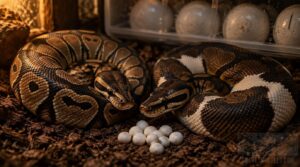
Crossing a 100% het clown with a 100% het pied produces double hets. Neither gene shows visually in the parents, but each clutch carries a 6.25% chance of producing a clown pied.
That’s gene stacking at work: multiply each gene’s 25% visual odds together.
These breeding outcomes demand real patience, and accurate clutch records are how you verify your progress.
A dedicated snake breeding record book makes it easy to log every clutch, so you’ll know exactly when those rare double het odds finally pay off.
Buying and Pricing Het Ball Pythons

Prices swing wildly, and here’s why: certainty sells. A confirmed 100% het can cost 20–60% more than a possible het carrying the same recessive gene.
Expect these ranges:
- Common het ball pythons: $15–$200
- Rare or premium lineages: $300–$600
- Shipping: $25–$60 per animal
Insist on documentation. A certificate of authenticity or parentage record proves carrier status and protects your market value later. Buy from reputable breeders offering health guarantees, use escrow or bank transfers, and time your purchase. Late-summer hatchlings often carry higher price tags due to seasonal demand. Genetic verification later, through test clutches or third-party testing, can raise what your snake is worth.
Keeping payment records from your secure money transfer service also helps document the transaction if disputes arise later.
Responsible Breeding and Genetic Recordkeeping

A beautiful morph means nothing without a paper trail. Responsible breeding starts with honest recordkeeping.
Give every snake a unique ID. Log each pairing, date, and outcome in a master spreadsheet. When a genetic test comes back, attach the lab report number to that animal’s record. Update files within 24 hours.
Track lineage to avoid inbreeding. Cross-check visual phenotypes against genotypes. Restrict record edits, back up nightly, and disclose het outcomes transparently. Your reputation depends on it. A reliable external hard drive for breeders keeps nightly backups safe even if your computer fails.
Frequently Asked Questions (FAQs)
What does 100% het mean in ball pythons?
It’s the single most powerful word in Ball Python Genetics: your snake carries one copy of a recessive allele, looks completely normal, and can pass that hidden trait to offspring. Only genetic testing or lineage confirms true het carriers.
Which ball python morphs to avoid?
You should avoid morphs tied to serious health problems, like spider (wobble), super cinnamon and super black pastel (kinks, duckbill), and super sable. Prioritize animal welfare and ethical breeding over flashy looks when you buy.
What does it mean when a ball python is het?
Think of it as carrying a hidden ace. A het ball python is heterozygous: it holds one copy of a recessive gene variant, looks wild-type, and can pass that allele to half its offspring.
Can you explain the genetics of ball pythons?
Ball python genetics run on Mendelian genetics: each snake inherits one allele per gene from each parent. Recessive morphs need two copies. A heterozygous snake, or het, carries one mutant allele but looks normal.
Even a single nucleotide change can dramatically shift color and pattern, as explored in this overview of common genetic mutations in ball pythons and other snakes.
Can a het ball python ever look visual?
Picture a pied het: it looks completely normal, yet carries the recessive gene. No, a het can’t look visual. Visual morphs need two copies, so your het’s genotype stays hidden in its phenotype.
Do het genes pass to every offspring?
Last clutch I tracked: six eggs from a het sire, and only three carried the gene. Het genes don’t pass to every offspring. Each egg gets a 50% probability of inheritance, which Punnett squares confirm for your offspring prediction.
What happens when pairing two different het genes?
Pairing two different het genes creates a double het offspring. Each gene segregates independently, so your breeding odds apply separately per gene. You’re multiplying probabilities, not combining them into one single guaranteed visual morph outcome.
Is a het female different from a het male?
Take a het pied female and a het pied male. Ball python recessive traits aren’t sex-linked, so both carry and pass the hidden allele with equal probability. Your breeding odds won’t shift based on gender.
Can het traits skip a generation entirely?
Yes, het traits can skip a generation. If only one parent carries the hidden recessive gene, offspring won’t express it visually but can pass it forward as silent het carriers.
Conclusion
A hobbyist once bought three ‘poss het’ Pieds at budget prices, bred them for two seasons, and never produced a single visual. That’s years of time and money lost to a label.
Having the ball python het gene explained gives you the framework to ask better questions before you buy. Verify lineage, weigh the odds honestly, and prioritize proven hets when the project matters. Genetics won’t lie to you if you learn to read them.