This site is supported by our readers. We may earn a commission, at no cost to you, if you purchase through links.
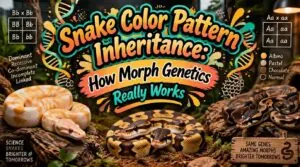
Two ball pythons with identical-looking parents can hatch as a pale, ghostly white and a deep chocolate black. Same clutch. Same incubator. Totally different animals.
That’s snake color pattern inheritance at work, and it’s why breeders pay thousands for a single stunning morph. Behind every banded stripe and golden blush sits a set of genes passing quietly from parent to hatchling, some hiding for generations before they surface.
You can learn to read that code. Once you understand how pigment cells build color, how alleles stack, and how crosses play out, your pairings stop being guesses and start being predictions.
Table Of Contents
- Key Takeaways
- What Determines a Snake’s Color and Pattern?
- How Are Snake Color Morphs Inherited?
- How Do Pigment and Pattern Genes Interact?
- How Do Punnett Squares Predict Offspring Morphs?
- Why Does Genetic Diversity Matter in Breeding?
- Frequently Asked Questions (FAQs)
- What is a snake’s pattern called?
- What do all females inherit from their father?
- What is the snake color rule?
- What snake is worth $100,000?
- How do snake genes affect coloration and pattern?
- What are genetic color morphs in corn snakes?
- Can a snake mutation be inherited?
- Do snakes have morphs?
- What happens if you mutation a snake?
- What causes genetic diversity in ground snakes?
- Conclusion
Key Takeaways
- Your snake’s look comes from pigment cells (dark, yellow-orange, and light-scattering) layered together, with genes steering where and how they settle into a pattern.
- You can predict what you’ll hatch once you know whether a trait is recessive, dominant, or incomplete dominant, since recessive traits hide in carriers while dominant ones show up with a single copy.
- Punnett squares give you the odds for each pairing, but you should treat those percentages as odds, not promises, because small clutches drift from the expected ratios.
- Your breeding project lasts longer when you outcross to unrelated animals instead of pairing close relatives, since inbreeding costs you fertility, hatchling strength, and rare alleles.
What Determines a Snake’s Color and Pattern?
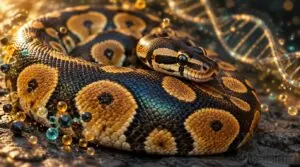
Color starts inside the skin, and it’s built by three pigment cell types. Melanocytes make dark melanin, xanthophores add yellow and orange, and iridophores scatter light into blue and green. That’s simply put. Your snake’s stunning palette is just these cells layered together.
Because these pigment layers combine in countless ways, breeders have developed hundreds of color and pattern variations, and this complete guide to snake morphs explains how to choose healthy ones.
Pattern comes from movement. During early development, those cells migrate and settle, forming bands, saddles, or blotches. Timing matters here. Shifts in cell differentiation between hatchling and adult can fade or sharpen a pattern, so a stunning baby may look quite different later.
Genes steer it. Genetic inheritance hands your snake a genotype combination, and allele interaction between those genes shapes phenotype expression, the look you see. Incubation temperature can nudge the result too.
How Are Snake Color Morphs Inherited?
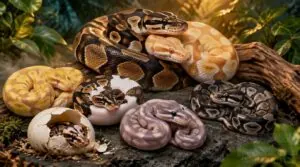
Every stunning morph you’ve seen follows a predictable inheritance pattern. Once you know which one you’re working with, you can plan your pairings with confidence. Let’s walk through the three you’ll use most, starting with the traits that hide.
Recessive Traits and Hidden Carriers
Most recessive genetic mutation traits stay invisible until two carriers meet. That’s the catch. Hidden recessive alleles hide behind a normal-looking snake, so you can’t judge by eye.
Breeders who want to predict which hidden traits might surface in a clutch can start with this guide to how snake color morph genetics work.
Here’s what you’ll picture with a 66 het pairing:
- Both parents look wild-type.
- A Punnett square predicts 25% visible morphs.
- Carrier identification needs test breeding.
Ready to prove it in your clutch?
Dominant Traits
play by simpler rules. One copy of a dominant gene shows up on the snake, so nothing hides. That’s dominant morph inheritance in short.
A heterozygous dominant Spider bred to a normal gives roughly half visible Spider babies. Got a genetic stripe line? Same logic applies. You’ll see results fast. No test breeding needed, check your hatchlings.
If you’re new to dominant traits, this guide to how ball python morphs inherit walks through dominant, recessive, and co-dominant patterns with breeding examples.
Incomplete Dominance and Super Forms
Not every gene plays by the all-or-nothing rule. With incomplete dominance, one copy makes a visible shift, and two copies push it further.
Ball python Pastel proves it. A heterozygous Pastel looks brighter than normal, while a homozygous Super Pastel looks even cleaner. Codominant and super forms work on dose. Add genetic trait interaction, and your results get truly stunning.
How Do Pigment and Pattern Genes Interact?
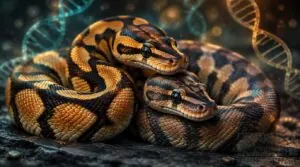
A snake’s look is never one gene’s work. Pigment genes set the palette, pattern genes draw the map, and the two have to cooperate. Here’s what that means for your pairings:
- Chromatophore function sets the colors available on each scale.
- Epistasis in pigmentation lets one allele hide another.
- Allele dosage changes intensity, so one copy and two copies look different.
- Genetic recombination can split linked loci, breaking up a stunning combo.
- Phenotype discordance shows up when a snake’s genotype doesn’t match its look.
Why does this matter? Because a pattern allele can mask a pigment allele you thought you’d locked in. Think of it as layered, not simple. Track each locus separately, and you’ll predict stunning results far more often.
How Do Punnett Squares Predict Offspring Morphs?
Punnett squares turn breeding guesswork into math. Ever wondered what a clutch might hold? Here’s how you find out.
A Punnett square crosses each parent’s gametes in a grid, so every cell shows one possible offspring genotype. It’s pure Mendelian inheritance, and it works because dominant and recessive genes follow predictable rules. Remember genotype vs phenotype: the grid predicts genes, not looks. Your genotype phenotype correlation tells you which cells produce a stunning morph. Keeping a reptile breeding genetics chart nearby makes it easier to map each pairing’s possible outcomes before you commit to a clutch.
- List each parent’s alleles first.
- Write gametes across the top and down the side.
- Fill every cell.
- Count identical genotypes.
- Convert counts to percentages.
Cross two heterozygous parents and you’ll get a 3:1 dominant-to-recessive ratio. Small clutches drift from that. Treat percentages as odds, not promises.
Why Does Genetic Diversity Matter in Breeding?
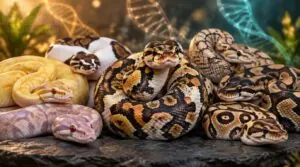
Pair full siblings and a quarter of each hatchling’s genome becomes identical by descent. That’s a 25% inbreeding coefficient, and it’s why Genetic Diversity Matters far more than most breeders admit.
Chasing one stunning morph through tight pairings feels efficient. It isn’t. You’ll hit Inbreeding and Weak Vigor fast: lower fertility, fragile hatchlings, odd pattern defects. Worse, a Genetic Bottleneck can erase rare alleles before you ever see them. Fragile hatchlings need every advantage, so pair good genetics with a secure snake hatchling enclosure setup that holds steady heat and humidity.
Chasing one stunning morph through tight pairings feels efficient, but it quickly costs you fertility, hatchling strength, and rare alleles
So outcross. Bring in unrelated animals and log every pairing. Strong Lineage Diversity keeps hidden pigment modifiers alive in your carriers, so they can surprise you with stunning new combinations. It also sharpens your predictions, and that Population Strength protects your whole project long term when disease or climate stress hits.
Frequently Asked Questions (FAQs)
What is a snake’s pattern called?
Your snake’s pattern is called its morph pattern, and you name it by what you see. Banded, striped, blotched, tessellated. Each describes the scale pattern and its distribution, while color intensity stays separate.
What do all females inherit from their father?
Say your sire carries a dominant X-linked allele. Your daughters all inherit that paternal X chromosome, so the trait’s fixed. Check genotype phenotype correlation, autosomal gene balance, and genetic compatibility before you pair your breeders.
What is the snake color rule?
Genes are a locked diary, and your snake’s colors are the pages you read.
The rule? Dominant and recessive genes decide everything. Punnett squares predict odds, allele frequency shifts them, and genetic mutations create morphs.
What snake is worth $100,000?
Honestly, a million-dollar dream starts with designer morphs.
Rarity alone drives morph market value, so a proven recessive pairing with perfect genetic compatibility, low allele frequency, and clear genotype phenotype correlation can easily fetch $100,
How do snake genes affect coloration and pattern?
Your snake’s look comes down to genetic factors steering pigment and pattern. Melanin and albinism show the extremes, while genotype phenotype correlation, allele frequency, and a quick Punnett square help you predict what you’ll hatch.
What are genetic color morphs in corn snakes?
Every corn snake is a living palette, and you hold the brush. Genetic color morphs are stable, heritable color and pattern variants. Dominant and recessive genes, allele combinations, and Punnett squares explain corn snake inheritance.
Can a snake mutation be inherited?
Yes, and that’s exactly how new morphs get built. A mutation passes down only if it’s in the germline, and its inheritance patterns decide the odds. Recessive alleles need two copies. Dominant ones show up with one.
Do snakes have morphs?
Morphs are everywhere in the hobby, and they’re your starting point for mastery. A genetic mutation shifts pigment or pattern, and breeders lock it in through morph creation. Stunning results follow, predictable with Punnett squares.
What happens if you mutation a snake?
Think of a mutation as a typo in a recipe card. Most typos change nothing, but one tweak to a pigment gene can turn a banded snake solid. It only counts as a new morph if it’s heritable.
What causes genetic diversity in ground snakes?
Picture a wild ground snake population where one male carries a rare orange allele. He wanders, mates, and genetic variation spreads.
Mutation stacking and gene flow, plus genetic drift, keep allele combinations shifting.
Conclusion
Your snake’s genome is a recipe card, and every parent hands down half the ingredients. Some are written in bold ink. Others hide in faint pencil until the right partner shows up.
That’s snake color pattern inheritance, and you now hold the tools to read it. Map your recessive and dominant traits, sketch the Punnett square, and protect genetic diversity. Do that, and every clutch becomes a prediction you’ve earned, not a gamble you survived.
- https://www.barrettlab.ca/wp-content/uploads/Pigment-Cell-Melanoma-Res-2024-Garcia%E2%80%90Elfring-A-Ball-Python-Colour-Morph-Implicates-MC1R-in-Melanophore-Xanthophore.pdf
- https://vgl.ucdavis.edu/test/agouti-dog
- https://www.facebook.com/ImperialReptiles/posts/albinism-in-ball-pythons-is-a-genetic-condition-that-results-in-a-lack-of-melani/939105578217687